

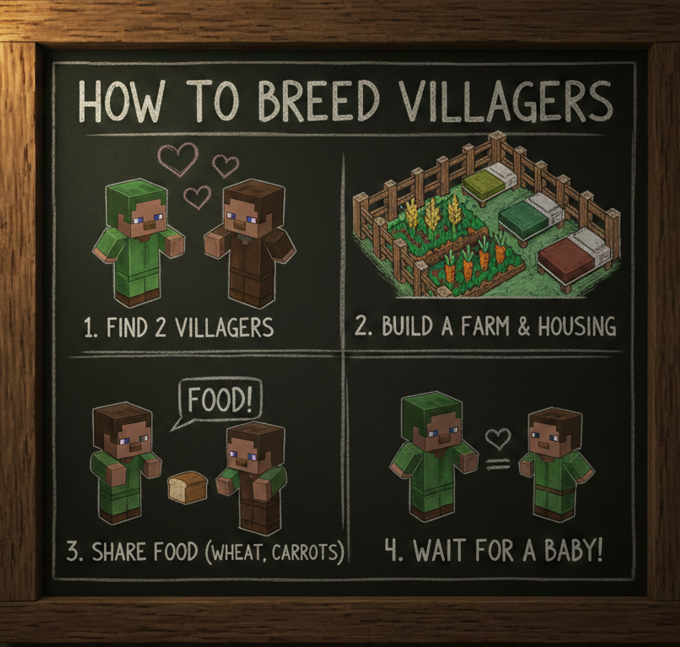
Breeding villagers in Minecraft is one of the most important mechanics for players who want to build efficient trading halls, iron farms, or thriving survival worlds. If you’ve ever wondered how to breed villagers, you’re not alone—this is a core skill that separates beginner players from experienced ones.
In this in-depth guide, you’ll learn how to breed villagers in Minecraft, including Java Edition, Bedrock Edition, PS4, and the latest Minecraft 1.21 update. We’ll also explore how to breed villagers fast, using proven techniques that work reliably across platforms. Every section is explained clearly, with practical steps, common mistakes to avoid, and optimization tips based on real gameplay experience.
Villager breeding isn’t random—it follows strict in-game rules involving beds, food, job sites, and player proximity. Once you understand these mechanics, you can control population growth precisely and create self-sustaining villages anywhere in your world.
How to Breed Villagers in Minecraft
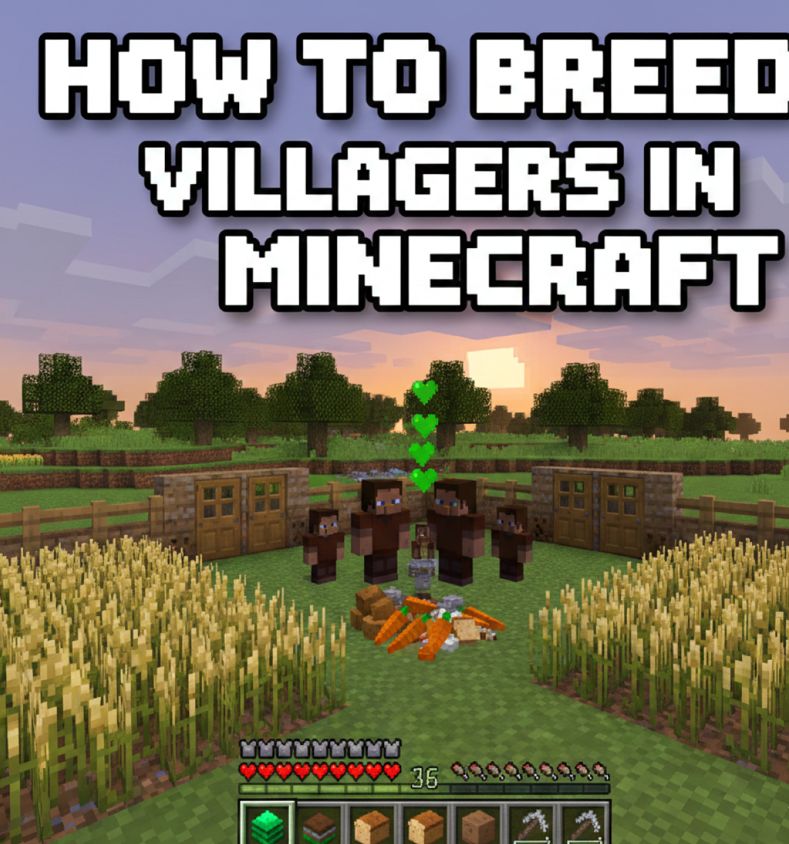
Breeding villagers in Minecraft requires meeting specific conditions that signal villagers they are safe, fed, and ready to reproduce. When these requirements are fulfilled, villagers will automatically enter “love mode” and produce a baby villager.
● Understand the Core Villager Breeding Mechanics
Villagers can only breed when they believe there is enough housing available. This is determined by the number of valid beds nearby. Each baby villager requires one unclaimed bed, and the bed must be accessible and usable. Without enough beds, breeding will not occur, even if villagers have food.
● Provide Enough Food for Willingness
Villagers must have sufficient food in their inventories to become willing to breed. Crops such as bread, carrots, potatoes, and beetroots work best. Bread is the fastest option because it instantly fills the willingness meter, making breeding more reliable.
● Ensure Proper Bed Placement
Beds must be placed within a close radius of the villagers and have at least two blocks of air above them. Villagers must be able to pathfind to the bed, meaning blocked or enclosed beds will prevent breeding entirely.
● Keep Villagers Safe from Threats
Hostile mobs, constant damage, or panic states can interrupt breeding. Make sure the breeding area is well-lit, enclosed, and protected from zombies and pillagers, especially during nighttime.
● Stay Within Activation Range
Players must remain within simulation distance for villager AI to function. If you move too far away, villagers will stop interacting, and breeding attempts may fail silently.
● Be Patient and Observe Particle Effects
When villagers are ready, heart particles will appear. If storm clouds appear instead, it indicates a failed attempt—usually due to missing beds or insufficient food.
Also Read: How to Clean Cast Iron Skillet: The Complete Care & Cleaning Guide
How to Breed Villagers in Minecraft Bedrock
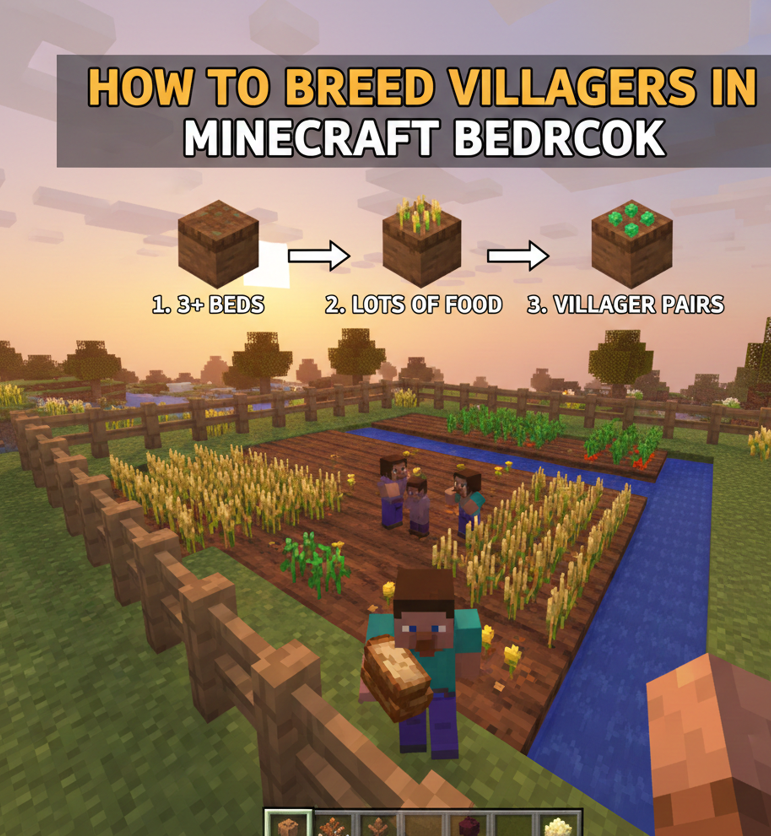
Breeding villagers in Minecraft Bedrock Edition works slightly differently than Java Edition due to unique AI behaviors and village detection mechanics.
● Village Detection Is Bed-Based
In Bedrock Edition, a village is created the moment at least one villager links to a bed. This means bed placement is even more critical than job blocks when breeding villagers.
● Food Sharing Is Less Predictable
Villagers in Bedrock do not always share food consistently. To compensate, manually feed each villager rather than relying on automatic crop farming during early stages.
● Workstations Affect Behavior
While not required for breeding, assigning job blocks helps stabilize villager routines. Employed villagers tend to behave more predictably, reducing AI bugs that may block breeding.
● Bed Spacing Prevents Linking Errors
Beds placed too close together may confuse villager pathfinding. Leave at least one block of space between beds and ensure clear access paths.
● Chunk Borders Matter More in Bedrock
Breeding systems that cross chunk borders can fail unexpectedly. Always build villager breeders within a single chunk to avoid desynchronization issues.
● Bedrock Requires Extra Time
Breeding in Bedrock Edition can take longer due to slower AI decision cycles. Avoid interrupting villagers and give them uninterrupted time to complete the process.
Also Read: How to Steam Broccoli: The Complete Healthy Cooking Guide
How to Breed Villagers 1.21 (Latest Update)
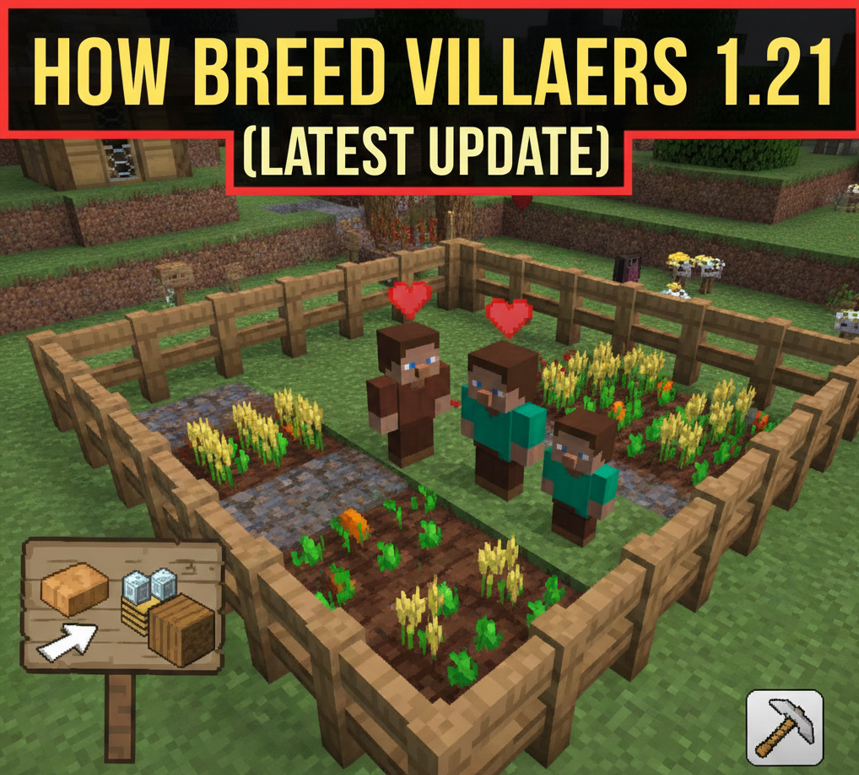
Minecraft 1.21 introduced subtle AI improvements and structure changes that affect villager behavior, making understanding the updated mechanics essential.
● Improved Pathfinding Accuracy
Villagers now evaluate bed access more accurately. If a bed is blocked by trapdoors, slabs, or carpets, villagers may refuse to claim it, stopping breeding entirely.
● Biome-Based Villager Variants
While breeding mechanics remain the same, baby villagers now inherit biome appearances. This is important for players collecting specific villager skins.
● Increased AI Awareness of Space
Villagers in 1.21 require clearer movement paths. Compact breeders that worked in older versions may need more space to function properly.
● Redstone Interference Can Break Breeders
Active redstone components near beds can interfere with villager sleep cycles. Keep breeding areas simple and isolated from machines.
● Food Detection Is More Precise
Villagers now correctly evaluate food quantities before breeding, reducing random failures but requiring exact food thresholds.
● Compatibility with Old Worlds
Existing breeders may need redesigning when upgrading to 1.21. Always test breeding systems after updating your world.
Also Read: How to Draw a Rose: A Complete Step-by-Step Guide for Beginners
How to Breed Villagers Bedrock (Fast & Reliable)
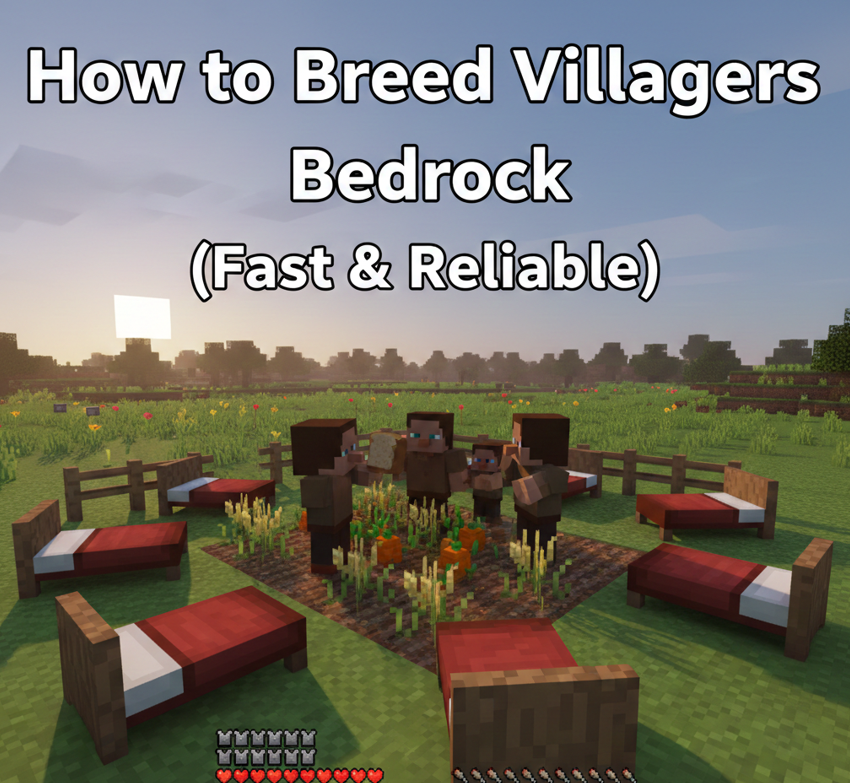
Speed breeding in Bedrock requires optimization, not shortcuts. Understanding AI priorities allows you to maximize efficiency safely.
● Use Bread for Maximum Efficiency
Bread remains the fastest food for triggering willingness. Three bread items per villager is the ideal minimum.
● Limit Villager Count Per Room
Too many villagers in a small area can cause AI confusion. Two breeders per chamber yields the most consistent results.
● Control Bed Ownership
Destroy and replace beds to reset villager claims if breeding stalls. This forces villagers to re-evaluate housing availability.
● Avoid Job Switching During Breeding
Villagers changing professions can interrupt breeding attempts. Lock professions before starting the process.
● Sleep Cycles Improve Success Rates
Allow villagers to sleep at least once before expecting breeding. Night cycles reset AI states.
● Observe and Adjust Gradually
If breeding fails, adjust one variable at a time—beds, food, or spacing—to identify the issue without breaking the system.
Also Read: How to Add Fractions: A Complete Step-by-Step Learning Guide
How to Breed Villagers in Minecraft PS4
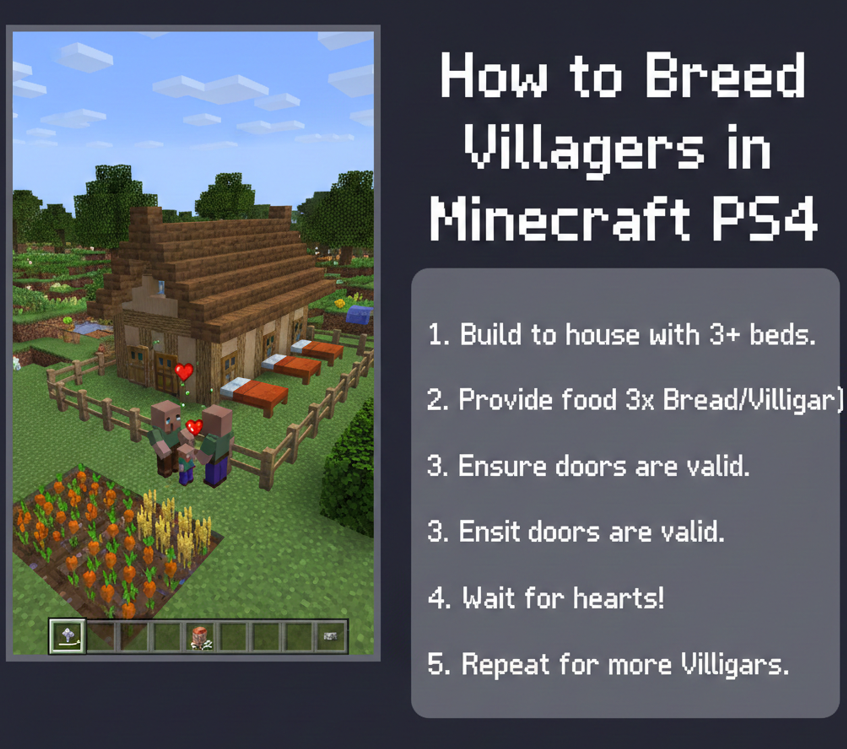
Minecraft PS4 runs Bedrock Edition, but console performance and render distance introduce unique challenges.
● Stay Close to the Breeder
PS4 unloads AI faster than PC. Remain near villagers until the baby spawns to avoid failed attempts.
● Reduce Lag in Breeding Areas
Too many entities nearby can slow villager behavior. Keep farms, animals, and redstone away from breeding zones.
● Manual Feeding Works Best
Console controls make automatic systems less reliable early on. Hand-feed villagers to ensure correct food intake.
● Avoid Vertical Stack Designs
PS4 pathfinding struggles with vertical breeders. Flat, horizontal layouts are more stable.
● Save and Reload If Stuck
Occasionally, Bedrock AI freezes. Saving and reloading the world can reset villager behavior safely.
● Keep Lighting Consistent
Light level changes can reset villager focus. Maintain constant lighting to prevent interruptions.
Also Read: How to Cook Chicken Breast in Oven Complete Step-by-Step Guide
How to Breed Villagers Fast (Advanced Strategy)
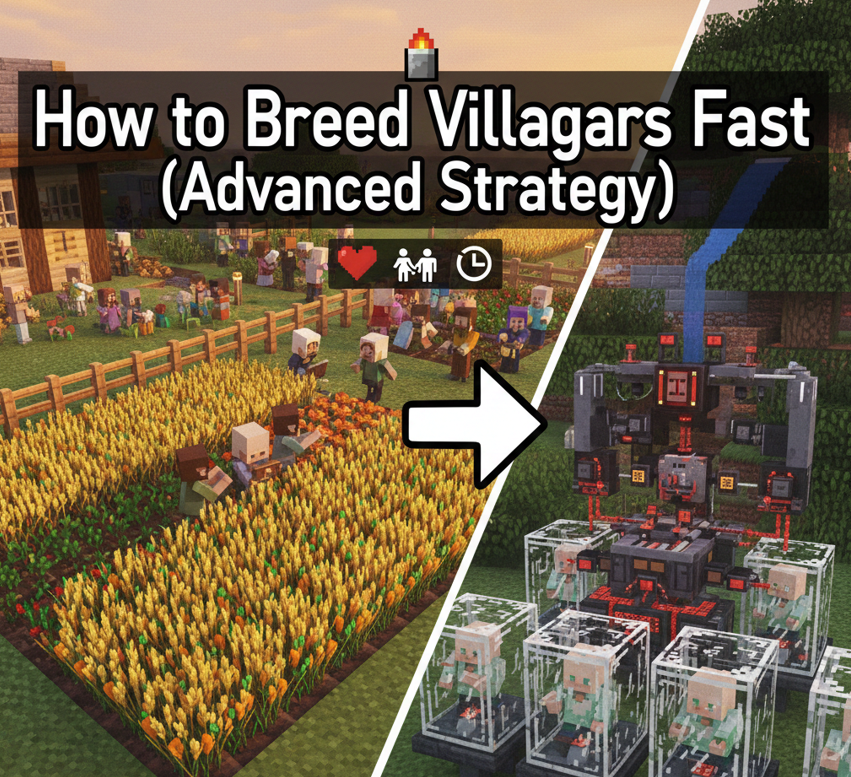
Fast villager breeding is about efficiency, not exploits. These expert techniques work across versions.
● Create Dedicated Breeding Zones
Separate breeders from job halls to prevent AI conflicts and improve consistency.
● Automate Food Delivery Carefully
Farmer villagers can feed breeders automatically, but only if inventories are managed properly.
● Limit Population Caps
Villagers stop breeding if too many are nearby. Move babies away quickly using water or minecarts.
● Use Controlled Bed Counts
Exact bed-to-villager ratios prevent wasted attempts and increase success rates.
● Maintain Chunk Activity
Build breeders near frequently used areas so chunks stay loaded naturally.
● Test After Every Update
Game updates can subtly change mechanics. Always revalidate breeder designs after patch releases.
Also Read: How to Soften Brown Sugar: The Complete Expert Guide for Every Situation
Conclusion
Learning how to breed villagers gives you full control over one of Minecraft’s most powerful systems. Whether you’re playing Java, Bedrock, PS4, or Minecraft 1.21, the principles remain the same: beds, food, safety, and patience. By applying the strategies in this guide, you can create fast, reliable villager breeders that fuel your entire survival world
FAQs
Q: Why won’t my villagers breed?
A: Most failures are caused by missing beds, blocked access, or insufficient food.
Q: What is the fastest food for breeding villagers?
A: Bread is the most efficient and reliable option.
Q: Can villagers breed without jobs?
A: Yes, jobs are not required—only beds and food matter
For More Updates Visit: Biomagazine
