

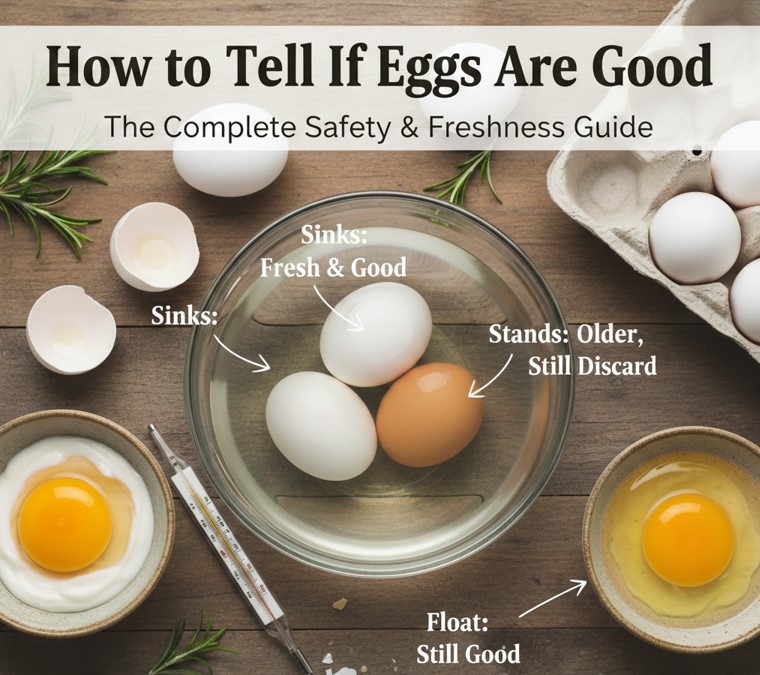
Eggs are a staple in households around the world, valued for their nutrition, versatility, and affordability. However, because eggs are an animal product, they can spoil over time and pose serious food safety risks if consumed when bad. This is why understanding how to tell if eggs are good is not just a kitchen skill—it is an essential health practice.
According to food safety data from the CDC, Salmonella causes over 1.3 million infections annually in the U.S., and improperly stored or spoiled eggs are a known contributor. Many people rely only on expiration dates, but dates alone are not always accurate indicators of egg freshness or safety.
This expert-level guide combines food science, USDA guidelines, real-world cooking experience, and practical testing methods to teach you exactly how to tell if eggs are good or bad, safe to eat, safe to cook, and still usable—even when you’re unsure.
How to Tell If Eggs Are Good or Bad
Eggs naturally deteriorate over time due to moisture loss, bacterial growth, and internal chemical changes. As eggs age, air enters through microscopic shell pores, altering texture, smell, and safety.
• Spoilage starts internally before it’s visible
Eggs can look normal on the outside while being unsafe inside, which is why multiple checks are important.
• Bacteria thrive at warm temperatures
Improper refrigeration dramatically accelerates spoilage.
• Shell condition matters
Cracks allow bacteria to enter easily.
• Smell is the most reliable indicator
Sulfur compounds released by spoiled eggs create a strong odor.
• Color and texture change over time
Cloudy whites and flattened yolks indicate aging.
• Time and storage method are critical
Eggs stored correctly last significantly longer.
Also Read:- How to Pronounce Gyro: The Complete, Accurate Guide You Can Trust
How to Tell If Eggs Are Good Still Shelf Life Explained
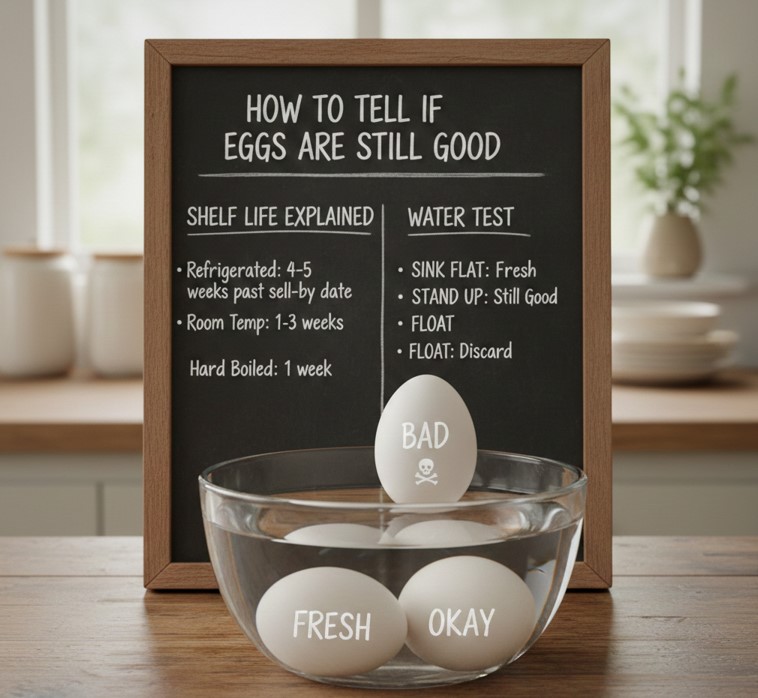
Many people throw away eggs prematurely. In reality, eggs can remain safe 3–5 weeks beyond the purchase date when refrigerated properly.
• Refrigeration slows bacterial growth
Cold temperatures inhibit Salmonella activity.
• Eggshells act as natural barriers
As long as shells remain intact, protection continues.
• USDA sell-by dates are conservative
They prioritize retailer turnover, not spoilage.
• Proper carton storage matters
Original cartons reduce moisture loss.
• Door storage reduces freshness
Temperature fluctuation speeds aging.
• Consistent cold storage preserves quality
Ideal temperature is below 40°F (4°C).
Also Read:- How to Parallel Park: The Complete Step-by-Step Guide for Beginners and Pros
How to Tell If Eggs Are Good to Eat
An egg may look fine but still be unsafe to eat raw or lightly cooked. Determining whether eggs are good to eat requires combining sensory evaluation and safety knowledge.
• Smell test after cracking
A rotten egg releases a strong sulfur odor immediately.
• Check egg whites
Thick, gel-like whites indicate freshness.
• Inspect yolk shape
A tall, rounded yolk signals a fresh egg.
• Avoid eggs with slime or mold
These indicate bacterial contamination.
• Cook questionable eggs thoroughly
High heat kills most pathogens.
• Never taste raw eggs to test freshness
This increases risk of illness.
Also Read:- How to Get Blood Out of Clothes (Complete Expert Guide)
How to Tell If Eggs Are Good to Cook
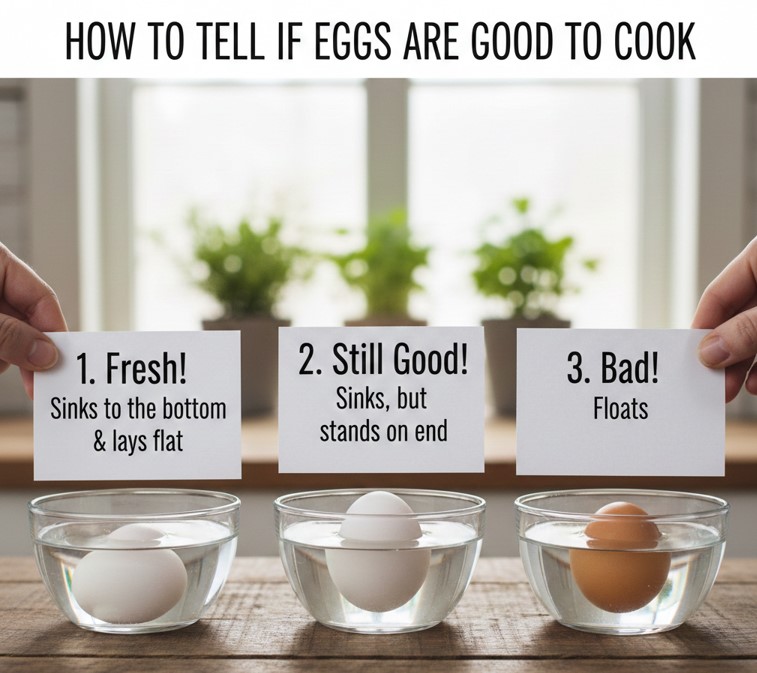
Eggs that are slightly aged may still be safe to cook if fully heated, even if they are no longer ideal for frying or poaching.
• Baking tolerates older eggs better
Structure matters less than flavor.
• Boiling kills bacteria effectively
Hard-boiled eggs are safer for borderline freshness.
• Scrambling masks texture changes
But smell must still be normal.
• Avoid soft-cooked dishes with older eggs
Runny yolks require fresher eggs.
• Cracked eggs should be cooked immediately
Never store cracked raw eggs.
• When in doubt, discard
Food poisoning is never worth the risk.
Also Read:- How to Cut a Pomegranate (Complete Step-by-Step Guide)
How to Tell If Eggs Are Good in Water
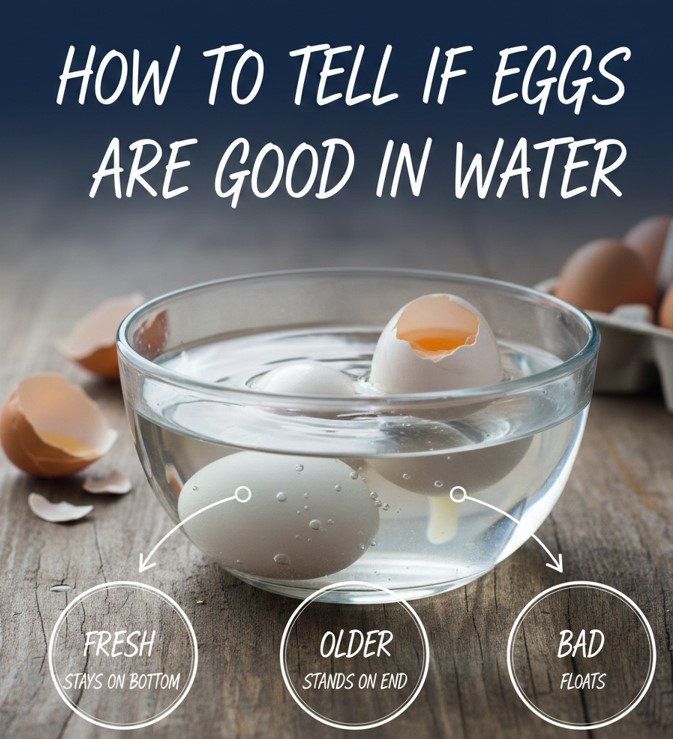
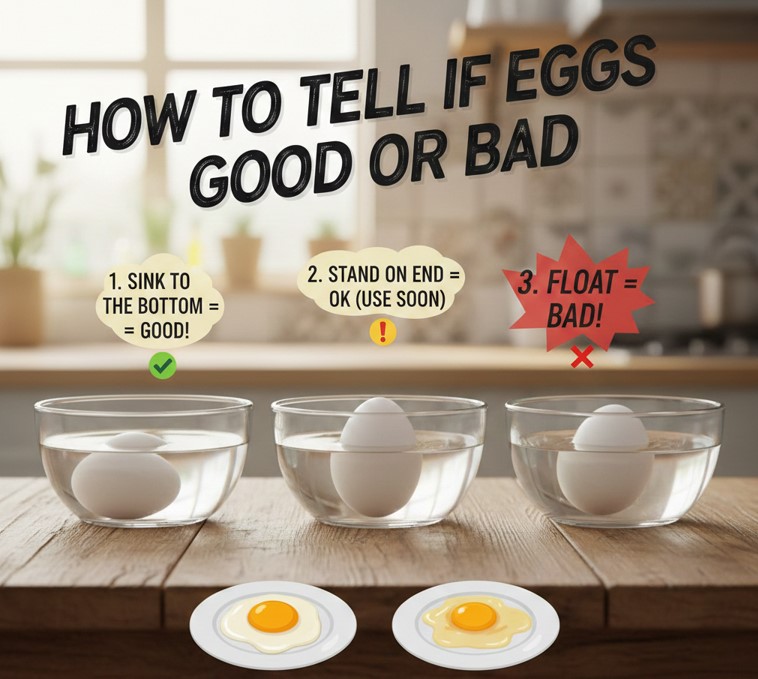
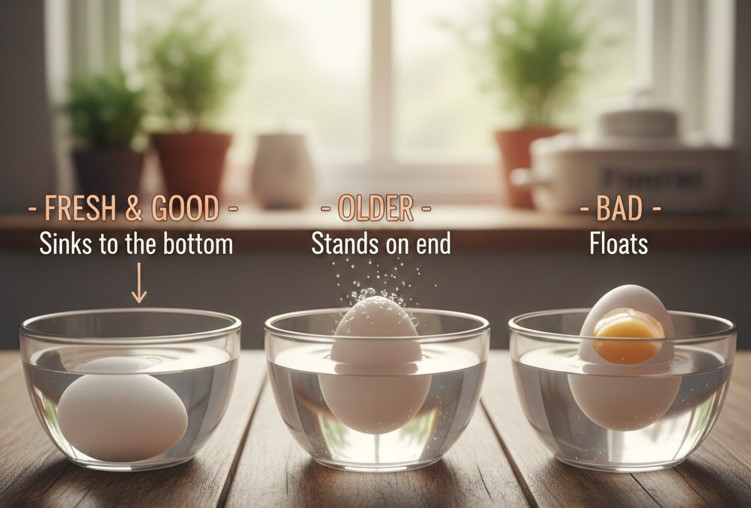
The water test works because eggs lose moisture and gain air as they age, changing buoyancy.
• Fill a bowl with cold water
Room-temperature water may skew results.
• Gently place egg in water
Do not drop or crack it.
• Fresh eggs sink and lie flat
Minimal air cell inside.
• Older eggs stand upright
Air cell has grown.
• Floating eggs are unsafe
Indicates advanced spoilage.
• Use water test as a screening tool
Always confirm with smell test.
Also Read:- How to Breed Villagers in Minecraft (Complete 2026 Guide)
How to Tell If Eggs Are Good Float Test Detailed Breakdown
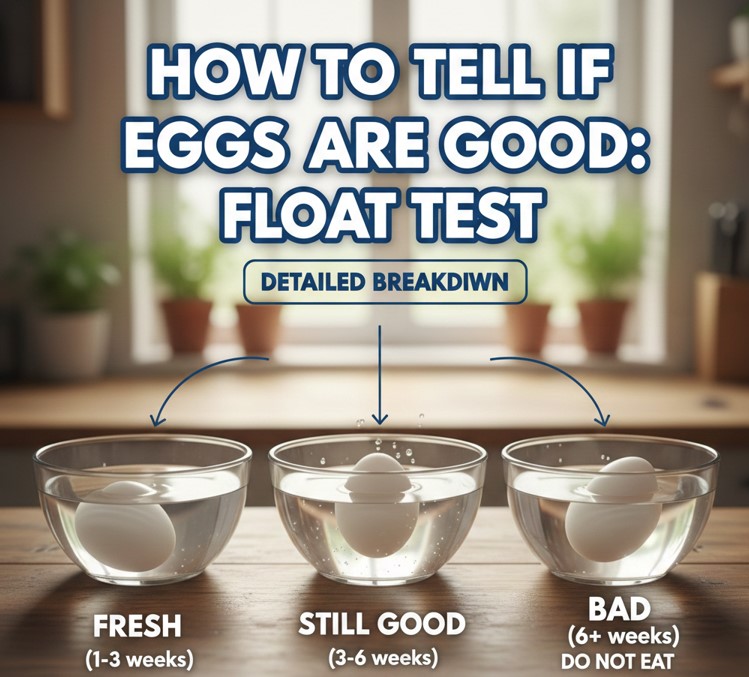
The float test is one of the most popular methods for checking egg freshness, but it must be understood correctly.
• Air pocket expansion causes float
Gas builds up inside as egg ages.
• Floating eggs are not fresh
They should be discarded.
• Standing eggs are nearing expiration
Use soon and cook thoroughly.
• Sinking eggs are fresh
Best for frying and poaching.
• Shell integrity still matters
Cracked floating eggs are especially unsafe.
• Float test does not detect bacteria
Always use smell as confirmation.
Also Read:- How to Clean Cast Iron Skillet: The Complete Care & Cleaning Guide
Visual Signs That Eggs Are Bad
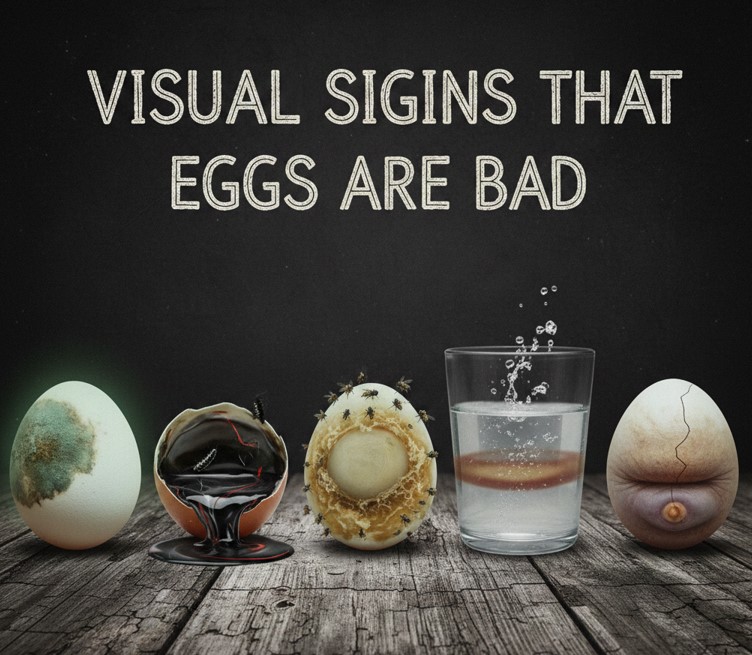
Visual inspection is an important first step when determining how to tell if eggs are good or bad.
• Powdery residue on shell
May indicate mold growth.
• Slimy shell texture
Bacterial contamination warning.
• Discolored yolk or whites
Pink, green, or iridescent hues are unsafe.
• Runny whites in very old eggs
Loss of protein structure.
• Collapsed yolk membrane
Indicates age and weakness.
• Leaks or wet spots
Suggest internal breakage.
Also Read:- How to Steam Broccoli: The Complete Healthy Cooking Guide
Smell Test: The Most Reliable Method
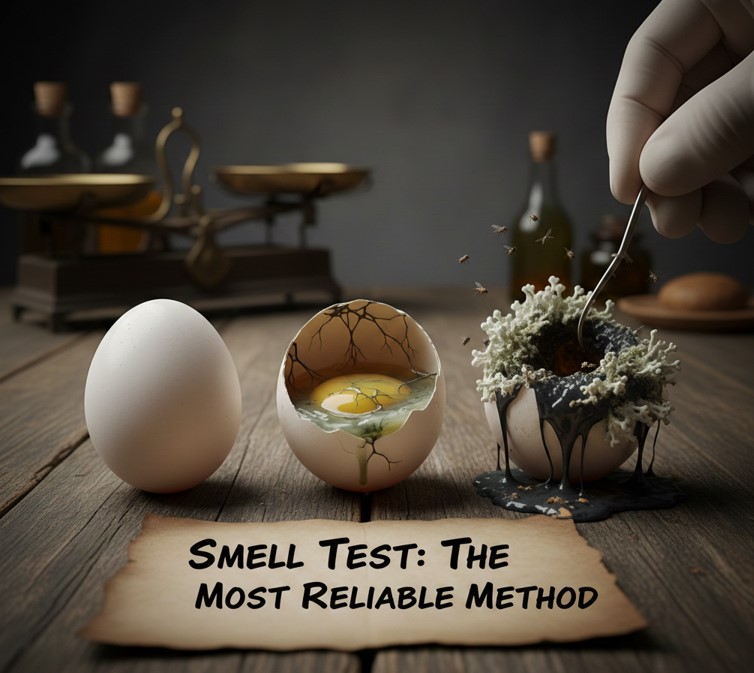
No test is more reliable than smell. Rotten eggs produce hydrogen sulfide gas, which smells unmistakably foul.
• Smell immediately after cracking
Odor appears instantly.
• Do not rely on shell smell alone
Shells may trap odor.
• Even mild sulfur smell is unsafe
Fresh eggs have almost no smell.
• Cooking does not fix rotten eggs
Heat intensifies bad odors.
• Trust instinctive reaction
If you recoil, discard.
• Never taste to confirm
This is dangerous.
Also Read:- How to Draw a Rose: A Complete Step-by-Step Guide for Beginners
How Storage Affects Egg Freshness
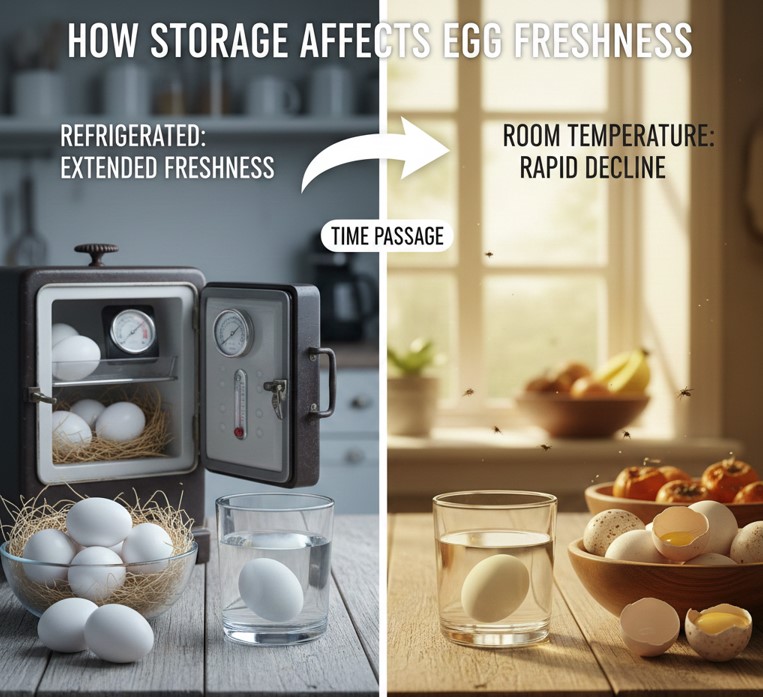
Proper storage can extend egg safety significantly.
• Keep eggs refrigerated at all times
Avoid leaving them out.
• Store in original carton
Prevents odor absorption.
• Avoid washing eggs before storage
Removes protective bloom.
• Do not store near strong smells
Eggshells are porous.
• Keep eggs away from door
Temperature fluctuates there.
• Label purchase date
Track freshness accurately.
Also Read:- How to Add Fractions: A Complete Step-by-Step Learning Guide
Conclusion
Learning how to tell if eggs are good empowers you to make safer decisions in the kitchen, reduce food waste, and protect your health. By combining smell tests, visual checks, water tests, and proper storage knowledge, you can confidently determine whether eggs are good, usable, or unsafe.
When it comes to eggs, caution is always better than regret. If something feels off, trust your senses—and throw it out. Safe food handling isn’t about fear; it’s about informed confidence.
FAQs
Can eggs be good past the expiration date?
Yes, if refrigerated and stored properly.
Is the float test 100% accurate?
No, it indicates age, not safety.
Can I eat eggs with cloudy whites?
Yes, cloudiness often indicates freshness.
For More Updates Visit: Biomagazine
