

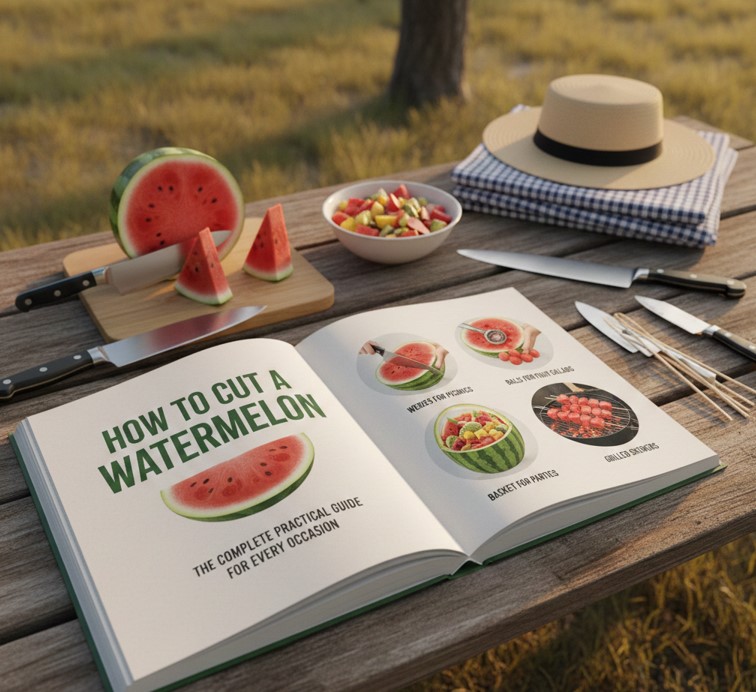
Learning how to cut a watermelon correctly is a simple skill that makes a big difference in presentation, safety, and enjoyment. Whether you’re preparing a quick family snack, hosting a summer party, or meal-prepping fruit for the week, the way you cut a watermelon affects texture, portion control, and waste.
This guide is written with hands-on kitchen experience, food safety best practices, and insights from professional chefs and nutrition experts. According to the USDA, watermelon is over 91% water, making clean, precise cuts essential to preserve freshness and prevent slipping accidents. By following the methods below, you’ll cut watermelon efficiently, safely, and beautifully—every time.
How to Cut a Watermelon Easy
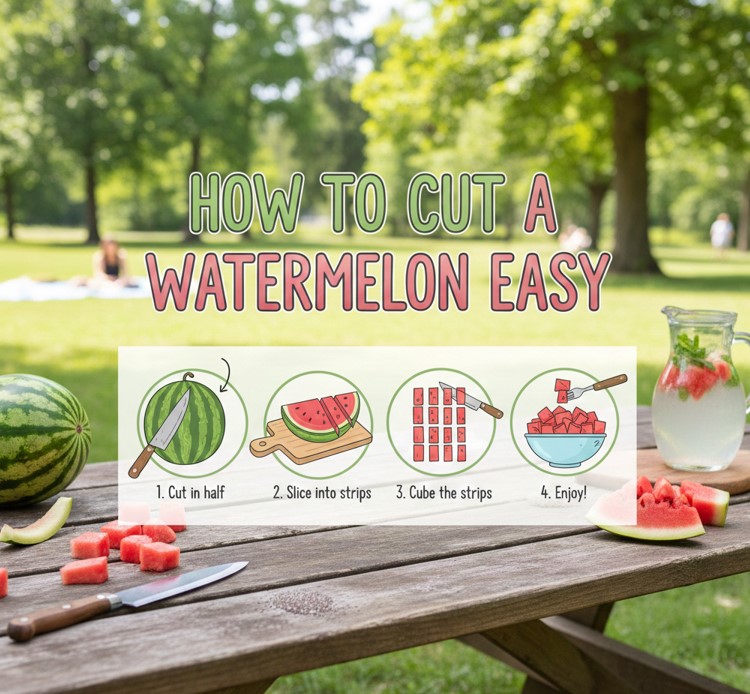
Cutting a watermelon easily is about simplicity, stability, and smart sequencing. Many people struggle not because watermelon is hard to cut, but because they start incorrectly.
Simple Foundations for Easy Watermelon Cutting
• Choose the Right Knife
A long, sharp chef’s knife (8–10 inches) reduces resistance and prevents slipping. Dull knives require more force, increasing injury risk. Professional kitchens emphasize sharp blades for safety, not danger.
• Stabilize the Watermelon First
Slice a thin piece off one end to create a flat base. This prevents rolling, which is the main cause of cutting accidents at home.
• Work on a Non-Slip Surface
Place a damp towel under your cutting board. This creates friction and keeps the board from moving, a technique recommended by culinary schools.
• Cut in Halves Before Anything Else
Always split the watermelon lengthwise first. This exposes the flesh and makes subsequent cuts predictable and controlled.
• Use Gravity, Not Force
Let the weight of the knife do the work. Smooth downward motion gives cleaner cuts and preserves texture.
• Clean as You Go
Watermelon juice builds quickly. Wipe surfaces regularly to maintain grip and safety.
Also Read:- How Long to Beat: A Complete Guide to Video Game Completion Times
How to Cut a Watermelon Properly
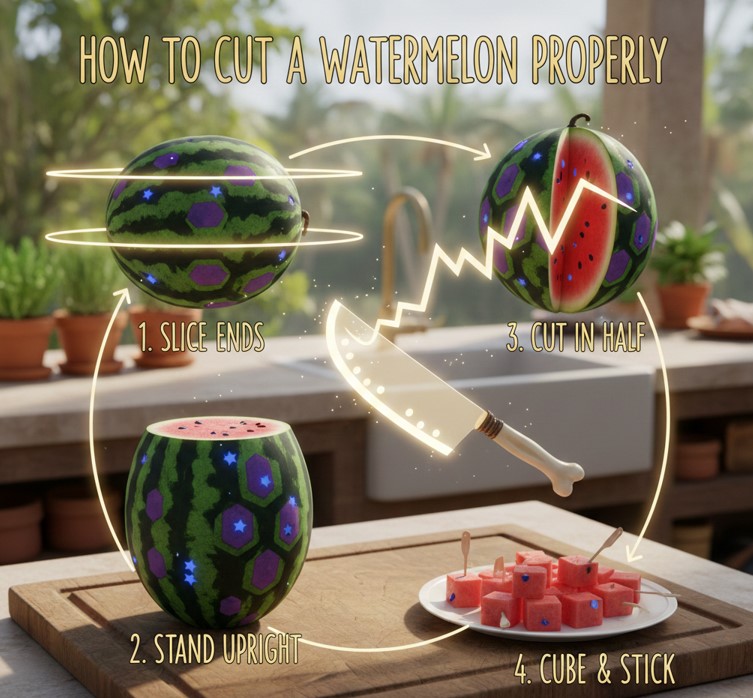
Cutting a watermelon properly means minimizing waste, maximizing yield, and ensuring food safety.
Principles of Proper Watermelon Cutting
• Wash the Rind Thoroughly
Even though you don’t eat the rind, bacteria on the surface can transfer to the flesh when slicing. The FDA recommends washing all produce before cutting.
• Align Cuts with Natural Shape
Follow the watermelon’s natural oval shape to avoid uneven pieces and juice loss.
• Remove Rind Strategically
Cut rind away in strips rather than peeling randomly. This method preserves flesh and gives uniform edges.
• Mind Cross-Contamination
Never cut watermelon on a board used for raw meat. Use dedicated produce boards.
• Control Portion Sizes
Proper cutting allows consistent portions, which helps with serving and calorie awareness.
• Store Correctly After Cutting
According to USDA guidelines, cut watermelon should be refrigerated within two hours and consumed within 3–4 days.
Also Read:- How to Make Cold Foam: The Complete Expert Guide for Coffee Lovers
How to Cut a Watermelon for a Party
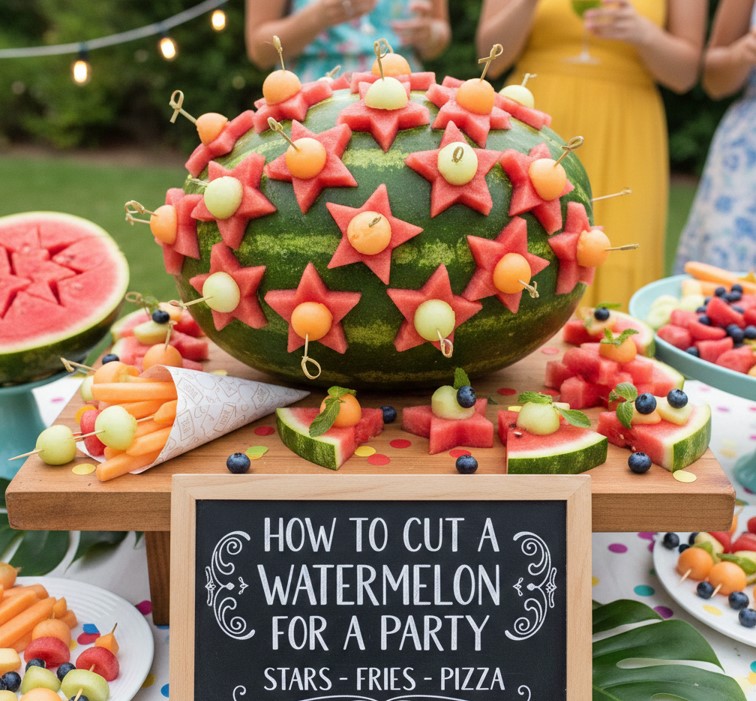
When preparing watermelon for a party, presentation, volume, and convenience matter more than speed.
Party-Friendly Watermelon Cutting Techniques
• Plan Portions Ahead
Estimate about 1½ cups per guest. Pre-planning reduces waste and last-minute stress.
• Choose Uniform Shapes
Cubes, sticks, or triangles are easier for guests to grab and eat without mess.
• Avoid Seeds in Party Cuts
Use seedless watermelon or remove visible seeds to improve guest experience.
• Chill Before Cutting
Cold watermelon cuts cleaner and holds shape better on serving trays.
• Use Garnishes Thoughtfully
Mint leaves or lime wedges elevate presentation without overpowering flavor.
• Serve Safely
Keep watermelon chilled over ice, especially outdoors, to prevent spoilage.
Also Read:- How to Measure Ring Size: The Complete Step-by-Step Guide for Accurate Results
How to Cut a Watermelon in Sticks
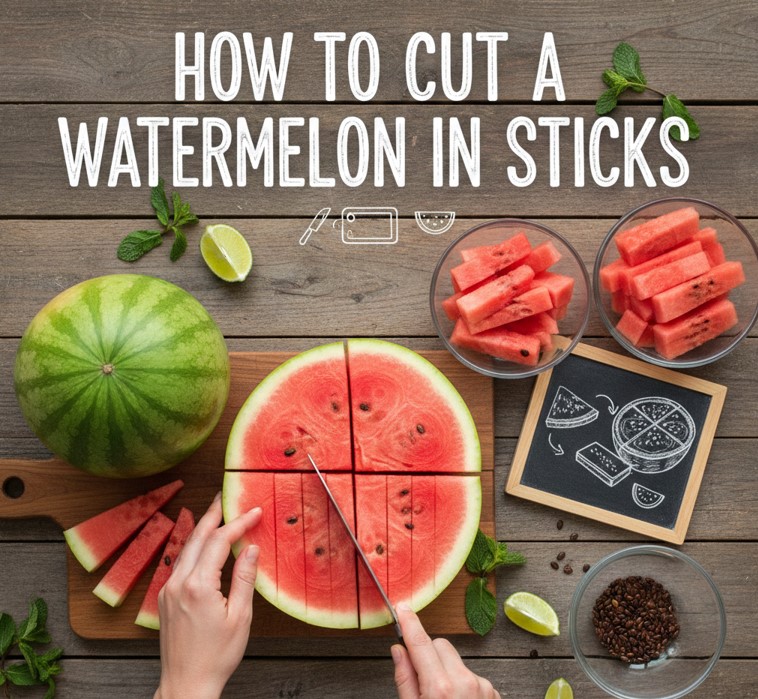
Watermelon sticks are ideal for kids, picnics, and mess-free snacking.
Stick-Style Watermelon Cutting Method
• Halve and Quarter First
Start by halving the watermelon, then cut each half into quarters for manageable sections.
• Remove the Rind Cleanly
Slice the rind away in one smooth motion, keeping flesh intact.
• Cut Lengthwise Strips
Slice flesh into evenly sized sticks, about 1–1.5 inches wide.
• Ensure Uniform Thickness
Consistent thickness helps sticks hold shape and prevents breaking.
• Ideal for Dips
Sticks pair well with yogurt, chocolate, or chili-lime seasoning.
• Great for Storage
Stick shapes stack easily in airtight containers.
Also Read:- How to Tell If Eggs Are Good: The Complete Safety & Freshness Guide
How to Cut a Watermelon in Triangles
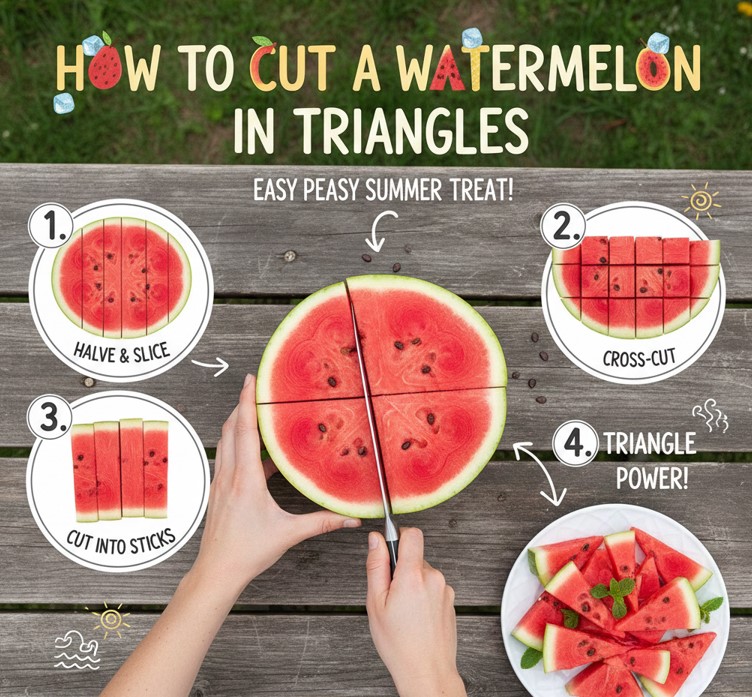
Triangles are classic, visually appealing, and perfect for casual serving.
Triangle-Style Watermelon Cutting Explained
• Slice into Rounds First
After halving, cut the watermelon into thick circular slices.
• Quarter Each Round
Cut each round into halves, then quarters, creating triangle wedges.
• Leave Rind On for Grip
The rind acts as a natural handle, reducing mess.
• Adjust Thickness for Age Group
Thinner triangles for kids, thicker for adults.
• Serve Fresh
Triangles dry faster than cubes, so serve soon after cutting.
• Perfect for BBQs
Easy to grab and eat outdoors.
Also Read:- How to Pronounce Gyro: The Complete, Accurate Guide You Can Trust
How to Cut a Watermelon Into Small Pieces
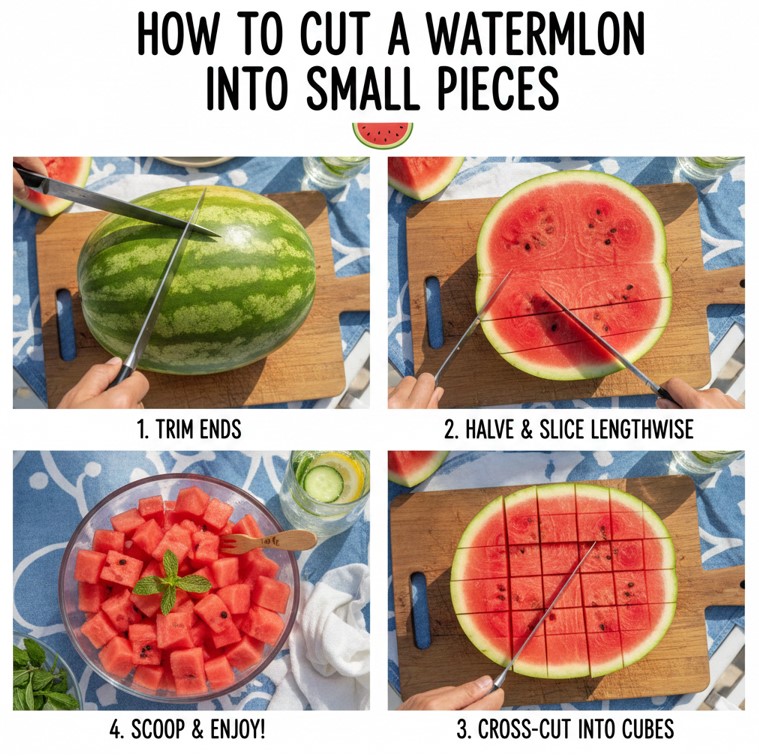
Small pieces are best for fruit salads, smoothies, and toddlers.
Techniques for Small Watermelon Pieces
• Remove Rind First
Always remove rind completely to ensure uniform bite-size pieces.
• Slice Into Slabs
Cut flesh into flat slabs before dicing.
• Grid-Style Cutting
Use straight, evenly spaced cuts for consistency.
• Monitor Juice Loss
Work quickly to prevent excessive juice pooling.
• Ideal for Mixed Fruits
Small pieces blend well with berries and citrus.
• Store Airtight
Small pieces dehydrate faster if left uncovered.
Also Read:- How to Parallel Park: The Complete Step-by-Step Guide for Beginners and Pros
How to Cut a Watermelon in Cubes
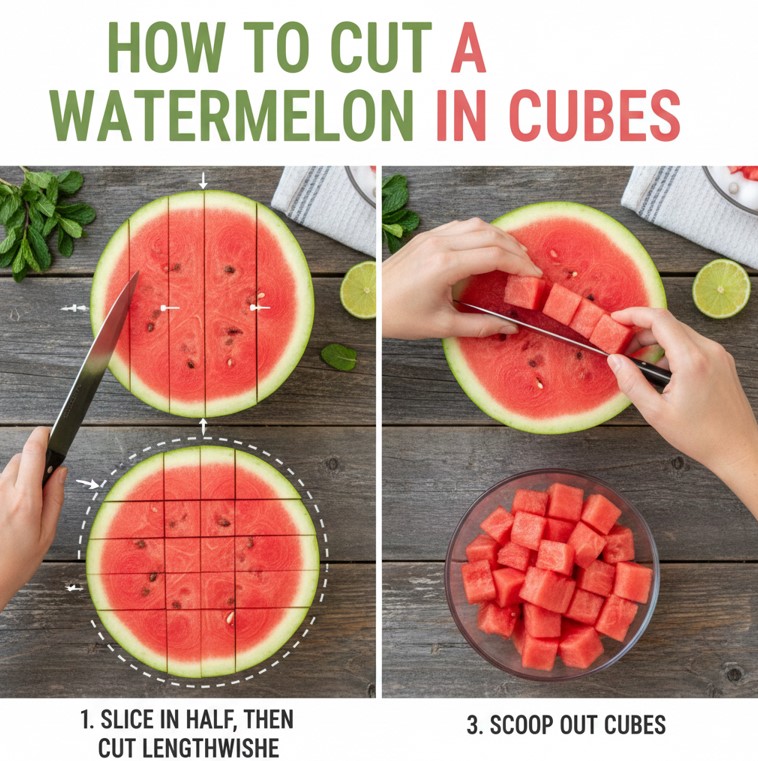
Cubed watermelon is versatile and widely used in recipes.
Cubing Watermelon Like a Pro
• Flat Base Is Essential
Always work from a stable base to ensure clean cubes.
• Cut into Uniform Slabs
Consistent slab thickness ensures even cubes.
• Vertical and Horizontal Cuts
Create a grid pattern for perfect cube shapes.
• Popular for Meal Prep
Cubes portion easily for lunches and snacks.
• Used in Salads & Salsas
Cube shape absorbs flavors evenly.
• Freeze for Smoothies
Cubed watermelon freezes well for blending.
Also Read:- How to Get Blood Out of Clothes (Complete Expert Guide)
How to Cut a Watermelon Into Slices
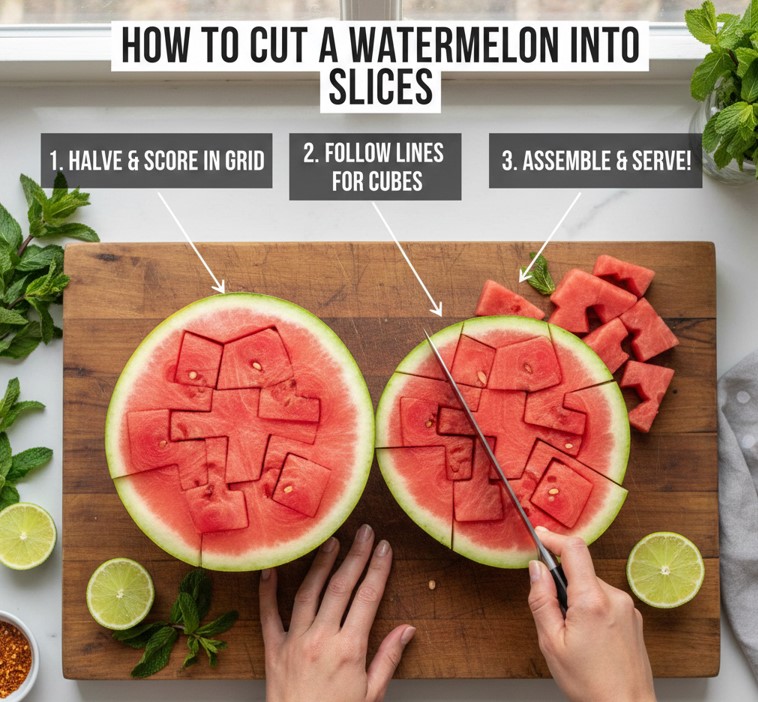
Slices are quick, traditional, and satisfying.
Slicing Watermelon Efficiently
• Halve Lengthwise First
This ensures even slice distribution.
• Slice Crosswise
Create thick or thin slices depending on preference.
• Leave Rind Attached
Makes slices easier to hold.
• Serve Immediately
Slices lose freshness faster than other cuts.
• Great for Large Groups
Fastest method for high-volume serving.
• Minimal Cleanup
Fewer cuts mean less mess.
Also Read:- How to Cut a Pomegranate (Complete Step-by-Step Guide)
Conclusion
Mastering how to cut a watermelon saves time, improves safety, and elevates presentation. Whether you need quick slices, party-ready cubes, or kid-friendly sticks, the right technique makes all the difference. With proper tools, preparation, and storage, watermelon becomes one of the easiest and most rewarding fruits to serve.
FAQs
What is the safest way to cut a watermelon?
Using a sharp knife, stable cutting board, and flat base minimizes risk.
How long does cut watermelon last?
Stored properly, cut watermelon lasts 3–4 days in the refrigerator.
Can you freeze watermelon?
Yes, especially cubed watermelon for smoothies.
For More Updates Visit: Biomagazine
