

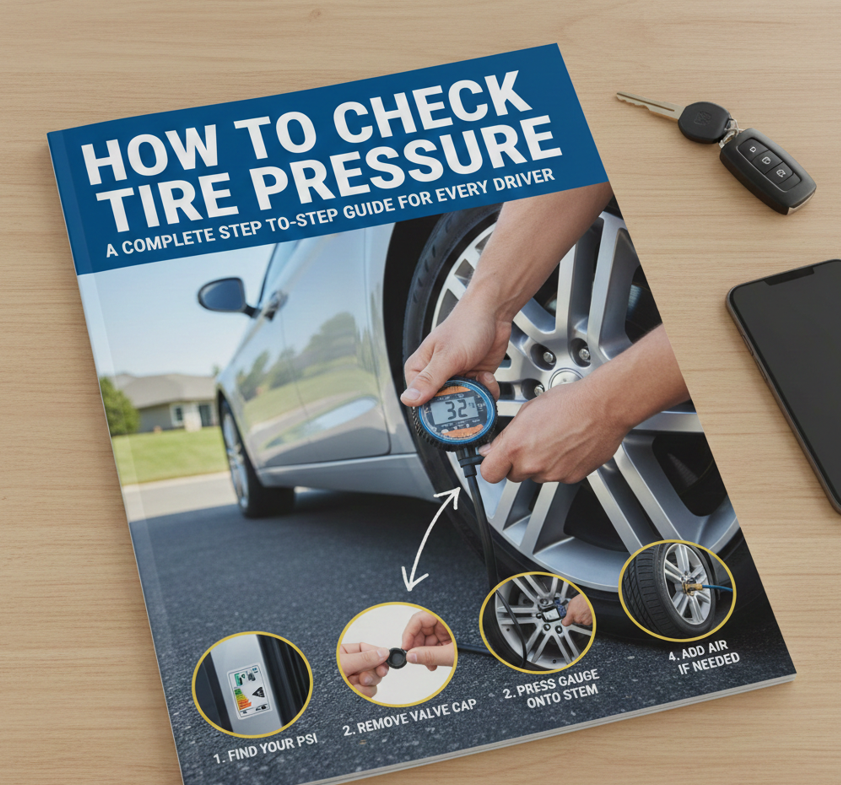
Understanding how to check tire pressure is one of the most important yet commonly ignored car maintenance skills for everyday drivers. Proper tire pressure directly affects fuel efficiency, braking performance, tire lifespan, and overall vehicle safety. Underinflated or overinflated tires can increase accident risks, cause uneven tire wear, and reduce control—especially during emergency situations.
Many drivers rely solely on warning lights or service centers, but learning how to check tire pressure yourself gives you control, saves money, and ensures your vehicle is always road-ready. Whether you drive a Honda Civic, Tesla, or any standard vehicle, this guide covers every method—from manual checks to dashboard systems and gas station tools.
This in-depth guide explains how to check tire pressure in real-world conditions, with actionable steps, expert insights, and modern vehicle examples—so you can drive confidently every time.
What Is Tire Pressure and Why It Is Important
Tire pressure refers to the amount of air inside your vehicle’s tires, measured in PSI (pounds per square inch). Maintaining correct tire pressure ensures that your tires make proper contact with the road, distribute weight evenly, and respond accurately to steering and braking inputs.
• Tire pressure affects fuel economy because underinflated tires create more rolling resistance, forcing the engine to work harder and burn more fuel over time.
• Correct pressure improves tire lifespan by preventing uneven tread wear, which commonly occurs when tires are too soft or too stiff.
• Properly inflated tires enhance vehicle handling, allowing better grip, stability, and safer braking during sudden stops or wet road conditions.
• Incorrect pressure increases the risk of tire blowouts, especially during high-speed driving or hot weather when air expands.
• Maintaining recommended PSI protects suspension components, as improperly inflated tires transfer excess stress to shocks and alignment systems.
• Tire pressure also impacts ride comfort, ensuring a smoother and more controlled driving experience for passengers.
Also Read: How to Make Heavy Cream at Home: Easy, Reliable Methods That Actually Work
Understanding Recommended Tire Pressure (PSI)
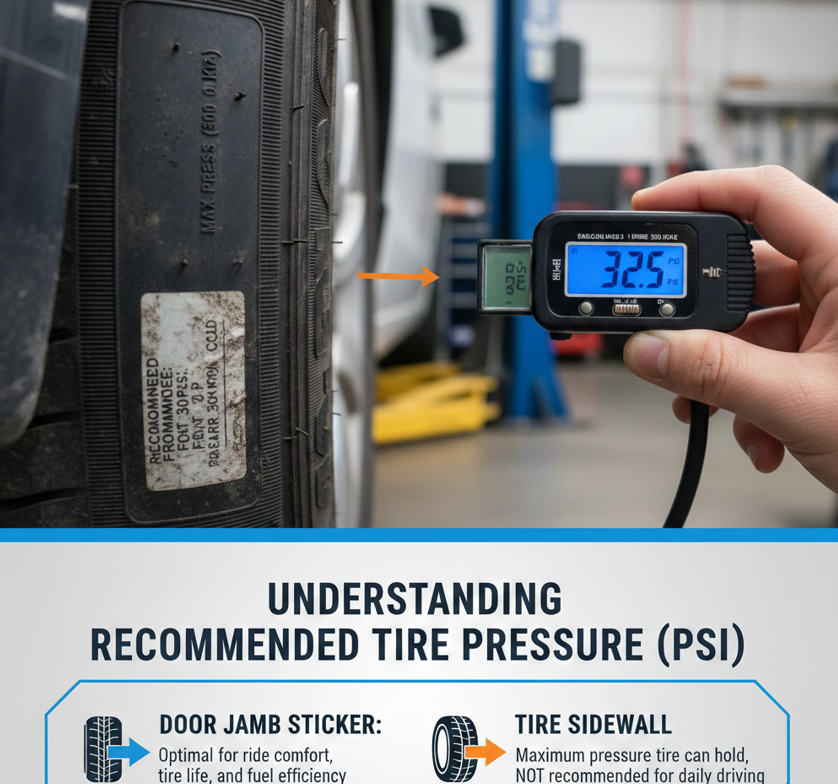
Recommended tire pressure is the manufacturer-specified PSI level that ensures optimal safety and performance for your specific vehicle model. This value is not a generic number and varies based on car type, weight, and tire size.
• The correct PSI is usually found on a sticker inside the driver-side door jamb, not on the tire itself, which only shows maximum pressure limits.
• Vehicle manufacturers test and determine PSI levels based on load balance, handling characteristics, and safety standards.
• Seasonal temperature changes can affect tire pressure, as colder air causes PSI to drop while hot air increases internal pressure.
• Driving with incorrect PSI can reduce braking efficiency, especially during emergency stops or sharp turns.
• Tire pressure recommendations may differ between front and rear tires, particularly in front-wheel or rear-wheel drive vehicles.
• Understanding PSI helps drivers adjust pressure accurately instead of guessing or relying on dashboard alerts alone.
Also Read: How to Cut a Watermelon: The Complete Practical Guide for Every Occasion
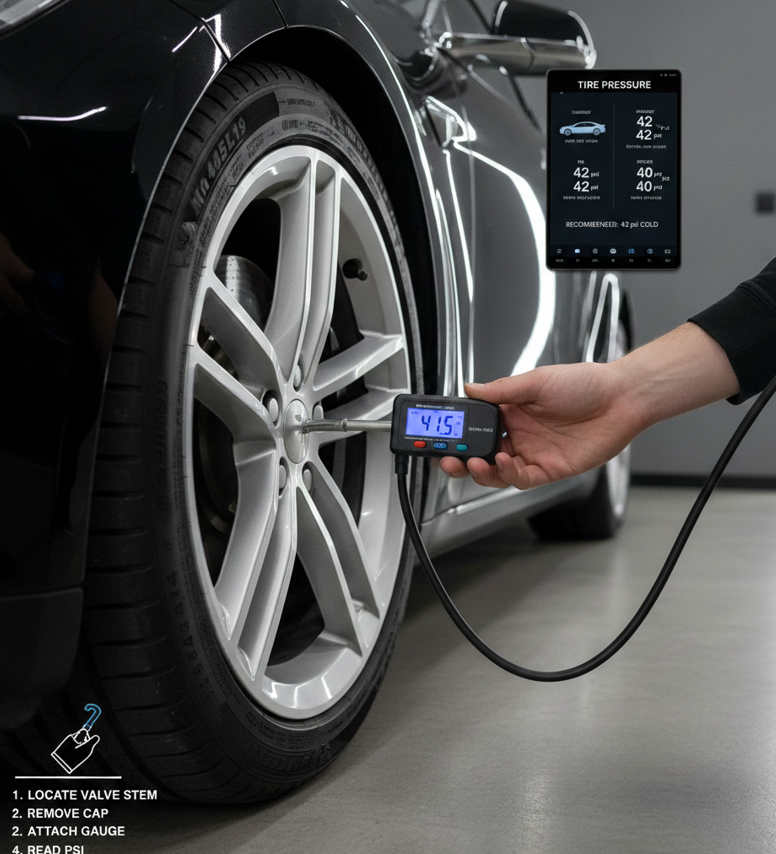
How to Check Tire Pressure Using a Tire Pressure Gauge
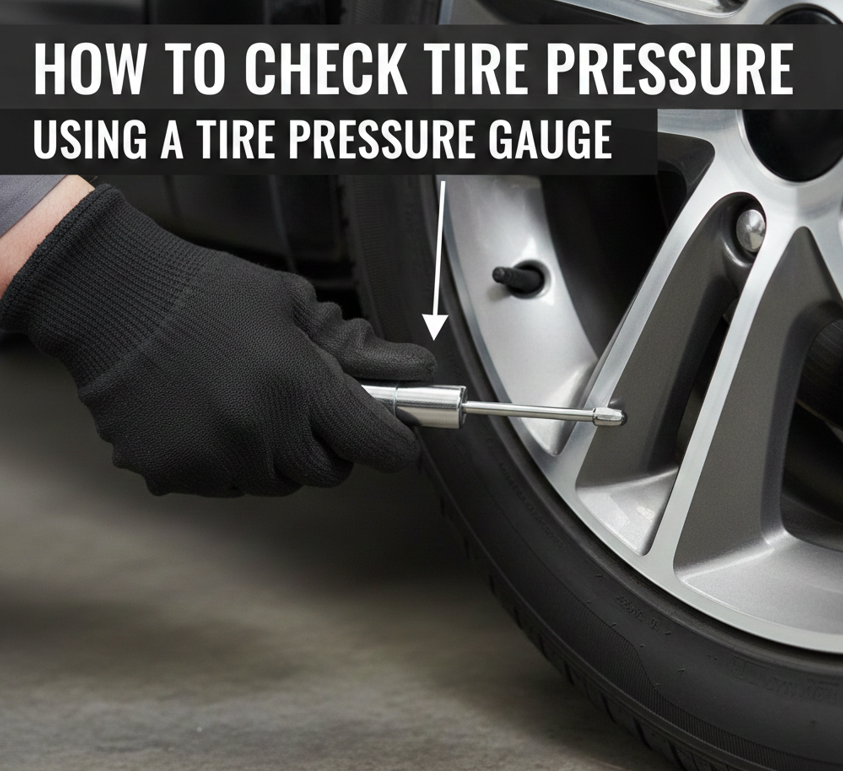
A tire pressure gauge is the most accurate and reliable tool for checking tire pressure at home or on the road. Gauges come in digital, dial, and pencil-style formats, all designed to measure PSI precisely.
• Ensure the tires are cold, ideally checked in the morning or after the car has been parked for at least three hours.
• Remove the valve cap and press the gauge firmly onto the valve stem to prevent air leakage during measurement.
• Read the PSI displayed on the gauge and compare it to the recommended pressure listed on your vehicle’s door sticker.
• Add air if the pressure is too low or release air gradually if the pressure is too high, checking repeatedly for accuracy.
• Repeat the process for all four tires, including the spare if applicable, as spare tires also lose pressure over time.
• Regular gauge checks help detect slow leaks early, preventing sudden tire failure while driving.
Also Read: How to Get Rid of a Stye Overnight: Proven Remedies That Actually Work
How to Check Tire Pressure Without a Gauge
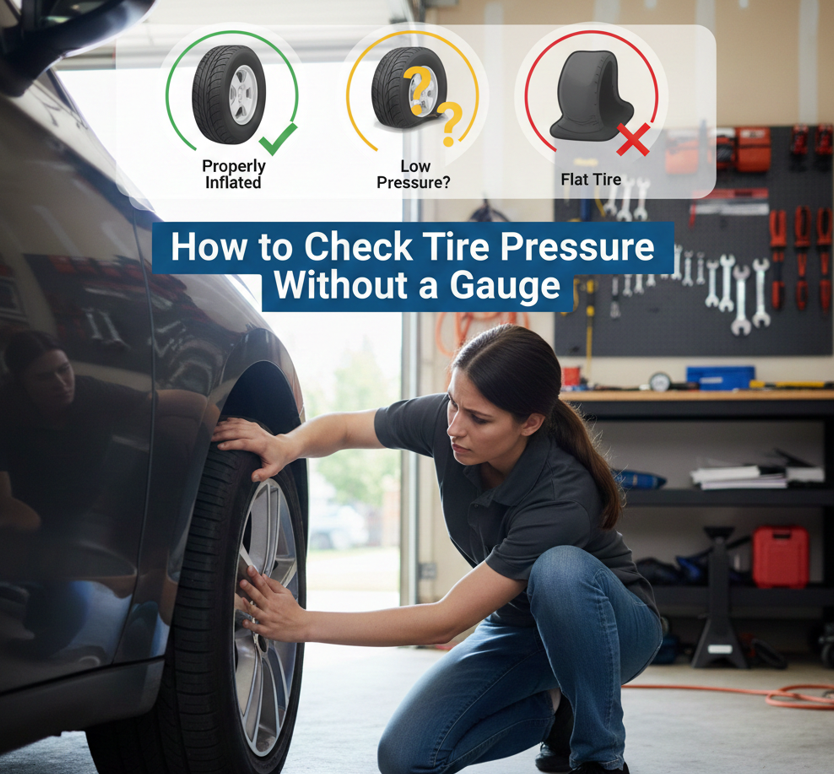
Checking tire pressure without a gauge is less precise but still possible in emergency situations or when tools are unavailable. While not a replacement for proper measurement, visual and physical methods can provide temporary awareness.
• Observe the tire’s sidewall and tread contact with the ground, as visibly sagging tires often indicate low pressure.
• Compare all four tires visually; uneven height or shape usually signals pressure imbalance between tires.
• Press down firmly on the tire with your foot—excessive softness may suggest underinflation.
• Listen for unusual road noise or vibrations while driving, which can indicate improper tire pressure.
• Monitor steering response, as low pressure often causes sluggish or heavy steering feel.
• Use this method only as a temporary assessment and confirm with a gauge as soon as possible.
Also Read: How to Make Cold Foam: The Complete Expert Guide for Coffee Lovers
How to Check Tire Pressure at a Gas Station
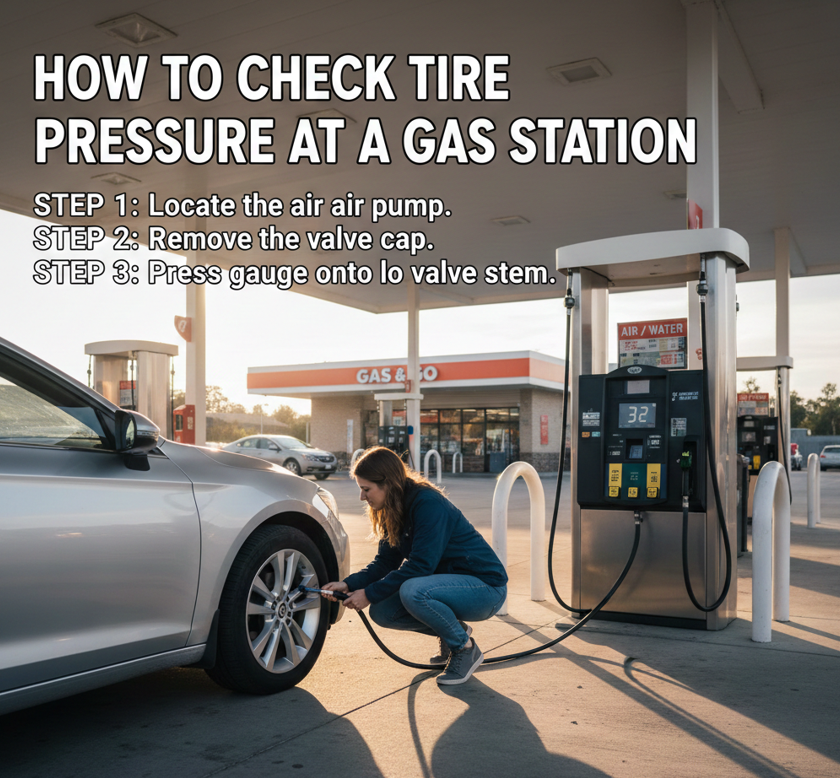
Gas stations commonly provide air pumps equipped with built-in pressure gauges, making them convenient for on-the-go tire checks. These machines are widely accessible and user-friendly.
• Park close enough to the air pump so the hose reaches all tires without straining the valve stems.
• Remove valve caps and attach the air hose securely to avoid pressure loss during reading.
• Use the pump’s gauge display to check current PSI before adding air.
• Inflate gradually, stopping frequently to recheck pressure and avoid overinflation.
• Adjust pressure according to manufacturer recommendations rather than relying on preset machine values.
• Replace valve caps securely after finishing to prevent dirt and moisture from entering the valve.
Also Read: How to Measure Ring Size: The Complete Step-by-Step Guide for Accurate Results
How to Check Tire Pressure on Dashboard (TPMS)
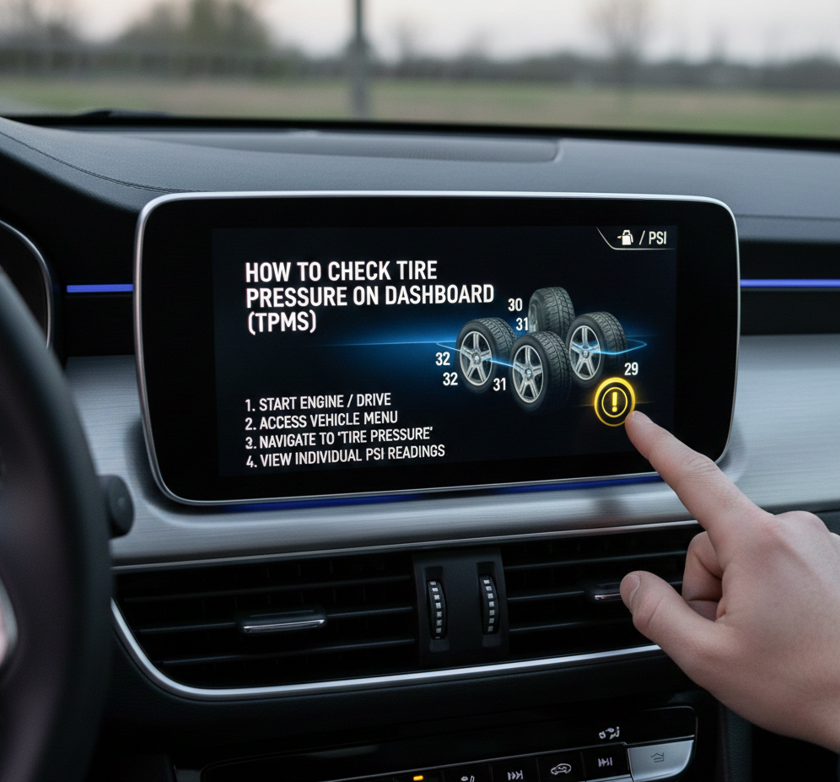
Modern vehicles use a Tire Pressure Monitoring System (TPMS) that alerts drivers when tire pressure drops below safe levels. While helpful, TPMS should not replace manual checks.
• TPMS sensors monitor air pressure electronically and trigger warning lights when pressure falls significantly.
• Dashboard readings provide general awareness but may not show exact PSI for each tire in all vehicles.
• TPMS alerts often activate only after pressure drops below a threshold, not during minor pressure loss.
• Temperature changes can trigger warning lights even when tires are properly inflated.
• Drivers should reset TPMS after adjusting tire pressure to ensure accurate future alerts.
• Manual checks remain essential for precise maintenance and long-term tire health.
Also Read: How to Tell If Eggs Are Good: The Complete Safety & Freshness Guide
How to Check Tire Pressure on a Honda Civic
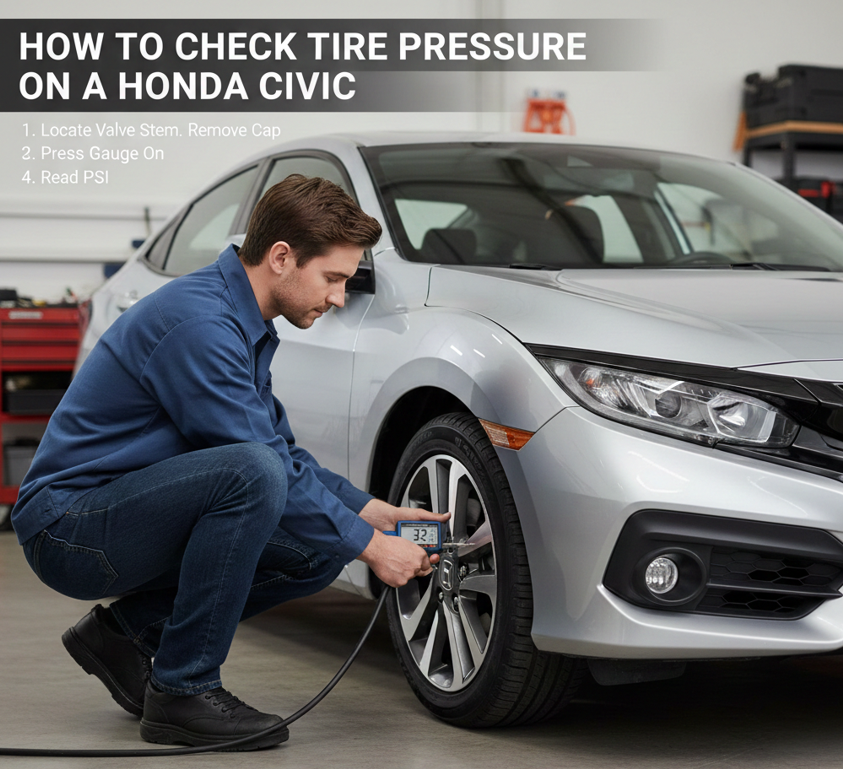
The Honda Civic includes both manual and electronic methods for monitoring tire pressure, depending on model year and trim level. Understanding these systems ensures accurate maintenance.
• Locate the recommended PSI on the driver-side door sticker specific to your Civic model.
• Use a tire pressure gauge for manual checks, especially before long drives or seasonal changes.
• Many Civic models use indirect TPMS, which measures wheel rotation differences rather than direct PSI.
• Reset the TPMS through the vehicle menu after inflating tires correctly.
• Dashboard alerts indicate imbalance but require manual verification for exact pressure levels.
• Regular checks improve fuel economy and preserve suspension alignment in Honda vehicles.
How to Check Tire Pressure on a Tesla
Tesla vehicles use advanced digital systems to display real-time tire pressure data directly on the touchscreen interface, offering unmatched convenience and accuracy.
• Access tire pressure readings through the Tesla touchscreen under the vehicle status menu.
• Tesla displays individual PSI values for each tire, allowing precise monitoring without tools.
• Pressure updates automatically while driving, offering real-time data rather than static readings.
• Cold weather may lower displayed PSI temporarily, requiring pressure adjustments accordingly.
• Tesla recommends checking pressure monthly and before long trips despite digital monitoring.
• Manual air inflation should still follow Tesla’s recommended PSI listed in the owner’s manual.
Common Tire Pressure Mistakes to Avoid
Many drivers unknowingly make tire pressure mistakes that compromise safety and performance. Awareness helps prevent long-term damage and driving risks.
• Inflating tires to the maximum PSI listed on the tire sidewall instead of manufacturer recommendations.
• Ignoring seasonal temperature changes that affect internal air pressure.
• Relying solely on TPMS warning lights instead of performing regular manual checks.
• Forgetting to check the spare tire, which can become unusable during emergencies.
• Overinflating tires to improve fuel economy, which reduces traction and ride comfort.
• Skipping pressure checks after tire rotation or alignment services.
Should You Check Tire Pressure
Frequency of tire pressure checks plays a critical role in maintaining consistent vehicle performance and safety throughout the year.
• Experts recommend checking tire pressure at least once a month under normal driving conditions.
• Additional checks should be performed before long road trips or carrying heavy loads.
• Seasonal transitions require extra attention due to temperature-related pressure changes.
• New tires should be monitored more frequently during the first few months of use.
• Older vehicles may require more frequent checks due to gradual valve and seal wear.
• Consistent monitoring prevents sudden pressure loss and unexpected roadside issues.
Conclusion:
Learning how to check tire pressure is a simple yet powerful skill that enhances safety, saves money, and improves vehicle longevity. Whether you’re checking tires at home, a gas station, without a gauge, or using advanced systems in vehicles like Honda Civic and Tesla, consistent monitoring ensures optimal performance.
By following expert recommendations and understanding your vehicle’s requirements, you can prevent accidents, improve fuel efficiency, and extend tire life—all while driving with confidence.
FAQs
Q: Can I check tire pressure when tires are hot?
It’s best to check when tires are cold, as heat increases PSI readings artificially.
Q: Is TPMS accurate enough on its own?
TPMS is helpful but should be supported with manual checks for precise pressure control.
Q: Does weather affect tire pressure?
Yes, tire pressure drops in cold weather and increases in hot temperatures.
For More Updates Visit: Biomagazine
