

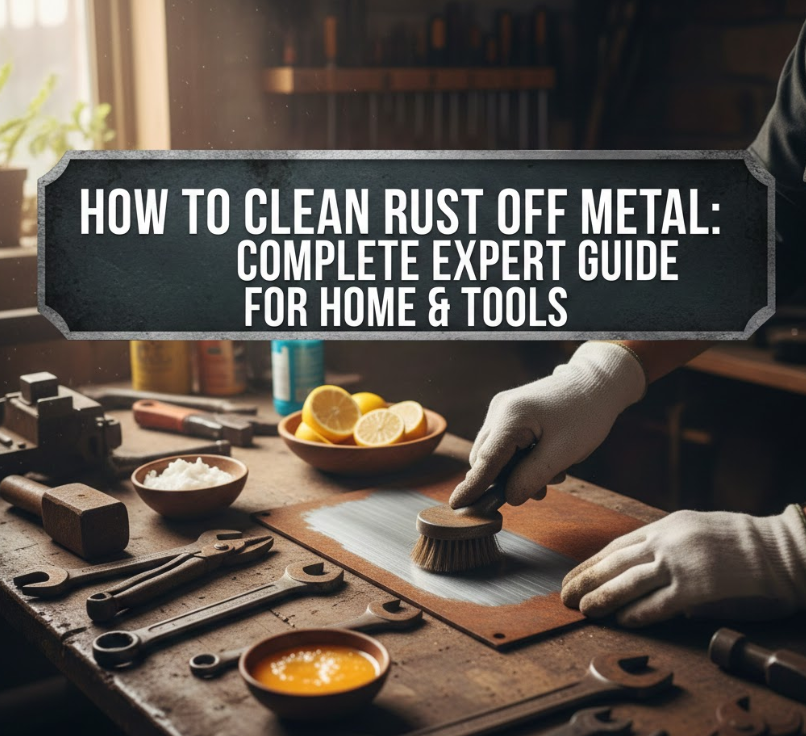
Rust is one of the most common and frustrating problems metal owners face. Whether it appears on household fixtures, tools, or fitness equipment, corrosion not only affects appearance but also weakens metal over time. Learning how to clean rust off metal properly can extend the life of your belongings, save money, and prevent permanent damage.
This comprehensive guide explains why rust forms, the science behind rust removal, and step-by-step solutions for cleaning rust from different metal surfaces. Drawing from practical experience, material science, and industry-accepted methods, this article gives you everything you need to remove rust safely and effectively—right at home.
What Is Rust and Why Does It Form on Metal?
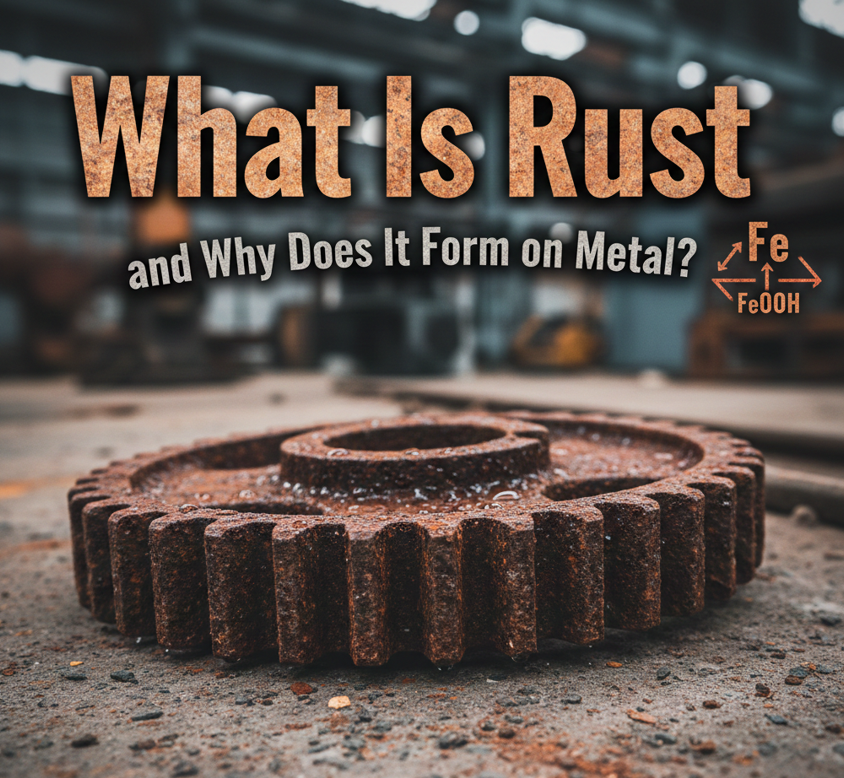
Rust is a form of corrosion that occurs when iron or iron-based metals react with oxygen and moisture over time. This chemical reaction creates iron oxide, which flakes, spreads, and gradually eats away at the metal surface.
Understanding Rust Formation
Rust develops when bare metal is exposed to air and water, triggering oxidation. Once started, rust accelerates because iron oxide allows more moisture to penetrate deeper layers. Without intervention, rust spreads and permanently weakens the metal structure.
Key Causes of Rust on Metal Surfaces
• Moisture exposure
Humidity, water splashes, and condensation create ideal conditions for oxidation. Even small amounts of trapped moisture can initiate rust formation over time.
• Lack of protective coating
Paint, oil, or plating acts as a barrier. When coatings wear off, metal becomes directly exposed to oxygen and moisture.
• Salt and chemicals
Salt speeds up corrosion by increasing electrical conductivity. This is why coastal areas and sweat-exposed gym equipment rust faster.
• Scratches and abrasions
Minor scratches remove protective layers, allowing rust to begin in localized spots and expand outward.
• Poor storage conditions
Leaving metal items outdoors or in damp basements significantly increases rust risk.
• Metal composition
Low-grade steel rusts faster than stainless or alloyed metals due to lower corrosion resistance.
Also Read:- How to Crochet a Blanket: A Complete Beginner-to-Expert Guide
How to Clean Rust Off Metal at Home
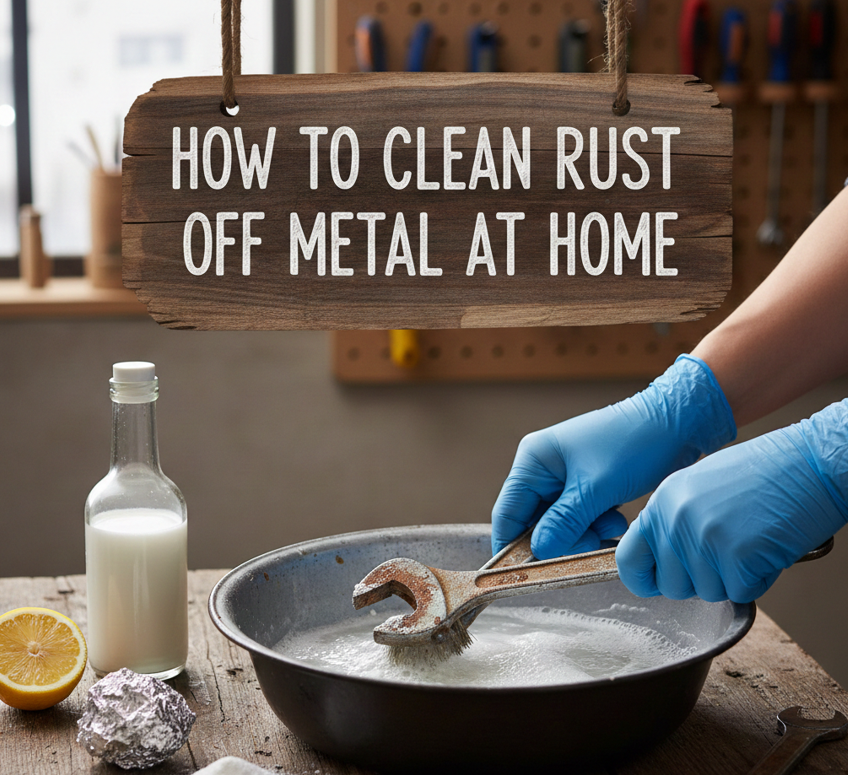
Removing rust at home is possible using simple ingredients and proper techniques. Many household items contain mild acids or abrasives that break down rust without damaging the metal beneath. Home rust removal relies on chemical reactions that dissolve iron oxide or mechanical friction that scrapes it away. When done correctly, these methods restore metal without harsh industrial chemicals.
Effective At-Home Rust Removal Methods
• White vinegar soaking
Vinegar’s acetic acid reacts with rust, loosening its bond to metal. Soaking items for several hours allows rust to dissolve naturally.
• Baking soda paste
Mixed with water, baking soda creates a mildly abrasive paste. It works well for light rust on delicate surfaces.
• Lemon juice and salt
Citric acid combined with salt accelerates rust breakdown. Sun exposure further enhances the reaction.
• Aluminum foil scrubbing
Aluminum reacts with rust and is softer than steel, reducing the risk of scratches during scrubbing.
• Potato and dish soap method
Oxalic acid in potatoes can loosen rust when combined with soap and friction.
• Steel wool for stubborn rust
Fine-grade steel wool removes thick rust layers when chemical methods are insufficient.
Also Read:- How to Skate: The Complete Step-by-Step Guide for Beginners and Beyond
How to Clean Rust Off Metal Shower Rod
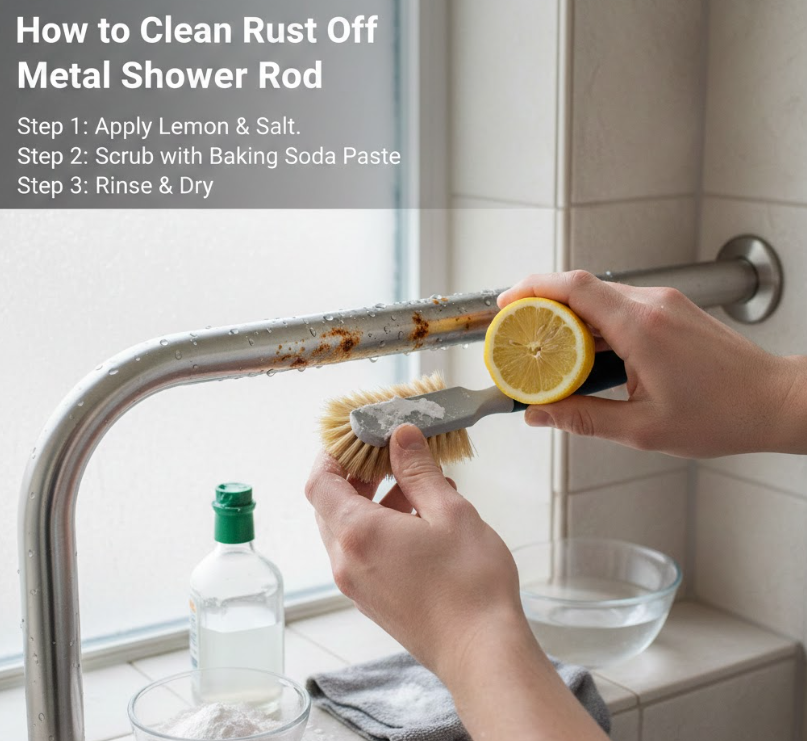
Shower rods rust due to constant exposure to moisture, steam, and cleaning chemicals. Addressing rust early prevents staining and structural weakening.
Rust on shower rods often forms at joints and scratches where moisture lingers. Proper cleaning restores appearance and prevents further corrosion in humid environments.
Best Methods for Shower Rod Rust Removal
• Vinegar spray treatment
Spray vinegar directly on rust spots and let sit for 30 minutes to break down oxidation.
• Baking soda scrub
Apply paste and gently scrub using a microfiber cloth to avoid scratching chrome finishes.
• Toothbrush detailing
Use an old toothbrush to clean rust from crevices and joints where buildup accumulates.
• Rinse and dry thoroughly
Water residue encourages new rust. Always dry completely after cleaning.
• Apply protective wax
A thin layer of car wax or mineral oil creates a moisture barrier.
• Switch to stainless steel rods
Long-term prevention includes upgrading to rust-resistant materials.
Also Read:- How to Read Tabs: A Complete Beginner-to-Advanced Guide
How to Clean Rust Off Metal Tools
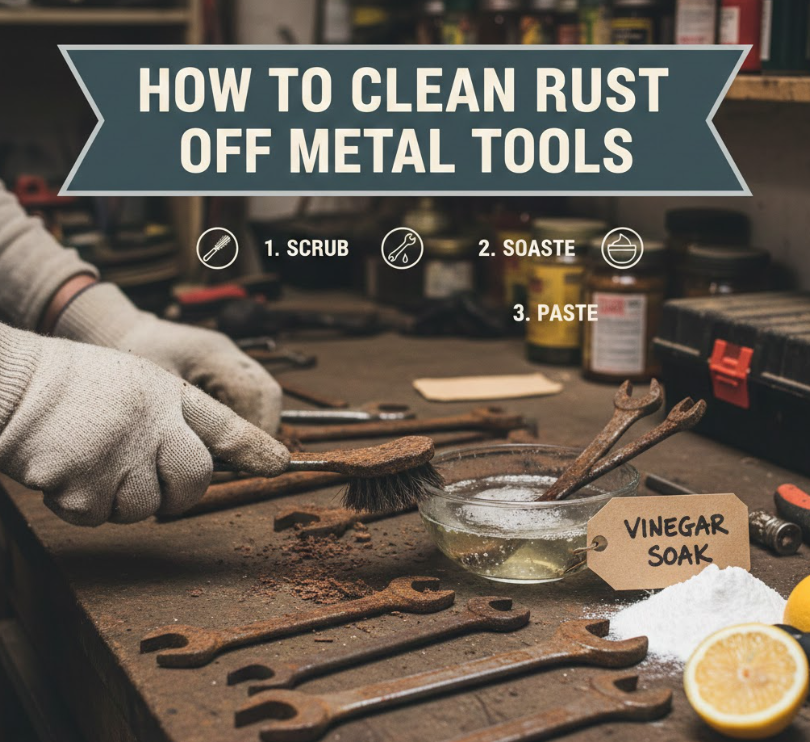
Rusty tools reduce efficiency, accuracy, and safety. Regular maintenance keeps tools functional and reliable.
Tool Rust Removal Explained
Tool rust develops from hand moisture, poor storage, and exposure to humidity. Removing rust restores sharpness and prevents joint failure.
Proven Tool Rust Removal Techniques
• Vinegar immersion
Soak hand tools overnight to dissolve rust without damaging hardened steel.
• Wire brushing
Manual brushing removes loosened rust after chemical treatment.
• Rust erasers
Specialized abrasive blocks remove rust while preserving metal shape.
• Lubrication after cleaning
Apply machine oil to prevent future moisture exposure.
• Sandpaper smoothing
Fine-grit sandpaper evens out surfaces after rust removal.
• Proper storage practices
Keep tools dry and store with silica gel or desiccants.
Also Read:- How to Clean Clams: The Complete, Safe, and Expert Seafood Guide
How to Clean Rust Off Metal Weights
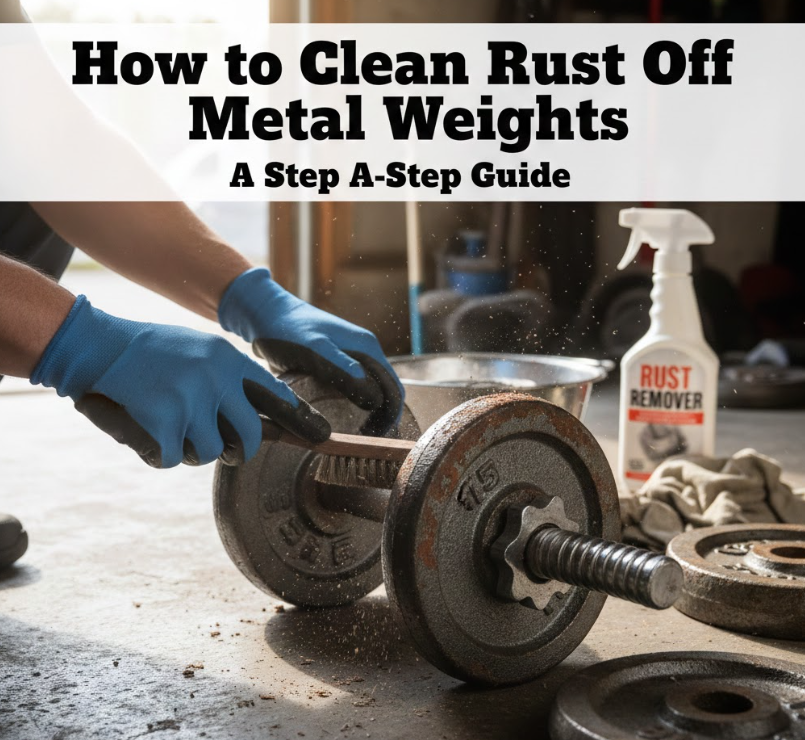
Metal weights rust due to sweat, humidity, and lack of protective coatings. Rust can stain floors and weaken equipment.
Weight Rust Removal Explained
Rust on weights forms rapidly due to salt from sweat. Removing rust improves grip, hygiene, and longevity.
Safe Rust Removal for Metal Weights
• Degreasing first
Remove oils and sweat residue before treating rust for better results.
• Vinegar wipe-down
Use soaked cloths instead of immersion to protect coatings.
• Nylon brushing
Avoid steel brushes that may damage weight surfaces.
• Neutralize acid residue
Rinse thoroughly to stop chemical reactions.
• Dry immediately
Moisture left behind accelerates re-rusting.
• Apply rust-inhibiting spray
Creates a protective barrier against sweat and humidity.
Also Read:- How to Love Yourself: A Complete Guide to Confidence, Healing, and Inner Peace
How to Clean Rust Off Metal Before Painting

Rust must be completely removed before painting to ensure adhesion and long-lasting results.
Pre-Painting Rust Removal Explained
Painting over rust traps corrosion underneath, causing paint failure. Proper preparation ensures smooth, durable finishes.
Steps for Rust Removal Before Painting
• Mechanical rust removal
Use sandpaper or wire brushes to remove loose rust.
• Chemical rust converters
Convert remaining rust into stable compounds.
• Surface degreasing
Remove oils that interfere with paint adhesion.
• Primer application
Rust-inhibiting primers protect exposed metal.
• Drying time adherence
Allow surfaces to cure fully before painting.
• Use quality paint systems
High-quality coatings resist moisture intrusion.
Also Read:- How to Clean Baby Ears: A Complete, Safe, and Parent-Approved Guide
Rust Prevention Tips for Long-Term Protection
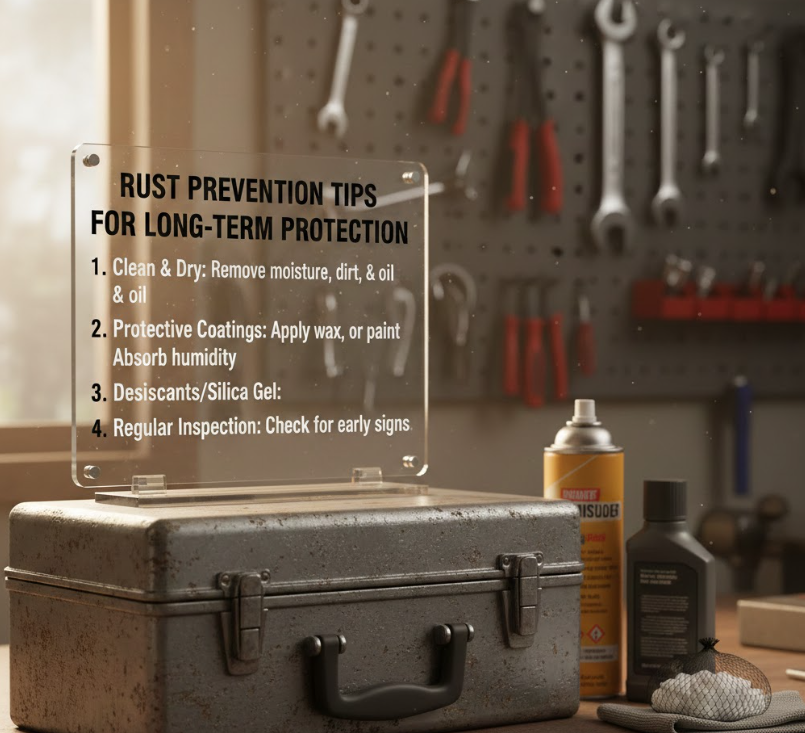
Preventing rust is easier than removing it. Proper care extends metal lifespan significantly.
Key Rust Prevention Strategies
• Control humidity
Use dehumidifiers in storage areas.
• Apply protective coatings
Paint, oil, or wax shields metal from moisture.
• Routine cleaning
Remove dirt and moisture regularly.
• Proper storage
Store metal items indoors when possible.
• Use corrosion-resistant metals
Stainless steel and alloys resist rust better.
• Inspect regularly
Early detection prevents major damage.
Also Read:- How Long Do Duck Eggs Take to Hatch? A Complete, Science-Based Guide
Conclusion
Understanding how to clean rust off metal empowers you to protect your tools, household fixtures, and equipment effectively. With the right techniques, household ingredients, and preventive care, rust can be removed safely and kept from returning. Whether cleaning tools, shower rods, weights, or prepping metal for paint, consistent maintenance ensures durability, safety, and long-term value
FAQs
Does vinegar damage metal?
When used correctly and rinsed thoroughly, vinegar is safe for most metals.
Can rust be permanently removed?
Yes, but untreated exposure can cause rust to return.
Is rust dangerous?
Rust itself isn’t toxic, but weakened metal can pose safety risks
For More Updates Visit: Biomagazine
