

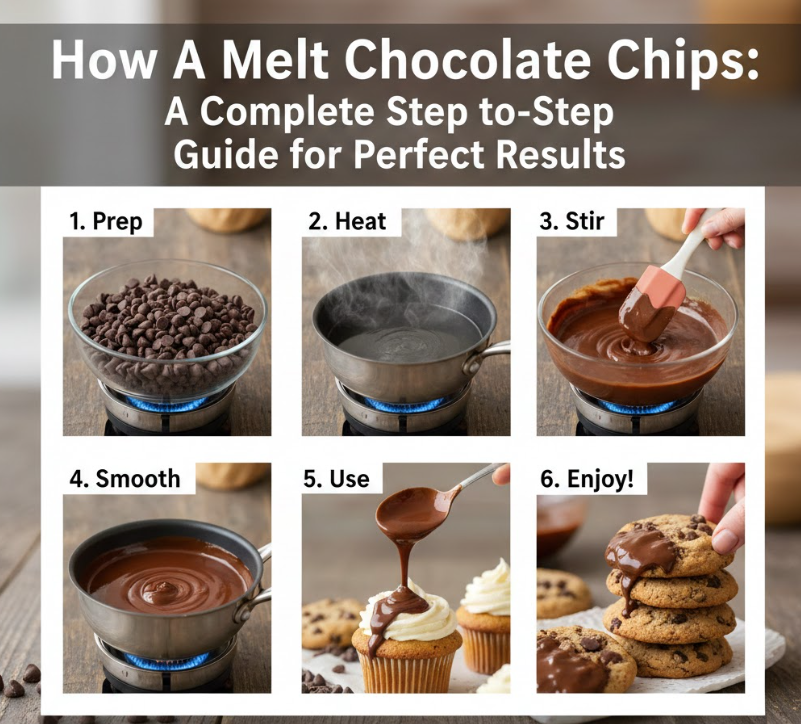
Melting chocolate chips may sound simple, but achieving smooth, glossy, and lump-free chocolate requires proper technique, temperature control, and an understanding of how chocolate behaves when heated. Whether you’re baking cookies, dipping strawberries, decorating cakes, or preparing ganache, knowing how to melt chocolate chips correctly can make or break your recipe.
Chocolate is sensitive to heat and moisture, and even small mistakes—like overheating or introducing water—can cause it to seize or burn. This comprehensive guide explains how to melt chocolate chips using multiple reliable methods, including the microwave, stovetop, and double boiler, while also addressing common challenges like melting without coconut oil or preparing chocolate specifically for dipping.
By the end of this guide, you’ll have expert-level confidence in melting chocolate chips smoothly and consistently, no matter your kitchen setup or recipe needs.
Understanding Chocolate Chips and How They Melt
Chocolate chips are specifically designed to hold their shape during baking, which means they contain stabilizers that make melting slightly more challenging than melting chocolate bars. Understanding this composition is essential for achieving a silky texture.
Chocolate chips melt best when heated gently and evenly. Unlike compound chocolate, real chocolate chips contain cocoa butter, which melts within a narrow temperature range. Overheating can cause the cocoa butter to separate, leading to a grainy or thick consistency.
Proper melting requires patience, low heat, and constant monitoring. This foundational knowledge applies to all melting methods discussed throughout this article and helps prevent common issues like scorching or clumping.
How to Melt Chocolate Chips in Microwave
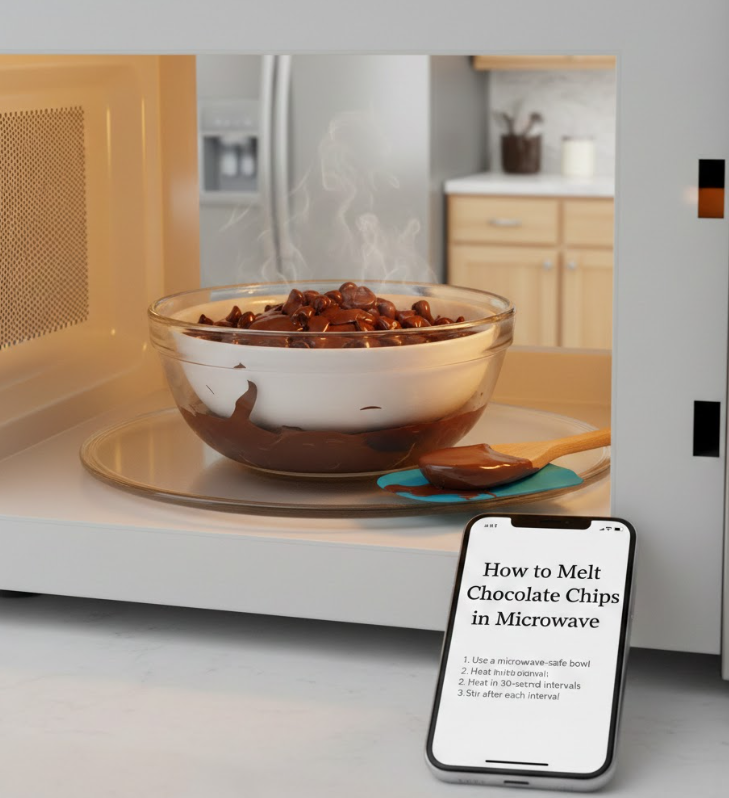
Melting chocolate chips in the microwave is one of the fastest and most convenient methods, especially for home bakers. However, it also carries the highest risk of overheating if not done carefully.
Using short intervals and stirring frequently allows the residual heat to finish the melting process gently. This method is ideal for quick tasks such as drizzling, mixing into batters, or making quick chocolate sauces.
Key Principles of Microwave Melting
. Microwave heat is uneven, so chocolate chips must be stirred regularly to distribute heat and prevent hot spots
. Lower power settings help reduce the risk of burning and maintain chocolate’s smooth texture
. Residual heat continues melting chocolate even after removing it from the microwave
Step-by-Step Microwave Method
. Place chocolate chips in a microwave-safe, dry glass or ceramic bowl
. Heat on 50% power for 20–30 seconds at a time to prevent overheating
. Stir thoroughly after each interval, even if the chips look unchanged
Preventing Burnt or Grainy Chocolate
. Stop microwaving when most chips are melted and allow stirring to finish the process
. Avoid adding water or cold liquids, which can cause chocolate to seize instantly
. If chocolate thickens, gently stir in warm cream or butter to restore smoothness
Also Read:- How to Induce Vomiting in Dogs: A Safe, Vet-Backed Guide for Pet Owners
How to Melt Chocolate Chips for Dipping
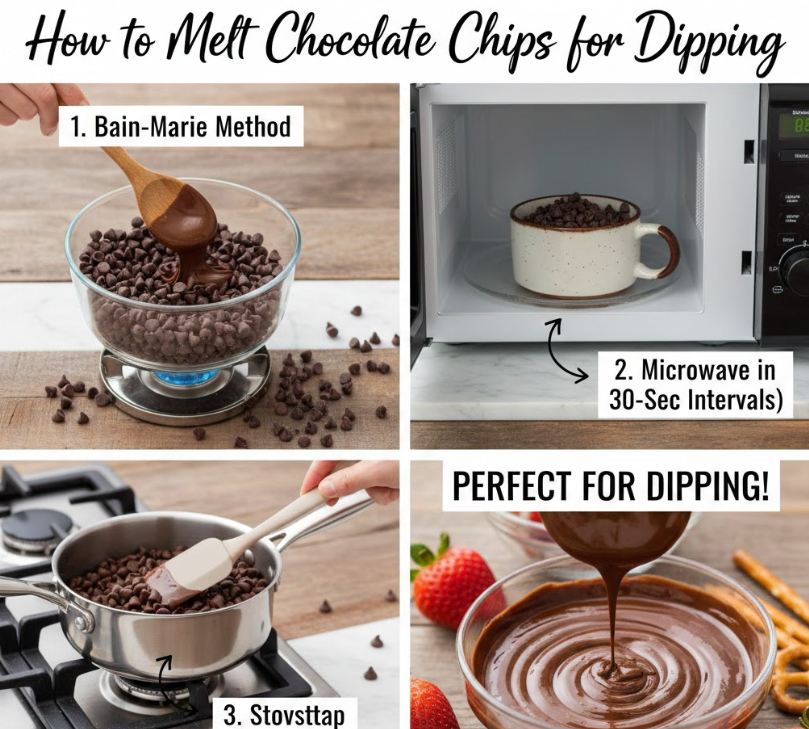
Melting chocolate chips for dipping requires special attention to texture and viscosity. The goal is to create chocolate that flows smoothly and coats items evenly without being too thick or too thin.
This method is commonly used for strawberries, pretzels, cookies, cake pops, and truffles. Achieving the right consistency ensures professional-looking results and better flavor release.
Why Texture Matters for Dipping
. Chocolate that is too thick creates uneven coatings and excess buildup
. Overheated chocolate loses its shine and sets with a dull appearance
. Properly melted chocolate adheres smoothly and hardens evenly
Preparing Chocolate for Dipping
. Melt chocolate slowly using a microwave or double boiler for better control
. Stir continuously to maintain even temperature and smooth texture
. Keep chocolate warm but not hot during the dipping process
Improving Flow Without Ruining Chocolate
. Add small amounts of warm heavy cream or cocoa butter if needed
. Avoid vegetable oils that affect flavor and setting quality
. Maintain chocolate temperature between 88–92°F for best dipping results
Also Read:- How to Grow Sweet Potatoes: A Complete Home Gardener’s Guide
How to Melt Chocolate Chips on Stove
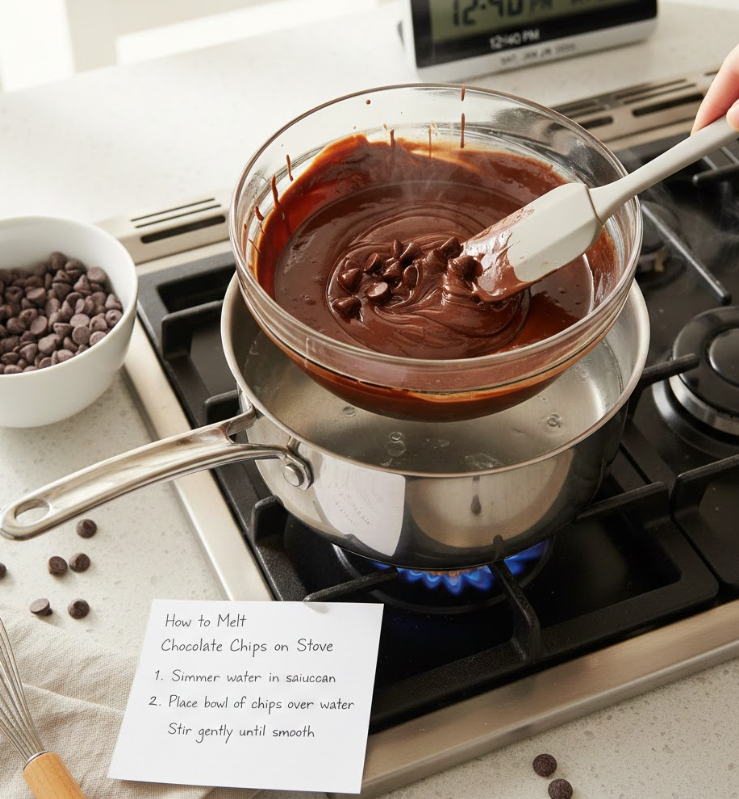
Melting chocolate chips on the stovetop offers better control than a microwave but requires more attention. This method works well for larger quantities or recipes that demand precision.
Direct heat must be avoided, as chocolate burns easily. A low-heat approach ensures gradual melting while preserving flavor and texture.
Benefits of Stovetop Melting
. Provides consistent heat when managed carefully
. Ideal for larger batches of chocolate
. Allows better control over final consistency
Proper Stovetop Technique
. Use a heavy-bottom saucepan to prevent hot spots
. Set heat to the lowest possible setting
. Stir continuously to prevent scorching
Common Stovetop Mistakes
. Heating too quickly causes chocolate to seize or burn
. Leaving chocolate unattended leads to uneven melting
. Introducing steam or water ruins texture immediately
Also Read:- How to Freeze Green Beans: Complete Step-by-Step Guide for Long-Term Freshness
How to Melt Chocolate Chips Without Coconut Oil
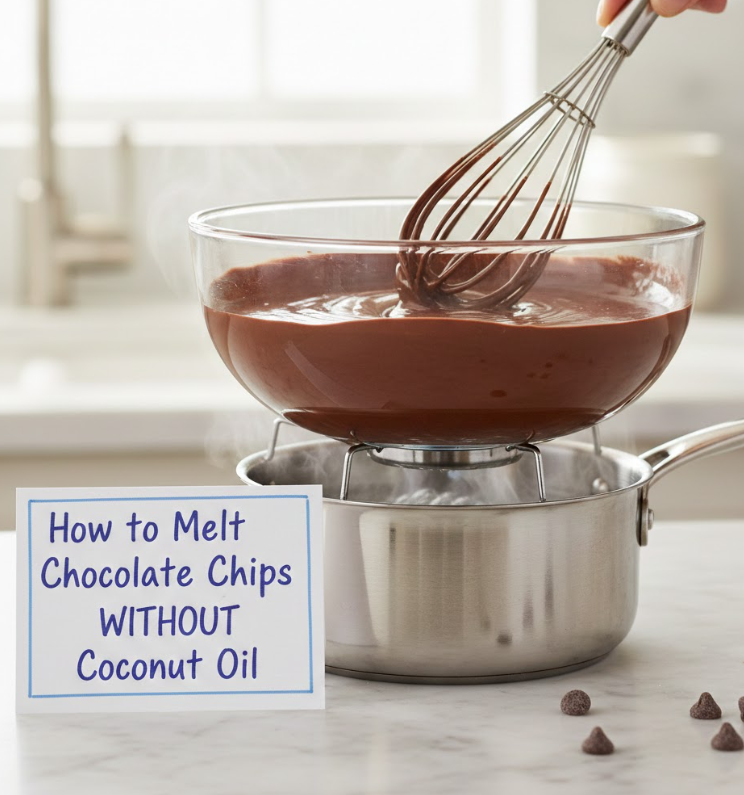
Many recipes suggest adding coconut oil to thin melted chocolate, but it’s not necessary and may alter flavor or texture. Chocolate chips can melt smoothly without added fats when handled correctly.
Understanding how cocoa butter behaves allows you to achieve a natural melt without compromising taste or quality.
Why Coconut Oil Is Often Used
. Helps thin chocolate for dipping or drizzling
. Adds shine but may change flavor
. Softens chocolate set at room temperature
Alternatives to Coconut Oil
. Use gentle heat and proper stirring instead of additives
. Add warm cream or butter only when making ganache
. Choose high-quality chocolate chips with higher cocoa butter content
Achieving Smooth Chocolate Naturally
. Melt slowly to preserve cocoa butter structure
. Stop heating early and let residual heat finish melting
. Stir patiently for a glossy, natural finish
Also Read:- How to Delete DoorDash Account: Complete Step-by-Step Guide (2026)
How to Melt Chocolate Chips in a Double Boiler
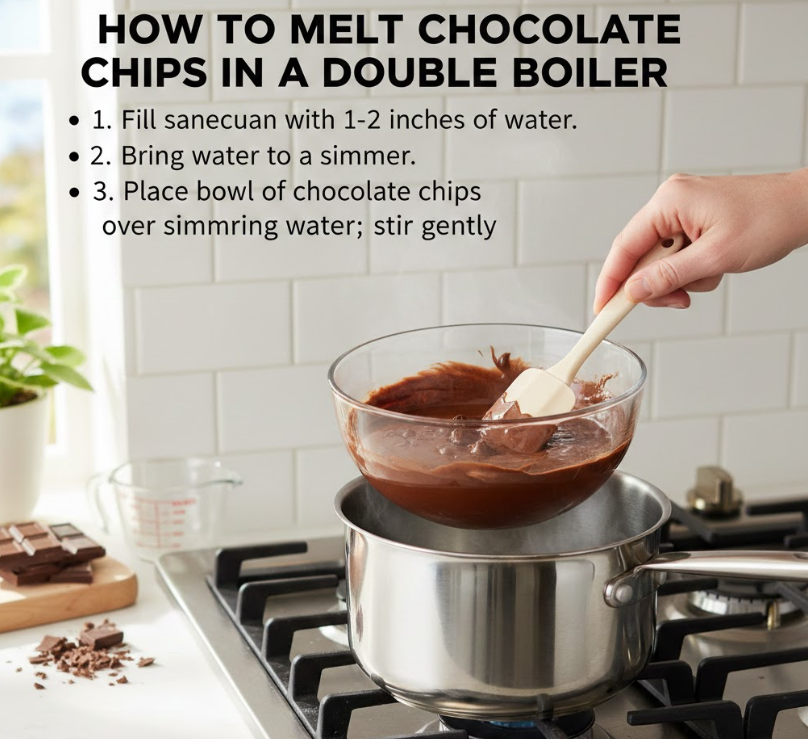
The double boiler method is considered the safest and most professional way to melt chocolate chips. It uses indirect heat, reducing the risk of burning or seizing.
This technique is ideal for tempering chocolate, making ganache, or preparing large quantities for baking and dipping.
How a Double Boiler Works
. Steam gently heats the bowl without direct contact
. Temperature remains stable and controlled
. Chocolate melts evenly and slowly
Step-by-Step Double Boiler Method
. Fill a saucepan with a few inches of water and bring to a simmer
. Place a heat-safe bowl on top without touching the water
. Add chocolate chips and stir constantly until melted
Tips for Best Results
. Keep water at a gentle simmer, not a boil
. Ensure bowl stays completely dry
. Remove chocolate from heat before fully melted and stir to finish
Also Read:- How to Clean Rust Off Metal: Complete Expert Guide for Home & Tools
Common Problems When Melting Chocolate Chips (And Fixes)
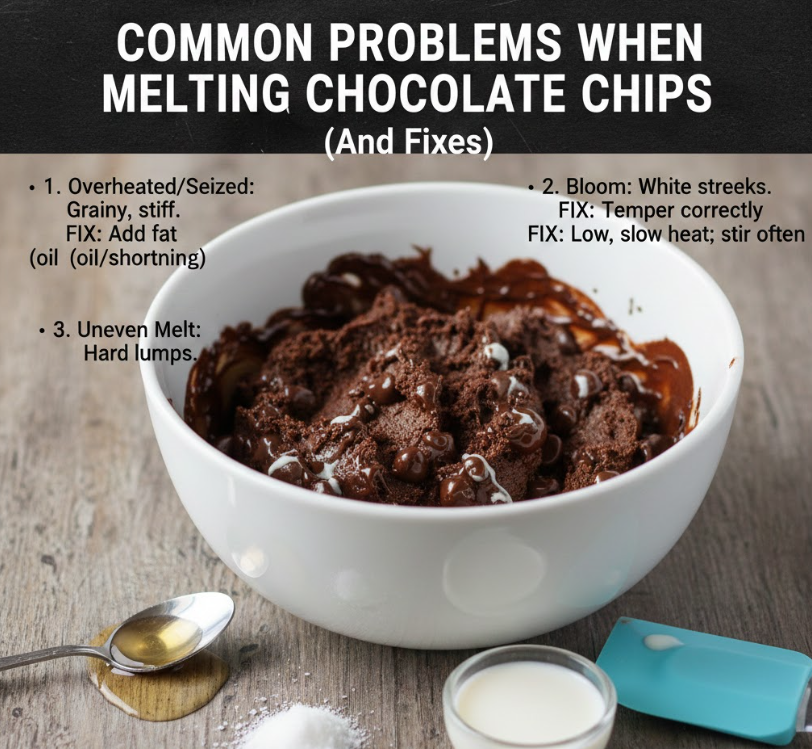
Even experienced bakers encounter issues when melting chocolate. Understanding common problems helps you fix them quickly and avoid waste.
. Chocolate seizes when moisture is introduced—fix with warm fat
. Chocolate burns when overheated—always melt slowly
. Grainy texture indicates temperature shock—stir gently and add warmth
Best Chocolate Chips for Melting
Not all chocolate chips melt the same way. Choosing the right type improves both flavor and texture.
. Semi-sweet chocolate chips balance sweetness and melting ease
. Dark chocolate melts smoothly due to higher cocoa butter
. Milk chocolate melts faster but burns more easily
Also Read:- How to Crochet a Blanket: A Complete Beginner-to-Expert Guide
Conclusion: Mastering How to Melt Chocolate Chips
Learning how to melt chocolate chips properly is a foundational kitchen skill that elevates baking, decorating, and dessert preparation. Whether you choose the microwave for convenience, the stovetop for control, or the double boiler for precision, the key is gentle heat, patience, and constant stirring.
By following the techniques in this guide, you’ll consistently achieve smooth, glossy chocolate that enhances both flavor and presentation. With practice, melting chocolate chips becomes second nature—and your desserts will reflect that mastery.
FAQs
Can you melt chocolate chips directly in a pan?
Yes, but only on very low heat with constant stirring to prevent burning.
Why won’t my chocolate chips melt smoothly?
This usually happens due to overheating or moisture exposure.
Can melted chocolate chips harden again?
Yes, properly melted chocolate will set again once cooled
For More Updates Visit: Biomagazine
