

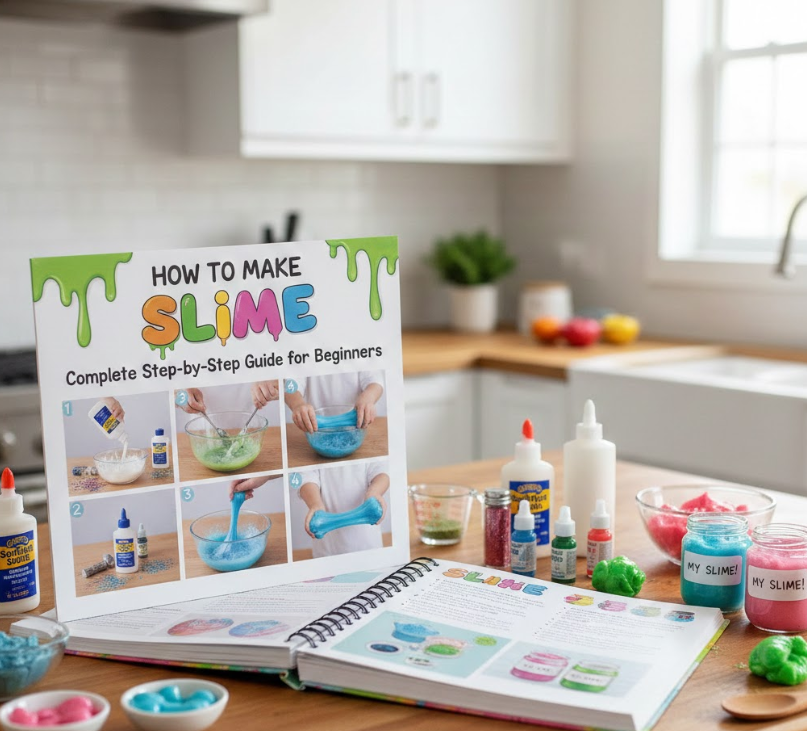
Slime has become one of the most popular DIY activities for kids, parents, teachers, and even adults who enjoy stress-relief crafts. If you’re searching for how to make slime, you’re not alone—millions of people around the world look for safe, affordable, and easy slime recipes every year. Slime is fun, stretchy, customizable, and surprisingly educational, helping children learn about textures, measurements, and simple chemistry concepts.
This in-depth guide explains how to make slime using multiple methods, including recipes without activator, without glue, with glue, and tips on how to make slime less sticky. Every method is explained clearly so beginners can follow along with confidence, while still offering expert-level insights that ensure safety, quality, and consistency.
Whether you’re making slime for a school project, sensory play, party activity, or just for fun, this guide will help you create perfect slime every time.
How to Make Slime Without Activator
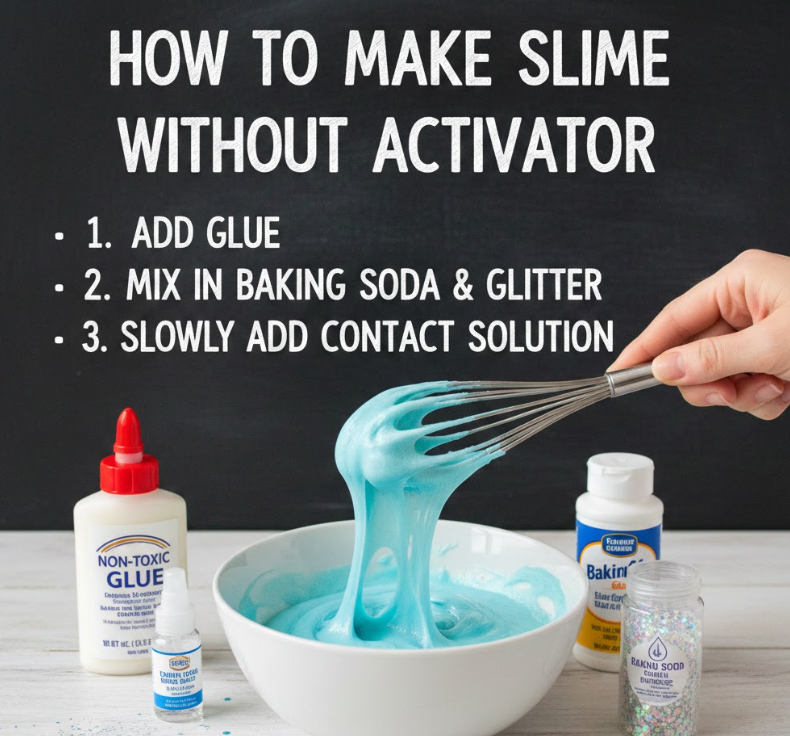
Making slime without a chemical activator is one of the safest and most beginner-friendly approaches, especially for younger children. Many parents prefer this method because it uses everyday household items while still producing a stretchy, enjoyable texture.
Slime without activator relies on natural thickeners and controlled moisture balance rather than borax or contact lens solution. The result is a soft, pliable slime that is easy to handle and safe for supervised play.
Why Slime Without Activator Works
• Natural thickening agents replace chemical reactions
Instead of relying on boron compounds, this method uses ingredients like cornstarch or flour that absorb moisture gradually. This creates resistance between particles, forming a slime-like consistency that feels smooth and moldable. Over time, the mixture thickens naturally, making it easier to control the final texture.
• Safer for children and sensitive skin
Activator-free slime significantly reduces the risk of skin irritation or allergic reactions. This makes it ideal for classrooms, toddlers (with supervision), and people with sensitive skin. Parents can feel more confident allowing hands-on play without worrying about harsh ingredients.
• Easy ingredient availability
Most activator-free slime recipes require items already found in kitchens, such as water, cornstarch, shampoo, or food coloring. This accessibility makes slime-making spontaneous and budget-friendly, without the need for specialty supplies.
• Encourages experimentation and creativity
Without strict chemical ratios, children can freely adjust texture and color. This open-ended process helps develop problem-solving skills as kids learn how small changes affect slime consistency and elasticity.
• Less risk of over-activating the slime
Traditional slime can quickly become rubbery if too much activator is added. Activator-free slime thickens slowly, giving you more control and reducing the chance of ruining the mixture.
• Ideal for short-term play
While this slime may not last as long as traditional slime, it’s perfect for same-day play. The texture remains soft and enjoyable for hours, making it great for parties, classrooms, or quick creative sessions.
Also Read:- How to Take a Screenshot on a Chromebook: Complete Step-by-Step Guide
How to Make Slime Without Glue
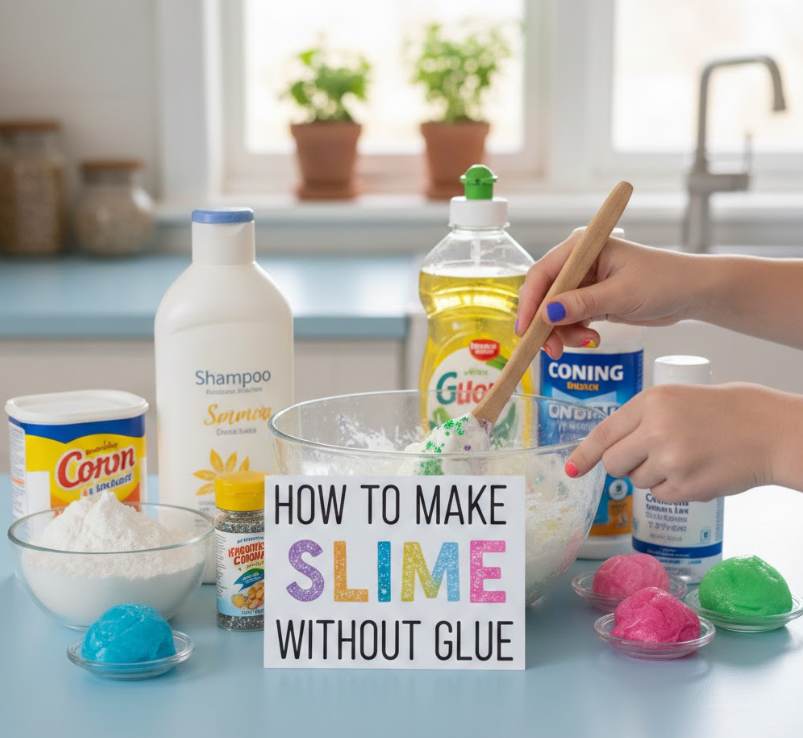
Learning how to make slime without glue is perfect for people who want a completely alternative approach using cosmetic or pantry items. Glue-free slime is especially popular because it avoids adhesives while still delivering satisfying stretch and softness.
This type of slime relies on thick personal care products such as shampoo or body wash, combined with stabilizers like salt or cornstarch.
Understanding Glue-Free Slime Texture
• Shampoo acts as the base polymer
Thick shampoos already contain long molecules that mimic the elasticity of glue. When combined with gentle thickening agents, these molecules interact to create a slime-like structure that stretches without breaking easily.
• Salt strengthens molecular bonding
Adding small amounts of salt changes the structure of shampoo, making it firmer and less watery. This gradual thickening allows you to stop once the slime reaches the perfect consistency, avoiding stiffness.
• Cornstarch adds body and control
Cornstarch absorbs excess moisture, helping transform liquid shampoo into a soft dough-like slime. This improves handling and reduces mess, especially for younger users.
• Great for sensory play
Glue-free slime often has a creamier, softer feel than traditional slime. This texture is calming and ideal for sensory activities, stress relief, or occupational therapy settings.
• Lower mess and easier cleanup
Because glue-free slime contains water-soluble ingredients, cleanup is much simpler. Residue washes away easily from hands, surfaces, and fabrics with warm water.
• Customizable scent and color
Using scented shampoos allows slime to smell pleasant without artificial fragrances. Food coloring or cosmetic pigments can be added to enhance visual appeal without affecting texture.
Also Read:- How to Stop Hiccups: Complete Guide to Fast, Safe, and Proven Relief
How to Make Slime With Glue
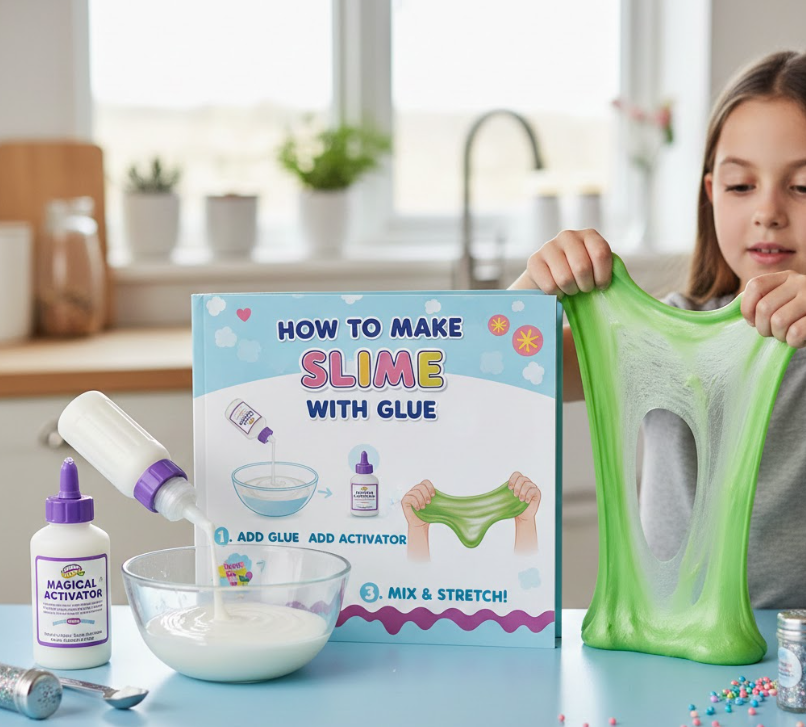
Traditional glue slime remains the most popular method due to its durability, stretch, and professional texture. If you want long-lasting slime that behaves like store-bought versions, learning how to make slime with glue is essential.
This method relies on a controlled chemical reaction between glue polymers and an activator, creating a strong yet flexible slime structure.
Why Glue-Based Slime Is So Effective
• Glue provides strong polymer chains
White school glue and clear glue contain long chains of molecules that form the backbone of slime. When activated, these chains link together, producing elasticity and strength that non-glue slimes cannot match.
• Activator creates controlled cross-linking
Contact lens solution or borax introduces borate ions that connect glue polymers evenly. This cross-linking gives slime its signature stretch without making it brittle or stiff when mixed correctly.
• Highly customizable texture
Glue slime can be adjusted to be fluffy, glossy, crunchy, or buttery. Add-ins like shaving cream, clay, or foam beads allow endless variations while maintaining structure.
• Longer shelf life
Properly stored glue slime can last weeks. Airtight containers prevent moisture loss, keeping the slime soft and stretchy over time.
• Ideal for advanced slime techniques
Clear slime, glitter slime, galaxy slime, and crunchy slime all rely on glue as the base. This method offers the most creative freedom for experienced slime makers.
• Predictable and repeatable results
Once you understand ratios, glue slime produces consistent outcomes. This makes it suitable for demonstrations, workshops, and educational experiments.
Also Read:- How to Program a Garage Door Opener: Step-by-Step Guide for Remotes, LiftMaster, Cars, and Keypads
How to Make Slime Less Sticky
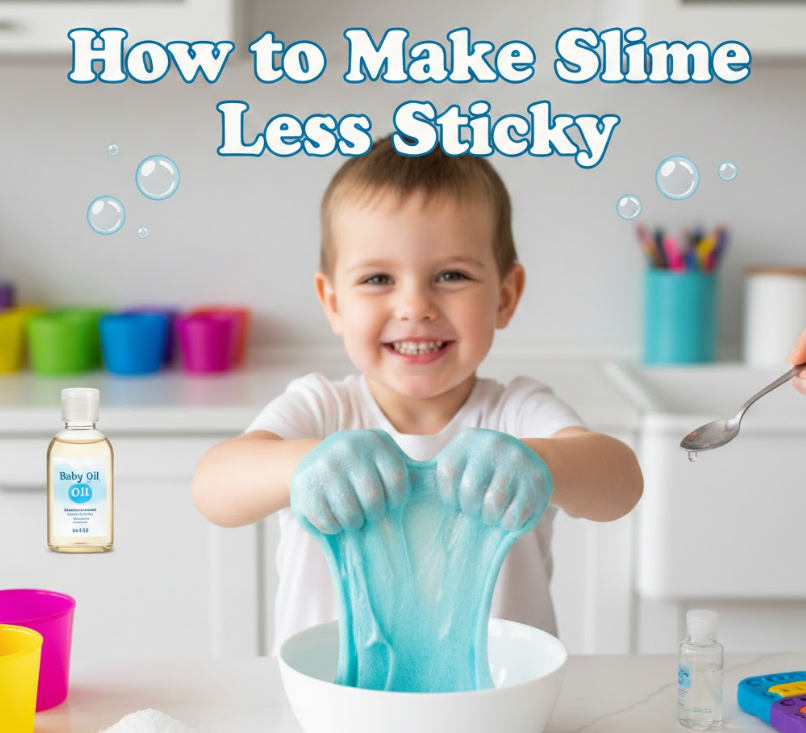
Sticky slime is one of the most common problems beginners face. Knowing how to make slime less sticky ensures your slime is enjoyable rather than frustrating.
Stickiness usually means the slime needs better balance between moisture and binding agents.
Effective Ways to Reduce Slime Stickiness
• Add activator gradually
Whether using contact lens solution or salt, adding too much too fast can ruin slime. Slow additions allow better control, helping you stop at the ideal texture before over-hardening occurs.
• Kneading improves structure
Hands-on kneading distributes ingredients evenly, strengthening bonds within the slime. This process naturally reduces stickiness while improving elasticity and smoothness.
• Use cornstarch for moisture control
A light dusting of cornstarch absorbs surface moisture, making slime easier to handle without altering its stretch too much.
• Let slime rest before use
Fresh slime often improves after resting for 10–20 minutes. This allows ingredients to fully bond, reducing surface tackiness naturally.
• Warm hands before playing
Cold hands can make slime feel stiffer and stickier. Warmth improves elasticity, making slime easier to stretch and shape.
• Store slime properly
Exposure to air causes slime to break down and become sticky again. Airtight containers preserve texture and prevent moisture imbalance.
Also Read:- How to Do a Pullup: The Complete, Science-Backed Guide for Beginners and Beyond
Conclusion
Learning how to make slime is more than just a fun activity—it’s an opportunity to explore creativity, science, and hands-on learning in a safe and engaging way. Whether you prefer making slime without activator, without glue, with glue, or simply want to fix sticky slime, the methods explained in this guide provide reliable, tested solutions for every skill level.
By following these detailed steps and tips, you can create high-quality slime that is safe, enjoyable, and endlessly customizable. With the right balance of ingredients and patience, perfect slime is always within reach.
FAQs
Q: Is slime safe for kids?
Yes, with supervision and safe ingredients, slime is suitable for children.
Q: How long does homemade slime last?
Glue slime can last weeks if stored properly; glue-free slime is best used the same day.
Q: Can slime stain clothes?
Some colored slimes may stain fabrics. Play on washable surfaces for safety.
For More Updates Visit: Biomagazine
