

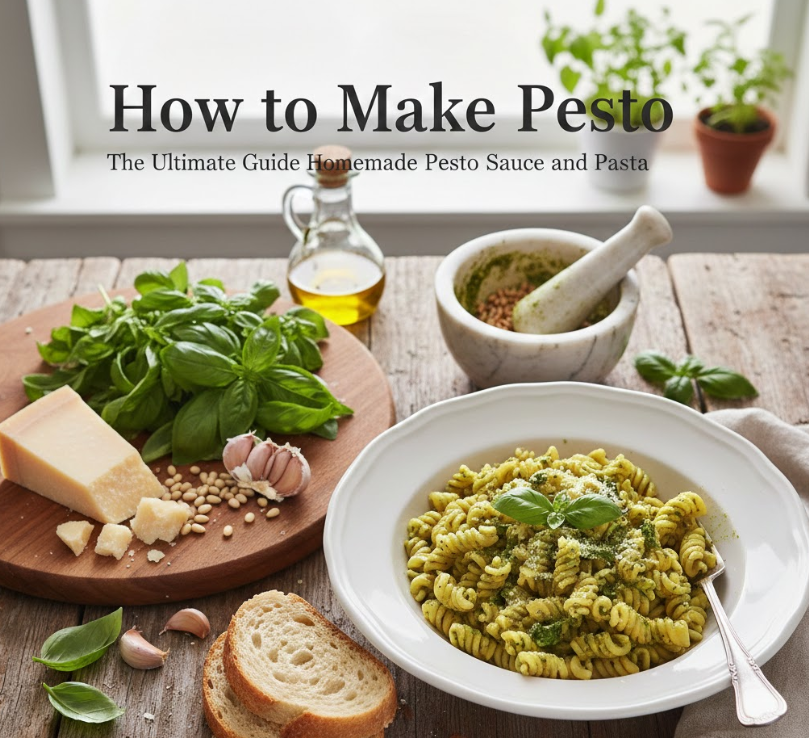
Pesto is one of the most beloved sauces in the world, known for its vibrant green color, fresh herbal aroma, and rich, nutty flavor. If you’ve ever wondered how to make pesto at home, you’re about to discover that it’s surprisingly simple, incredibly versatile, and far superior to store-bought versions. Homemade pesto delivers unmatched freshness, nutritional benefits, and customizable flavors that transform everyday dishes into gourmet meals.
Originating in Genoa, pesto has been a cornerstone of traditional Italy cuisine for centuries. The name “pesto” comes from the Italian word pestare, meaning “to crush,” referring to the original preparation method using a mortar and pestle. Today, modern tools like food processors make preparation faster while preserving authentic taste.
This comprehensive guide explains everything you need to know—from classic pesto sauce and pesto pasta to creative variations without pine nuts. You’ll also learn expert techniques, storage tips, nutritional insights, and step-by-step instructions to master homemade pesto like a professional chef.
What Is Pesto and Why Make It at Home?
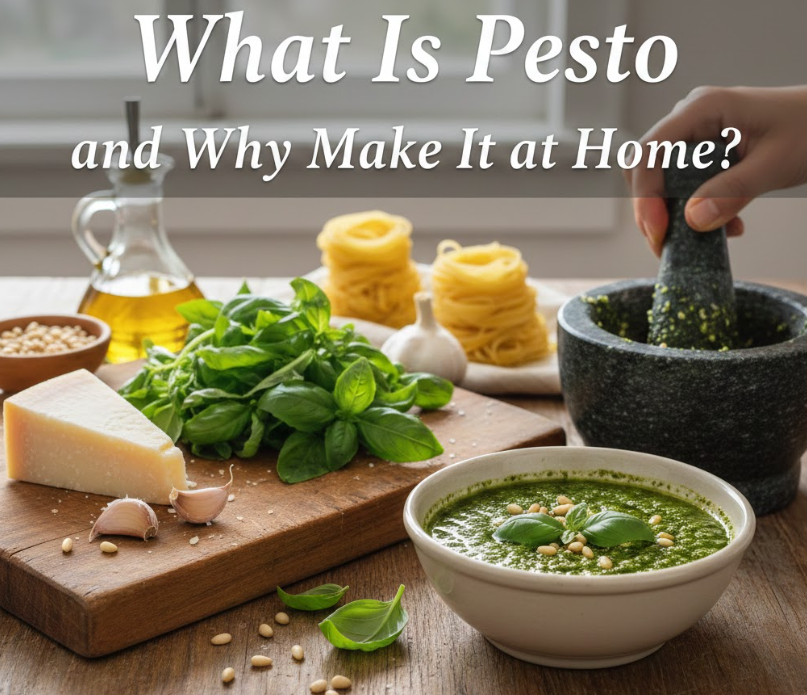
Pesto is a raw sauce traditionally made from fresh basil leaves, garlic, pine nuts, olive oil, Parmesan cheese, and salt. Unlike cooked sauces, pesto preserves the natural oils, vitamins, and flavors of its ingredients. This makes it both nutritionally dense and intensely flavorful.
Making pesto at home provides several advantages over commercial versions. Fresh pesto contains no preservatives, artificial flavors, or excess sodium. According to the USDA, fresh herbs and olive oil contain antioxidants that support heart health and reduce inflammation. Homemade pesto also allows complete control over ingredients, texture, and taste.
Benefits of homemade pesto include:
• Superior freshness and vibrant flavor compared to packaged pesto
Fresh basil loses aroma quickly after processing, which is why store-bought pesto often tastes dull or overly salty. Homemade pesto preserves the essential oils that give basil its signature fragrance and taste.
• Better nutritional value and fewer additives
Commercial pesto often contains preservatives, fillers, and excessive sodium. Homemade pesto contains pure, whole ingredients rich in vitamins A, C, and K. Olive oil contributes healthy monounsaturated fats that support cardiovascular health. Fresh garlic adds antimicrobial properties, while nuts provide protein and essential minerals.
• Cost-effective and customizable ingredients
Making pesto at home allows you to choose affordable alternatives without sacrificing quality. You can substitute walnuts, almonds, or sunflower seeds for pine nuts.
• Versatile use beyond pasta dishes
Pesto works as a sandwich spread, pizza base, salad dressing, marinade, and dip. It enhances grilled vegetables, roasted potatoes, and meats. This versatility makes pesto a valuable addition to your weekly meal preparation routine.
• Longer storage life with proper techniques
Homemade pesto can be refrigerated for up to one week and frozen for several months. Proper storage maintains flavor and prevents oxidation. Freezing pesto in small portions ensures easy use when needed.
Also Read:- How to Hard Reset iPhone: Complete Step-by-Step Guide for All Models
How to Make Pesto Sauce
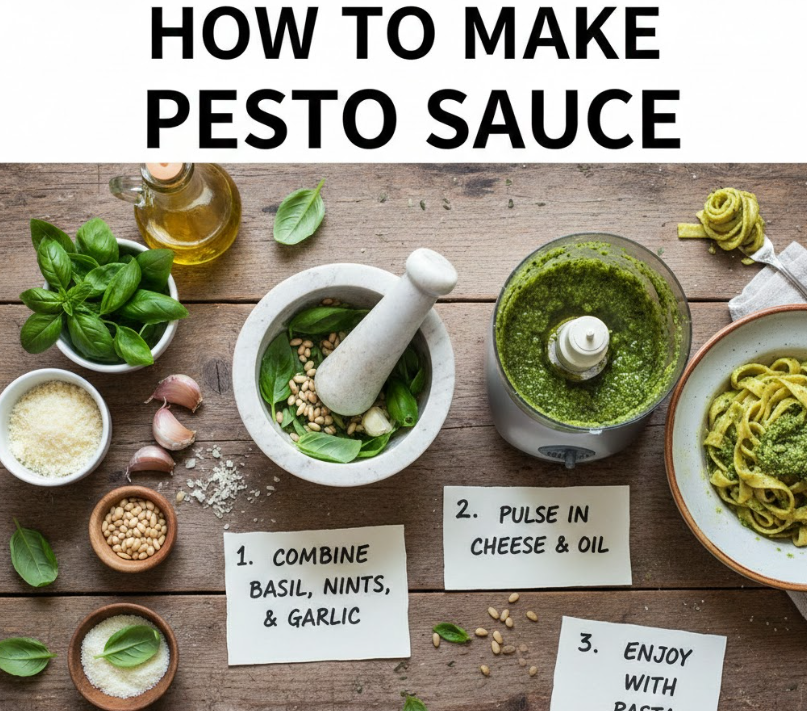
Learning how to make pesto sauce is the foundation of mastering pesto recipes. Authentic pesto relies on balanced ingredients and proper blending techniques to achieve perfect consistency and flavor.
Essential ingredients and their roles
• Fresh basil leaves provide the core flavor and vibrant color
Basil is the most important ingredient in pesto, delivering freshness, aroma, and herbal complexity. Young basil leaves are ideal because they are tender and less bitter. Washing and drying basil thoroughly prevents excess moisture from diluting the sauce. Using fresh basil ensures the best possible flavor and nutritional value.
• Olive oil creates smooth texture and enhances flavor absorption
Extra virgin olive oil binds all ingredients together and provides creamy consistency. It enhances flavor distribution and prevents dryness. High-quality olive oil improves taste and adds heart-healthy fats. Slowly adding oil during blending helps achieve emulsification.
• Garlic adds depth, aroma, and antimicrobial benefits
Garlic contributes pungency and bold flavor. It balances the sweetness of basil and richness of oil. Fresh garlic cloves provide stronger flavor than powdered versions. Adjust garlic quantity based on personal preference.
• Pine nuts provide creaminess and nutty flavor
Pine nuts create traditional pesto texture and richness. Lightly toasting them enhances flavor complexity. Their natural oils help thicken the sauce and improve mouthfeel.
• Parmesan cheese adds umami richness and saltiness
Freshly grated Parmesan provides savory depth and creamy texture. It balances herbal notes and enhances overall flavor. Avoid pre-grated cheese for best results.
• Salt enhances all ingredients and balances taste
Salt improves flavor perception and balances bitterness. Add gradually to avoid oversalting.
Step-by-step preparation method
• Wash and prepare ingredients properly
Clean basil leaves gently and dry completely. Remove tough stems to avoid bitterness. Measure ingredients accurately for balanced flavor.
• Blend garlic and nuts first for even consistency
Processing garlic and nuts before adding basil ensures smooth texture. This prevents uneven chunks and improves sauce consistency.
• Add basil gradually while blending
Adding basil slowly prevents overcrowding and ensures even blending. Pulse instead of continuous blending to preserve texture.
• Pour olive oil slowly during blending
Gradual oil addition creates smooth emulsification. This results in creamy, cohesive sauce.
• Add cheese and salt at the end
Adding cheese last prevents over-processing and preserves flavor.
• Adjust texture and seasoning
Add more oil for thinner sauce or more cheese for thicker texture.
Also Read:- How to Get Voice Chat on Roblox: Complete Step-by-Step Guide
How to Make Pesto Pasta
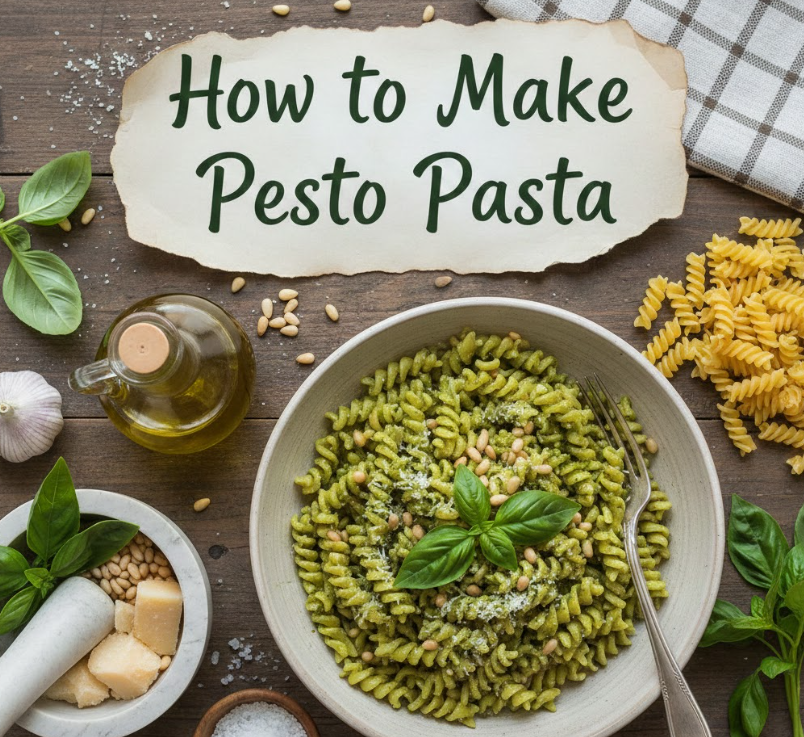
Knowing how to make pesto pasta allows you to turn simple ingredients into a delicious, restaurant-quality meal in minutes.
Choosing the right pasta
• Use pasta shapes that hold sauce well
Pasta like fusilli, penne, and spaghetti work best. Their texture traps pesto and ensures even coating.
• Cook pasta until al dente for ideal texture
Al dente pasta maintains firmness and absorbs sauce better.
• Save pasta water for sauce blending
Starchy pasta water improves sauce adhesion and consistency.
• Use high-quality pasta for better results
Quality pasta enhances flavor and texture.
• Avoid overcooking pasta
Overcooked pasta becomes mushy and doesn’t hold sauce well.
• Salt pasta water properly
Salt enhances pasta flavor and balances pesto richness.
Mixing pesto with pasta correctly
• Add pesto after draining pasta
Avoid cooking pesto directly, as heat reduces freshness.
• Use pasta water to thin sauce
This helps pesto coat pasta evenly.
• Mix gently to preserve texture
Gentle mixing prevents breaking pasta.
• Serve immediately for best flavor
Fresh pesto pasta tastes best when served warm.
• Add extra cheese if desired
Enhances richness and flavor.
• Garnish with fresh basil
Improves presentation and freshness.
Also Read:- How to Get Rid of a Hickey: Complete Guide to Fast Healing
How to Make Pesto Without Pine Nuts
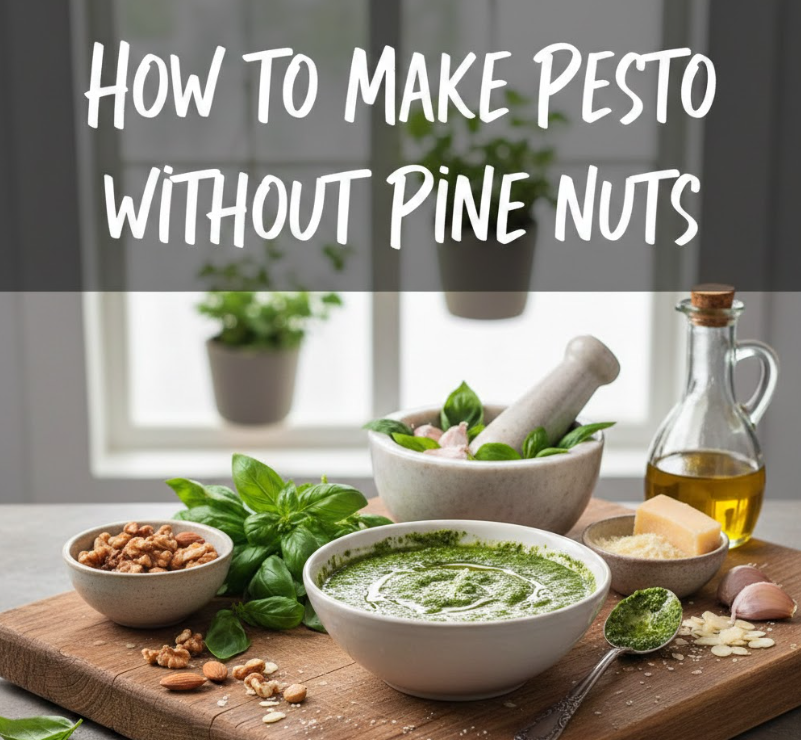
If you don’t have pine nuts or want a more affordable option, learning how to make pesto without pine nuts is essential.
Best pine nut substitutes
• Walnuts provide similar texture and flavor
Walnuts are affordable and widely available. They deliver rich taste and creamy consistency.
• Almonds offer mild flavor and good texture
Almonds create slightly sweeter pesto flavor.
• Cashews produce creamy consistency
Cashews make pesto smoother and less bitter.
• Sunflower seeds provide budget-friendly option
Sunflower seeds are economical and nutritious.
• Pistachios add unique flavor variation
Pistachios create gourmet pesto taste.
• Pumpkin seeds provide nutrient-rich alternative
Pumpkin seeds add minerals and depth.
Adjusting flavor when using substitutes
• Toast substitutes lightly for enhanced flavor
Toasting improves taste and aroma.
• Adjust oil quantity for consistency
Different nuts absorb oil differently.
• Taste and adjust seasoning gradually
Ensures balanced flavor.
• Use fresh ingredients for best results
Fresh basil improves taste.
• Blend carefully for smooth texture
Avoid over-processing.
• Store properly to maintain freshness
Refrigeration preserves quality.
Also Read:- How to Grow Tomatoes: The Complete Step-by-Step Guide for Every Space
How to Make Pesto From Scratch
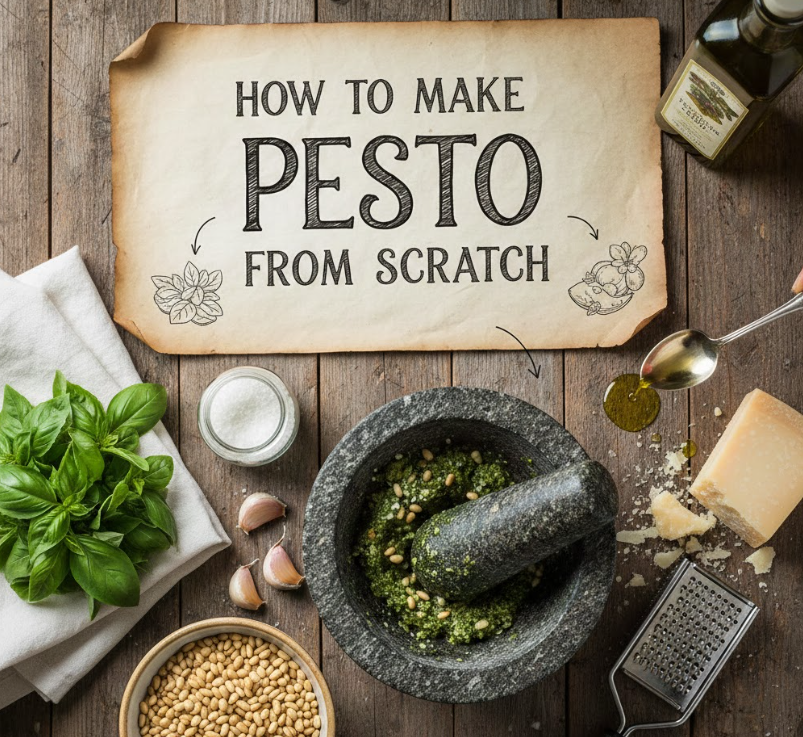
Learning how to make pesto from scratch ensures complete control over quality and authenticity.
Traditional mortar and pestle method
• Crush garlic and salt first
Creates smooth base.
• Add nuts and grind thoroughly
Ensures creamy consistency.
• Add basil gradually
Preserves flavor and texture.
• Add cheese slowly
Balances flavor.
• Drizzle oil gradually
Creates emulsified sauce.
Modern food processor method
• Add ingredients in correct order
Ensures smooth blending.
• Scrape sides frequently
Ensures even blending.
• Adjust oil gradually
Controls consistency.
• Taste and adjust seasoning
Improves flavor.
• Store immediately
Maintains freshness.
Nutritional Benefits of Pesto
Research from Harvard University highlights that olive oil, nuts, and herbs provide essential nutrients.
• Rich in healthy fats
Supports heart health.
• High in antioxidants
Protects against cell damage.
• Provides vitamins and minerals
Supports immune system.
• Contains anti-inflammatory compounds
Reduces inflammation.
• Supports brain health
Healthy fats improve cognitive function.
Storage and Preservation Tips
Proper storage maintains flavor and prevents spoilage.
• Refrigerate in airtight container
Prevents oxidation.
• Cover with oil layer
Protects color and freshness.
• Freeze in small portions
Ensures convenience.
• Avoid exposure to air
Prevents spoilage.
• Label storage date
Tracks freshness.
• Use within recommended timeframe
Ensures safety.
Also Read:- How to Clean Dishwasher – The Ultimate Expert Guide for Deep Cleaning, Hygiene, and Long-Lasting Performance
Conclusion
Understanding how to make pesto empowers you to create fresh, flavorful, and nutritious meals at home. Whether you’re making classic pesto sauce, delicious pesto pasta, or experimenting without pine nuts, homemade pesto offers superior taste, flexibility, and health benefits.
By using fresh ingredients, proper techniques, and correct storage methods, you can enjoy authentic pesto anytime. Homemade pesto not only enhances pasta but also transforms vegetables, sandwiches, and countless other dishes into gourmet experiences.
Mastering pesto is a simple yet powerful skill that elevates your cooking and brings authentic Italian flavor to your kitchen.
FAQs
How long does homemade pesto last?
Homemade pesto lasts 5–7 days in the refrigerator and up to 6 months in the freezer.
Can you make pesto without cheese?
Yes, you can omit cheese or use nutritional yeast as a substitute.
Why does pesto turn brown?
Oxidation causes browning. Cover pesto with oil to prevent this.
Can pesto be frozen?
Yes, freezing pesto preserves flavor and extends shelf life.
What oil is best for pesto?
Extra virgin olive oil provides best flavor and nutrition.
For More Updates Visit: Biomagazine
