

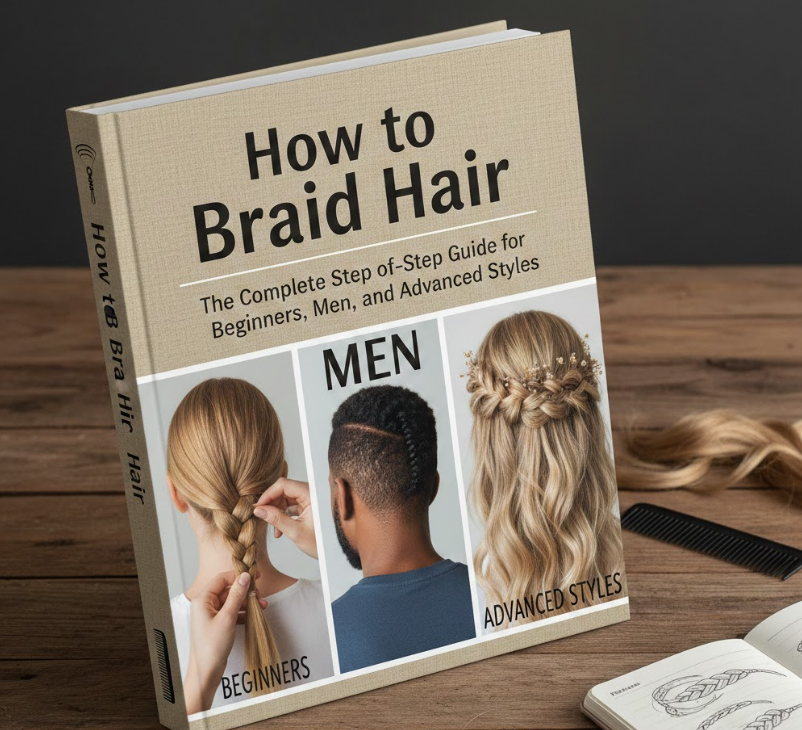
Learning how to braid hair is a timeless beauty skill that combines creativity, technique, and hair care knowledge. From simple three-strand braids to intricate cornrows and fishtail styles, braiding works for all hair types—straight, wavy, curly, and coily. Whether you want a protective hairstyle, a trendy festival look, or a practical everyday style, mastering braiding opens the door to endless styling possibilities.
Braiding dates back thousands of years and has deep cultural significance in regions like Africa, Asia, and Europe. Today, tutorials, salon techniques, and social media trends have made it easier than ever to understand how to braid hair step by step. In this comprehensive guide, you’ll learn beginner techniques, men’s braiding styles, diagram-based explanations, and visual step instructions—all written with clarity and expertise to help you achieve salon-quality results at home.
How to Braid Hair Step by Step with Pictures
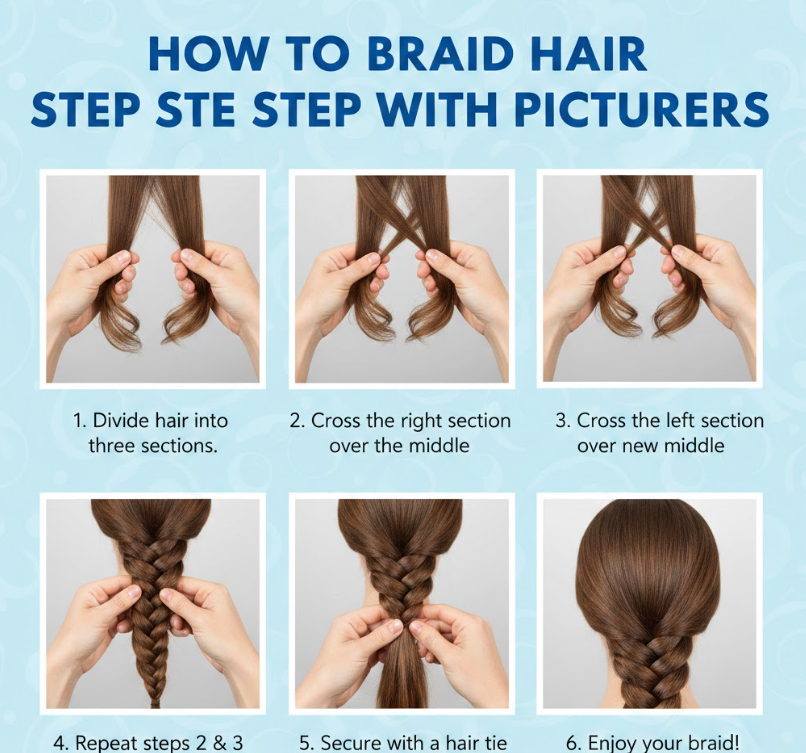
Understanding how to braid hair step by step with pictures makes the learning process faster and more intuitive. Visual guidance helps you see hand placement, strand movement, and section control clearly.
Definition and Explanation
Braiding step by step with pictures means breaking down the braiding process into structured visual stages that demonstrate how three or more strands intertwine to create a patterned hairstyle. This approach simplifies hand coordination and improves learning retention. When combined with detailed instructions, visual steps reduce confusion and improve technique precision.
Step-by-Step Guide (Basic Three-Strand Braid)
• Brush hair thoroughly to remove tangles and knots before starting. Smooth hair improves braid definition and reduces breakage.
• Divide the hair into three equal sections using your fingers or a tail comb. Keep tension even to avoid uneven braids.
• Cross the right section over the middle section. The right section becomes the new middle strand.
• Cross the left section over the new middle section. Continue alternating sides.
• Repeat the crossing motion down to the ends while maintaining consistent tension.
• Secure the braid with a hair tie or elastic band.
Visual Breakdown (What Pictures Typically Show)
• Image 1: Hair divided into three equal strands.
• Image 2: Right strand crossing over center.
• Image 3: Left strand crossing over new center.
• Image 4: Completed braid secured at the end.
For professional references on braiding techniques, consider resources from reputable beauty institutions like Milady and tutorials from platforms such as Cosmopolitan.
Pro Tips for Better Results
• Slightly damp hair is easier to manage than completely dry hair.
• Apply lightweight styling cream for grip and frizz control.
• Practice hand positioning slowly before increasing speed.
Also Read:- How to Get Out of Jury Duty: Legal, Ethical, and Practical Guide
How to Braid Hair for Beginners
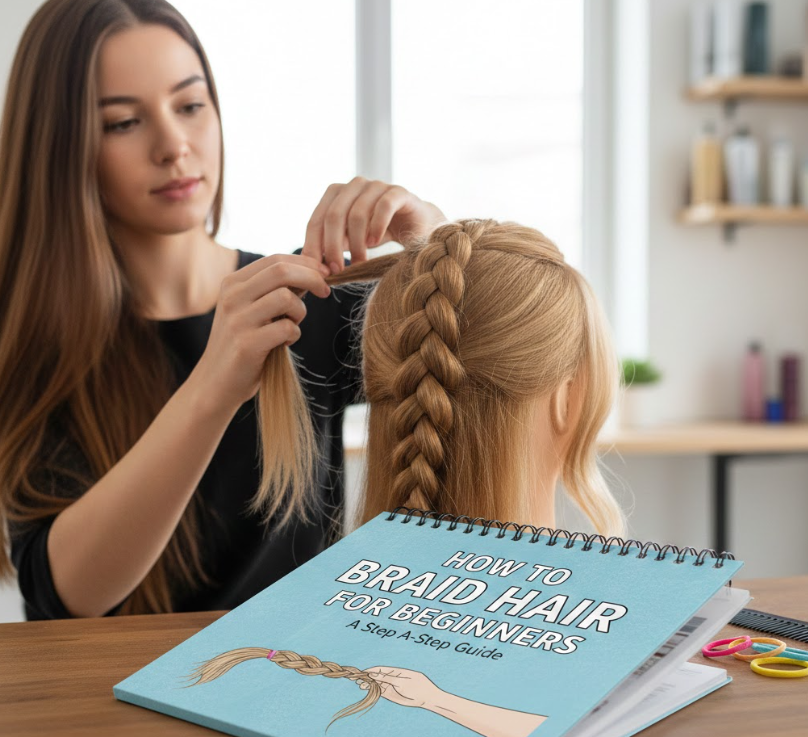
If you are just starting to learn how to braid hair, focusing on foundational techniques builds confidence and muscle memory.
Definition and Explanation
Braiding for beginners involves learning the core mechanics of strand crossing, section control, and consistent tension. Instead of jumping into advanced styles like Dutch braids or box braids, beginners should first master simple patterns. Building a strong foundation reduces frustration and increases styling accuracy over time.
Beginner-Friendly Techniques
• Start with a side braid instead of a back braid; it’s easier to see your hands.
• Practice on damp, detangled hair for better grip and smoother sections.
• Use mirrors—one in front and one behind—to monitor alignment.
• Begin with thicker sections; thin strands are harder to control at first.
• Secure tightly but avoid excessive pulling to prevent scalp tension.
Common Beginner Mistakes
• Uneven strand sizes causing lopsided braids.
• Pulling too tight, leading to discomfort.
• Losing strand order while crossing sections.
Best Beginner Braid Styles
• Classic three-strand braid.
• Side braid.
• Low ponytail braid.
• Loose fishtail braid (after mastering basics).
Statistics from beauty industry reports show that protective hairstyles, including braids, have increased in popularity by over 35% in the last five years due to low-maintenance benefits and hair health awareness.
Also Read:- How to Find Surface Area: Complete Step-by-Step Guide with Formulas and Examples
How to Braid Hair for Men
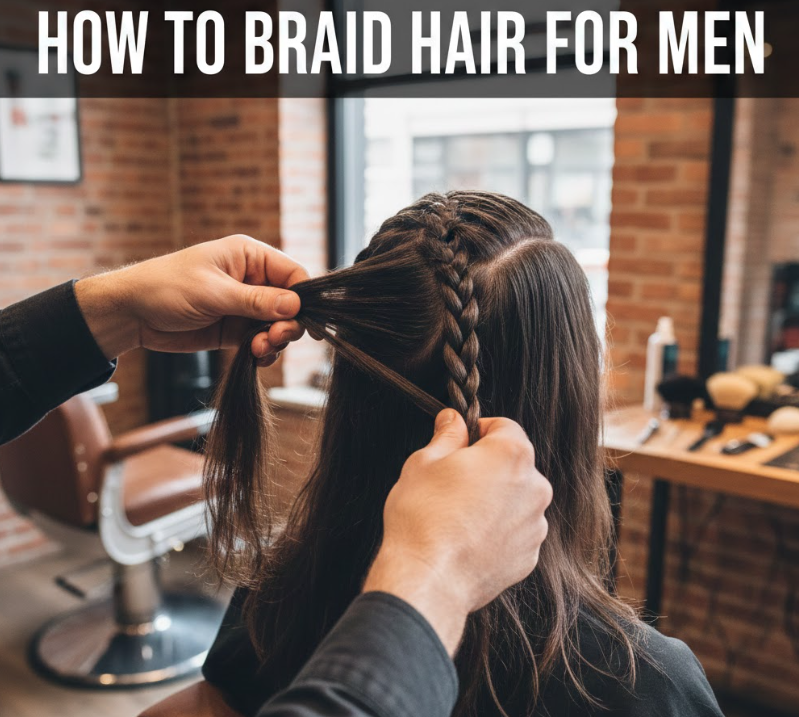
Learning how to braid hair for men requires understanding shorter lengths, textured hair, and scalp styling patterns.
Definition and Explanation
Men’s braiding focuses on structured designs such as cornrows, box braids, and braided undercuts. Unlike traditional long-hair braids, men’s styles often integrate fades, tapered cuts, or shaved sides. Precision parting and scalp sectioning play a crucial role in achieving clean results.
Popular Men’s Braiding Styles
• Cornrows (straight back or patterned).
• Two-strand twists.
• Box braids with fade haircut.
• Braided top knot.
• Zigzag or geometric scalp braids.
Celebrities like LeBron James and Travis Scott have popularized braided styles among men globally.
Step-by-Step Cornrow Basics
• Section hair using a rat-tail comb to create straight parts.
• Divide the first section into three smaller strands.
• Begin braiding close to the scalp while gradually adding hair into each strand.
• Continue braiding along the scalp in a straight or curved direction.
• Secure ends with elastics or braid them fully to the tips.
Men’s Hair Care Tips
• Moisturize scalp regularly with lightweight oil.
• Avoid tight braids to prevent traction alopecia.
• Wash scalp gently every 1–2 weeks when braided.
Also Read:- How to Erase iPhone: Complete Expert Guide for Safe Reset, Trade-In, and Security
How to Braid Hair Diagram Explanation
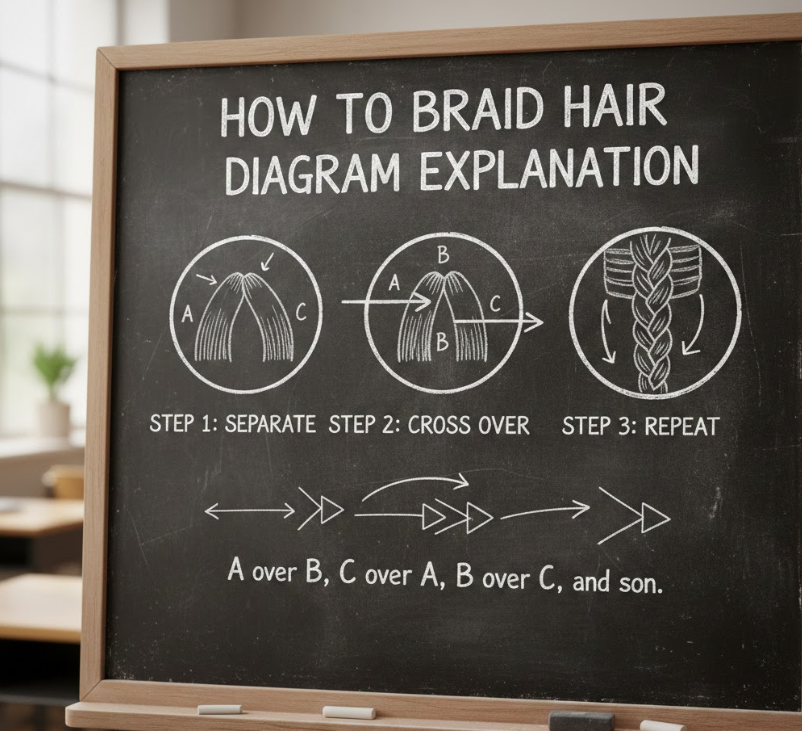
Understanding how to braid hair through diagrams enhances technical clarity, especially for visual learners.
Definition and Explanation
A braid diagram is a visual representation showing strand positioning and crossing patterns using arrows and numbered sections. Diagrams simplify complex styles by mapping movement direction. They are especially useful for French braids, Dutch braids, and fishtail techniques.
Basic Diagram Structure
• Strand 1 (Left).
• Strand 2 (Middle).
• Strand 3 (Right).
• Arrows indicating cross-over sequence.
French Braid Diagram Concept
• Start with three strands at crown.
• Cross outer strand over middle.
• Add new hair into outer strand before next cross.
• Repeat until reaching nape.
Dutch Braid Diagram Difference
• Instead of crossing over, strands go under the middle.
• Creates raised braid effect.
• Ideal for sporty and voluminous styles.
Educational hair training materials from brands like L’Oréal Professionnel provide technical braid diagrams for stylists.
Also Read:- How to Use Spirometer: A Complete, Evidence-Based Guide for Safe and Effective Breathing Therapy
Advanced Braiding Techniques
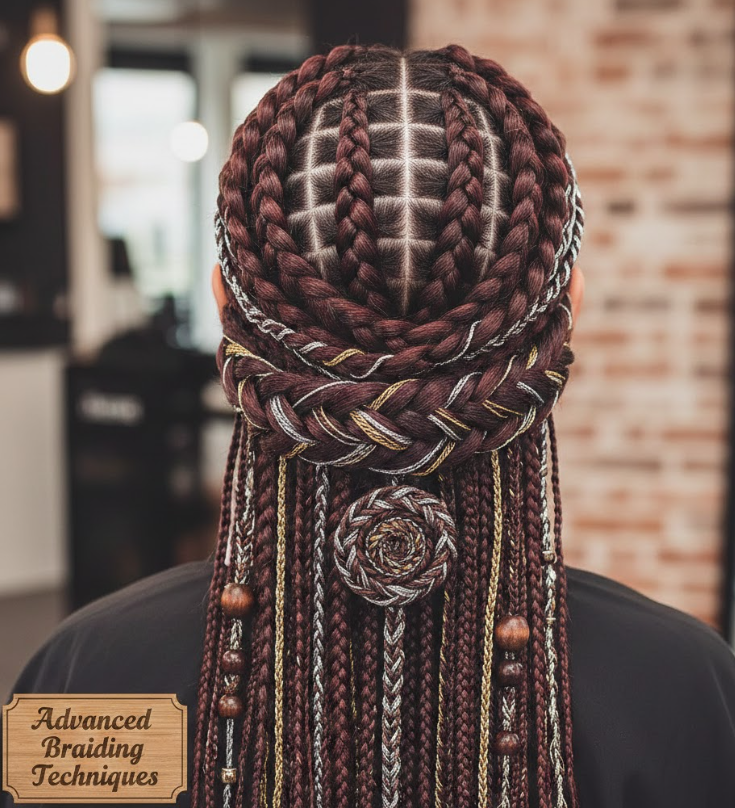
Once you master basic braiding, you can explore advanced styles that add dimension and creativity.
French Braid Technique
• Start at crown with three sections.
• Add hair from sides gradually.
• Cross over middle each time.
• Maintain tight scalp control.
Dutch Braid Technique
• Cross strands under instead of over.
• Creates 3D raised appearance.
• Ideal for athletic styles.
Fishtail Braid
• Divide hair into two large sections.
• Take small strand from outer edge and cross to opposite section.
• Repeat alternating sides.
• Produces intricate woven texture.
Hair Preparation Before Braiding
Proper preparation ensures neat, long-lasting braids.
• Wash hair with sulfate-free shampoo.
• Condition deeply for hydration.
• Detangle with wide-tooth comb.
• Apply leave-in conditioner.
• Blow-dry or air-dry depending on style.
Healthy hair improves braid longevity and reduces frizz.
Also Read:- How to Use SodaStream: The Complete Expert Guide for Beginners and Advanced Users
Conclusion
Learning how to braid hair is more than just a styling technique—it’s a valuable skill that enhances confidence, creativity, and hair health awareness. From step-by-step beginner methods to men’s cornrows and diagram-based explanations, braiding becomes easier with consistent practice and proper preparation. Whether you are styling your own hair or helping someone else, patience and technique refinement are key.
Master the basics, explore advanced designs, and prioritize scalp health for long-lasting, beautiful braids.
FAQs
How long does it take to learn how to braid hair?
Most beginners can learn a basic three-strand braid within one hour of practice.
Is braiding bad for hair?
Not when done correctly. Avoid excessive tightness and moisturize regularly.
Can short hair be braided?
Yes, styles like cornrows and mini braids work well for short hair.
How long do braids last?
Simple braids last 1–3 days, while protective styles can last 2–6 weeks.
For More Updates Visit: Biomagazine
