

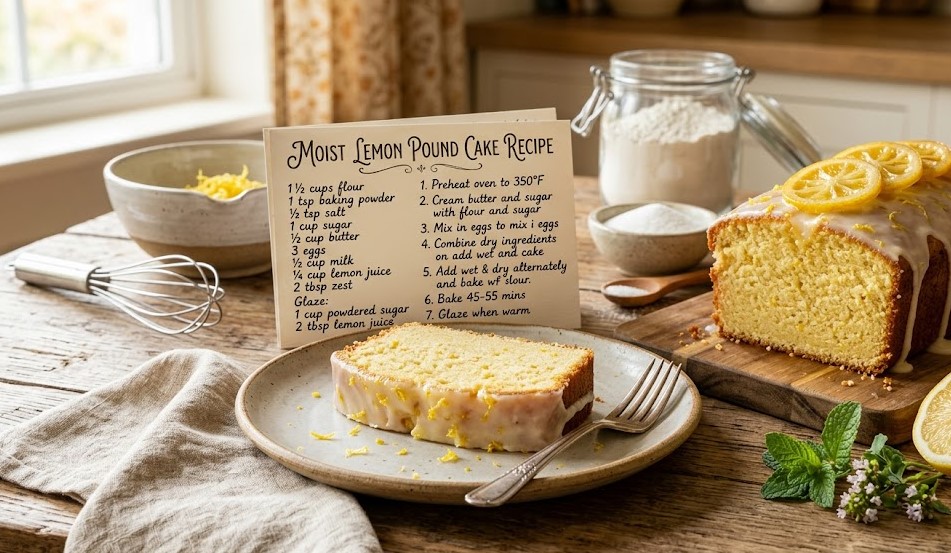
A truly moist lemon pound cake recipe depends on balancing rich ingredients with bright citrus flavor while maintaining a soft, tender crumb. Traditional pound cakes were originally dense and heavy, but modern baking techniques have transformed them into lighter, more enjoyable desserts without losing their buttery richness. The key is not just in the ingredients but in how they are combined and handled throughout the baking process.
This cake achieves its signature softness through carefully layered moisture-building methods. Ingredients like butter, eggs, and sugar create structure and richness, while lemon juice and zest add freshness and a slight tang that cuts through the heaviness. Techniques such as adding a lemon syrup or glaze after baking help lock in moisture, ensuring the cake stays soft for days instead of drying out quickly.
Ingredients That Create a Soft and Buttery Texture
The success of a moist lemon pound cake recipe starts with choosing the right ingredients, because each one plays a direct role in texture, flavor, and overall structure. Butter is the foundation of richness, giving the cake its soft and creamy crumb. When properly creamed with sugar, it traps air that helps lighten the dense structure typical of pound cakes, making the final result more tender and enjoyable.
Eggs are equally important because they provide stability and moisture while also helping bind the batter together. Fresh lemon juice and zest add brightness, cutting through the richness and giving the cake its signature citrus flavor. Many bakers also use buttermilk or whole milk to add extra softness, as the slight acidity helps break down gluten, resulting in a finer and more delicate crumb. When these ingredients are balanced correctly, they create a cake that is both rich and light at the same time.
Step-by-Step Baking Method for Perfect Results
A successful moist lemon pound cake recipe depends heavily on following the correct baking method, because even the best ingredients can fail if the process is not done properly. The first step is to cream the butter and sugar together until the mixture becomes light and fluffy. This step is crucial because it creates tiny air pockets that help the cake rise and develop a soft texture instead of becoming dense.
Next, eggs are added one at a time, allowing each egg to fully blend into the batter before adding the next. This ensures a smooth and stable mixture without curdling. After that, the dry ingredients and liquid ingredients are added alternately, which helps maintain balance and prevents overmixing. Overmixing can lead to a tough cake, so gentle folding is essential. Finally, the batter is poured into a prepared loaf or bundt pan and baked at a steady temperature until golden brown and a toothpick inserted in the center comes out clean.
Secrets to Keeping Your Lemon Pound Cake Moist
Keeping a moist lemon pound cake recipe truly soft after baking is all about how moisture is locked into the cake at every stage. One of the most effective secrets is brushing the warm cake with a lemon syrup right after it comes out of the oven. This allows the cake to absorb extra flavor and liquid while it is still porous, helping it stay soft for days instead of drying out quickly.
Another important factor is proper cooling and storage. The cake should be allowed to cool in the pan for a short time before being transferred to a wire rack, which prevents excess steam from making it soggy. Once fully cooled, wrapping it tightly in plastic wrap or storing it in an airtight container helps retain moisture. Many bakers also recommend letting the cake rest overnight, as the flavors deepen and the texture becomes even more tender the next day.
Lemon Glaze vs Lemon Syrup: Which One is Better?
In a moist lemon pound cake recipe, both lemon glaze and lemon syrup play important roles, but they serve slightly different purposes. Lemon syrup is usually brushed onto the cake while it is still warm, allowing it to soak deep into the crumb. This step is mainly responsible for keeping the cake moist and infusing it with a strong lemon flavor from the inside out.
Lemon glaze, on the other hand, is added after the cake has fully cooled. It sits on the surface and creates a sweet, tangy coating that enhances flavor while also giving the cake a polished, bakery-style finish. While syrup works from the inside, glaze works from the outside, and many bakers actually use both together for the best result. This combination ensures the cake is flavorful, moist, and visually appealing at the same time.
Common Mistakes to Avoid When Baking Pound Cake
Even with a reliable moist lemon pound cake recipe, small mistakes can easily affect the final texture and flavor. One of the most common errors is overmixing the batter after adding the flour. This develops too much gluten, which results in a dense and tough cake instead of a soft and tender crumb. Another frequent issue is not properly creaming the butter and sugar, which reduces the air content needed for a light texture.
Incorrect oven temperature is another major problem. If the oven is too hot, the outside of the cake may bake too quickly while the inside remains undercooked. On the other hand, a low temperature can cause the cake to become dry and flat. Using cold ingredients straight from the fridge can also affect how well the batter combines, leading to uneven texture. Avoiding these mistakes ensures a consistent, moist, and bakery-quality result every time.
Expert Tips from Top Baking Sources
Professional bakers emphasize a few key techniques that elevate a moist lemon pound cake recipe from average to bakery-quality. One important tip is to always use room-temperature ingredients, especially butter, eggs, and milk. This helps the batter mix smoothly and traps more air during the creaming process, resulting in a softer and more even crumb.
Another expert recommendation is to measure ingredients accurately using a kitchen scale rather than cups whenever possible. Precision ensures the right balance between wet and dry ingredients, which directly affects moisture and structure. Bakers also suggest not opening the oven door too early during baking, as sudden temperature drops can cause the cake to sink in the center. Lastly, letting the cake rest for several hours or overnight significantly improves both texture and flavor as the lemon notes develop more deeply over time.
Serving Ideas and Storage Guide
A freshly baked moist lemon pound cake recipe can be enjoyed in many simple yet delicious ways. It pairs beautifully with a cup of tea or coffee, making it perfect for breakfast, afternoon snacks, or light desserts after meals. For an elevated serving style, you can add fresh berries, whipped cream, or a light dusting of powdered sugar to enhance both flavor and presentation. The bright citrus notes also work well when served chilled on warm days, making it a versatile dessert year-round.
Proper storage is essential to maintain softness and flavor. Once fully cooled, the cake should be wrapped tightly in plastic wrap or stored in an airtight container to prevent it from drying out. At room temperature, it stays fresh for about two to three days, while refrigeration can extend its shelf life up to a week. For longer storage, freezing is an excellent option—simply slice the cake, wrap each piece individually, and thaw when needed to preserve its moist texture.
Conclusion
A well-made moist lemon pound cake recipe is the perfect balance of rich buttery texture and fresh citrus flavor. When the right ingredients and techniques come together—like proper creaming, careful mixing, and finishing with lemon syrup or glaze—the result is a soft, tender cake that stays moist for days. This dessert is simple enough for home bakers yet impressive enough to serve for gatherings, celebrations, or everyday treats.
The key takeaway is consistency: small details like room-temperature ingredients, accurate measurements, and avoiding overmixing make a big difference in the final outcome. With practice, this recipe becomes a reliable go-to for a perfectly moist and zesty cake every time.
FAQs
1. Why is my lemon pound cake dry?
Overbaking, overmixing, or incorrect ingredient ratios can cause dryness. Proper moisture techniques like syrup or glaze help prevent this.
2. Can I use oil instead of butter?
Yes, but butter gives better flavor and structure. Oil makes it softer but slightly less rich.
3. How do I keep pound cake moist for longer?
Wrap it tightly and store in an airtight container. Adding lemon syrup also helps retain moisture.
4. Can I freeze lemon pound cake?
Yes, you can freeze it for up to 2–3 months if wrapped properly in portions.
For More Updates Visit: Biomagazine
