

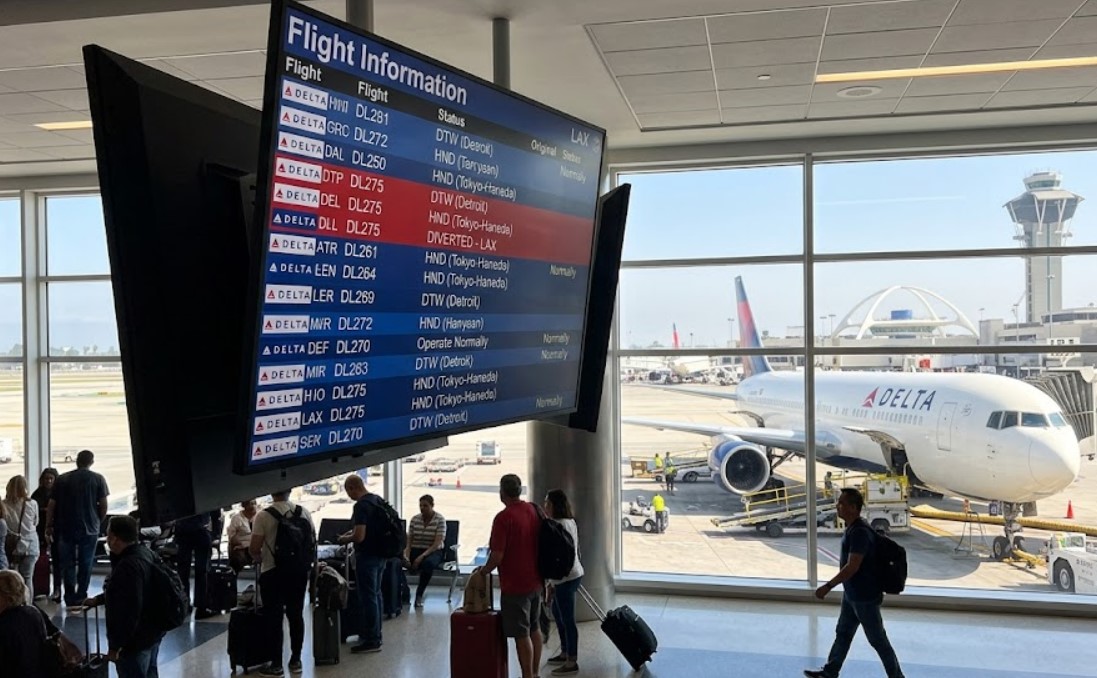
On a routine journey from Detroit Metropolitan Wayne County Airport (DTW) to Tokyo Haneda Airport (HND), Delta Air Lines Flight DL275 experienced an unexpected and precautionary event. The flight, which was set to fly across the Pacific Ocean, was diverted to Los Angeles International Airport (LAX) due to a technical issue involving the aircraft’s engine anti-ice system. This article dives into the details of the incident, the safety measures taken, and the significance of the diversion.
Why Did Delta Flight DL275 Divert to LAX?
Delta Flight DL275, an Airbus A350-900, was en route from Detroit to Tokyo on a long-haul international flight. Midway through its journey, the aircraft’s flight crew received an alert indicating a technical issue with the engine anti-ice system. This system is critical for ensuring the engines operate efficiently and safely at high altitudes in cold temperatures, especially during long flights over icy oceans.
When a malfunction with such a critical system arises, it’s standard procedure for flight crews to prioritize safety. In this case, instead of continuing the flight over thousands of miles of the Pacific Ocean, the crew decided to divert the flight to a nearby international airport with the necessary facilities for maintenance and support.
The Decision to Divert to LAX
Why choose Los Angeles International Airport (LAX) for this emergency landing? Several factors played a role in this decision:
- Proximity and Accessibility: LAX is one of the largest airports in the world, with ample infrastructure to accommodate wide-body aircraft like the Airbus A350.
- Maintenance Facilities: LAX offers state-of-the-art facilities for aircraft maintenance, particularly for Airbus A350s, making it a strategic choice for technical inspection and repairs.
- Passenger Logistics: As an international airport, LAX can quickly handle passenger transfers, rebooking, and support for affected travelers.
The decision to divert was made quickly and efficiently, ensuring the safety of passengers, crew, and the aircraft itself.
What Happened After the Diversion?
Upon arriving at LAX, the aircraft landed safely without any further incidents. There were no injuries reported among the passengers or crew. Following the diversion, Delta Airlines staff swiftly began rebooking affected passengers, ensuring they were accommodated on other flights to continue their journeys.
For some passengers, this unplanned stop was an inconvenience, but they were provided with all necessary assistance by Delta’s customer service team. The incident caused only a brief delay in passengers reaching their destinations, but all parties involved took the necessary steps to minimize disruption.
Technical Inspection and Safety Checks
Once the flight landed at LAX, the aircraft underwent thorough technical inspections by Delta’s maintenance team. The system that triggered the diversion, the engine anti-ice system, was identified as the source of the issue. Fortunately, the issue was not catastrophic, and no passengers were put at risk during the incident.
While such malfunctions are rare, they serve as a reminder of the meticulous safety standards followed by airlines. The crew and ground staff acted in accordance with standard procedures, ensuring that the aircraft was grounded at a suitable location for a detailed inspection and repair.
The Importance of Airline Safety Protocols
This incident highlights the importance of having strict safety protocols in place for air travel. The decision to divert to LAX rather than attempt to continue to Tokyo illustrates the airline’s commitment to passenger safety above all else.
While the diversion of Delta Flight DL275 was an inconvenience for passengers, it was ultimately the correct decision. Aviation safety protocols are designed to respond swiftly and decisively to potential issues, ensuring that flights are as safe as possible for everyone on board.
How Air Traffic Control Handled the Situation
Air traffic controllers at LAX and other airports along the flight path played an essential role in coordinating the diversion. Their efficient handling of the situation ensured that the aircraft had a clear and safe route to land. Coordination between Delta’s flight crew, maintenance teams, and air traffic controllers contributed to the smooth diversion process.
Conclusion: What Can We Learn From Delta Flight DL275’s Diversion?
Delta Flight DL275’s diversion to LAX was a precautionary measure taken to protect the safety of everyone on board. The technical issue with the engine anti-ice system was promptly addressed, and the aircraft landed safely without incident. Passengers were swiftly accommodated, and the situation was handled professionally by Delta’s crew and ground staff.
While the incident caused some delays, it serves as a reminder of the importance of safety protocols in the aviation industry. Airlines and air traffic controllers work tirelessly to ensure that even the most unexpected situations are managed with care and precision.
If you are a frequent flyer or someone planning an international trip, this incident underscores the critical role of maintenance and the quick decisions made to ensure the safety of all passengers. Safe travels, and remember that air travel continues to be one of the safest modes of transportation.
For More Updates Visit: Biomagazine
