

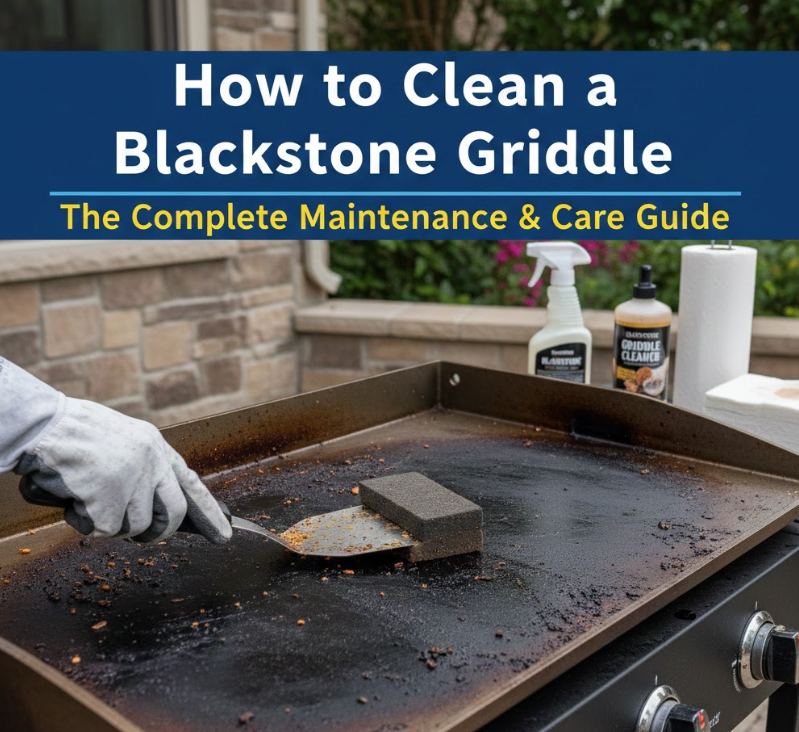
Knowing how to clean a Blackstone griddle correctly is essential for maintaining cooking performance, preventing rust, and extending the life of your flat-top grill. Blackstone griddles are built from rolled steel, which delivers excellent heat retention—but it also requires consistent care and proper cleaning techniques.
Many owners damage their griddle surface unknowingly by using soap incorrectly, skipping seasoning steps, or allowing moisture to sit too long. This guide draws on real-world experience, manufacturer recommendations, and outdoor cooking best practices to show you exactly how to clean a Blackstone griddle after cooking, after use, for the first time, and even when rust appears.
Whether you’re a first-time owner or a seasoned backyard cook, this article gives you actionable, expert-level guidance that keeps your griddle performing like new.
How to Clean a Blackstone Griddle After Cooking
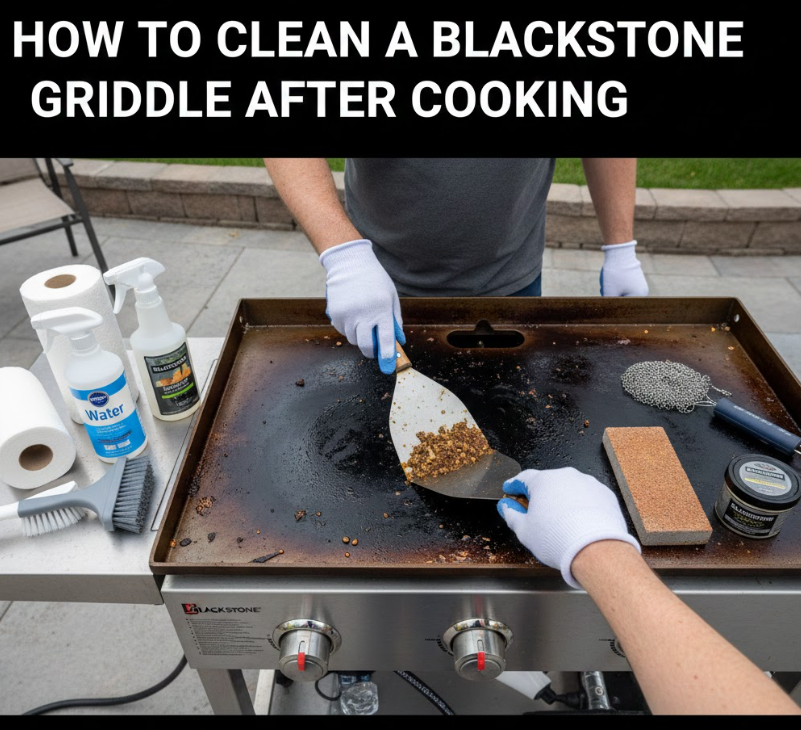
Cleaning your Blackstone griddle immediately after cooking is the most important habit you can build. Fresh grease and food residue are much easier to remove while the surface is still warm, and proper post-cook cleaning prevents carbon buildup and corrosion.
This process protects your seasoning layer and keeps flavors clean for your next cookout.
Post-Cooking Cleaning Best Practices
• Scrape while the griddle is warm, not hot
Once cooking is finished, reduce heat but don’t let the surface cool completely. A warm griddle allows grease and food debris to release easily without excessive scraping force. This reduces surface wear and preserves the seasoning layer that prevents rust.
• Use a metal scraper with controlled pressure
A flat metal scraper is ideal for pushing grease and food particles toward the grease trap. Apply even pressure and avoid digging into the steel. Consistent scraping maintains smoothness while preventing gouges that can trap moisture later.
• Wipe excess grease with paper towels
After scraping, use thick paper towels to absorb leftover grease. This step keeps oils from turning rancid and prevents sticky residue that can affect future cooking flavor and surface integrity.
• Add a small amount of water for stubborn residue
For stuck-on food, pour a little water onto the warm surface. The steam loosens debris naturally, making it easier to scrape away without chemicals or soap.
• Dry the surface completely
Moisture is the enemy of rolled steel. Always wipe the griddle dry to eliminate water droplets that could trigger rust overnight.
• Apply a thin protective oil layer
Finish by spreading a light coat of high-smoke-point oil across the surface. This seals the steel and reinforces seasoning for the next use.
Also Read:- How to Cite a Movie in MLA: Complete MLA 9 Guide for Students
How to Clean a Blackstone Griddle for the First Time
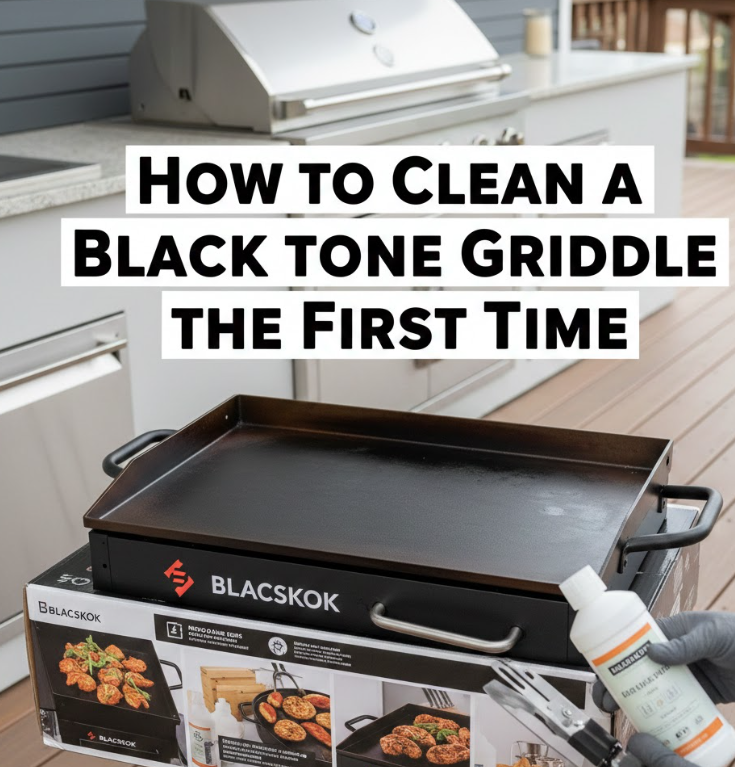
Cleaning a Blackstone griddle for the first time is different from routine maintenance. New griddles often come coated with factory oils meant to prevent rust during shipping—not for cooking. Removing these oils correctly ensures food safety and optimal seasoning.
This initial cleaning sets the foundation for long-term performance.
First-Time Cleaning and Preparation Steps
• Remove factory residue thoroughly
Heat the griddle to medium and wipe the surface with paper towels. This process burns off manufacturing oils that can cause unpleasant odors or flavors if left behind.
• Avoid soap unless explicitly recommended
Most Blackstone griddles do not require soap for first cleaning. Heat and wiping are usually sufficient. Soap can interfere with proper seasoning if overused.
• Use water sparingly for surface debris
If residue remains, lightly steam with water and scrape gently. Avoid soaking the surface, as excess moisture can create early rust.
• Dry completely before seasoning
After cleaning, allow the griddle to heat dry. This step evaporates hidden moisture and prepares the steel for oil bonding.
• Season immediately after cleaning
Apply oil and heat until it smokes. This polymerizes the oil, forming a non-stick, rust-resistant coating that protects your investment.
• Repeat seasoning cycles
Multiple seasoning layers strengthen the surface and improve cooking performance over time.
Also Read:- How to Take Care of Orchids: A Complete Indoor & Home Care Guide
How to Clean a Blackstone Griddle After Use
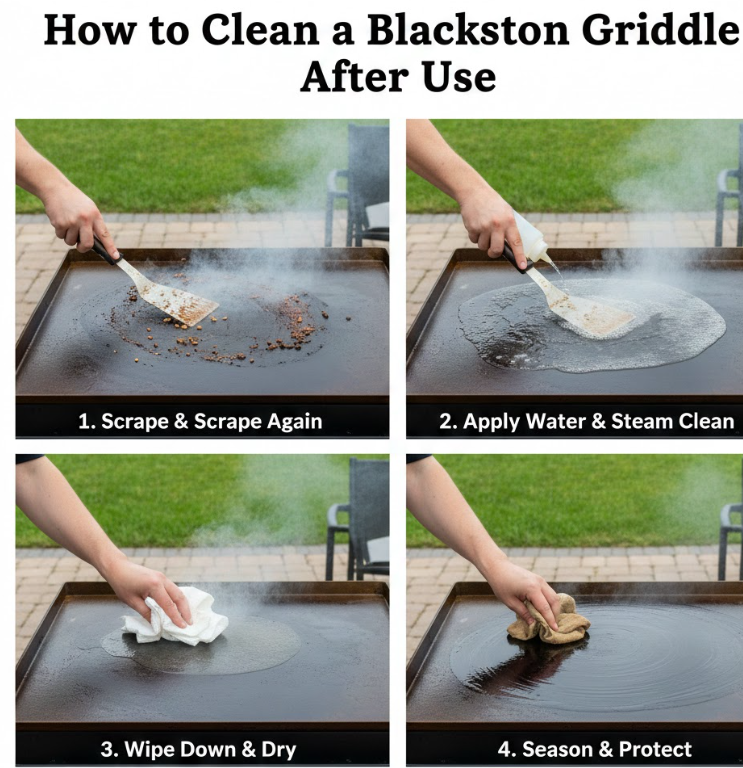
Cleaning your Blackstone griddle after each use ensures consistency in cooking quality and reduces long-term maintenance effort. Unlike deep cleaning, this process focuses on light but effective upkeep.
Routine cleaning preserves seasoning while preventing buildup.
Routine After-Use Cleaning Methods
• Turn heat low after cooking
Lower heat stabilizes grease without burning residue into the surface. Controlled temperature helps protect the seasoning layer during cleaning.
• Scrape evenly across the surface
Use smooth motions to remove residue without concentrating pressure in one spot. Even scraping keeps the surface flat and uniform.
• Clean the grease management system
Empty the grease trap regularly. Old grease can overflow, create odors, and attract pests if ignored.
• Wipe down edges and corners
Food particles often hide near corners. Regular attention prevents carbon buildup that’s difficult to remove later.
• Dry wipe instead of rinsing
Avoid rinsing the entire surface with water after every cook. Excess water accelerates rust formation if not dried perfectly.
• Re-oil lightly before storage
A thin oil layer prevents oxygen and moisture from contacting the steel surface.
Also Read:- How to Style Curtain Bangs: The Ultimate Expert Guide for Every Hair Type
How to Clean a Blackstone Griddle with Rust
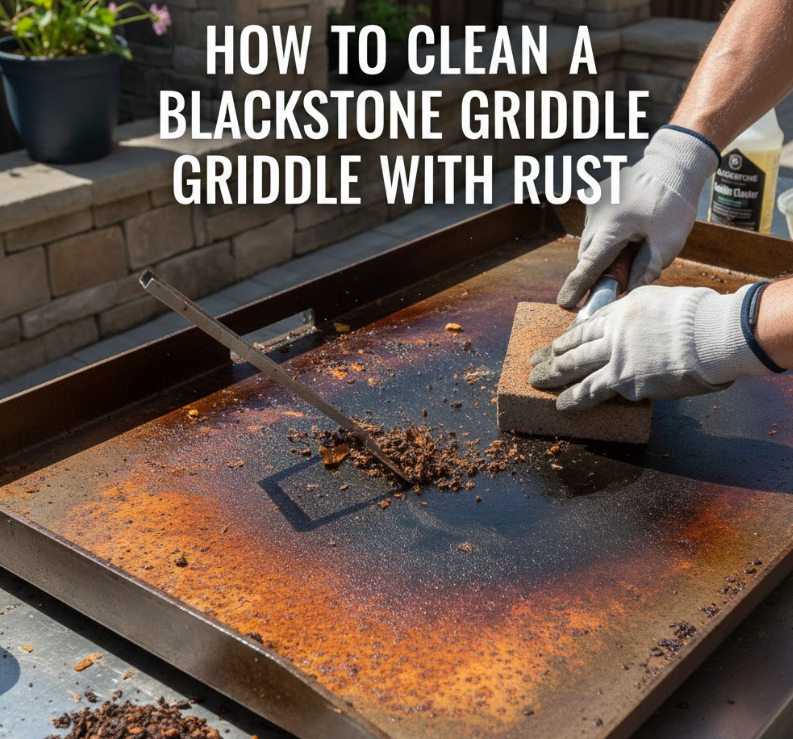
Rust happens when moisture meets bare steel, but it doesn’t mean your griddle is ruined. Learning how to clean a Blackstone griddle with rust allows you to restore it safely and effectively.
Rust removal requires patience and the right technique.
Rust Removal and Restoration Steps
• Identify surface vs deep rust
Surface rust appears orange and flaky, while deep rust pits the steel. Most cases are surface-level and easily removable.
• Use a griddle stone or abrasive pad
A pumice or griddle stone gently removes rust without damaging the steel when used correctly.
• Apply steady, even pressure
Scrub rusted areas slowly, avoiding aggressive force. Controlled pressure restores smoothness without thinning the steel.
• Wipe away rust dust completely
Rust particles left behind can re-oxidize. Always wipe clean before seasoning.
• Heat dry after rust removal
Turn heat on to eliminate remaining moisture. This step is critical before applying oil.
• Re-season thoroughly
Apply multiple seasoning layers to rebuild protection and prevent future rust.
Also Read:- How to Replace a Light Switch: A Complete Step-by-Step Guide for Safe and Modern Home Wiring
How to Clean a Blackstone Griddle with a Stone
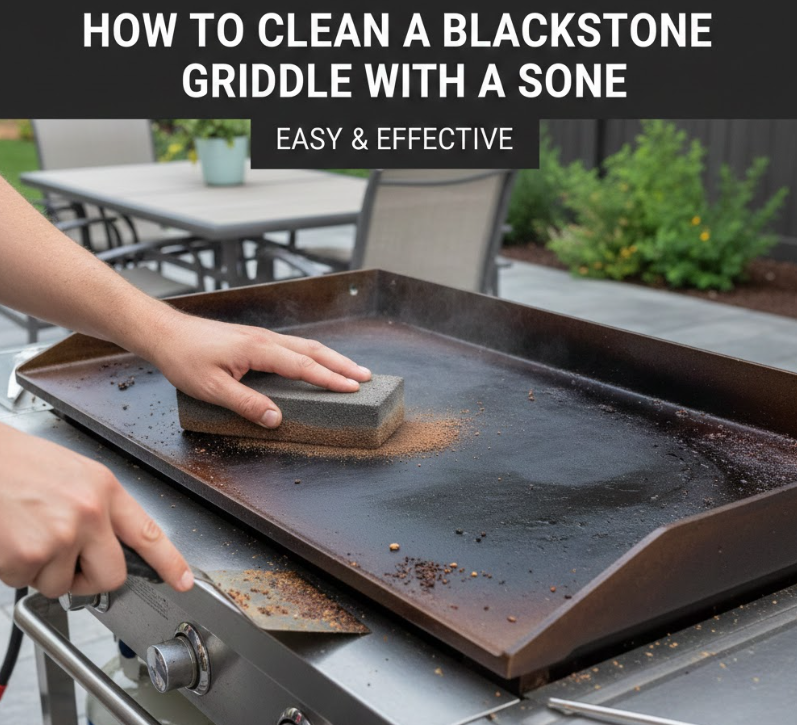
Using a griddle stone is one of the safest ways to deep-clean stubborn residue and rust without harming the cooking surface. Stones are specifically designed for flat-top grills and preserve structural integrity.
This method is ideal for periodic restoration.
Stone Cleaning Best Practices
• Choose the correct griddle stone
Use stones made for flat-top grills. Household pumice stones may be too abrasive.
• Heat the griddle slightly before use
A warm surface helps the stone glide smoothly and lift residue more effectively.
• Work in small sections
Cleaning in sections ensures even pressure and consistent results across the surface.
• Wipe debris frequently
Remove loosened residue often to avoid re-grinding particles into the steel.
• Avoid edges and corners aggressively
Edges are thinner and more vulnerable. Use light pressure in these areas.
• Re-season immediately after cleaning
Stone cleaning removes some seasoning. Re-oil and heat to restore protection.
Also Read:- How to Make a Shirley Temple: The Complete Classic Drink Guide
Conclusion
Understanding how to clean a Blackstone griddle properly is the difference between a long-lasting, high-performance cooking surface and one plagued by rust, buildup, and uneven heat. From first-time preparation to rust restoration and daily upkeep, consistent care protects both flavor and function.
With the right tools, proper technique, and regular seasoning, your Blackstone griddle can deliver restaurant-quality results for years.
FAQs
Q1: Can I use soap on my Blackstone griddle?
Only occasionally and lightly. Frequent soap use can strip seasoning.
Q2: How often should I deep clean my griddle?
Every few months or when heavy buildup appears.
Q3: Is rust dangerous on a Blackstone griddle?
Surface rust is safe to remove and does not ruin the griddle.
Q4: What oil is best for seasoning after cleaning?
Flaxseed, canola, or avocado oil work well due to high smoke points
For More Updates Visit: Biomagazine
