

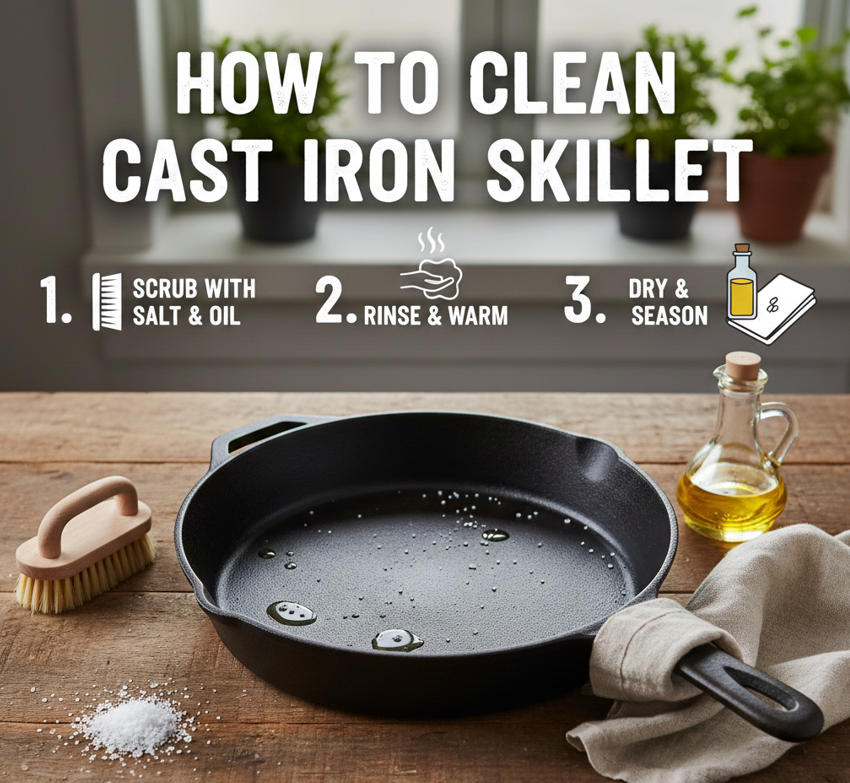
Knowing how to clean cast iron skillet correctly is essential for anyone who owns this timeless cookware. Cast iron skillets are valued for their durability, heat retention, and ability to improve with age—but only when they are cleaned and maintained properly. Unlike nonstick pans, cast iron requires special care to protect its seasoning layer, which is responsible for both flavor enhancement and natural nonstick performance.
Many people mistakenly believe cast iron is difficult to clean or that soap should never touch it. In reality, cleaning a cast iron skillet is simple when done the right way. Improper cleaning methods—such as soaking in water, using harsh detergents, or neglecting drying—can lead to rust, food buildup, and loss of seasoning.
This comprehensive guide explains how to clean cast iron skillet after use, after cooking steak, with salt, with baking soda, in the oven, and even how to remove rust safely. Drawing on culinary best practices and expert care techniques, this article gives you everything you need to keep your cast iron skillet performing at its best for decades.
Why Proper Cast Iron Skillet Cleaning Matters
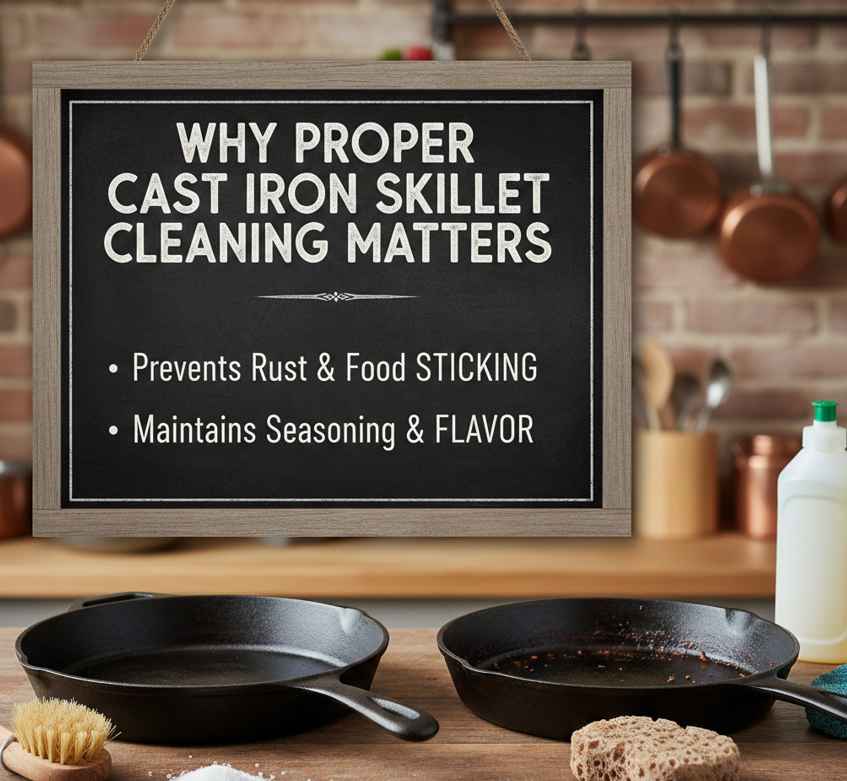
Understanding why proper cleaning matters helps prevent damage and extends the lifespan of your skillet. Cast iron is porous, meaning it absorbs moisture and flavors if not cleaned correctly. The seasoning layer—a polymerized oil coating—protects the surface from rust and sticking, and improper cleaning can strip this layer away.
Maintaining cleanliness while preserving seasoning ensures better cooking performance, safer food preparation, and improved flavor over time.
Key Reasons to Clean Cast Iron the Right Way
• Proper cleaning preserves the seasoning layer.
Seasoning is what makes cast iron naturally nonstick. Harsh scrubbing or soaking removes this protective layer, forcing you to re-season frequently and reducing cooking performance.
• It prevents rust formation.
Moisture left on cast iron penetrates the metal quickly. Proper cleaning and drying stop oxidation before it starts, keeping the skillet smooth and usable.
• Clean cast iron improves food flavor.
Old food residue can create unpleasant tastes. Gentle cleaning removes debris while allowing beneficial seasoning to enhance future meals.
• It ensures food safety.
Removing leftover grease and particles reduces the risk of bacterial growth, especially after cooking meat.
• Proper care extends skillet lifespan.
Well-maintained cast iron can last generations, making cleaning an investment rather than a chore.
• It maintains even heat distribution.
A clean, well-seasoned surface heats more evenly and performs better across cooking tasks.
Also Read: How to Steam Broccoli: The Complete Healthy Cooking Guide
How to Clean Cast Iron Skillet After Use
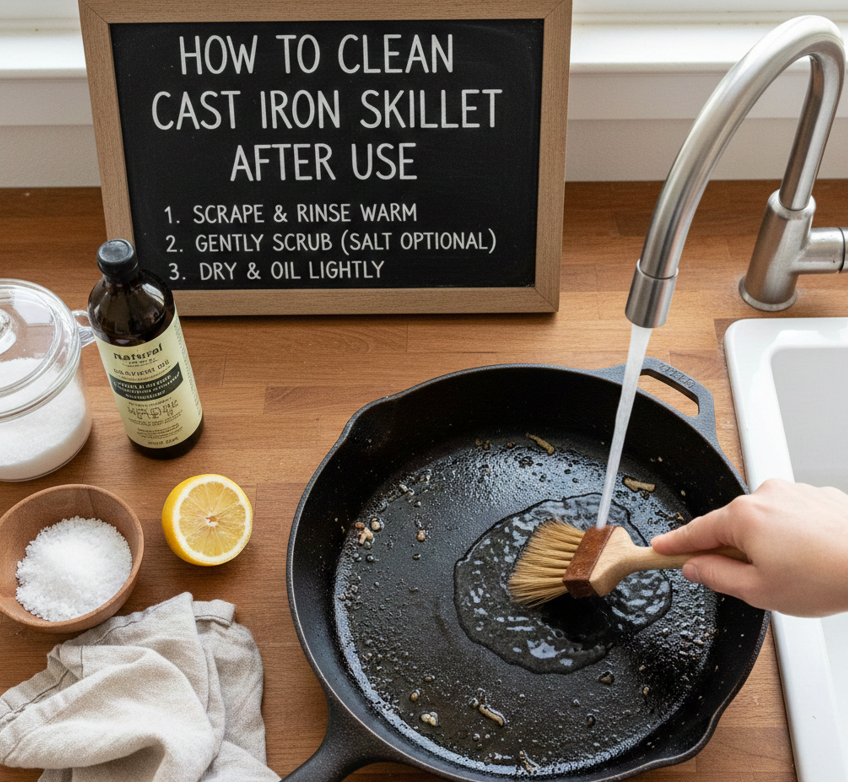
Learning how to clean cast iron skillet after use is the foundation of cast iron care. Cleaning immediately after cooking—while the pan is still warm—prevents food from hardening and makes the process easier.
The goal is to remove food residue without damaging the seasoning. This method works for everyday meals like vegetables, eggs, or light sautéing.
Best Practices for Cleaning After Use
• Clean while the skillet is warm, not hot.
Warm metal loosens food particles naturally. Cleaning too hot can cause burns, while cleaning cold allows residue to harden and stick.
• Use warm water and a soft brush or sponge.
Gentle tools remove debris without scratching seasoning. Avoid steel wool for routine cleaning.
• Skip soaking the skillet.
Soaking allows water to penetrate pores, increasing rust risk and weakening seasoning.
• Avoid harsh dish soap.
Small amounts of mild soap are acceptable occasionally, but frequent use strips protective oils.
• Rinse quickly and thoroughly.
Quick rinsing prevents moisture absorption and removes all residue efficiently.
• Dry immediately with heat.
Place the skillet on a burner for a minute to evaporate remaining moisture completely.
Also Read: How to Draw a Rose: A Complete Step-by-Step Guide for Beginners
How to Clean Cast Iron Skillet After Cooking
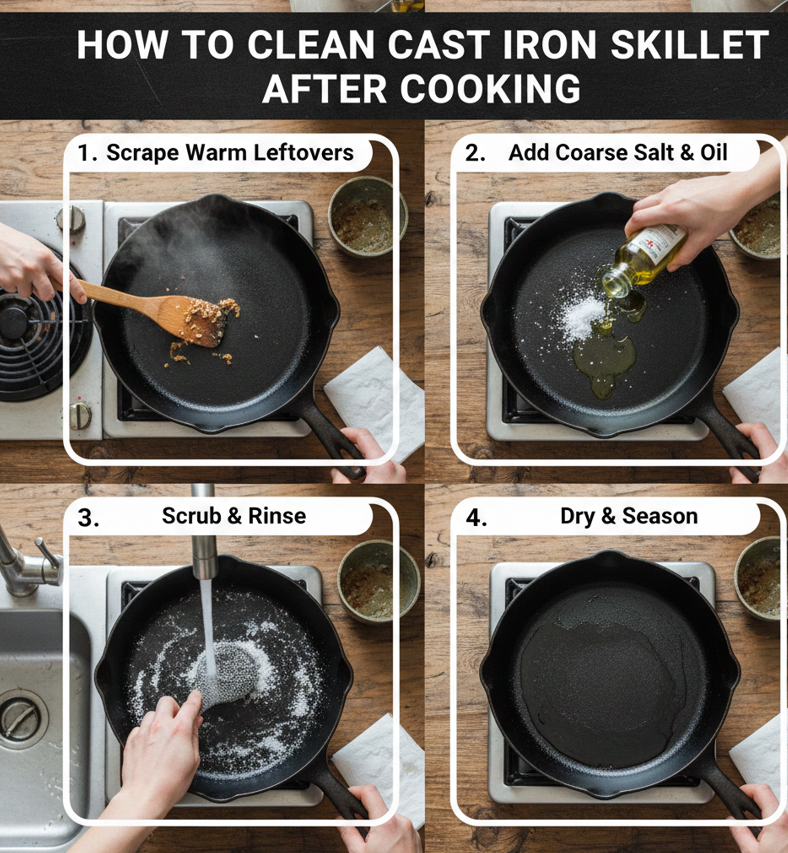
Understanding how to clean cast iron skillet after cooking focuses on removing grease and stuck-on bits without compromising seasoning. Different foods leave different residues, and adapting your cleaning method is essential.
This approach balances cleanliness with preservation, especially after heavier cooking.
Effective Post-Cooking Cleaning Techniques
• Scrape gently using a wooden or silicone spatula.
These tools lift food without scratching the surface or damaging seasoning.
• Use hot water to loosen stubborn residue.
Heat helps dissolve grease naturally, reducing the need for aggressive scrubbing.
• Employ a chainmail scrubber if needed.
Designed for cast iron, chainmail removes debris while preserving seasoning.
• Clean immediately after cooking.
Waiting allows fats to solidify, making cleaning harder and increasing odor retention.
• Inspect the surface after cleaning.
Check for food particles or dull spots that may indicate seasoning wear.
• Apply a light oil coat after drying.
Re-oiling restores shine and reinforces the seasoning layer.
Also Read: How to Add Fractions: A Complete Step-by-Step Learning Guide
How to Clean Cast Iron Skillet With Salt
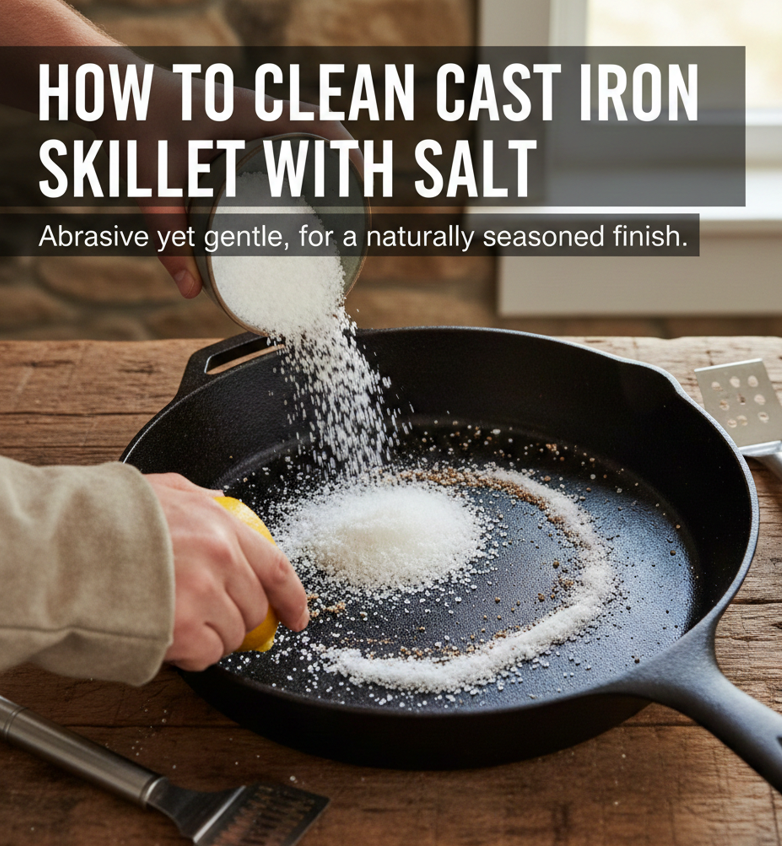
Learning how to clean cast iron skillet with salt is a traditional and highly effective method. Salt acts as a natural abrasive that removes stuck-on food without chemicals or water exposure.
This method is especially useful for maintaining seasoning while deep-cleaning the surface.
Salt Cleaning Method Explained
• Use coarse kosher or sea salt.
Larger grains provide gentle abrasion without scratching the skillet.
• Add salt to a warm, dry skillet.
Heat helps loosen food particles, enhancing salt’s cleaning power.
• Scrub using a paper towel or cloth.
The salt lifts debris while absorbing grease, leaving the surface clean.
• Avoid adding water during scrubbing.
Dry cleaning prevents moisture penetration and rust formation.
• Dispose of used salt immediately.
Salt absorbs oils and debris and should not be reused.
• Re-oil lightly after cleaning.
This restores the skillet’s protective layer and prevents dryness.
Also Read: How to Cook Chicken Breast in Oven Complete Step-by-Step Guide
How to Clean Cast Iron Skillet Rust Safely
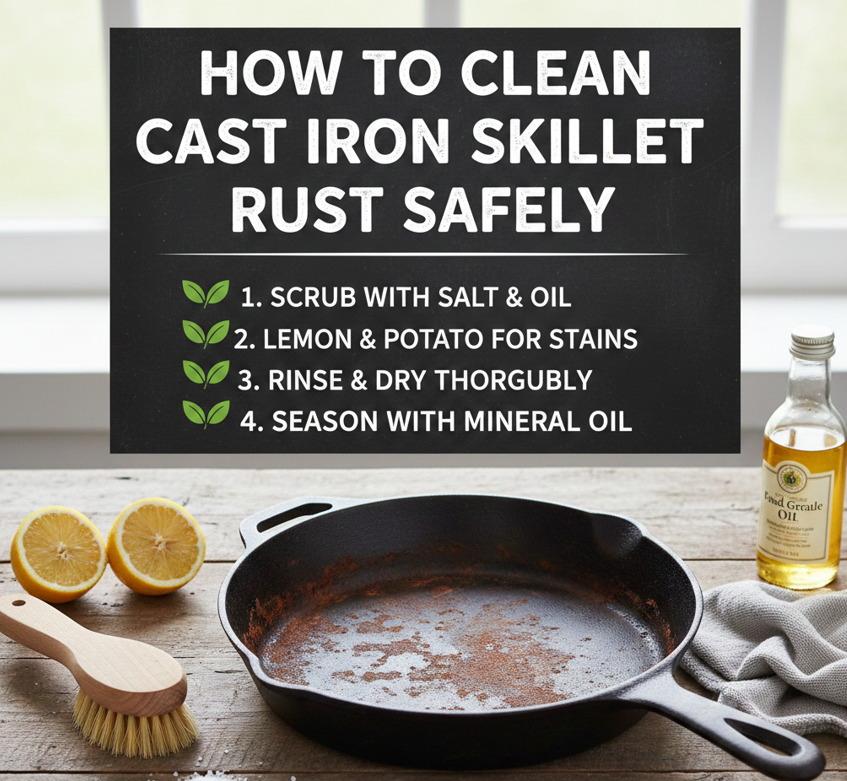
Knowing how to clean cast iron skillet rust is essential for restoring neglected or improperly stored pans. Rust does not mean your skillet is ruined—it can be repaired with proper care.
Rust occurs when moisture contacts bare iron, often due to improper drying or storage.
Safe Rust Removal Techniques
• Scrub rust with steel wool or stiff brush.
Unlike routine cleaning, rust removal requires abrasion to expose clean metal.
• Rinse thoroughly to remove rust particles.
All residue must be removed before re-seasoning.
• Dry immediately using heat.
Moisture is the enemy—heat drying ensures rust does not return.
• Re-season immediately after rust removal.
Bare iron must be protected quickly to prevent new oxidation.
• Apply thin layers of oil during seasoning.
Thin coats polymerize better and create a durable surface.
• Repeat seasoning cycles if needed.
Severely rusted skillets may require multiple rounds for full restoration.
Also Read: How to Soften Brown Sugar: The Complete Expert Guide for Every Situation
How to Clean Cast Iron Skillet After Cooking Steak
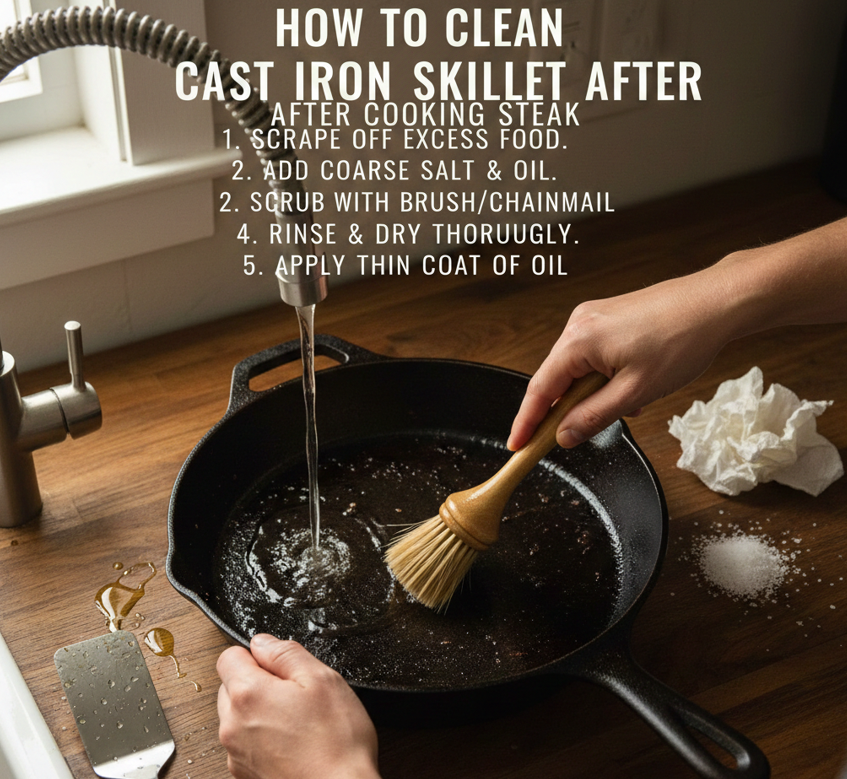
Understanding how to clean cast iron skillet after cooking steak is important because steak leaves behind heavy grease and protein residue. Improper cleaning can lead to sticky buildup or burnt odors.
This method focuses on grease control without stripping seasoning.
Steak-Specific Cleaning Tips
• Let the skillet cool slightly before cleaning.
Cooling prevents warping and makes grease easier to manage.
• Pour off excess grease carefully.
Removing grease early prevents buildup and sticky residue.
• Use hot water to dissolve protein bits.
Protein residue responds best to heat rather than scraping.
• Scrub gently with a brush or chainmail.
Avoid aggressive tools that damage seasoning.
• Dry thoroughly using stovetop heat.
Grease combined with moisture encourages rancid odors.
• Re-oil lightly after cleaning.
Steak cooking can dry out seasoning, making oiling essential.
Also Read: How to Cut a Pineapple: A Complete, Easy, and Waste-Free Guide for Beginners
How to Clean Cast Iron Skillet in Oven
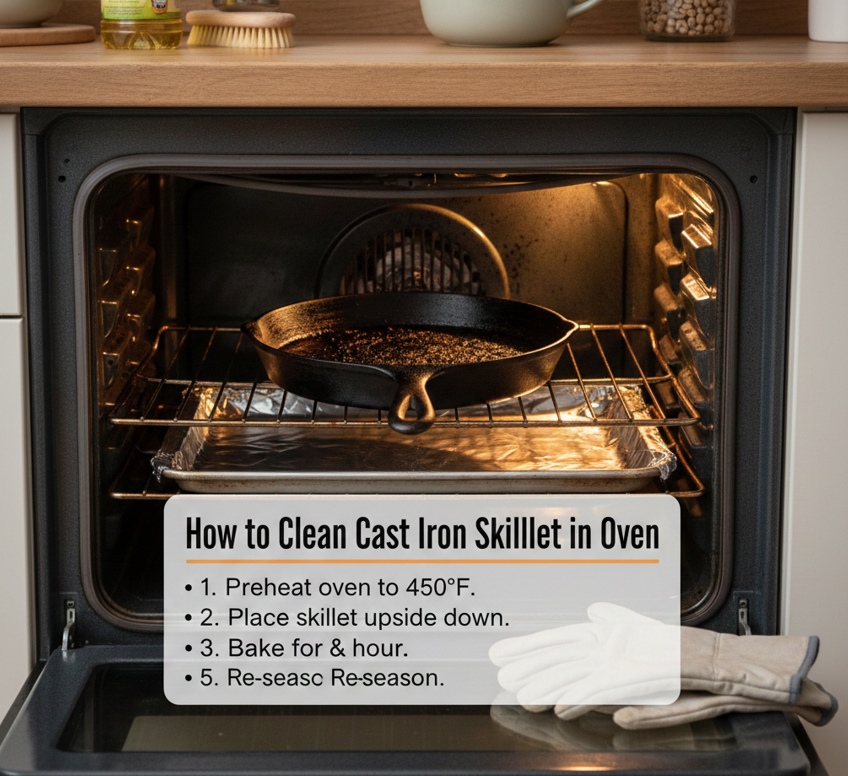
Learning how to clean cast iron skillet in oven is useful for deep cleaning and restoring seasoning. Oven cleaning is often paired with re-seasoning to renew the skillet’s surface.
This method is best for heavily used or unevenly seasoned pans.
Oven Cleaning and Restoration Process
• Preheat oven to appropriate seasoning temperature.
High heat polymerizes oil, creating a durable coating.
• Clean skillet thoroughly before oven use.
Remove all debris to ensure even seasoning.
• Apply a thin oil layer evenly.
Excess oil causes sticky residue instead of smooth seasoning.
• Place skillet upside down in oven.
This prevents oil pooling and ensures uniform coating.
• Bake for one hour.
Sufficient time allows oil to bond properly to iron.
• Cool gradually in oven.
Slow cooling prevents cracking and improves seasoning durability.
Also Read: How to Learn English Fast: Practical Strategies
How to Clean Cast Iron Skillet With Baking Soda
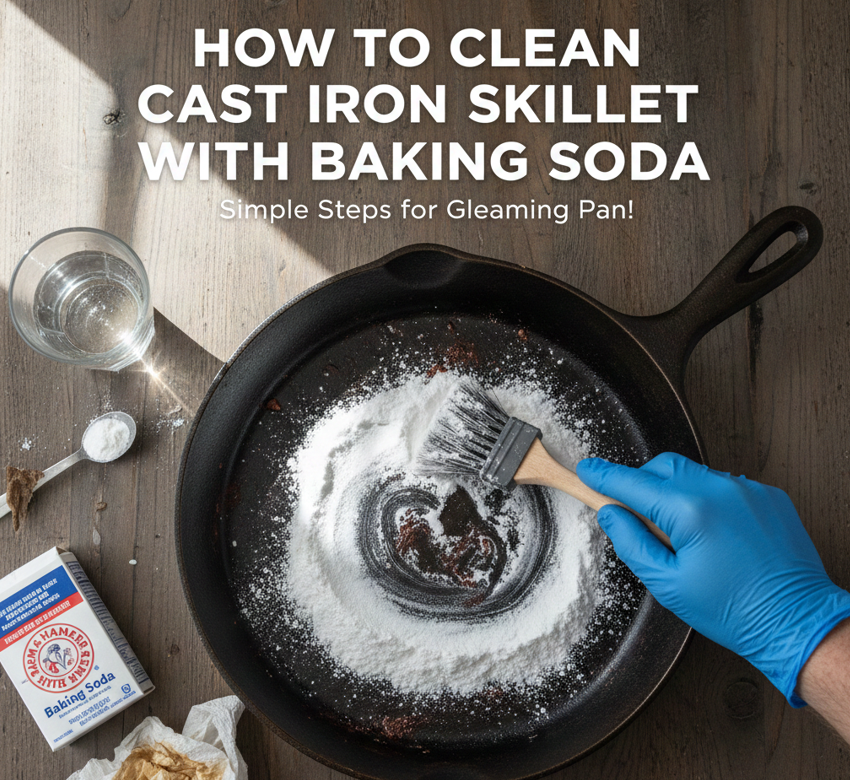
Understanding how to clean cast iron skillet with baking soda is helpful for removing odors or stubborn residue when salt alone is not enough. Baking soda is mildly abrasive and deodorizing.
This method should be used sparingly to avoid seasoning damage.
Baking Soda Cleaning Method
• Mix baking soda with minimal water.
Creating a paste allows targeted cleaning without soaking.
• Apply only to problem areas.
Spot treatment prevents unnecessary seasoning loss.
• Scrub gently using a soft brush.
Avoid aggressive scrubbing that exposes bare iron.
• Rinse quickly and thoroughly.
Leaving residue can dull the surface.
• Dry immediately with heat.
Heat drying prevents moisture-related rust.
• Re-season lightly after use.
Baking soda can weaken seasoning, making oiling essential.
Conclusion
Mastering how to clean cast iron skillet ensures your cookware remains durable, safe, and high-performing for years. Whether cleaning after daily use, removing rust, or restoring seasoning, proper techniques protect the skillet’s surface while enhancing cooking results.
With consistent care, a cast iron skillet becomes better with time—developing rich seasoning, superior heat control, and unmatched flavor. Treat it correctly, and it will serve you for generations
FAQs
Can I use soap on cast iron?
Yes, mild soap occasionally is safe if the skillet is properly dried and oiled.
Why does my cast iron smell bad?
Odors result from trapped grease or moisture and require deep cleaning and re-seasoning.
How often should I season my skillet?
Light seasoning after each use maintains performance and protection
For More Updates Visit: Biomagazine
