

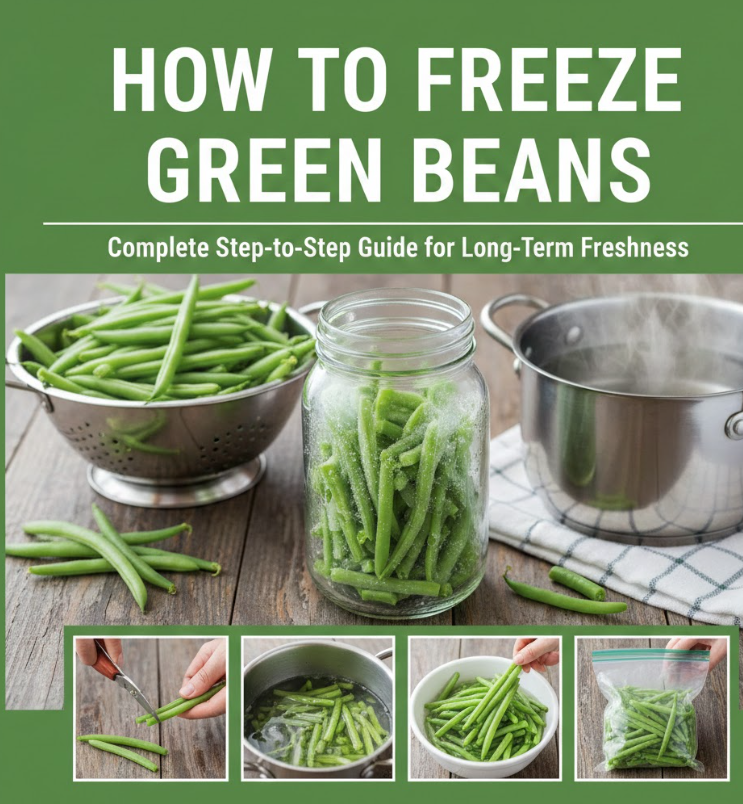
Freezing vegetables at home is one of the most practical ways to preserve flavor, nutrition, and money—especially when your garden is overflowing. If you’ve ever wondered how to freeze green beans the right way, this guide walks you through every proven method in depth. From garden-fresh beans to vacuum-sealed freezer storage, you’ll learn expert-approved techniques that prevent freezer burn, maintain texture, and keep green beans tasting fresh for months.
This comprehensive guide covers how to freeze green beans from the garden, how to freeze green beans without blanching, how to freeze green beans with blanching, how to freeze green beans fresh, and how to freeze green beans with FoodSaver, ensuring you choose the best method for your needs.
Why Freezing Green Beans Is the Best Preservation Method
Freezing is one of the most reliable preservation methods for green beans because it locks in nutrients, color, and flavor better than canning or dehydration. When done correctly, frozen green beans retain their crisp texture and vibrant green color for up to 12 months. Unlike refrigeration, which only slows spoilage, freezing halts enzyme activity that causes nutrient loss.
From a food safety perspective, freezing minimizes bacterial growth when beans are prepared properly. This makes it ideal for home gardeners and bulk shoppers who want to reduce food waste while enjoying vegetables year-round.
How to Freeze Green Beans From the Garden
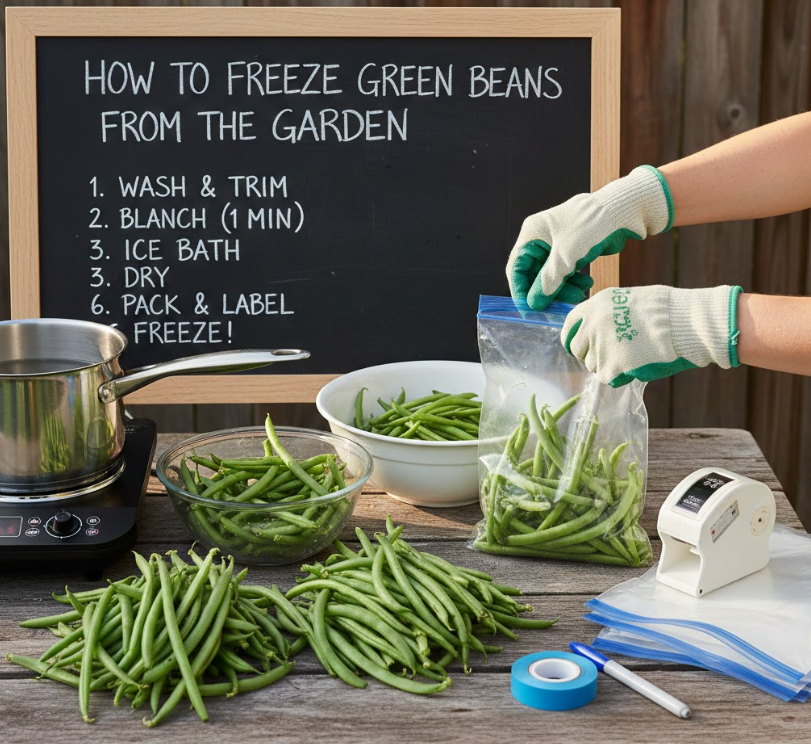
Freshly harvested green beans contain the highest levels of vitamins A, C, and K, making garden freezing the most rewarding option. Timing and handling are critical to preserve peak quality.
Understanding Garden-Fresh Green Beans
Freezing green beans from the garden means preserving beans within hours of harvest to capture maximum flavor and nutrition. Fresh beans have active enzymes that must be handled correctly to prevent texture loss. This method prioritizes freshness, cleanliness, and quick processing.
Key Preparation Steps for Garden Beans
• Harvest at peak maturity
Pick green beans when they are firm, smooth, and snap easily. Beans harvested too late become fibrous and freeze poorly, leading to tough texture after cooking.
• Wash thoroughly in cold water
Garden beans often carry dirt, insects, and residue. Washing removes contaminants that can affect taste and freezer safety.
• Trim ends evenly
Removing stems and tips ensures uniform freezing and makes future cooking easier, especially for stir-fries or casseroles.
• Sort by size
Similar-sized beans freeze more evenly and reheat consistently, preventing mushy or undercooked portions.
• Blanch promptly after harvest
Garden beans lose nutrients quickly. Blanching within 6–12 hours preserves color and flavor.
• Dry completely before freezing
Excess moisture forms ice crystals that damage cell walls and cause freezer burn.
Also Read:- How to Delete DoorDash Account: Complete Step-by-Step Guide (2026)
How to Freeze Green Beans Without Blanching
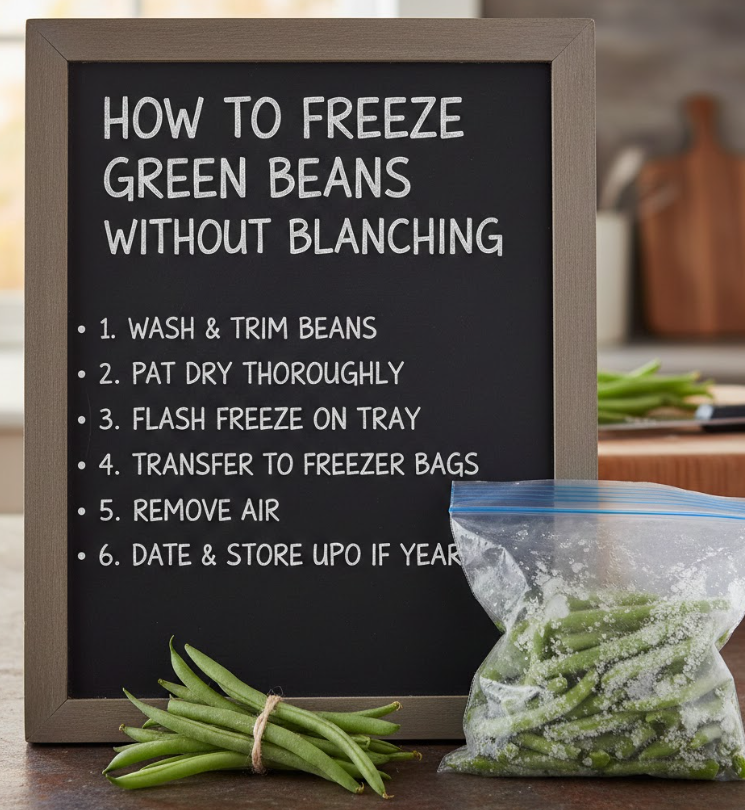
Skipping blanching is a time-saving option, but it requires realistic expectations. This method works best for short-term storage and cooked dishes.
What No-Blanch Freezing Means
Freezing green beans without blanching involves placing raw beans directly into the freezer. While faster, enzymes remain active, which can affect texture and color over time. This approach is best for soups, stews, and slow-cooked meals.
Best Practices for No-Blanch Freezing
• Choose young, tender beans only
Older beans deteriorate quickly without blanching. Young beans maintain better structure.
• Wash and dry thoroughly
Moisture increases ice formation, which accelerates freezer damage.
• Use airtight freezer bags
Air exposure causes oxidation, leading to dull color and off-flavors.
• Remove as much air as possible
Pressing out air slows enzyme activity and reduces freezer burn.
• Freeze in small portions
Smaller batches freeze faster and are easier to use later.
• Use within 2–3 months
No-blanch beans are best consumed quickly for acceptable quality.
Also Read:- How to Clean Rust Off Metal: Complete Expert Guide for Home & Tools
How to Freeze Green Beans With Blanching
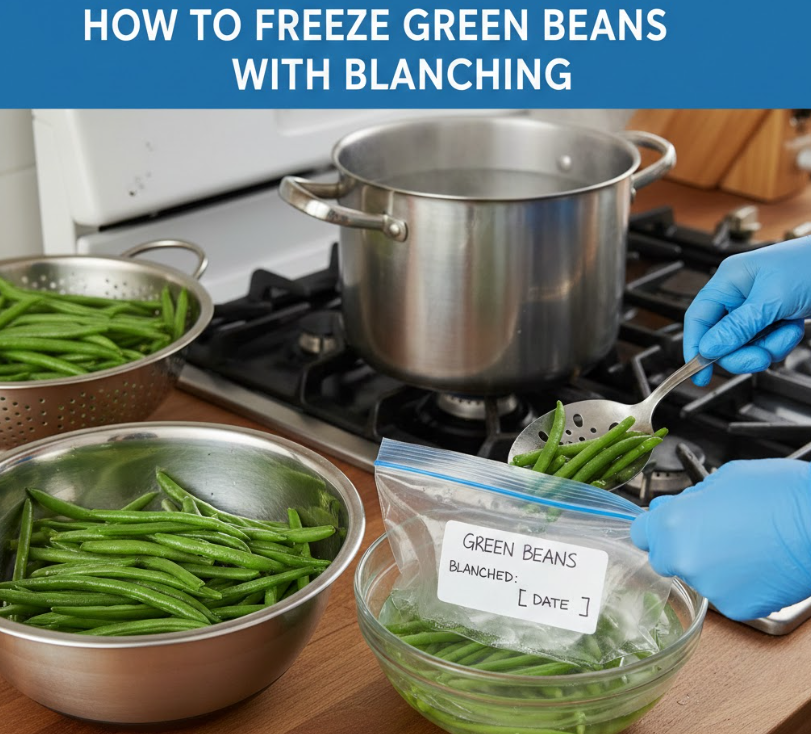
Blanching is the gold standard for freezing vegetables. It preserves color, texture, and nutritional value.
Why Blanching Works
Blanching involves briefly boiling green beans, then rapidly cooling them in ice water. This process stops enzyme action that causes spoilage. It ensures long-term freezer stability and superior quality.
Step-by-Step Blanching Process
• Boil water generously
Use one gallon of water per pound of beans to maintain temperature stability.
• Blanch for exactly 3 minutes
Under-blanching fails to stop enzymes; over-blanching softens texture.
• Immediately ice bath
Rapid cooling halts cooking and locks in crispness.
• Drain thoroughly
Excess water leads to freezer burn and ice buildup.
• Flash freeze before storage
Lay beans flat on a tray to prevent clumping.
• Label and date packages
Proper labeling helps track freshness and rotation.
Also Read:- How to Crochet a Blanket: A Complete Beginner-to-Expert Guide
How to Freeze Green Beans Fresh
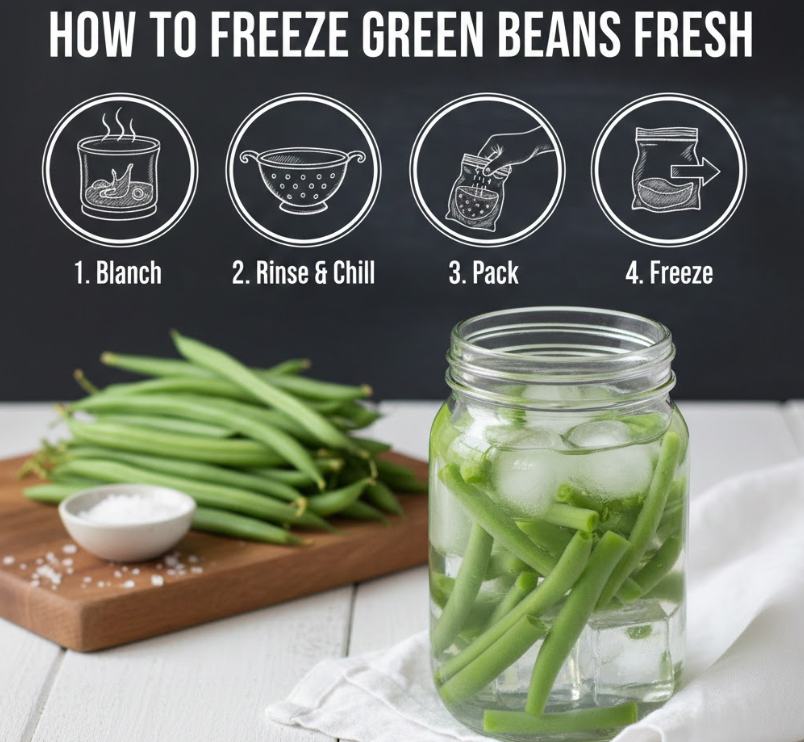
Freezing green beans fresh refers to preserving beans at their absolute peak condition—regardless of method.
What “Fresh Freezing” Really Means
Fresh freezing emphasizes minimal delay between preparation and freezing. It focuses on maintaining natural texture, taste, and nutrients. Speed and cleanliness are essential factors.
Fresh Freezing Techniques
• Freeze immediately after prep
Delays reduce vitamin retention and flavor quality.
• Use high-quality freezer containers
Thin bags allow air transfer; thicker materials protect better.
• Avoid overcrowding freezer
Proper airflow ensures faster freezing and better texture.
• Store at 0°F (-18°C) or lower
Consistent temperature prevents thaw-refreeze cycles.
• Rotate freezer stock regularly
Use older beans first to maintain quality.
• Avoid repeated thawing
Repeated temperature changes degrade texture and taste.
Also Read:- How to Skate: The Complete Step-by-Step Guide for Beginners and Beyond
How to Freeze Green Beans With FoodSaver (Vacuum Sealing)
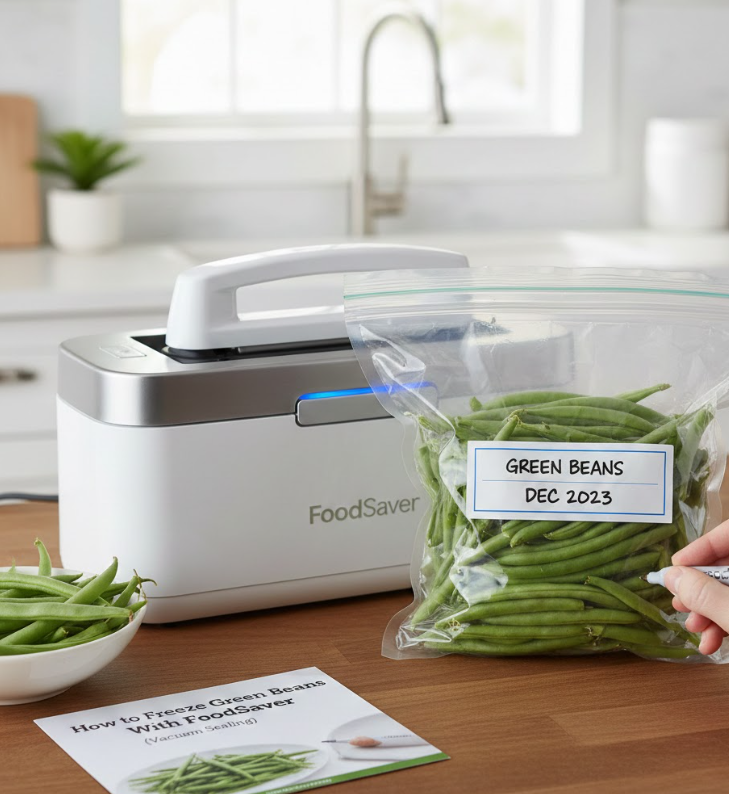
Vacuum sealing is the most advanced method for long-term storage.
What FoodSaver Freezing Is
FoodSaver freezing removes oxygen from packaging before sealing. Oxygen causes freezer burn and flavor loss. This method maximizes shelf life and freshness.
FoodSaver Best Practices
• Blanch beans before sealing
Vacuum sealing does not stop enzyme activity alone.
• Cool beans completely
Warm beans create condensation inside bags.
• Use proper vacuum settings
Gentle vacuum prevents crushing beans.
• Seal in meal-size portions
Reduces waste and repeated opening.
• Label clearly
Vacuum bags look similar once frozen.
• Store flat for space efficiency
Flat storage improves freezer organization.
Also Read:- How to Read Tabs: A Complete Beginner-to-Advanced Guide
Nutrition and Storage Statistics
Research shows blanch-frozen vegetables retain up to 90% of vitamin C compared to fresh after storage (USDA). Properly frozen green beans maintain quality for 8–12 months, while no-blanch methods last 2–3 months.
Conclusion: The Best Way to Freeze Green Beans
Learning how to freeze green beans correctly allows you to enjoy garden-fresh flavor all year long. While multiple methods exist, blanching and vacuum sealing consistently deliver the best results for texture, taste, and nutrition. Whether you’re preserving a backyard harvest or bulk groceries, using proper freezing techniques ensures high-quality meals with zero waste.
FAQs
Can I freeze green beans raw?
Yes, but blanching significantly improves texture and shelf life.
How long do frozen green beans last?
Blanched beans last up to 12 months at 0°F.
Do frozen green beans lose nutrients?
Minimal loss occurs when properly blanched and frozen quickly
For More Updates Visit: Biomagazine
