

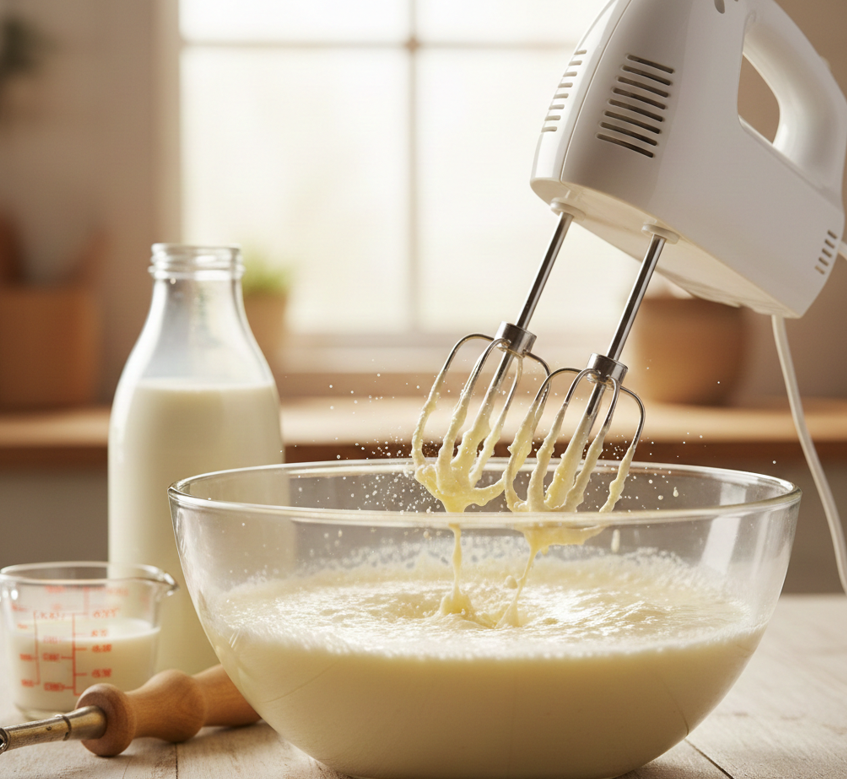
If you’ve ever started cooking or baking only to realize you’re out of heavy cream, you’re not alone. Many people search for how to make heavy cream because it’s a staple ingredient in sauces, soups, desserts, and whipped toppings—but not always something we keep stocked. Heavy cream, also known as heavy whipping cream, contains 36–40% milk fat, giving it a rich texture and smooth mouthfeel that’s hard to replace directly.
The good news is that you can make heavy cream at home using simple ingredients like milk, butter, or half-and-half, depending on what you have available. While homemade versions may not whip exactly like store-bought heavy cream, they work extremely well for cooking, baking, and creamy recipes.
This guide explains what heavy cream really is, how homemade versions compare, and walks you through multiple proven methods—each explained in depth so you can choose the best option for your recipe.
What Is Heavy Cream and Why Fat Content Matters
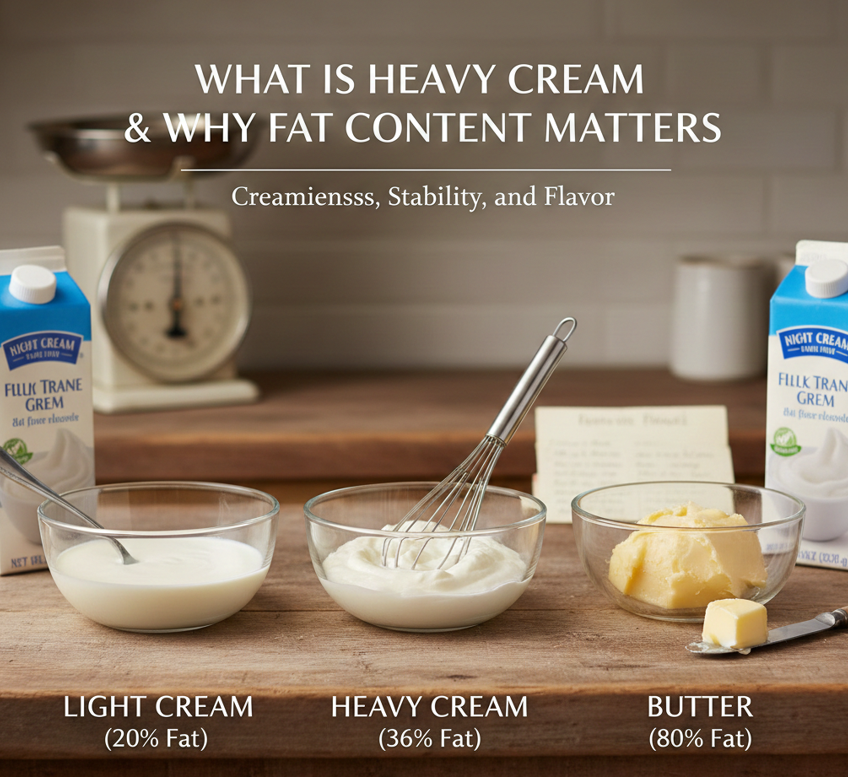
Heavy cream is the high-fat portion of milk that rises to the top before homogenization. Its fat content is what gives dishes richness, thickness, and stability.
• Heavy cream contains at least 36% milk fat, which creates a smooth, luxurious texture
• Fat helps sauces emulsify instead of separating
• In baking, heavy cream adds moisture and tenderness
• In soups, it creates body without flour or starch
• High fat allows cream to thicken when heated
• Whipping depends entirely on sufficient fat structure
Because most household milk contains only 2–4% fat, homemade heavy cream focuses on increasing fat content to mimic these properties as closely as possible.
Also Read:- How to Cut a Watermelon: The Complete Practical Guide for Every Occasion
How to Make Heavy Cream at Home (Overview Method)
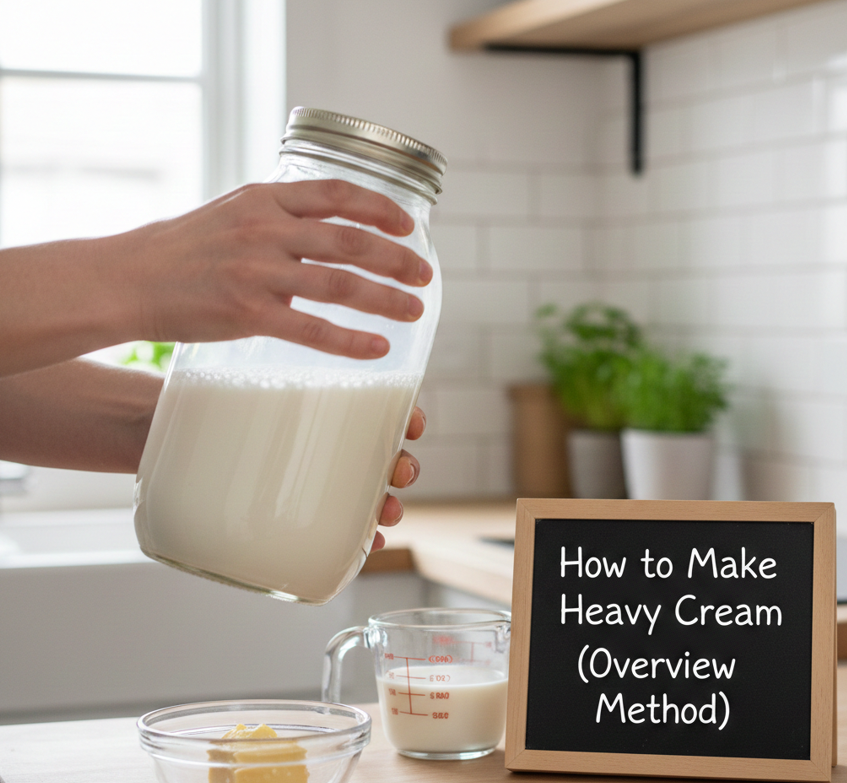
Making heavy cream at home means recreating its fat-to-liquid balance, not chemically duplicating dairy processing. This distinction matters for realistic expectations.
• Homemade versions are best for cooking, not whipping
• Texture depends on ingredient ratios
• Freshness improves flavor compared to packaged cream
• Customizable for lactose sensitivity or diet needs
• Ideal for sauces, soups, casseroles, and desserts
• Requires no special equipment
Understanding this helps you choose the right method for the right recipe, which we’ll break down below.
Also Read:- How to Get Rid of a Stye Overnight: Proven Remedies That Actually Work
How to Make Heavy Cream with Milk
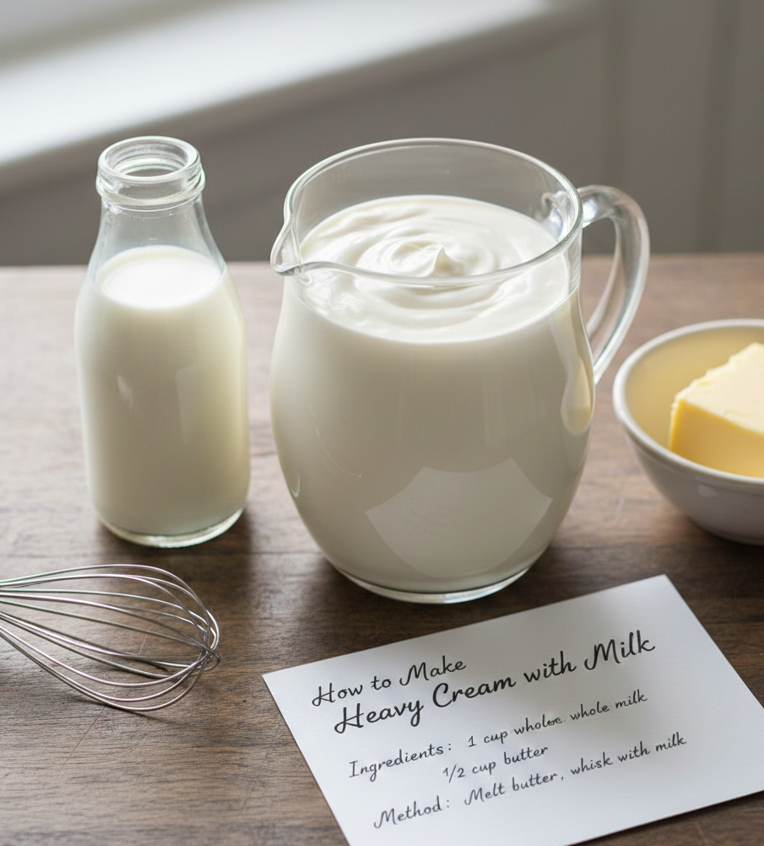
This method focuses on enriching regular milk to behave like heavy cream in cooking applications. It’s useful when butter is unavailable or undesirable.
• Uses whole milk for better fat balance
• Relies on thickening rather than emulsification
• Best suited for sauces and soups
• Maintains dairy flavor without heaviness
• Cannot be whipped into stiff peaks
• Easy and quick for everyday cooking
Whole milk alone doesn’t contain enough fat, so this approach emphasizes functional similarity rather than exact replication.
Practical insight: Milk-based substitutes work best in heat-stable recipes where cream is used for richness rather than structure.
Also Read:- How to Make Cold Foam: The Complete Expert Guide for Coffee Lovers
How to Make Heavy Cream with Milk and Butter
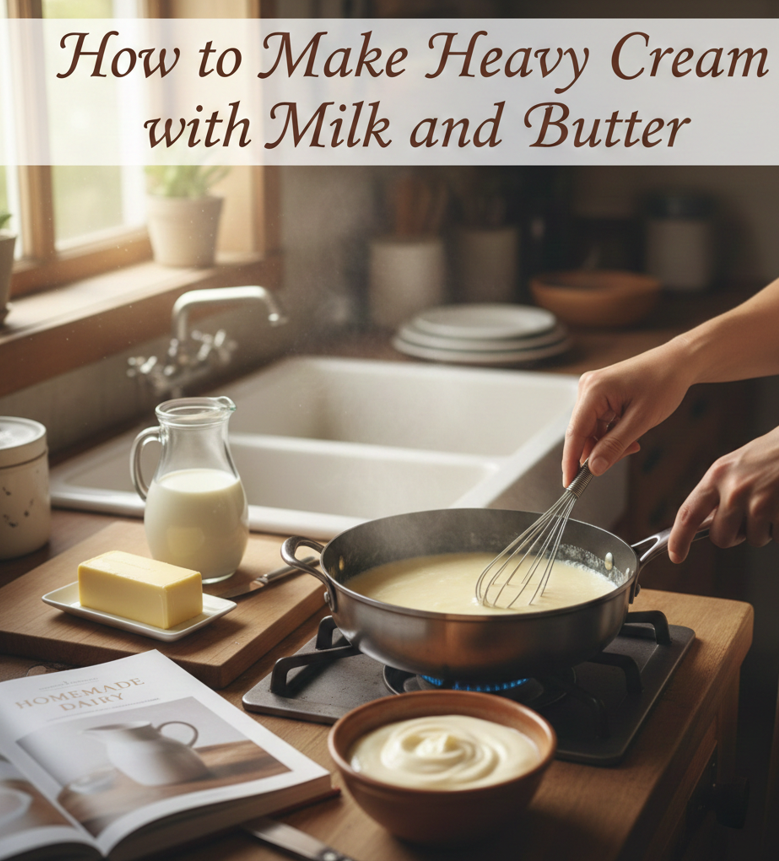
This is the most reliable and widely recommended homemade heavy cream substitute, as butter provides the missing fat.
• Butter supplies concentrated milk fat
• Milk provides liquid consistency
• Mimics fat percentage closely
• Works extremely well in cooking and baking
• Smooth texture when properly blended
• Best overall replacement method
Why This Method Works Best
Butter is essentially milk fat, and when combined with milk in the right ratio, it creates a mixture very close to real heavy cream. This method is endorsed by many professional cooks for sauces and baked goods.
Common ratio:
¾ cup milk + ¼ cup melted butter = 1 cup heavy cream substitute
This version performs excellently in pasta sauces, gravies, soups, and custards.
Also Read:- How to Measure Ring Size: The Complete Step-by-Step Guide for Accurate Results
How to Make Heavy Cream with Half and Half
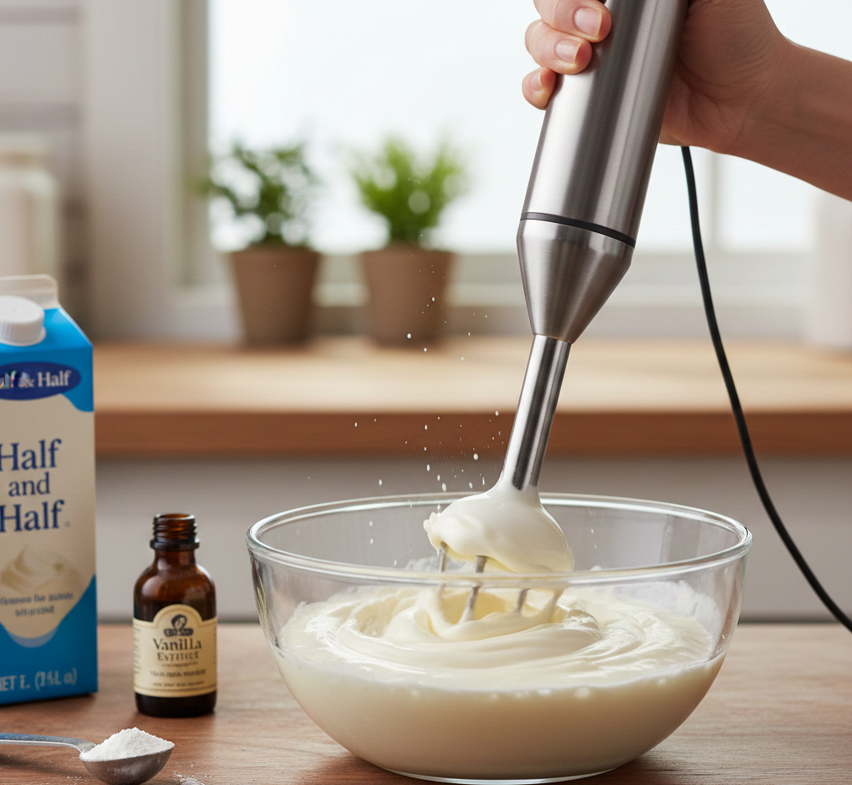
Half and half sits between milk and cream, containing about 10–12% fat. Enhancing it can push it closer to heavy cream territory.
• Half and half offers a richer base than milk
• Requires added fat for proper thickness
• Less dilution compared to milk-based methods
• Good for coffee, sauces, and light cooking
• Flavor remains balanced and creamy
• Easier texture control
Adding melted butter or cream cheese to half and half increases fat content without significantly changing flavor.
Best use case: When you want a lighter cream consistency that won’t overpower delicate dishes.
Also Read:- How to Tell If Eggs Are Good: The Complete Safety & Freshness Guide
How to Make Heavy Cream Without Butter
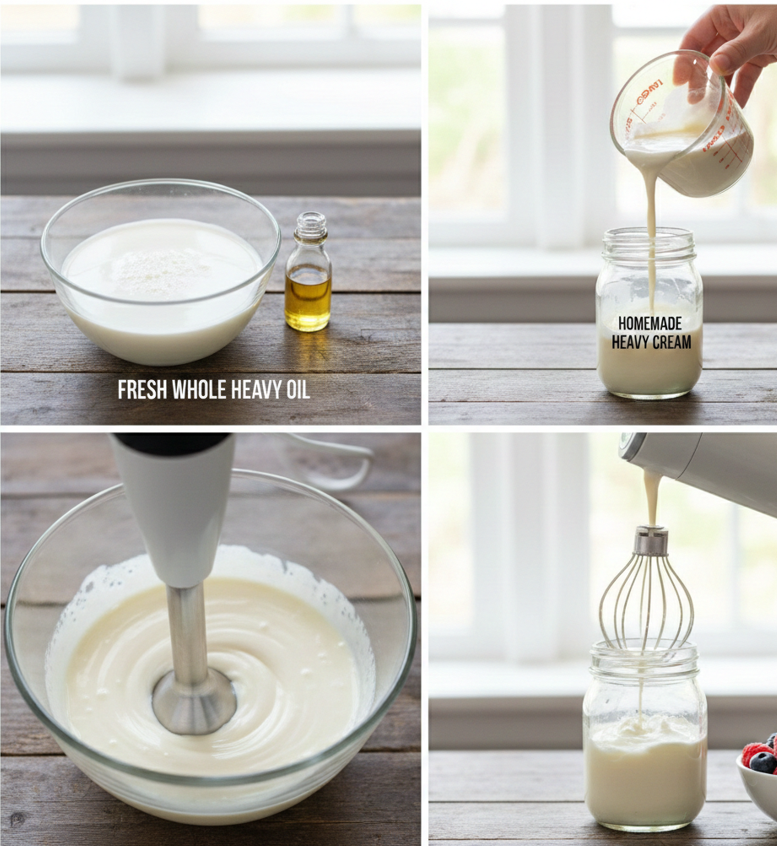
Some people avoid butter due to dietary preferences, allergies, or flavor concerns. Fortunately, alternatives exist.
• Uses milk thickening techniques
• Employs cornstarch or gelatin
• Mimics texture, not fat content
• Best for soups and casseroles
• Not suitable for whipping
• Lower calorie option
Why Texture Still Matters
Even without added fat, thickened milk can replicate the mouthfeel of cream in certain dishes. This works especially well in savory recipes where richness comes from other ingredients.
Important note: This is a functional substitute, not a nutritional equivalent.
Also Read:- How to Pronounce Gyro: The Complete, Accurate Guide You Can Trust
How to Make Heavy Cream for Cooking vs Baking
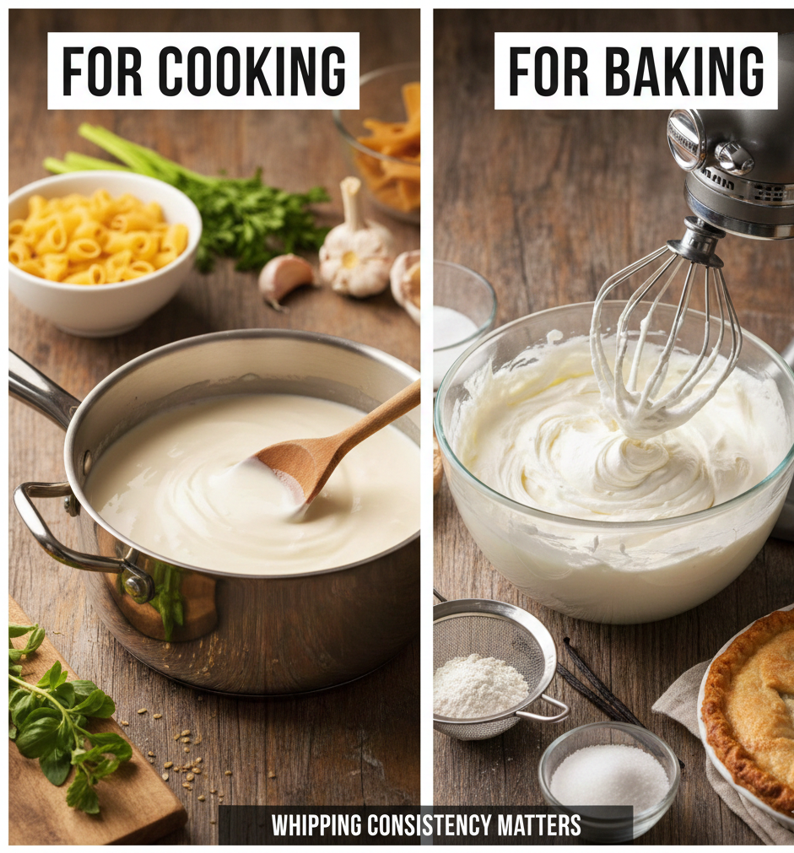
Not all recipes require the same cream behavior, so choosing the right method matters.
• Cooking allows more flexibility
• Baking requires moisture consistency
• Sauces need emulsification
• Desserts require richness balance
• Whipping requires real heavy cream
• Heat stability differs by method
Understanding this distinction prevents recipe failure and helps you select the most appropriate homemade option.
Common Mistakes When Making Heavy Cream at Home
Avoiding these errors ensures better results.
• Using low-fat milk
• Overheating butter
• Incorrect ratios
• Expecting whipping capability
• Skipping proper mixing
• Substituting blindly without testing
Each mistake affects texture, taste, or stability, especially in sensitive recipes like custards.
Storage and Shelf Life of Homemade Heavy Cream
Homemade versions don’t last as long as commercial cream.
• Store in airtight container
• Refrigerate immediately
• Use within 2–3 days
• Shake before use
• Discard if separation smells sour
• Do not freeze milk-based substitutes
Freshness directly impacts flavor and safety.
Conclusion: The Best Way to Make Heavy Cream at Home
Learning how to make heavy cream at home gives you flexibility, saves time, and keeps your cooking on track. While homemade versions can’t fully replicate whipping cream, they perform exceptionally well in cooking, baking, and creamy dishes when matched to the right recipe.
For the closest substitute, milk and butter remains the most effective option. For lighter needs or dietary preferences, milk-only or butter-free methods still deliver satisfying results.
The key is understanding fat, function, and recipe intent—once you do, making heavy cream at home becomes simple, reliable, and practical
FAQs:
Can homemade heavy cream be whipped?
No. Only real heavy cream with intact fat globules can whip properly.
Is homemade heavy cream healthier?
It can be, depending on ingredients and portion control.
Does it taste the same?
Very similar in cooked dishes, slightly different when tasted plain
For More Updates Visit: Biomagazine
