

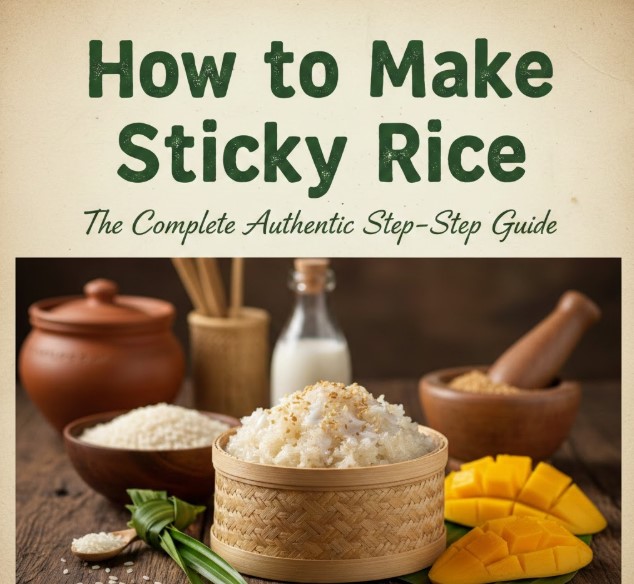
If you’ve ever wondered how to make sticky rice that turns out soft, chewy, and perfectly cohesive, you’re not alone. Sticky rice—also called glutinous rice or sweet rice—is a staple in many Asian cuisines and plays a central role in dishes from sushi rolls to mango sticky rice desserts. However, achieving the correct texture requires more than simply boiling rice.
Sticky rice differs from regular long-grain varieties because of its high amylopectin starch content, which creates its signature sticky consistency. According to research published by the Food and Agriculture Organization, rice varieties vary significantly in starch composition, affecting cooking behavior and texture. Understanding this science is key to mastering preparation methods.
Understanding Sticky Rice: Texture, Starch, and Rice Varieties
Before learning how to make sticky rice, it’s essential to understand what makes it sticky. Sticky rice, often labeled glutinous rice (though gluten-free), contains nearly 100% amylopectin starch and very little amylose. This starch structure allows grains to cling together once cooked.
In countries such as Thailand and Laos, sticky rice is traditionally steamed in bamboo baskets. Culinary experts at institutions like Le Cordon Bleu emphasize that soaking and steaming are critical steps in traditional preparation.
Key Characteristics of Sticky Rice
• High Amylopectin Content
Amylopectin molecules absorb water and swell, forming cohesive bonds. This gives sticky rice its chewy structure rather than fluffy separation seen in long-grain rice.
• Short to Medium Grain Shape
Sticky rice grains are plump and opaque. Their compact size enhances moisture retention during cooking.
• Steam-Based Cooking Tradition
Authentic preparation uses steaming instead of boiling to maintain structure.
• Neutral Flavor Profile
Sticky rice adapts to sweet and savory dishes alike.
• Cultural Culinary Importance
Central in Southeast Asian festivals and Japanese cuisine.
• Moisture Sensitivity
Proper soaking ensures even hydration before cooking.
Also Read:- How to Remove Skin Tags at Home: Safe, Natural, and Fast Methods That Work
How to Make Sticky Rice on the Stove (Traditional Method)
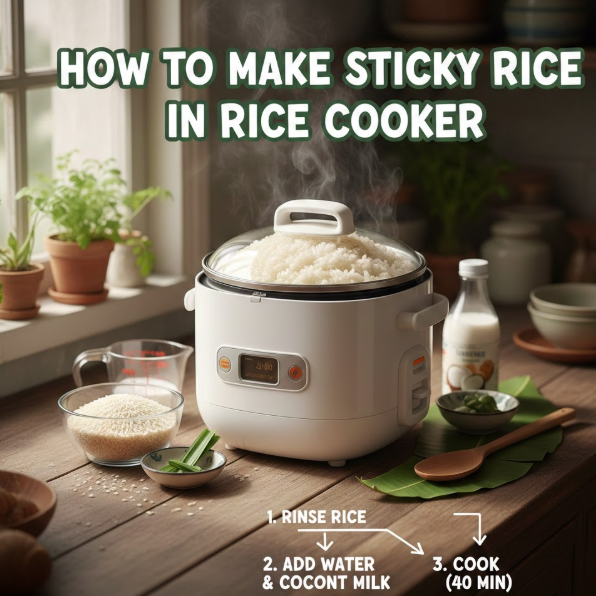
The stovetop steaming method produces the most authentic results.
Step-by-Step Traditional Technique
• Soak the Rice Properly
Rinse until water runs clear. Soak for 4–8 hours. This hydration ensures even cooking and optimal stickiness.
• Drain Thoroughly
After soaking, drain completely to avoid soggy texture.
• Prepare Steaming Setup
Line a bamboo steamer or metal sieve with cheesecloth. Add water below but ensure rice doesn’t touch water.
• Steam for 20–25 Minutes
Cover and steam. Flip halfway for uniform cooking.
• Test Texture
Grains should be tender yet cohesive.
• Rest Before Serving
Let sit covered for 5 minutes to stabilize moisture.
This method reflects traditional Southeast Asian culinary practice.
Also Read:- How to Find Y Intercept: A Complete Step-by-Step Mathematical Guide
How to Make Sticky Rice in Rice Cooker
Modern appliances simplify preparation.
Rice Cooker Method
• Rinse Rice Thoroughly
Remove excess starch for balanced stickiness.
• Use Proper Water Ratio
Typically 1:1 ratio for glutinous rice.
• Select White Rice Setting
Standard setting works best.
• Let Steam After Cooking
Keep lid closed 10 minutes post-cycle.
• Fluff Gently
Use rice paddle carefully to avoid crushing grains.
• Adjust Water if Needed
Minor variations may occur between models.
This method is practical for beginners learning how to make sticky rice easily.
Also Read:- How to Make Pesto: The Ultimate Guide to Homemade Pesto Sauce and Pasta
How to Make Sticky Rice in Instant Pot
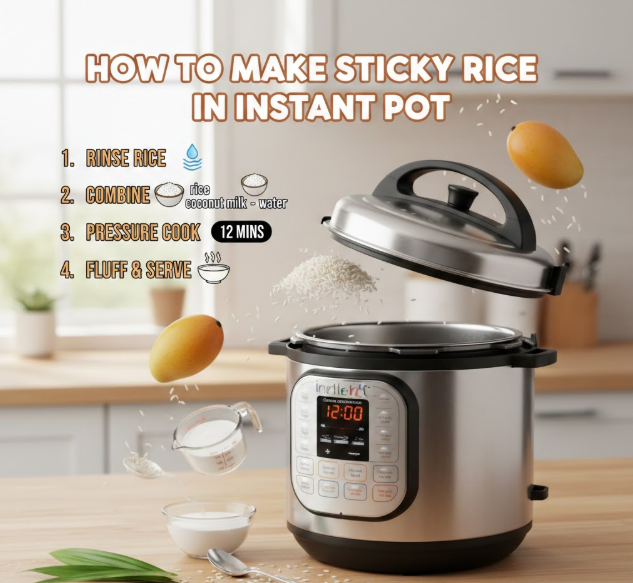
Pressure cooking offers speed and consistency.
Instant Pot Technique
• Rinse and Soak 1 Hour
Short soak improves texture.
• Add Minimal Water
Use trivet or pot-in-pot method.
• Pressure Cook 12 Minutes
Natural release preferred.
• Avoid Over-Stirring
Maintains grain integrity.
• Check Moisture Level
Add splash if too dry.
• Allow Brief Resting Period
Steam redistribution enhances stickiness.
Also Read:- How to Hard Reset iPhone: Complete Step-by-Step Guide for All Models
How to Make Sticky Rice for Sushi
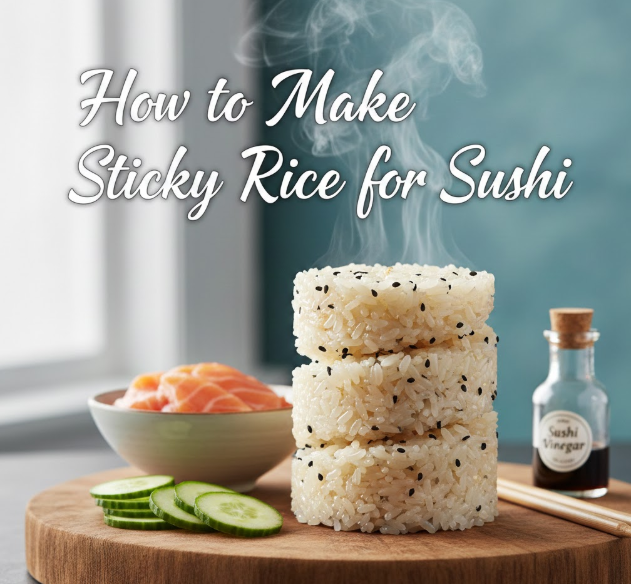
Sushi rice differs slightly from Thai sticky rice.
Sushi Rice Preparation
• Use Short-Grain Japanese Rice
Provides correct consistency.
• Cook with Precise Water Ratio
Usually 1:1.1 ratio.
• Season with Rice Vinegar Mixture
Blend rice vinegar, sugar, and salt.
• Fold Gently
Cut and fold motion preserves grains.
• Cool Properly
Fan rice for glossy finish.
• Maintain Room Temperature
Essential for sushi assembly.
Sushi traditions originate from Japan and are globally recognized in culinary arts.
Also Read:- How to Get Voice Chat on Roblox: Complete Step-by-Step Guide
How to Make Sticky Rice for Onigiri
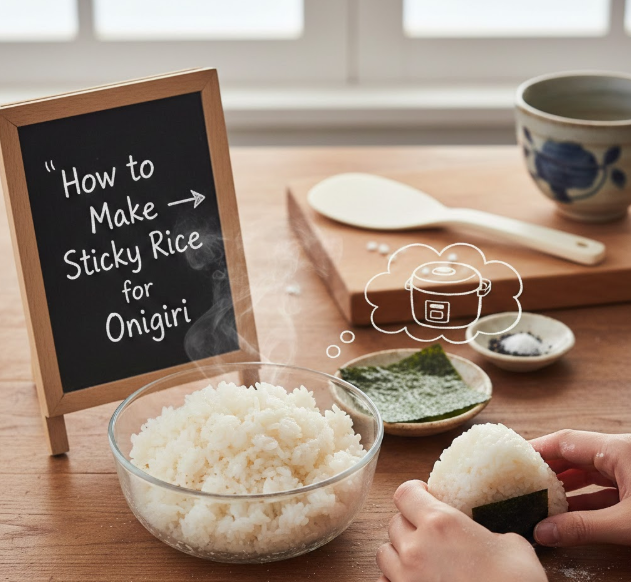
Onigiri requires firm yet moldable rice.
Onigiri Rice Steps
• Choose Japanese Short-Grain Rice
Texture must hold shape.
• Cook Slightly Firmer
Reduce water slightly.
• Let Cool Slightly Before Shaping
Prevents burning hands.
• Use Wet Hands
Prevents sticking.
• Shape Gently
Avoid compressing too tightly.
• Wrap with Nori Sheet
Adds texture contrast.
Also Read:- How to Get Rid of a Hickey: Complete Guide to Fast Healing
How to Make Sticky Rice with Jasmine Rice
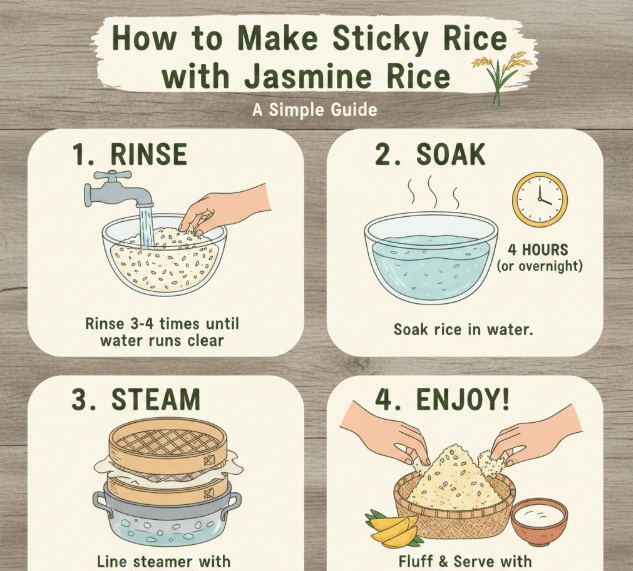
Jasmine rice is not naturally glutinous but can be adapted.
Jasmine Adaptation
• Rinse Lightly
Avoid removing all starch.
• Use Slightly Less Water
Prevents mushiness.
• Steam Instead of Boil
Improves cohesion.
• Allow Steam Resting
Encourages sticking.
• Avoid Excess Fluffing
Preserves texture.
• Expect Softer Stickiness
Not identical to glutinous rice.
Also Read:- How to Grow Tomatoes: The Complete Step-by-Step Guide for Every Space
How to Make Sticky Rice with Basmati
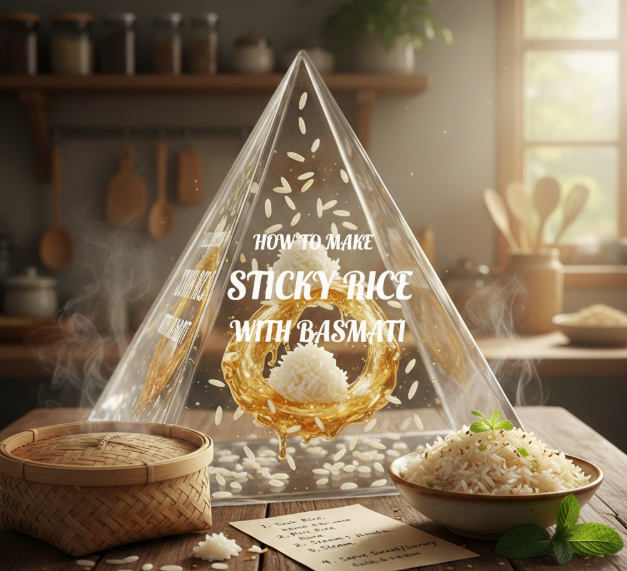
Basmati is long-grain and naturally fluffy.
Basmati Adjustment
• Reduce Rinsing
Keep some starch intact.
• Use 1:1 Water Ratio
Lower than standard.
• Cook Covered Without Stirring
Maintains structure.
• Allow Natural Steam Finish
Do not uncover immediately.
• Add Slight Cornstarch Slurry (Optional)
Enhances adhesion.
• Understand Texture Difference
Will not replicate authentic sticky rice.
Also Read:- How to Clean Dishwasher – The Ultimate Expert Guide for Deep Cleaning, Hygiene, and Long-Lasting Performance
Nutritional and Cultural Insights
Sticky rice provides carbohydrates, moderate protein, and small amounts of minerals. According to global rice consumption statistics from the Food and Agriculture Organization, rice remains a primary calorie source for over half the world’s population.
In Thailand, mango sticky rice is a celebrated dessert. In Japan, sticky rice supports cultural dishes like onigiri and mochi.
Common Mistakes to Avoid
• Skipping soaking step
• Using incorrect rice type
• Overcooking with too much water
• Stirring excessively
• Ignoring resting period
• Confusing sticky rice with regular white rice
Conclusion
Mastering how to make sticky rice requires understanding rice type, starch composition, and cooking method. Whether you’re using a rice cooker, stovetop steamer, or Instant Pot, proper soaking and moisture control are essential. For sushi and onigiri, seasoning and texture precision elevate results. While jasmine and basmati can be adapted, authentic glutinous rice produces the best traditional texture.
With practice and careful technique, you can consistently create soft, cohesive sticky rice for both savory meals and sweet desserts.
FAQs About How to Make Sticky Rice
Can I make sticky rice without soaking?
Soaking improves hydration and texture; skipping may cause uneven cooking.
Is sticky rice gluten-free?
Yes, despite the name “glutinous,” it contains no gluten.
Why is my sticky rice mushy?
Too much water or overcooking.
Can I freeze sticky rice?
Yes, store airtight and reheat with steam.
What rice is best?
Authentic glutinous short-grain rice gives optimal results.
For More Updates Visit: Biomagazine
