


Meditation is one of the most powerful tools for improving mental clarity, emotional stability, and overall well-being. If you’ve ever wondered how to meditate properly, you’re not alone. Millions of people worldwide are turning to meditation to reduce stress, improve focus, and cultivate inner peace. From ancient traditions practiced by Gautama Buddha to modern science-based techniques developed by experts like Jon Kabat‑Zinn, meditation has proven benefits supported by research and real-world experience.
Meditation is not about emptying your mind completely or achieving perfection. Instead, it is about awareness, attention, and learning to observe your thoughts without judgment. When practiced properly, meditation can lower stress hormones, improve sleep, enhance emotional control, and increase productivity.
In this comprehensive guide, you will learn exactly how to meditate properly at home, in bed, and for anxiety. You’ll also discover beginner-friendly techniques, expert insights, and actionable steps you can follow today.
What Does It Mean to Meditate Properly?
Meditating properly means practicing intentional mental focus while maintaining awareness and calmness. It involves directing your attention to your breath, body, or present moment without reacting to distractions. Proper meditation is less about forcing silence and more about observing your inner experience with acceptance.
Meditation works by activating the parasympathetic nervous system, which reduces stress and promotes relaxation. According to research from Harvard Medical School, meditation can lower anxiety, improve emotional health, and even reduce blood pressure.
Key Elements of Proper Meditation
• Focused attention on a single anchor
Meditation begins with choosing a point of focus, such as your breathing, a sound, or a sensation. This anchor gives your mind something stable to return to whenever distractions arise. Without a focus point, the mind tends to wander endlessly.
Your breath is the most common anchor because it is always present and easy to observe. Watching your inhale and exhale naturally stabilizes your awareness. This simple act trains your brain to remain present.
Over time, this improves concentration and mental discipline. Studies show that consistent breath-focused meditation strengthens the prefrontal cortex, the brain region responsible for attention and decision-making.
• Relaxed but alert posture
Proper posture helps maintain both comfort and alertness. Sitting upright ensures that you stay conscious and focused instead of becoming sleepy or distracted. Your spine should be straight but not stiff.
This balanced posture supports healthy breathing and reduces physical tension. When your body is aligned, your mind naturally follows. Poor posture can cause discomfort and disrupt meditation.
Relaxation is equally important. Your shoulders, jaw, and facial muscles should remain loose. This creates a state of calm awareness, which is essential for effective meditation practice.
• Non-judgmental awareness of thoughts
One of the most important aspects of meditation is observing your thoughts without judging them. Thoughts will naturally arise during meditation. This is normal and expected.
Instead of trying to stop thoughts, you simply notice them and gently return your focus to your breath. This process strengthens mental control and emotional balance.
Over time, this teaches you that thoughts are temporary and do not control you. This realization reduces anxiety, overthinking, and emotional reactivity.
• Consistent practice over perfection
Meditation improves through regular practice, not perfection. Even experienced meditators face distractions and wandering thoughts. What matters is consistency.
Practicing daily, even for 5–10 minutes, can produce significant benefits. Regular meditation trains your brain to become calmer and more focused.
Consistency builds mental resilience. Just like physical exercise strengthens muscles, meditation strengthens your mind.
• Breathing naturally and calmly
Breathing is the foundation of most meditation techniques. Natural breathing helps calm the nervous system and stabilize attention.
Slow, steady breathing signals your brain to relax. This reduces stress hormones and promotes emotional balance.
Observing your breath also improves mindfulness. You become more aware of your body and present moment.
• Returning focus gently when distracted
Distractions are part of meditation. The key is gently returning your attention without frustration.
Each time you refocus, you strengthen your attention and awareness. This improves concentration in everyday life.
This process teaches patience, emotional control, and mental discipline.
Also Read:- How to Do a Squat: The Ultimate Step-by-Step Guide for Perfect Form and Powerful Results
How to Meditate Properly at Home for Beginners
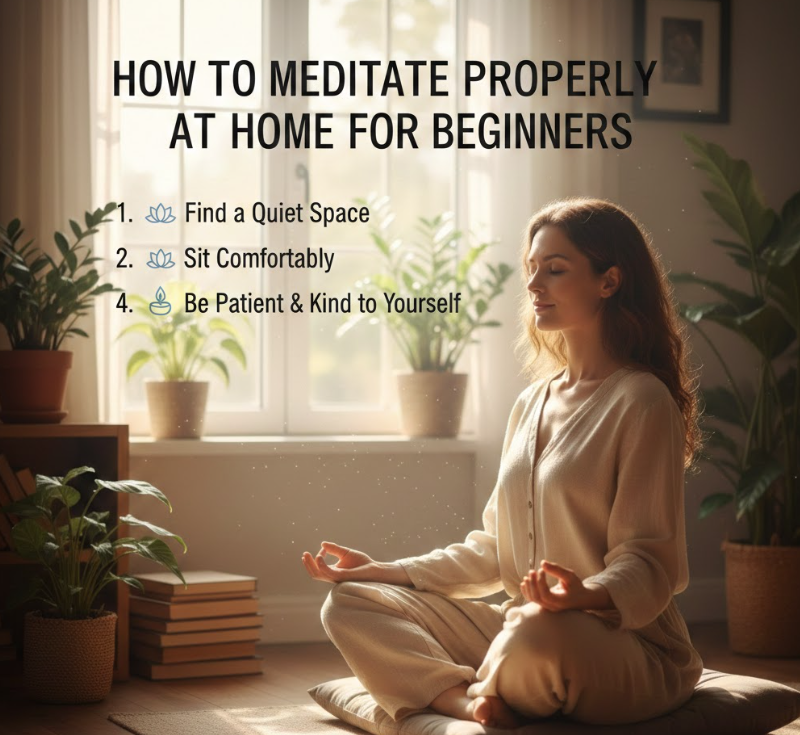
Meditating at home is the easiest and most convenient way to start. You don’t need special equipment or experience. A quiet space and willingness to practice are enough.
Home meditation allows you to create a comfortable environment where you can relax and focus fully. Beginners often find it easier to meditate at home because they feel safe and free from external pressure.
Step-by-Step Beginner Meditation at Home
• Choose a quiet and comfortable space
Select a location where you won’t be disturbed. This could be your bedroom, living room, or any peaceful corner of your home.
A quiet environment helps your brain relax and focus. External noise can distract your attention and reduce effectiveness.
Over time, your brain associates this space with calmness. This makes meditation easier and more effective.
• Sit in a comfortable upright position
You can sit on a chair, cushion, or floor. Keep your back straight but relaxed.
Proper posture helps maintain alertness. Slouching can cause discomfort and distraction.
Comfort ensures you can meditate longer without physical strain.
• Focus on your breathing naturally
Close your eyes and observe your breathing. Notice the sensation of air entering and leaving your body.
Do not control your breath. Simply observe it.
This builds mindfulness and awareness.
• Start with short sessions
Begin with 5–10 minutes daily. Gradually increase duration as you improve.
Short sessions prevent frustration and build consistency.
Consistency is more important than duration.
• Accept distractions without frustration
Your mind will wander. This is normal.
Gently return your focus to your breath.
This strengthens mental discipline.
• Practice at the same time daily
Routine builds habit. Morning meditation is especially effective.
Consistency improves long-term benefits.
Daily practice strengthens your mental clarity.
Also Read:- How to Delete Instagram Account: The Complete 2025 Step-by-Step Guide
How to Meditate Properly in Bed
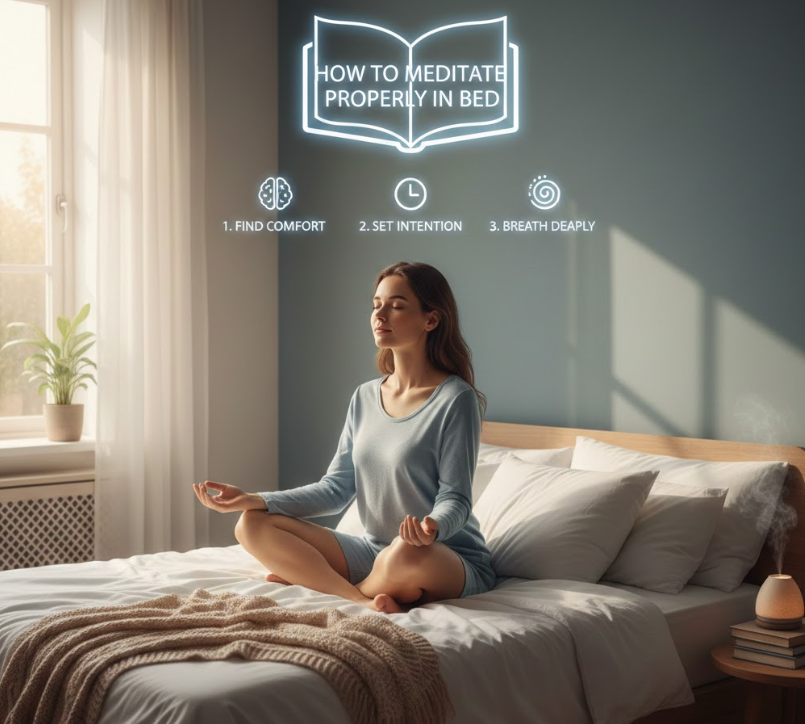
Meditating in bed is ideal for relaxation and sleep improvement. It helps calm your mind before sleeping and reduces insomnia.
Bed meditation is especially useful for people with busy schedules or sleep problems. It prepares your brain for deep rest.
Steps to Meditate Properly in Bed
• Lie down comfortably on your back
Keep your arms relaxed at your sides.
This allows your body to release tension.
Physical relaxation supports mental calmness.
• Focus on slow, natural breathing
Observe each inhale and exhale.
Breathing deeply reduces stress hormones.
This prepares your body for sleep.
• Relax each body part gradually
Start from your feet and move upward.
This releases tension and improves relaxation.
Body scanning improves awareness.
• Let thoughts pass naturally
Do not engage with thoughts.
Simply observe and release them.
This reduces overthinking.
• Avoid forcing sleep
Meditation naturally leads to sleep.
Forcing sleep creates tension.
Relaxation allows sleep naturally.
• Practice regularly before bedtime
Routine improves effectiveness.
Sleep quality improves over time.
Your brain learns to relax faster.
Also Read:- How to Store Potatoes: The Complete Expert Guide for Freshness, Flavor, and Long-Term Storage
How to Meditate Properly for Anxiety
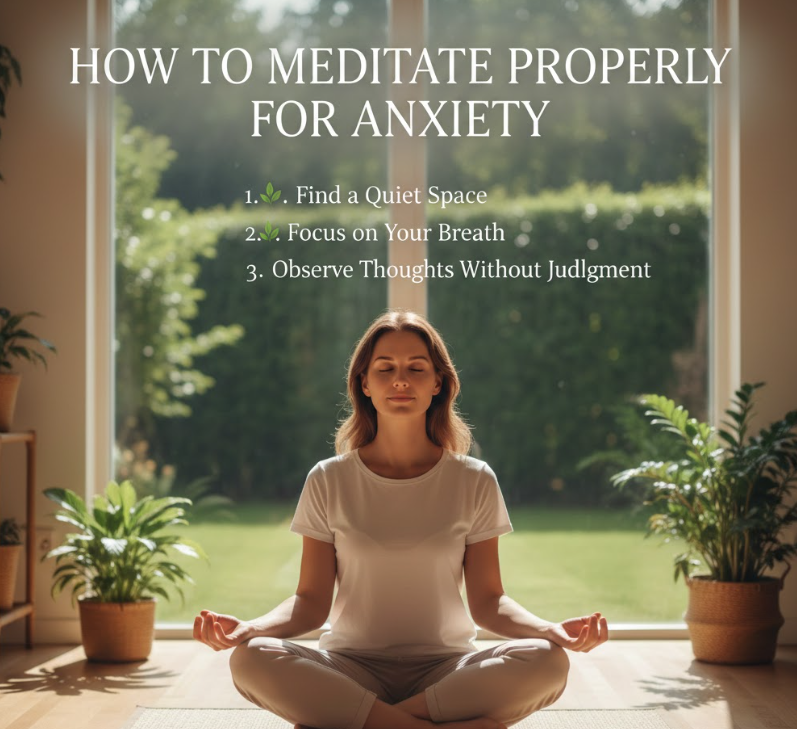
Meditation is one of the most effective natural treatments for anxiety. It calms the nervous system and reduces stress hormones.
Mindfulness meditation has been proven to reduce anxiety symptoms significantly.
Anxiety Meditation Techniques
• Focus on slow breathing
Slow breathing calms your nervous system.
It reduces stress hormones.
This creates immediate calmness.
• Observe anxious thoughts without reacting
Thoughts lose power when observed.
This reduces emotional impact.
You gain emotional control.
• Practice body awareness meditation
Notice physical sensations.
This grounds your attention.
Grounding reduces anxiety.
• Use guided meditation apps
Apps like Headspace and Calm help beginners.
Guided meditation improves consistency.
Structured guidance improves results.
• Practice daily mindfulness
Consistency reduces anxiety long-term.
Daily practice strengthens emotional control.
Your brain becomes calmer.
• Use meditation during anxiety episodes
Meditation stops panic escalation.
Breathing restores calmness.
Immediate relief becomes possible.
Also Read:- How to Read Palms: Complete Beginner’s Guide to Palm Reading, Lines, and Meanings
How to Meditate Properly at Home (Advanced Tips)
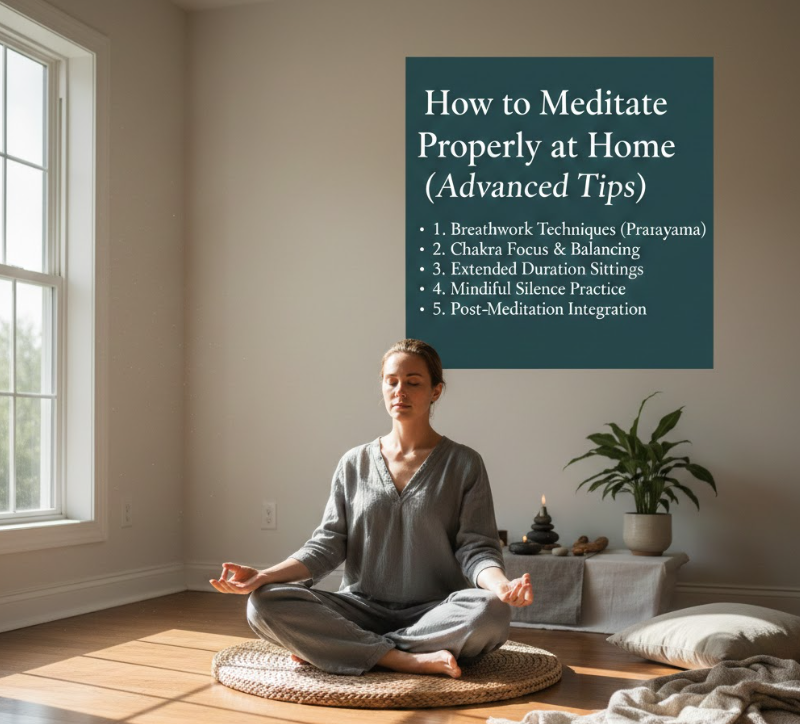
Home meditation becomes more effective with experience and proper techniques.
Advanced Home Meditation Tips
• Create a dedicated meditation space
This builds mental association with calmness.
Your brain relaxes faster.
Consistency improves results.
• Meditate at the same time daily
Routine strengthens habit formation.
Morning meditation improves focus.
Regular timing improves discipline.
• Increase meditation duration gradually
Longer sessions deepen awareness.
Mental clarity improves.
Emotional control strengthens.
• Combine breathing and body awareness
Multiple techniques improve effectiveness.
Awareness becomes stronger.
Meditation deepens.
• Avoid distractions and interruptions
Silence improves focus.
Reduced interruptions improve quality.
Attention strengthens.
• Track your progress and improvements
Monitoring builds motivation.
You see measurable benefits.
Consistency improves.
Benefits of Meditating Properly
Meditation provides physical, mental, and emotional benefits.
• Reduces stress and anxiety
• Improves concentration and focus
• Enhances emotional stability
• Improves sleep quality
• Boosts self-awareness
• Improves overall well-being
Also Read:- How to Tie a Tie: The Complete Step-by-Step Expert Guide
Conclusion
Learning how to meditate properly is one of the most valuable skills you can develop for mental, emotional, and physical well-being. Meditation does not require perfection, expensive tools, or special training. All it requires is consistency, awareness, and patience.
By practicing meditation at home, in bed, or for anxiety, you can transform your mental state, reduce stress, and improve your quality of life. Over time, meditation strengthens your focus, emotional balance, and inner peace.
Start with just a few minutes daily, and gradually build your practice. The benefits will grow naturally, and meditation will become an essential part of your healthy lifestyle.
FAQs
How long should beginners meditate?
Beginners should start with 5–10 minutes daily and gradually increase duration.
Can I meditate lying down?
Yes, especially for sleep and relaxation meditation.
How quickly does meditation reduce anxiety?
Some people feel relief immediately, while long-term benefits develop with consistent practice.
Is meditation scientifically proven?
Yes. Research from major institutions confirms meditation reduces stress and improves mental health.
For More Updates Visit: Biomagazine
