


For many drivers, parallel parking is the most intimidating part of learning how to drive. Even experienced motorists feel anxious when squeezing into a tight space on a busy street. Yet knowing how to parallel park is not optional—it is a core driving skill required for road safety, urban driving, and passing most driving tests worldwide.
According to driving assessment data, parallel parking is one of the top three reasons learners fail road tests, not because it is difficult, but because it requires precision, spatial awareness, and proper technique. The good news is that parallel parking is a repeatable process, not a guessing game.
This guide is based on real driving instruction experience, traffic authority standards, and proven learning techniques. By the end, you will understand how to parallel park step by step, easily, confidently, and perfectly—whether you are practicing with cones, driving a truck, or preparing for your driving test.
What Is Parallel Parking and Why It Matters

Parallel parking is the act of positioning your vehicle parallel to the curb, between two parked cars, usually on a city street. Unlike angled or perpendicular parking, it requires controlled reversing, precise steering, and awareness of vehicle dimensions.
Parallel parking is tested because it demonstrates full control of the car at low speeds, which is critical for real-world driving safety.
• It proves spatial awareness
Parallel parking shows that a driver understands vehicle size, turning radius, and distance judgment.
• It is essential for city driving
Urban environments rely heavily on parallel parking due to limited space.
• It demonstrates steering control
Proper steering timing prevents curb hits and collisions.
• It reflects safe reversing skills
Backing up safely is a core driving competency.
• It reduces traffic disruption
Efficient parking prevents congestion and delays.
• It builds driver confidence
Once mastered, parallel parking removes one of the biggest mental barriers in driving.
Also Read: How to Cook Chicken Breast in Oven Complete Step-by-Step Guide
How to Parallel Park Step by Step Universal Method
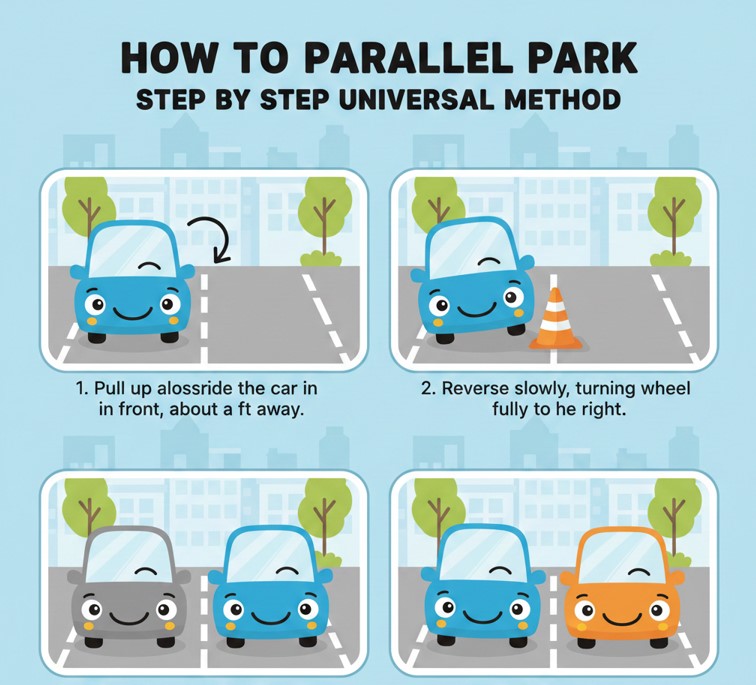
Understanding how to parallel park step by step removes fear and replaces it with a predictable system. While vehicles differ slightly, the core mechanics remain the same across cars, SUVs, and trucks.
Step-by-Step Breakdown
• Position your car correctly
Pull up alongside the parked car, leaving about 2–3 feet of space. Align your rear bumper with theirs for optimal turning angles.
• Check surroundings carefully
Use mirrors, turn your head, and check blind spots for pedestrians, cyclists, and vehicles.
• Reverse slowly and turn the wheel fully
Turn the steering wheel toward the curb while backing up slowly, maintaining control.
• Straighten the wheels at the right moment
When your car reaches a 45-degree angle, straighten the steering wheel.
• Turn away from the curb to align
Turn the wheel opposite to bring the front of your car in line.
• Adjust and center the vehicle
Move forward or backward slightly to center your car evenly between both vehicles.
Also Read: How to Add Fractions: A Complete Step-by-Step Learning Guide
How to Parallel Park Easy Beginner-Friendly Technique
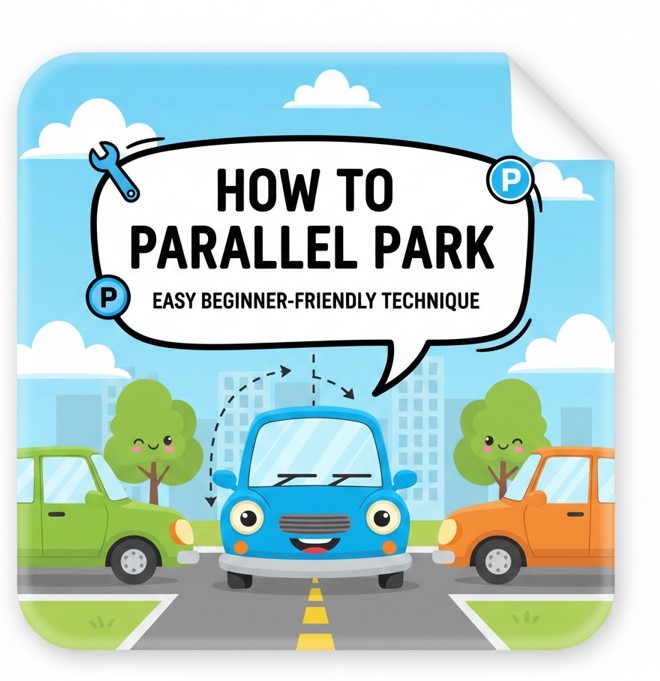
Many learners struggle because they try to memorize distances instead of understanding vehicle movement. An easy method focuses on reference points and slow control.
Easy Parallel Parking Tips
• Use visual reference points
Line up mirrors, door handles, or rear windows instead of guessing distances.
• Move slowly at all times
Speed is the enemy of accuracy when parking.
• Use small steering corrections
Over-steering causes panic and misalignment.
• Practice in low-pressure environments
Empty streets and parking lots build confidence.
• Ignore honking or pressure
Safety comes before speed.
• Trust the process
Consistency matters more than perfection.
Also Read: How to Draw a Rose: A Complete Step-by-Step Guide for Beginners
How to Parallel Park with Cones Practice Method

Learning how to parallel park with cones removes fear of hitting real cars while allowing skill development through repetition.
Cone Practice Strategy
• Set cones to real-world distances
Use standard car lengths to simulate realistic conditions.
• Practice reference alignment
Cones help visualize bumper and tire positioning.
• Focus on mirror usage
Learn how your car appears in mirrors while reversing.
• Repeat from both sides
Practice parking on left and right sides equally.
• Increase difficulty gradually
Reduce space as confidence grows.
• Record your practice sessions
Video feedback improves technique faster.
Also Read: How to Steam Broccoli: The Complete Healthy Cooking Guide
How to Parallel Park on Driving Test
Driving examiners are not expecting perfection—they assess control, observation, and safety awareness.
Test-Day Parallel Parking Tips
• Signal clearly and early
Shows intention and road awareness.
• Check mirrors and blind spots
Examiners watch head movement closely.
• Maintain slow, steady speed
Rushing leads to mistakes.
• Correct mistakes calmly
Adjusting is allowed and encouraged.
• Do not hit the curb
Minor distance is acceptable, contact is not.
• Stay within time limits
Efficiency matters but safety comes first.
Also Read: How to Clean Cast Iron Skillet: The Complete Care & Cleaning Guide
How to Parallel Park a Car Standard Vehicles
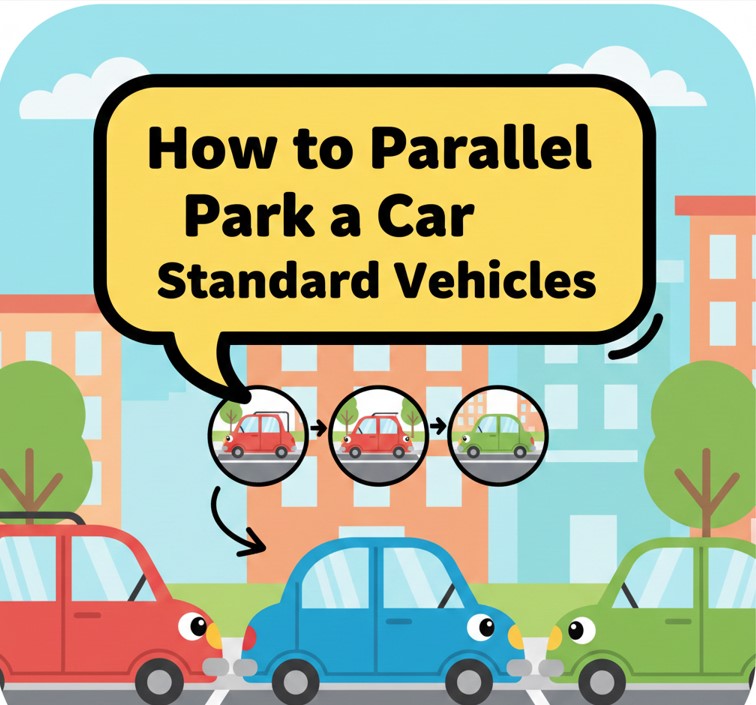
Most cars have shorter wheelbases, making them easier to maneuver than larger vehicles.
Best Practices for Cars
• Use side mirrors effectively
They provide accurate curb distance.
• Understand turning radius
Smaller cars turn faster than expected.
• Avoid over-steering
Small inputs go a long way.
• Keep wheels straight during adjustments
Prevents tire scrubbing.
• Center the vehicle properly
Balance space front and rear.
• Practice consistency
Same method every time builds muscle memory.
Also Read: How to Breed Villagers in Minecraft (Complete 2026 Guide)
How to Parallel Park a Truck

Parallel parking a truck is harder due to longer wheelbase, wider turning arc, and limited rear visibility.
Truck Parking Techniques
• Allow extra space
Trucks need more room to swing in.
• Use mirrors extensively
Rear visibility is limited.
• Turn later than with cars
Delayed steering prevents curb collision.
• Make wider corrections
Trucks respond slower to steering input.
• Take your time
There is no benefit to rushing.
• Practice in large areas first
Build confidence before city streets.
Also Read :-How to Get Blood Out of Clothes (Complete Expert Guide)
How to Parallel Park Perfectl

Perfect parking is not about millimeter accuracy—it’s about safe positioning, proper spacing, and legal alignment.
Perfection Criteria
• Even spacing front and rear
Prevents blocking other vehicles.
• Correct curb distance
Typically 6–12 inches depending on laws.
• Straight wheel alignment
Wheels should be parallel to curb.
• No curb contact
Protects tires and rims.
• Minimal adjustments
Shows control and confidence.
• Legal positioning
Avoid driveways, hydrants, and signs.
How to Parallel Park Diagram Understanding the Visuals
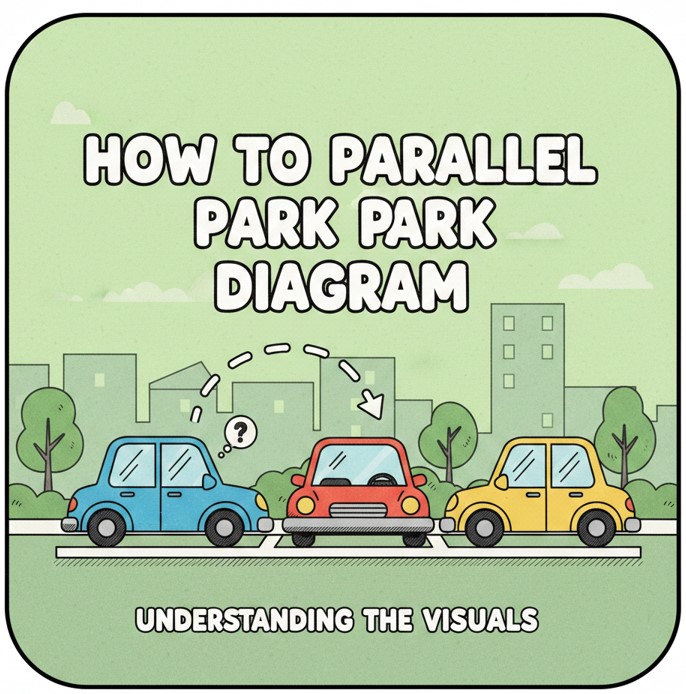
Visual learners benefit greatly from parallel parking diagrams, which illustrate angles, steering points, and vehicle positioning.
Diagram Interpretation Tips
• Understand angle stages
Straight → angled → straight alignment.
• Identify steering direction cues
Arrows show wheel movement.
• Note tire positioning
Rear tire location determines success.
• Visualize vehicle swing
Front end movement matters.
• Practice with diagrams first
Mental rehearsal improves execution.
• Combine diagrams with real practice
Theory becomes muscle memory.
Also Read:- How to Clean Cast Iron Skillet: The Complete Care & Cleaning Guide
Conclusion
Learning how to parallel park is not about talent—it’s about technique, patience, and practice. By following a structured, step-by-step method and understanding how your vehicle moves, parallel parking becomes predictable rather than stressful.
Whether you’re practicing with cones, preparing for a driving test, or learning to park a truck, the principles remain the same: slow speed, correct positioning, and calm adjustments.
FAQs
How long does it take to learn parallel parking?
Most drivers improve significantly within 5–10 focused practice sessions.
Is it okay to adjust during a driving test?
Yes. Safe corrections are encouraged.
What’s the biggest mistake learners make?
Turning too fast and not checking blind spots.
For More Updates Visit: Biomagazine
