

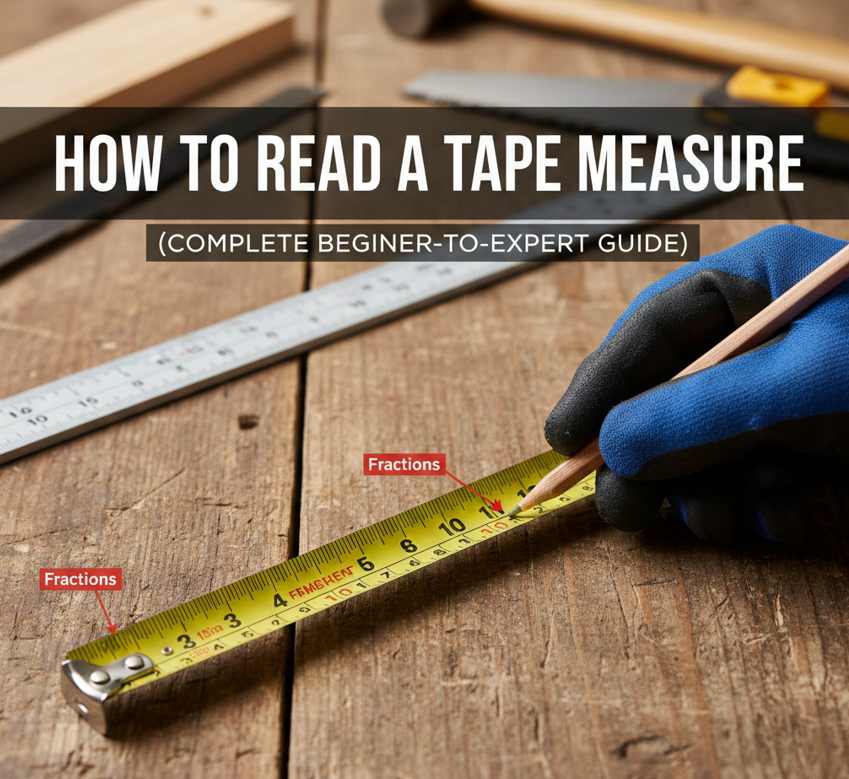
Learning how to read a tape measure is a fundamental life skill that applies to home improvement, woodworking, sewing, construction, and DIY projects. Despite its everyday use, many people find tape measures confusing because of the mix of numbers, lines, fractions, and metric units.
This comprehensive guide explains how to read a tape measure correctly, step by step, in inches, millimeters, and centimeters, using beginner-friendly language and expert-level clarity. Whether you’re a complete beginner or just want to improve accuracy, this article provides clear explanations, practical examples, and actionable tips you can apply immediately.
How to Read a Tape Measure in Inches
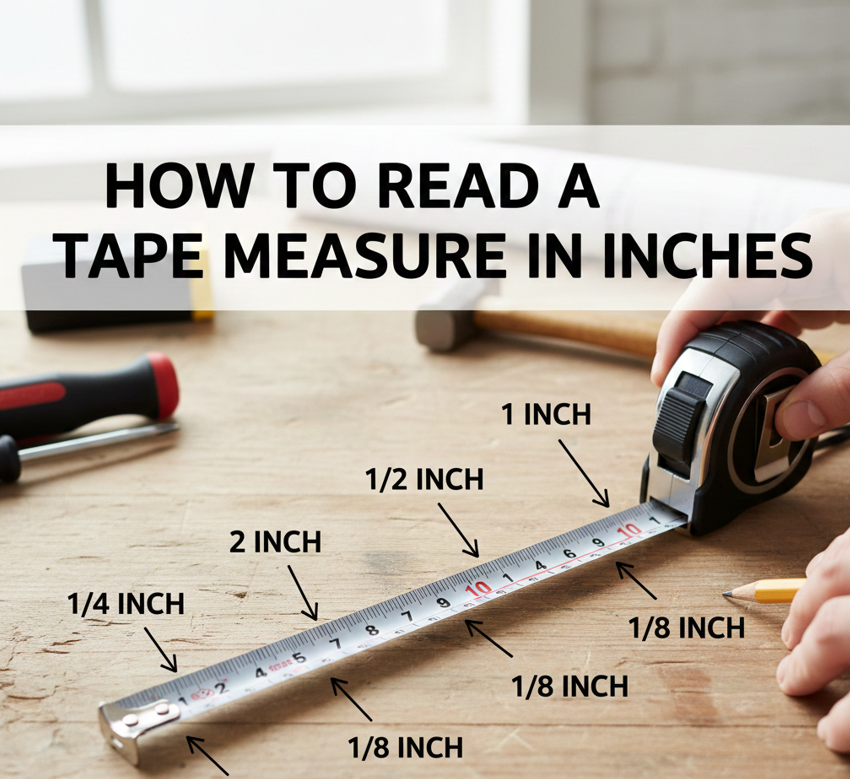
Understanding how to read a tape measure in inches is essential because inches are the most commonly used unit in the United States and many DIY instructions. An inch-based tape measure is divided into whole inches, fractions of inches, and sometimes even finer subdivisions, each marked by different line lengths.
When reading inches, the key is learning to recognize visual patterns rather than memorizing fractions. The longer the line, the larger the measurement value it represents. Once you understand this logic, reading inches becomes fast, accurate, and intuitive.
Key Concepts Explained (In Detail)
• Whole Inch Markings
Whole inches are represented by the longest numbered lines on the tape. Each number corresponds directly to a full inch measurement. These markings create the foundation for reading all other measurements accurately.
• Half-Inch Lines
The second-longest line between two inch numbers represents ½ inch. This mark appears exactly halfway and is one of the easiest fractions to identify visually.
• Quarter-Inch Measurements
Quarter inches (¼ and ¾) are shown with slightly shorter lines. These measurements are extremely common in carpentry and furniture assembly.
• Eighth-Inch Divisions
Eighth-inch marks are shorter still and divide each quarter inch in half. These allow for more precise measurements without complex math.
• Sixteenth-Inch Precision
The shortest lines represent 1/16 inch increments. These fine measurements are crucial for detailed woodworking, metalwork, and mechanical tasks.
• Reading Inches Accurately
To read a measurement, find the last full inch, then identify the fraction that follows. Combine them (e.g., 5 + ¾ = 5¾ inches).
Also Read: How to Make Oobleck: A Complete Science-Based Guide for Kids and Adults
Cheat Sheet: How to Read a Tape Measure
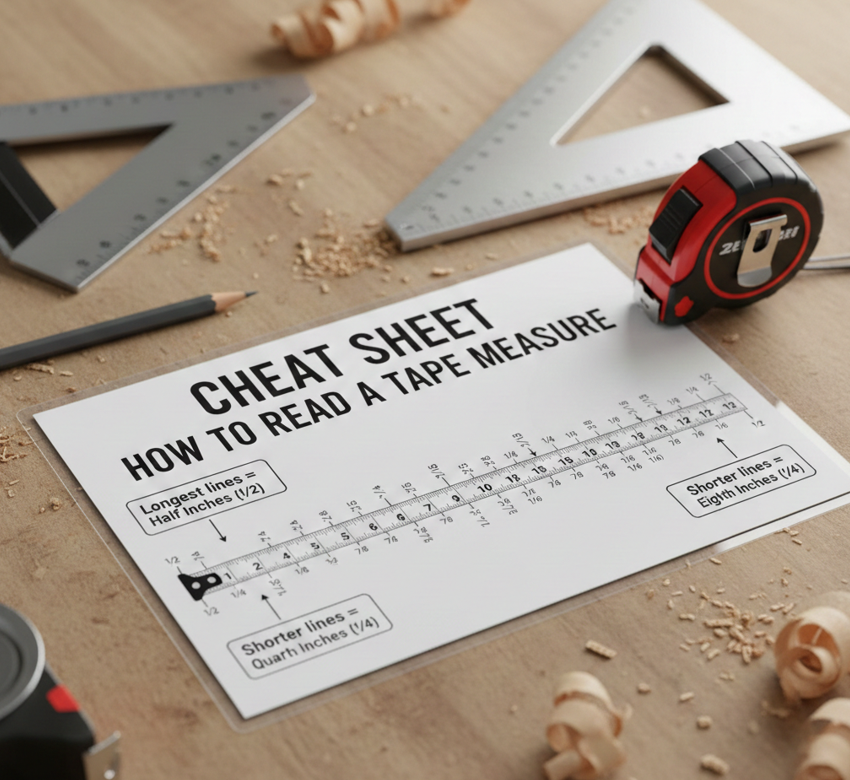
A tape measure cheat sheet simplifies learning by translating fractions into clear, visual references. This approach is especially useful for beginners who struggle with fraction recognition or mental math.
Cheat sheets act as quick-reference tools, reducing mistakes and improving confidence when measuring under pressure.
Practical Cheat Sheet Guidance
• Visual Fraction Mapping
Cheat sheets show which line length corresponds to which fraction, helping users instantly recognize measurements without counting lines.
• Fraction-to-Decimal Conversion
Many projects require decimal values. A cheat sheet explains how ¼ equals 0.25, ½ equals 0.5, and so on.
• Common Measurement Examples
Cheat sheets often include real-world examples like board thicknesses or standard furniture dimensions.
• Portable Reference Use
Printable or mobile cheat sheets are useful on job sites, workshops, or home projects.
• Beginner Error Prevention
Most mistakes happen between similar fractions (⅜ vs 7⁄16). Cheat sheets reduce these errors dramatically.
• Learning Accelerator
With repeated use, users naturally memorize measurements and rely less on reference material.
Also Read: How to Make Netherite Armor: The Ultimate Minecraft Survival Guide
How to Read a Tape Measure in Millimeters (mm)
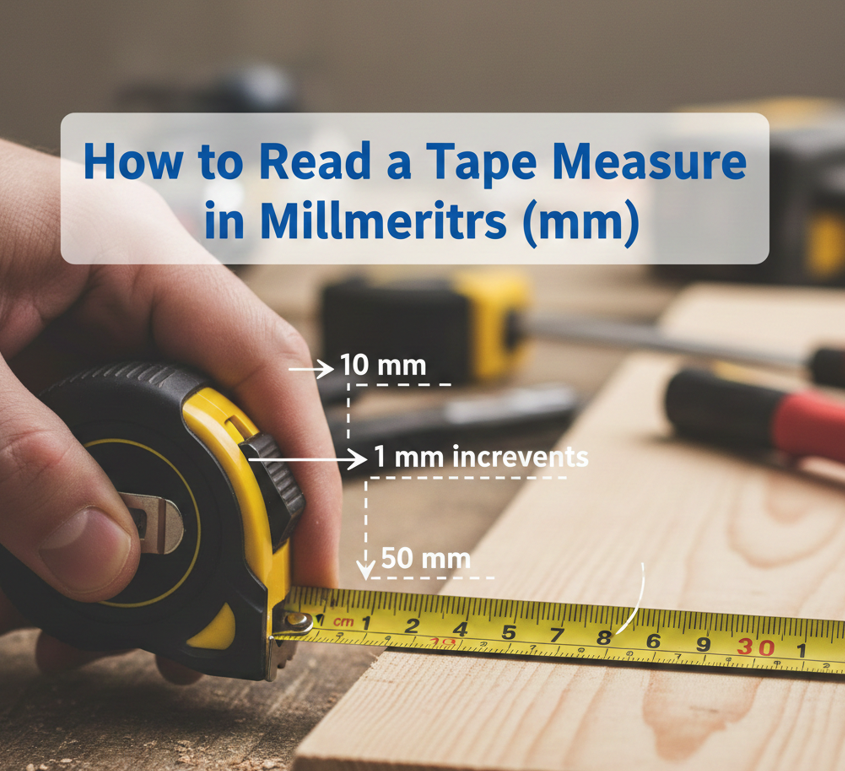
Learning how to read a tape measure in millimeters is essential for precision work, international projects, and technical fields. Millimeters are part of the metric system and provide greater accuracy because they are based on uniform decimal units.
Unlike inches, millimeters do not use fractions, which makes them easier for many beginners once they understand the scale.
Understanding Millimeter Measurements
• Millimeter Basics
Each small line represents exactly one millimeter. There are 10 millimeters in a centimeter.
• Numbered Markings
Numbers typically indicate centimeters, not millimeters. You count the small lines between numbers to determine millimeters.
• Precision Advantage
Millimeters allow extremely fine measurements, making them ideal for engineering, electronics, and medical tools.
• Avoiding Counting Errors
Start from zero carefully and count each small line methodically to ensure accuracy.
• Metric Consistency
Because the metric system is base-10, conversions are simple and intuitive.
• Real-World Usage
Millimeters are standard in blueprints, machinery specifications, and imported products.
Also Read: How to Check Tire Pressure: A Complete Step-by-Step Guide for Every Driver
How to Read a Tape Measure in Centimeters (cm)
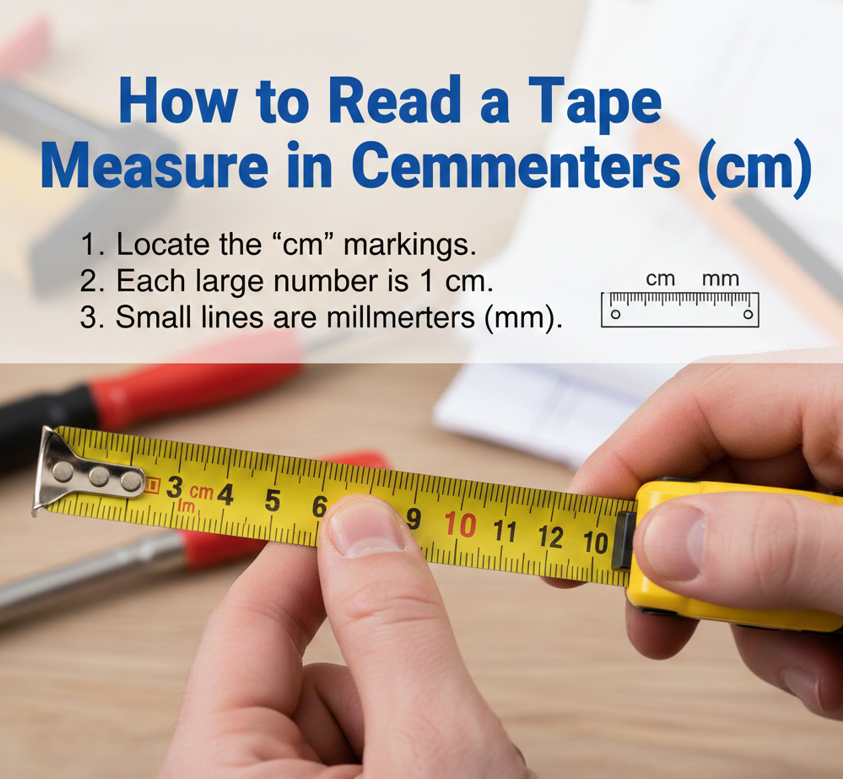
Understanding how to read a tape measure in centimeters bridges the gap between millimeters and meters. Centimeters are commonly used in tailoring, school measurements, health tracking, and international construction projects.
Centimeters provide a balanced level of precision without overwhelming detail.
Centimeter Measurement Explained
• Centimeter Markings
Each numbered line represents one centimeter, making it easy to identify measurements at a glance.
• Millimeter Subdivisions
Each centimeter contains 10 smaller millimeter lines for added precision.
• Everyday Applications
Used in clothing measurements, furniture sizing, and academic work.
• Fast Estimation
Centimeters allow quick visual estimation without exact counting.
• Metric Compatibility
Easy conversion to meters and millimeters keeps calculations simple.
• Beginner-Friendly Learning Curve
No fractions or mixed units reduce confusion for new users.
Also Read: How to Make Heavy Cream at Home: Easy, Reliable Methods That Actually Work
How to Read a Tape Measure for Dummies (Beginner-Friendly Guide)
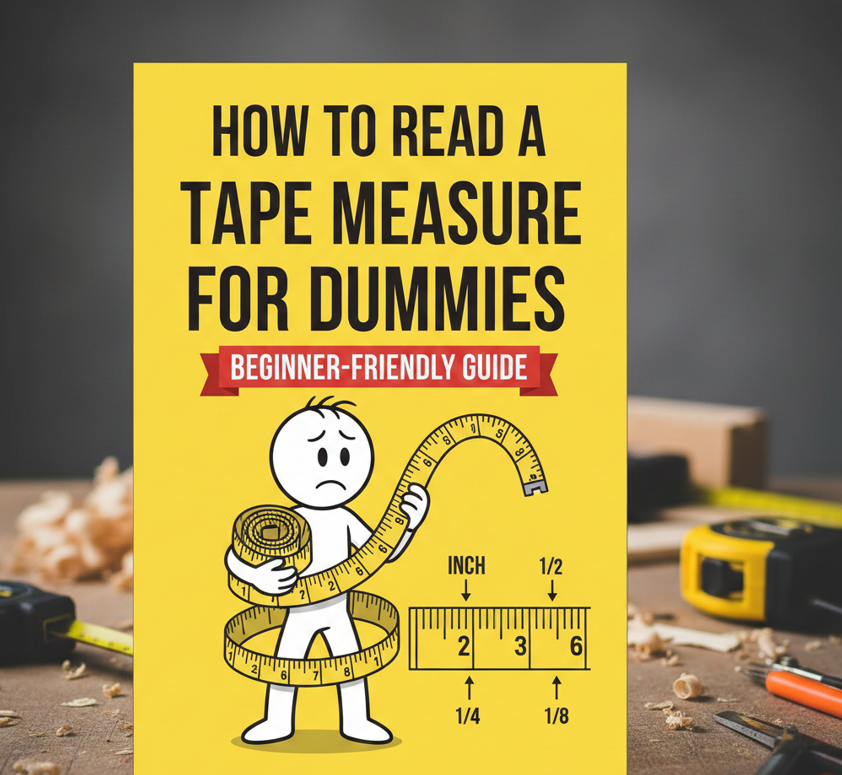
This section explains how to read a tape measure for dummies, using plain language, step-by-step logic, and zero assumptions about prior knowledge.
If tape measures have ever felt intimidating, this explanation removes complexity and replaces it with clarity.
Beginner-Focused Explanation
• Start at Zero
Always align the hook or edge exactly at zero before measuring.
• Find the Last Full Number
Locate the last whole inch or centimeter before the object ends.
• Identify the Next Line
Determine whether the next line is half, quarter, or millimeter-based.
• Read Left to Right
Measurements always increase from left to right.
• Ignore Extra Marks Initially
Focus on whole numbers first, then add detail gradually.
• Practice with Real Objects
Hands-on practice builds confidence faster than theory alone.
Also Read: How to Cut a Watermelon: The Complete Practical Guide for Every Occasion
How to Read a Tape Measure Worksheet (Learning & Practice)
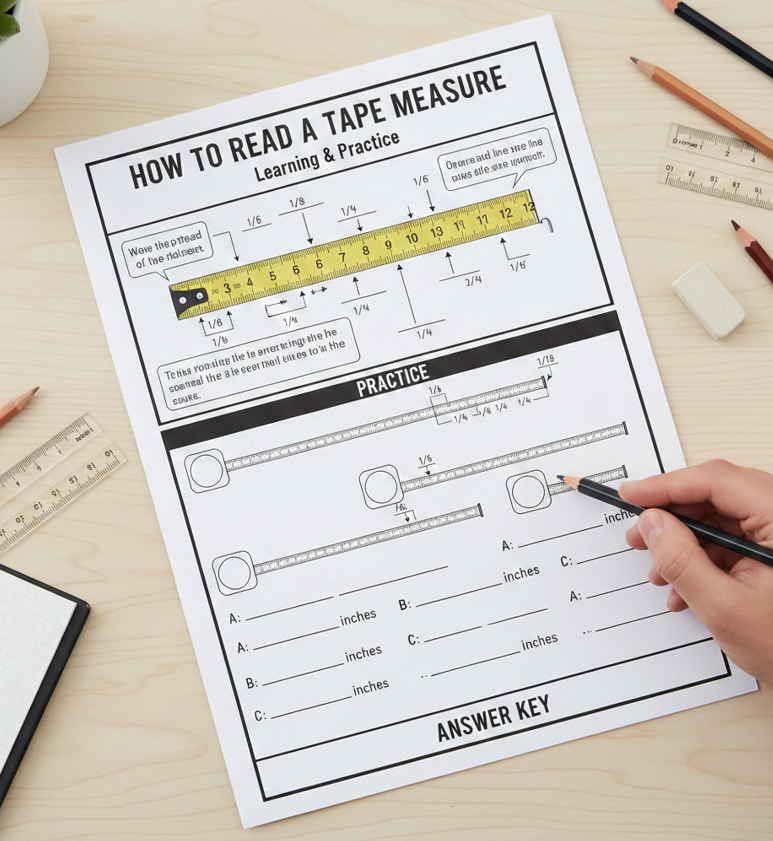
A how to read a tape measure worksheet reinforces learning through repetition and visual recognition. Worksheets are especially effective for students, apprentices, and self-learners.
Worksheet Benefits & Usage
• Visual Line Identification
Worksheets label tape segments for hands-on learning.
• Fraction Recognition Practice
Repeated exposure improves speed and accuracy.
• Error Correction
Immediate feedback helps learners understand mistakes.
• Skill Reinforcement
Worksheets turn theory into muscle memory.
• Classroom & Home Use
Ideal for schools, training programs, and homeschooling.
• Progress Tracking
Improvement becomes measurable and motivating.
Also Read: How to Get Rid of a Stye Overnight: Proven Remedies That Actually Work
How to Read a Tape Measure in Millimeters (Advanced Accuracy)
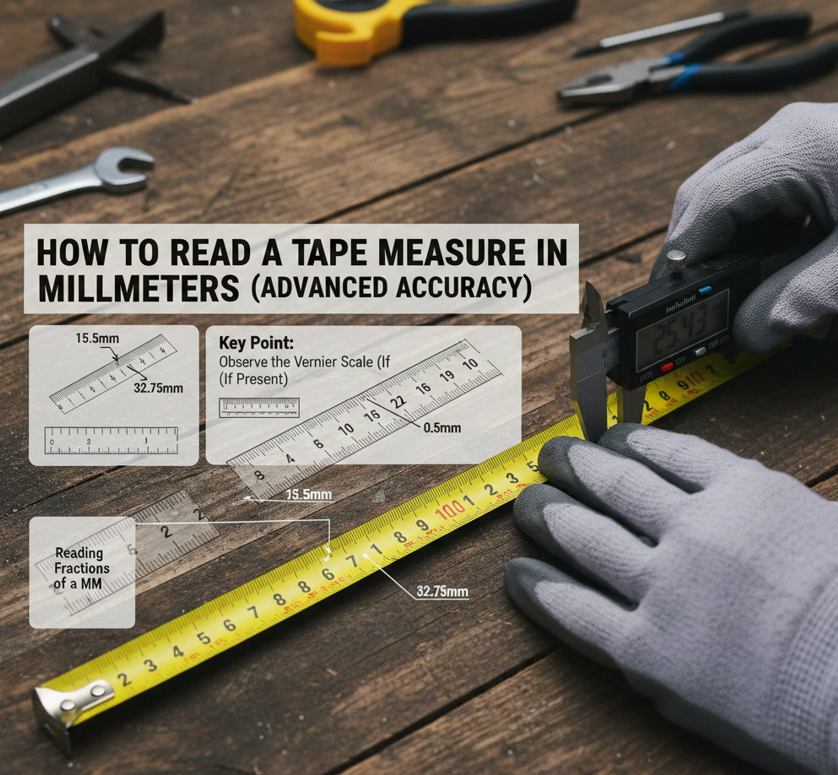
Although similar to earlier metric explanations, mastering how to read a tape measure in millimeters at an advanced level improves professional precision.
Advanced Millimeter Techniques
• Zero Alignment Accuracy
Even a 1 mm offset can cause measurement failure.
• Parallax Error Avoidance
Always view the tape straight-on.
• Consistent Measurement Pressure
Too much or too little tension affects accuracy.
• Tool Calibration Awareness
Old tapes may stretch over time.
• Repeat Measurement Verification
Measure twice to ensure consistency.
• Professional Use Cases
Critical in machining, drafting, and fabrication.
Also Read: How to Make Cold Foam: The Complete Expert Guide for Coffee Lovers
Conclusion
Mastering how to read a tape measure empowers you to work smarter, safer, and more accurately across countless tasks. By understanding inches, centimeters, and millimeters—and practicing with cheat sheets and worksheets—you eliminate guesswork and gain confidence.
Whether you’re measuring wood, fabric, or furniture, accurate measurement is the foundation of quality work. With the knowledge from this guide, you’re now equipped to measure like a professional.
FAQs
Q: What is the easiest way to read a tape measure?
Start with whole numbers, then identify fractions or millimeters visually.
Q: Why are some tape measure lines longer?
Longer lines represent larger measurement values.
Q: Are metric tape measures more accurate?
They offer easier precision due to decimal-based units.
For More Updates Visit: Biomagazine
