

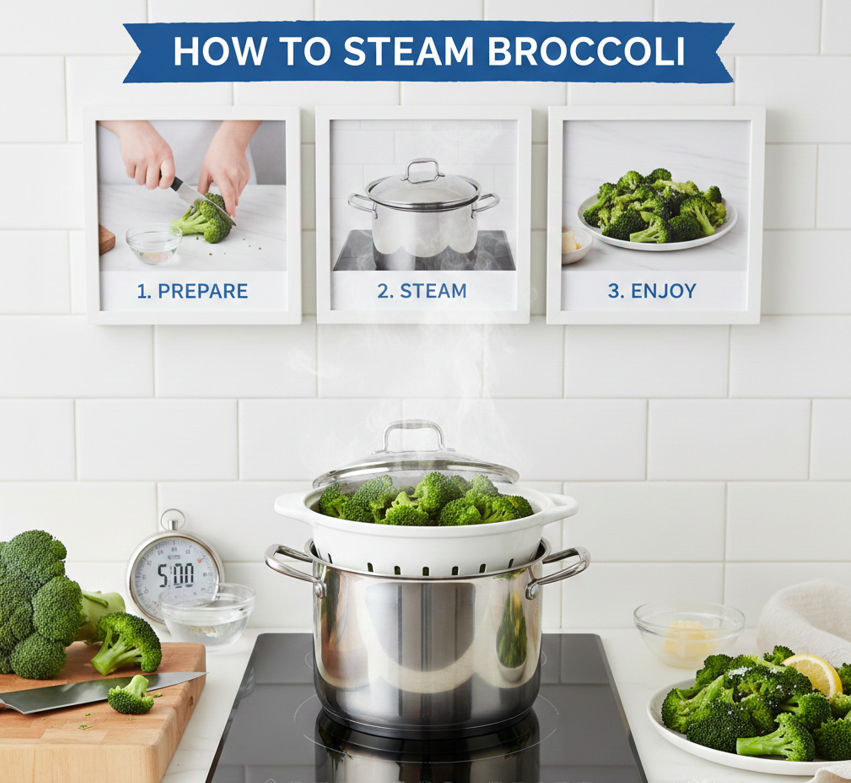
Learning how to steam broccoli is one of the simplest yet most powerful ways to improve everyday nutrition. Broccoli is widely recognized as a nutrient-dense vegetable rich in fiber, vitamin C, vitamin K, folate, and powerful antioxidants such as sulforaphane. Steaming is considered one of the healthiest cooking methods because it preserves nutrients better than boiling or frying while enhancing natural flavor and texture.
Many people avoid broccoli because it turns mushy, bitter, or dull green when cooked incorrectly. Understanding the correct steaming technique transforms broccoli into a vibrant, tender-crisp vegetable that pairs well with countless meals. Whether you are cooking for a family, preparing meals for weight management, or following a heart-healthy diet, mastering broccoli steaming techniques is a foundational kitchen skill.
This in-depth guide explains how to steam broccoli using multiple methods, including microwave, stovetop, pan, Instant Pot, and techniques without a steamer. Each method is broken down clearly so you can choose the approach that best fits your kitchen, schedule, and dietary goals.
Why Steaming Broccoli Is the Healthiest Cooking Method
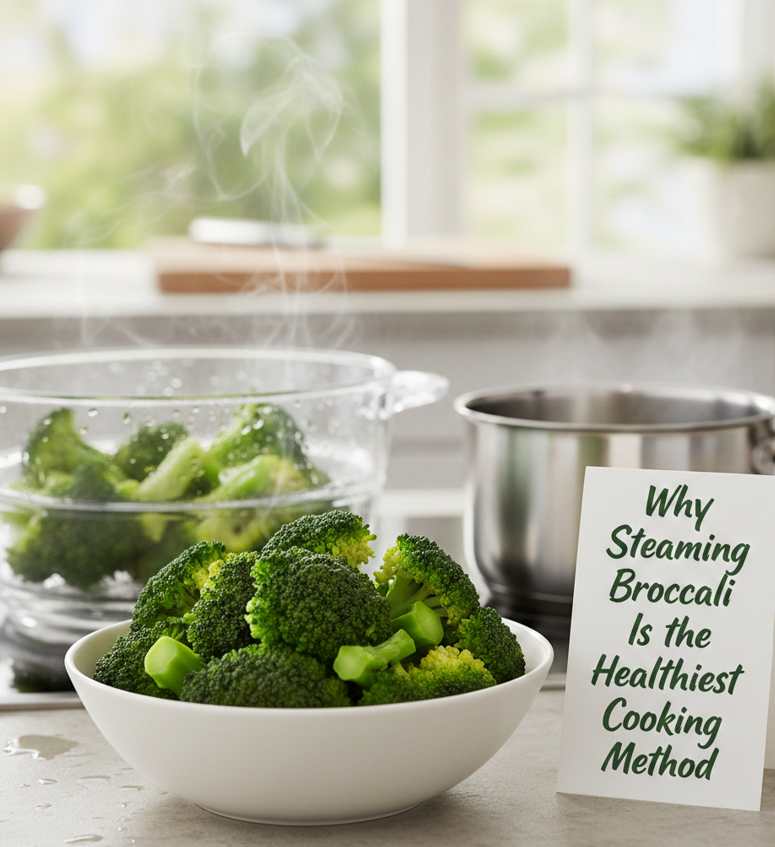
Steaming broccoli is widely recommended by nutritionists and culinary experts because it minimizes nutrient loss while maintaining texture and taste. Unlike boiling, where water dissolves vitamins, steaming uses gentle heat and limited moisture to cook broccoli evenly.
Scientific studies have shown that steaming preserves significantly higher levels of glucosinolates—compounds linked to cancer prevention—compared to boiling or microwaving improperly. Additionally, steaming keeps broccoli bright green, indicating chlorophyll retention and freshness.
Steamed broccoli is also easier to digest, making it suitable for children, seniors, and people with sensitive digestion.
Health Benefits of Steaming Broccoli Properly
• Steaming retains heat-sensitive vitamins such as vitamin C and folate.
When broccoli is submerged in boiling water, water-soluble vitamins leach out rapidly. Steaming minimizes direct contact with water, preserving these essential nutrients and improving the vegetable’s overall nutritional profile.
• It preserves sulforaphane, a powerful antioxidant.
Sulforaphane supports detoxification pathways and may reduce inflammation. Research indicates that steaming broccoli for under five minutes maintains the enzyme myrosinase, which activates sulforaphane effectively.
• Steaming prevents broccoli from becoming waterlogged.
Excess water dilutes flavor and ruins texture. Steaming ensures broccoli remains tender-crisp rather than soggy or mushy, making it more enjoyable to eat.
• It enhances natural sweetness and flavor.
Gentle steam softens cell walls without destroying sugars, allowing broccoli’s mild sweetness to emerge naturally without the need for heavy seasoning.
• Steamed broccoli supports weight management.
Low in calories and high in fiber, steamed broccoli promotes satiety while supporting digestive health, making it ideal for balanced diets.
• It is a heart-healthy cooking method.
Steaming avoids added fats while preserving potassium and antioxidants that support cardiovascular health.
Also Read: How to Draw a Rose: A Complete Step-by-Step Guide for Beginners
How to Steam Broccoli in Microwave Safely and Quickly
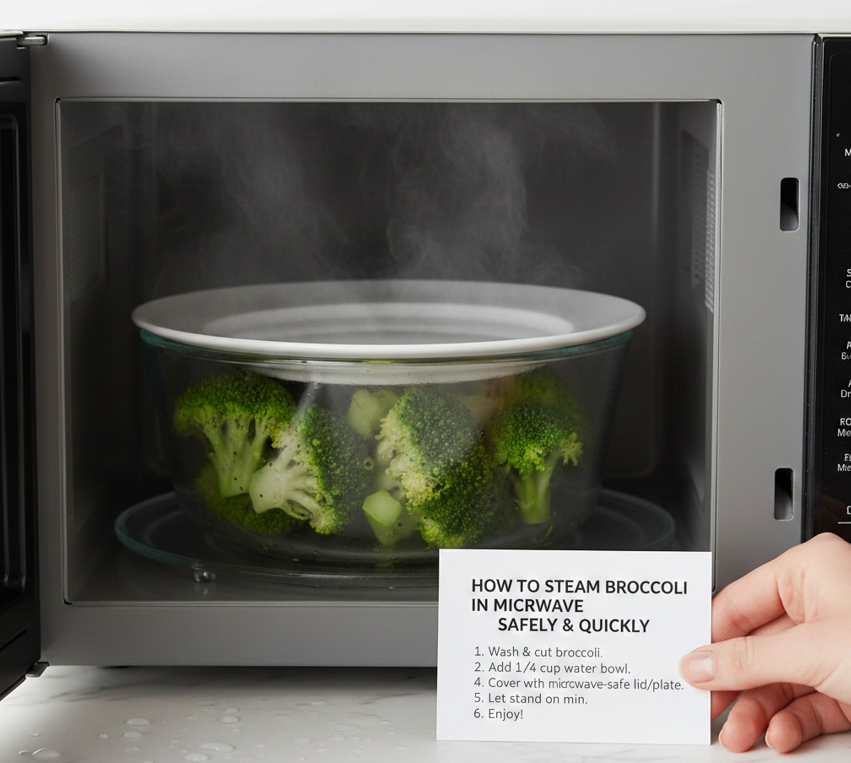
Learning how to steam broccoli in microwave is ideal for busy households and quick meal preparation. Microwave steaming is fast, energy-efficient, and surprisingly effective when done correctly. This method works well for small portions and retains nutrients when minimal water is used.
Contrary to popular myths, microwaving vegetables does not destroy nutrients if done properly. In fact, shorter cooking times often preserve vitamins better than longer stovetop methods.
Microwave steaming is particularly helpful for students, office lunches, and minimalist kitchens.
Microwave Steaming Best Practices
• Use a microwave-safe bowl with a loose lid or cover.
Covering the bowl traps steam, allowing broccoli to cook evenly. Leaving a small vent prevents pressure buildup and ensures safety during heating.
• Add a small amount of water only.
Two to three tablespoons of water are sufficient. Excess water increases nutrient loss and leads to uneven cooking.
• Cut broccoli into uniform florets.
Even sizes ensure consistent steaming, preventing some pieces from becoming overcooked while others remain raw.
• Microwave in short intervals.
Cooking in 1-minute intervals allows you to monitor texture and prevent mushiness, especially with powerful microwaves.
• Let broccoli rest after cooking.
Residual steam continues cooking slightly, improving tenderness without overcooking.
• Season after steaming, not before.
Adding salt or acid after cooking preserves color and texture while allowing flavors to absorb properly.
Also Read: How to Add Fractions: A Complete Step-by-Step Learning Guide
How to Steam Broccoli on Stove for Traditional Cooking
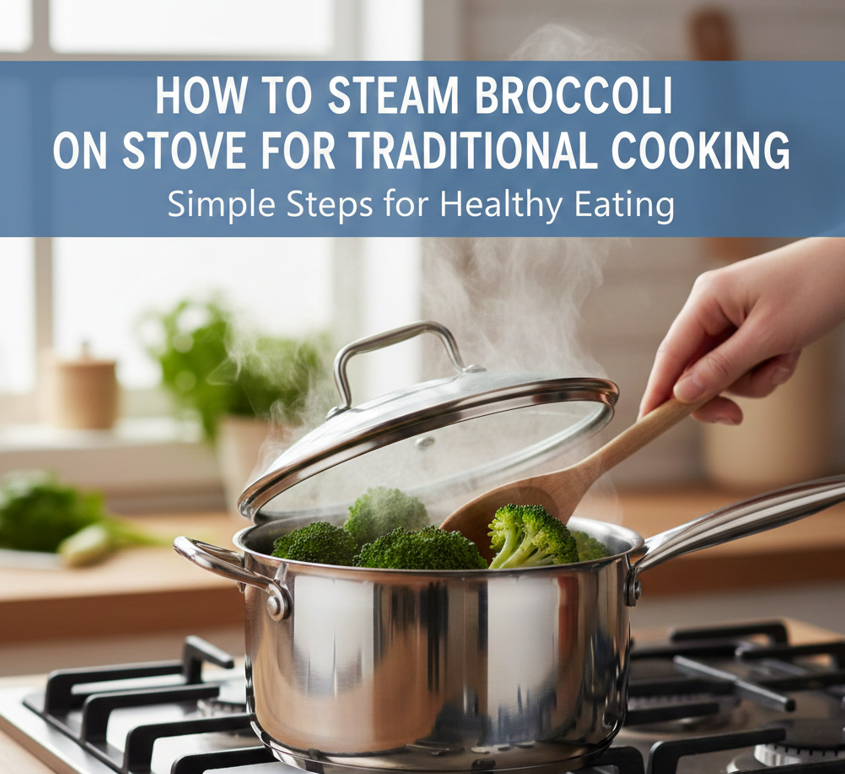
Understanding how to steam broccoli on stove is essential for traditional home cooking. This method offers precise control over heat and texture, making it a favorite among experienced cooks.
Stovetop steaming works well for larger quantities and allows you to monitor doneness visually. It also adapts easily to different cookware, from classic steamers to makeshift setups.
This method produces consistently excellent results when timing is managed carefully.
Stovetop Steaming Techniques Explained
• Use a pot with a tight-fitting lid.
A sealed environment traps steam efficiently, ensuring even cooking and reducing heat loss.
• Keep water below the steaming basket.
Broccoli should cook from steam, not direct contact with water, to prevent nutrient loss.
• Bring water to a gentle boil before adding broccoli.
Starting with active steam shortens cooking time and preserves texture.
• Steam for three to five minutes.
This range produces tender-crisp broccoli while maintaining vibrant color and nutrients.
• Test doneness with a fork.
Broccoli should be easily pierced but still firm, indicating proper cooking.
• Immediately remove from heat.
Oversteaming continues even after heat is off, so quick removal is essential.
Also Read: How to Cook Chicken Breast in Oven Complete Step-by-Step Guide
How to Steam Broccoli Without a Steamer Using Simple Tools
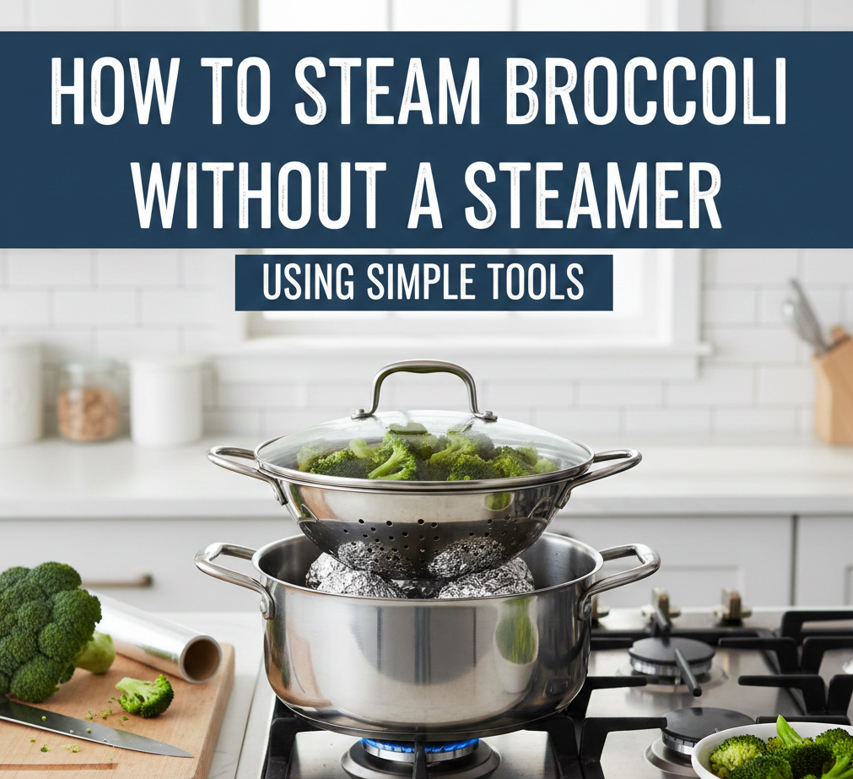
Learning how to steam broccoli without a steamer is practical and empowering. Many households lack specialized equipment, but steaming broccoli is still easily achievable using everyday kitchen items.
Improvised steaming methods work just as effectively when done correctly. This approach is especially useful for beginners, travelers, or minimal kitchens.
Understanding heat, moisture, and airflow is key to success.
Steaming Without a Steamer Methods
• Use a metal colander inside a pot.
A heat-safe colander elevated above water creates an effective steaming environment.
• Create a foil ball rack.
Aluminum foil balls placed at the bottom of a pot lift broccoli above water, allowing steam circulation.
• Cover tightly to trap steam.
Steam retention is crucial for even cooking, regardless of setup.
• Use minimal water.
Too much water increases boiling rather than steaming, reducing effectiveness.
• Monitor closely for doneness.
Improvised methods cook quickly and require attention to avoid overcooking.
• Remove promptly once tender.
Immediate removal preserves texture and nutrients.
Also Read: How to Soften Brown Sugar: The Complete Expert Guide for Every Situation
How to Steam Broccoli in Instant Pot Efficiently
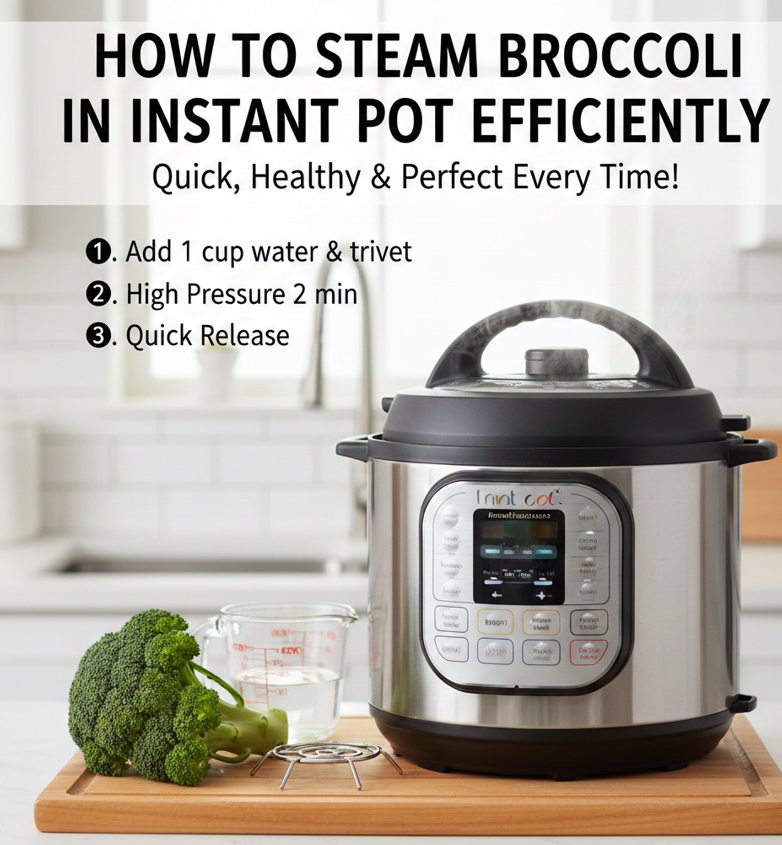
Understanding how to steam broccoli in Instant Pot is ideal for modern kitchens. Instant Pots provide controlled pressure and heat, allowing fast, consistent results with minimal effort.
This method is excellent for batch cooking and meal prep. However, timing is critical, as pressure cooking can quickly overcook vegetables.
Using the steam function ensures broccoli retains color, texture, and nutrients.
Instant Pot Steaming Guidelines
• Use the steam rack provided.
Elevating broccoli ensures it cooks from steam rather than boiling water.
• Add exactly one cup of water.
This amount generates sufficient steam without flooding the broccoli.
• Set pressure to zero or one minute.
Broccoli cooks rapidly under pressure, so minimal time prevents mushiness.
• Quick-release pressure immediately.
Natural release continues cooking and can ruin texture.
• Remove broccoli promptly.
Immediate removal halts cooking and preserves bright green color.
• Season after steaming.
Post-steaming seasoning ensures better flavor absorption.
Also Read: How to Cut a Pineapple: A Complete, Easy, and Waste-Free Guide for Beginners
How to Steam Broccoli in a Pan for Everyday Cooking
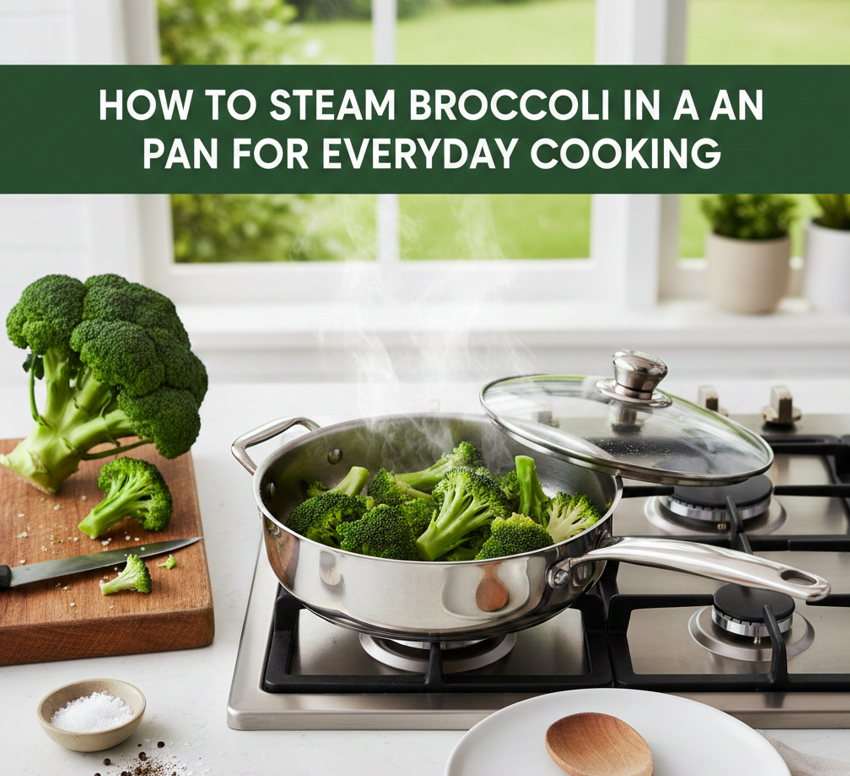
Learning how to steam broccoli in a pan combines simplicity with efficiency. This method is ideal when cooking small portions or when a pot is unavailable.
Pan steaming uses shallow water and a tight lid to generate steam quickly. It is a popular technique among home cooks who value speed and simplicity.
This method also transitions easily into sautéing for added flavor.
Pan Steaming Method Explained
• Use a wide pan with a lid.
Surface area allows even steam distribution and quick cooking.
• Add a small amount of water.
About one-quarter cup is enough to create steam without boiling.
• Cover immediately after adding broccoli.
Trapped steam cooks broccoli evenly and efficiently.
• Steam for four to five minutes.
This duration ensures tender-crisp texture without nutrient loss.
• Drain excess water quickly.
Removing water prevents overcooking and sogginess.
• Finish with light seasoning or oil.
Optional finishing enhances flavor while maintaining health benefits.
Also Read: How to Learn English Fast: Practical Strategies
Conclusion
Mastering how to steam broccoli is a simple yet impactful step toward healthier eating. Whether you use a microwave, stovetop, pan, Instant Pot, or improvised method, steaming allows broccoli to retain nutrients, color, and flavor.
By applying the techniques in this guide, you can enjoy perfectly steamed broccoli every time—tender, vibrant, and delicious. With practice, this skill becomes effortless, supporting long-term health and better meals for you and your family
FAQs
How long should broccoli be steamed?
Most methods require three to five minutes for tender-crisp results.
Is steaming broccoli better than boiling?
Yes, steaming preserves more nutrients and flavor.
Can oversteamed broccoli lose nutrients?
Yes, excessive heat breaks down vitamins and antioxidants.
For More Updates Visit: Biomagazine
