

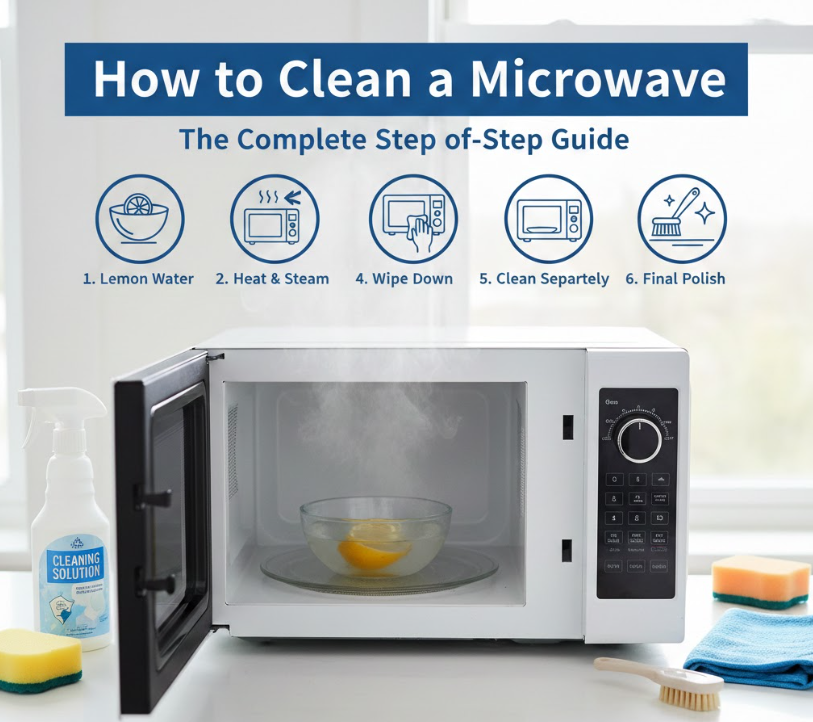
Keeping your microwave clean is essential for hygiene, food safety, and appliance longevity. Many people search for how to clean a microwave only after strong odors, stains, or burnt food appear—but regular cleaning prevents these problems entirely. A dirty microwave can harbor bacteria, affect food taste, and even reduce heating efficiency over time.
This in-depth guide explains how to clean a microwave easily, using proven natural methods such as baking soda, vinegar, lemon, and specialized steps for burnt food cleanup. Every method is explained clearly, safely, and in a way that protects both your health and your appliance.
How to Clean a Microwave with Baking Soda

Cleaning a microwave with baking soda is a powerful yet gentle method that removes grease, neutralizes odors, and loosens stubborn food splatters. Baking soda is non-abrasive, making it safe for microwave interiors while still being effective against dried-on grime. This method is especially useful for regular maintenance and light to moderate messes.
Baking soda works by breaking down acidic food residues and absorbing unpleasant smells without releasing harsh fumes. It is widely recommended by cleaning experts and appliance manufacturers for routine microwave care.
Effective Steps for Cleaning a Microwave with Baking Soda
• Prepare a safe baking soda solution
Mix two tablespoons of baking soda with one cup of warm water in a microwave-safe bowl. This creates a gentle alkaline solution that helps soften dried food particles. The mixture is safe for interior coatings and does not damage microwave surfaces.
• Heat the solution to loosen grime
Place the bowl inside the microwave and heat for three to five minutes until steam forms. Steam penetrates hardened food splatters, making them easier to wipe away. This step reduces the need for scrubbing and protects interior finishes.
• Allow steam to sit before opening
Keep the microwave door closed for an additional two minutes after heating. This allows steam to fully settle on interior walls, ceiling, and door, ensuring even moisture coverage for easier cleaning.
• Wipe interior surfaces gently
Use a damp microfiber cloth or sponge to wipe all surfaces. Baking soda residue lifts grease without scratching. Pay attention to corners, vents, and rotating plates where spills often accumulate unnoticed.
• Clean the turntable separately
Remove the glass turntable and wash it with warm water and dish soap. Baking soda residue can be used for stubborn stains. Dry thoroughly before placing it back to prevent slipping or cracking.
• Neutralize lingering odors naturally
If odors remain, sprinkle a small amount of baking soda inside a bowl and leave it in the microwave overnight. This absorbs smells without masking them, keeping the microwave fresh.
Also Read:- How to Attract Birds: A Complete Guide for Feeders, Yards, Gardens, and Bird Baths
How to Clean a Microwave with Vinegar
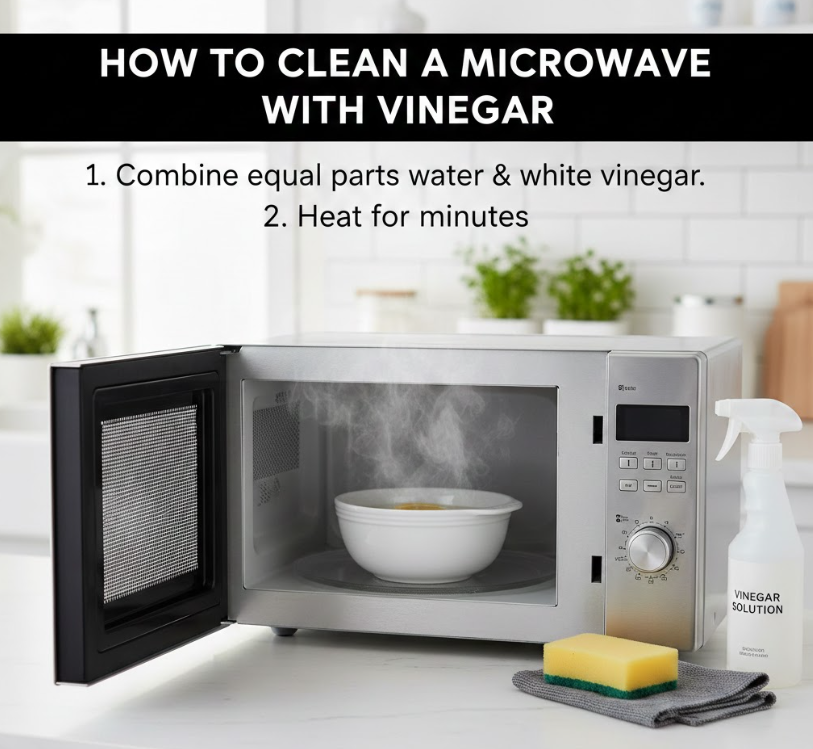
Vinegar is one of the most effective natural cleaners for microwave interiors due to its acidity and disinfecting properties. It cuts through grease, dissolves mineral buildup, and kills odor-causing bacteria without synthetic chemicals. Cleaning with vinegar is especially effective for households that use microwaves frequently.
White distilled vinegar is recommended because it contains acetic acid, which reacts with hardened food residue and neutralizes smells safely.
Step-by-Step Vinegar Microwave Cleaning Method
• Create a vinegar steam solution
Mix one cup of water with one cup of white vinegar in a microwave-safe container. This balanced solution ensures strong cleaning power without overwhelming fumes or damaging surfaces.
• Heat until steam fills the microwave
Run the microwave on high for five minutes until the mixture boils and creates steam. Vinegar vapor condenses on interior walls, loosening grease and baked-on food particles.
• Let steam rest inside the microwave
Allow the steam to sit for two to three minutes with the door closed. This extra time enhances vinegar’s ability to break down stubborn residue and sanitize surfaces naturally.
• Wipe down all interior areas
Using a clean cloth, wipe the ceiling, walls, and door. Vinegar removes grease efficiently, reducing the need for harsh scrubbing that could damage coatings.
• Clean vents and seals carefully
Dip a cloth in the vinegar solution and gently clean door seals and vents. These areas often trap food particles and moisture, contributing to odor buildup.
• Air out to remove vinegar smell
Leave the microwave door open for a few minutes after cleaning. The vinegar scent dissipates quickly, leaving the microwave fresh and sanitized.
Also Read:- How to Cut a Dragon Fruit: Complete Step-by-Step Guide for All Varieties
How to Clean a Microwave with Lemon
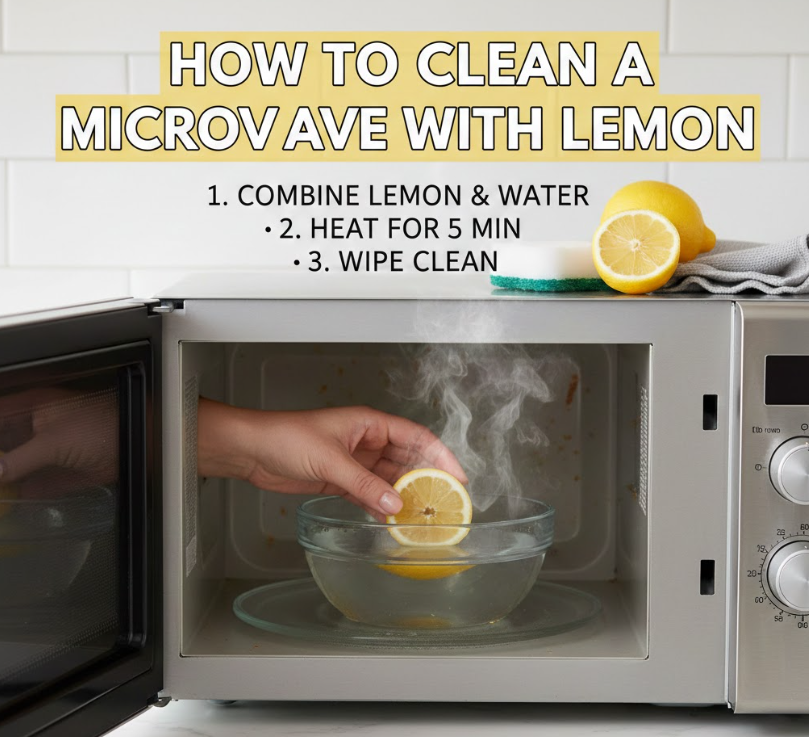
Lemon is a natural deodorizer and grease remover that leaves a fresh scent behind. Cleaning a microwave with lemon is ideal for people sensitive to vinegar smells or looking for a pleasant, food-safe cleaning method. Lemon’s citric acid breaks down grease while neutralizing odors.
This method is especially effective for routine cleaning and light stains while enhancing freshness.
Lemon Cleaning Method for Microwave Interiors
• Prepare a lemon steam bowl
Slice one lemon in half and squeeze the juice into a microwave-safe bowl of water. Drop the lemon halves into the bowl to maximize citric acid release.
• Heat until fragrant steam forms
Microwave the bowl for five minutes until steam coats the interior. Lemon vapor softens food splatters while infusing a clean citrus scent.
• Allow steam to work internally
Keep the microwave door closed for two minutes after heating. This allows lemon steam to penetrate residue and deodorize surfaces thoroughly.
• Wipe interior surfaces gently
Use a soft cloth to wipe walls, ceiling, and door. Lemon residue cuts through grease without leaving streaks or chemical traces.
• Remove stubborn spots naturally
For tough stains, dip the cloth into the lemon water and apply gentle pressure. Citric acid helps lift residue without abrasion.
• Maintain long-term freshness
Repeat lemon cleaning weekly to prevent odors and buildup. This method is safe for daily use and keeps the microwave smelling fresh.
Also Read:- How to Call No Caller ID: Complete Guide to Identify, Call Back, and Manage Hidden Numbers
How to Clean a Microwave After Burning Food

Burnt food creates stubborn stains and strong odors that require targeted cleaning. Knowing how to clean a microwave after burning food is essential to prevent lingering smells and residue that can affect future meals.
Burnt residue contains carbonized particles that need moisture, time, and gentle solvents to break down effectively.
Removing Burnt Food Smell and Residue Safely
• Ventilate the area immediately
Open windows and turn on exhaust fans to remove smoke odor. Fresh airflow prevents burnt smells from settling into kitchen surfaces.
• Use steam to soften burnt residue
Heat water with vinegar or lemon to generate steam. Steam rehydrates burnt food, making it easier to remove without scraping.
• Wipe gently to avoid surface damage
Use a soft cloth to lift residue. Avoid abrasive pads, as they can damage microwave coatings and reduce appliance lifespan.
• Target odor molecules effectively
Leave baking soda or activated charcoal inside the microwave overnight. These absorb burnt smells rather than masking them.
• Clean the microwave filter if present
Some microwaves have grease filters that trap smoke particles. Remove and wash according to manufacturer instructions.
• Repeat if necessary for severe burns
Deep burns may require two cleaning cycles. Consistency ensures complete odor and residue removal.
Also Read:- How to Unsend an Email in Outlook: Complete Guide for All Devices
How to Clean a Microwave Easily (Daily & Weekly Maintenance)

The easiest way to clean a microwave is through consistent, light maintenance rather than deep cleaning sessions. Learning how to clean a microwave easily saves time and prevents stubborn buildup.
Simple habits dramatically reduce mess and odor issues.
Easy Microwave Cleaning Habits That Work
• Cover food during heating
Using microwave-safe covers prevents splatters, reducing cleaning frequency and maintaining hygiene.
• Wipe spills immediately
Fresh spills are easier to clean than dried residue. A quick wipe saves time and effort later.
• Use steam cleaning weekly
Weekly steaming with water keeps interior surfaces clean and odor-free without chemicals.
• Clean turntable regularly
Wash the turntable weekly to prevent grease accumulation and uneven heating.
• Avoid harsh cleaners
Strong chemicals can damage interior coatings and leave harmful residues. Stick to natural methods.
• Create a simple cleaning schedule
Routine maintenance prevents deep stains and keeps the microwave performing efficiently.
Also Read:-How to Get Rid of Chipmunks: A Complete, Humane & Effective Guide
Conclusion: How to Clean a Microwave the Right Way
Learning how to clean a microwave properly improves food safety, appliance performance, and kitchen hygiene. Whether you use baking soda, vinegar, lemon, or steam-based methods, consistent and gentle cleaning ensures long-lasting results. Natural cleaning solutions are safe, effective, and environmentally friendly, making them ideal for everyday use.
A clean microwave is not just about appearance—it’s about health, efficiency, and peace of mind.
FAQs
How often should I clean my microwave?
Light cleaning weekly and deep cleaning monthly is recommended.
Is vinegar safe for microwave interiors?
Yes, when diluted properly, vinegar is safe and effective.
Can burnt smells permanently damage a microwave?
No, but untreated residue can cause long-term odor issues.
For More Updates Visit: Biomagazine
