

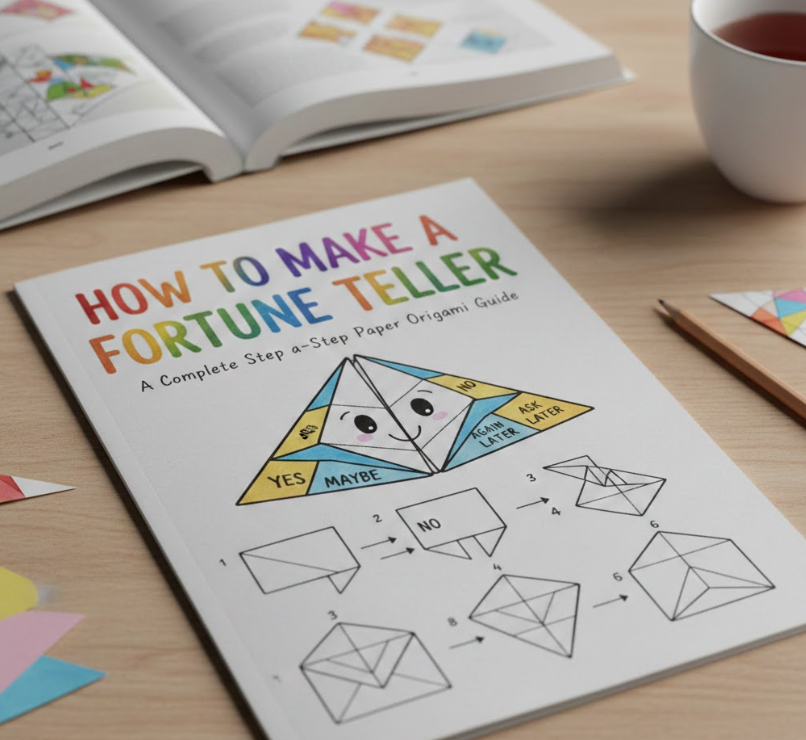
Learning how to make a fortune teller is a fun, creative, and timeless paper activity enjoyed by children, students, teachers, and even adults around the world. Often called a paper fortune teller, cootie catcher, or origami fortune teller, this classic craft blends imagination, simple geometry, and playful interaction into one engaging experience.
In this in-depth guide, you will discover how to make a fortune teller out of paper, understand the origami principles behind it, and learn step-by-step methods that are easy enough for beginners while still offering creative depth. Whether you’re crafting for fun, education, or nostalgia, this guide provides everything you need to succeed confidently.
What Is a Fortune Teller and Why It’s Still Popular Today
A fortune teller is a folded paper toy that opens and closes using fingers, revealing playful messages, predictions, or challenges inside. Its simplicity and interactive nature make it an enduring favorite across generations.
• A fortune teller combines creativity, storytelling, and hands-on learning in one activity
• It encourages fine motor skills, spatial awareness, and logical folding patterns
• Children enjoy the surprise element of hidden messages
• Teachers use it for educational games and icebreakers
• It requires only one sheet of paper and no special tools
• It promotes social interaction through shared play
How to Make a Fortune Teller Out of Paper
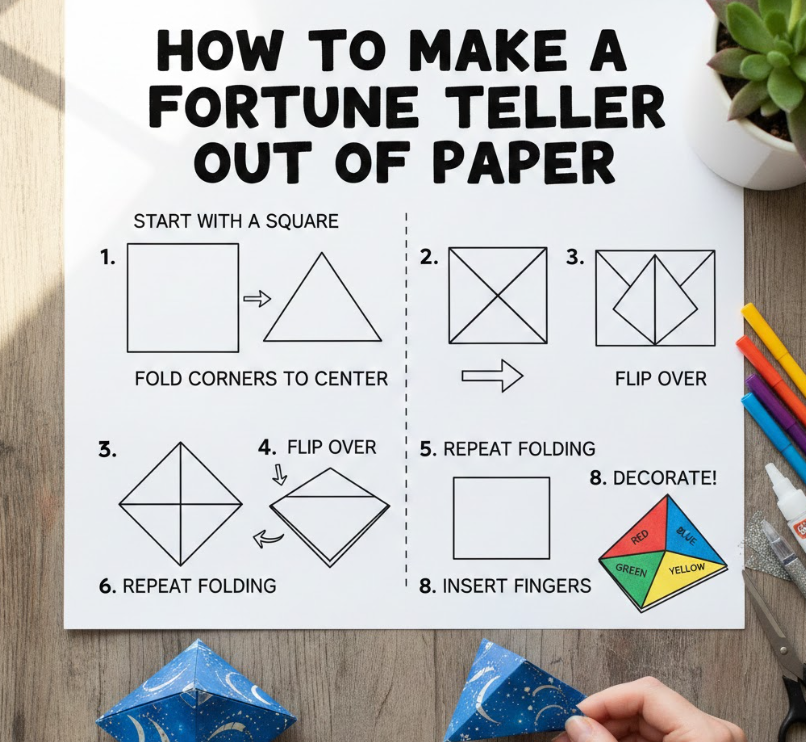
Making a fortune teller out of paper is the foundation of this craft and the most common method used worldwide. This approach focuses on precision folding and clean alignment to create a functional and durable paper toy.
Definition and Overview
This method uses a single square sheet of paper folded symmetrically to form four triangular flaps and eight hidden compartments. Proper folding ensures smooth movement and clear visibility of fortunes.
• Choosing the right paper improves folding accuracy and durability
Paper quality affects how crisp the folds remain over time. Lightweight paper is easier for beginners, while thicker paper adds durability. Smooth paper surfaces allow cleaner creases, making the fortune teller open and close effortlessly.
• Creating a perfect square is essential
A square ensures symmetry. If using rectangular paper, trimming it correctly prevents uneven flaps. Uneven edges cause misalignment, making the fortune teller difficult to use.
• Precision folding builds structural balance
Each fold must align edge-to-edge. Small inaccuracies multiply as folds progress, so patience during early steps results in a smoother final shape.
• Repetition strengthens fold memory
Reinforcing folds by pressing firmly helps the paper remember its shape. This improves motion and longevity.
• Symmetry supports easy finger movement
Equal fold tension allows the fortune teller to open evenly from all sides without tearing.
• Clean edges improve appearance and usability
Neat folds make messages easier to read and the toy more enjoyable to use.
Also Read:- How to Fix a Zipper: A Complete Step-by-Step Repair Guide for Every Situation
How to Make a Fortune Teller Step by Step
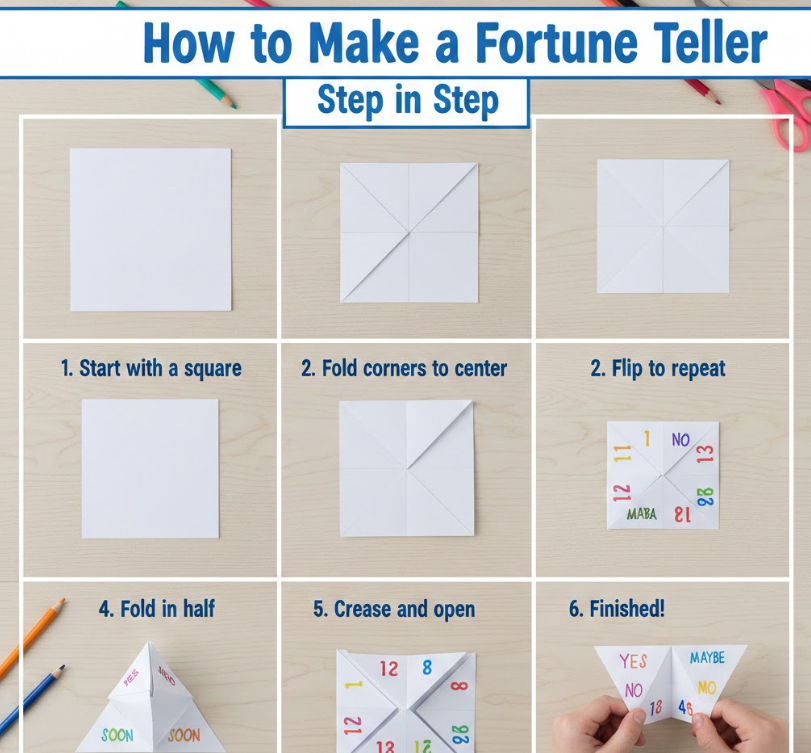
This section focuses on the classic step-by-step approach, breaking the process into logical stages that beginners can follow confidently.
Definition and Learning Purpose
Step-by-step instructions transform a simple paper craft into a structured learning experience, reducing confusion and improving success rates.
• Start with proper paper orientation
Placing the paper flat on a stable surface prevents shifting. Proper alignment from the start avoids later corrections that can damage folds.
• Fold diagonally to establish center points
Diagonal folds help locate the exact center of the paper, serving as reference lines for future folds.
• Bring corners to the center evenly
This step forms the fortune teller’s iconic square base. Equal spacing ensures balanced movement later.
• Flip and repeat folds carefully
Repeating the corner-to-center fold on the reverse side creates internal pockets essential for finger placement.
• Shape internal pockets gradually
Inserting fingers slowly prevents tearing. Gentle adjustments allow the paper to adapt to movement.
• Test motion before decorating
Opening and closing the fortune teller before writing ensures functionality and avoids smudged messages.
Also Read:- How to Fix a Running Toilet: A Complete DIY Plumbing Guide
How to Make a Fortune Teller With Paper (Creative Variations)
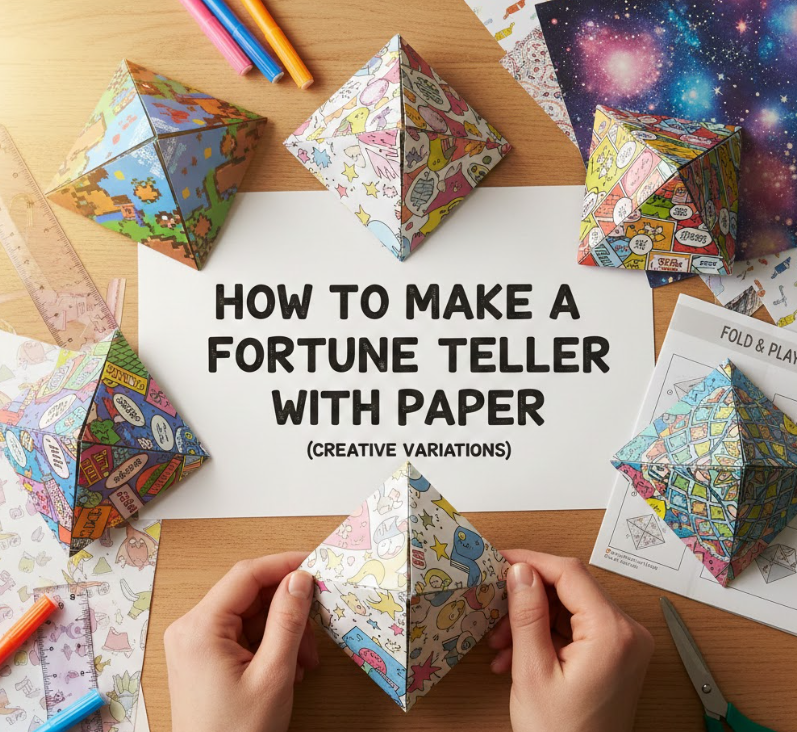
Using paper creatively allows you to personalize your fortune teller with colors, themes, and messages that suit different occasions.
Definition and Creative Scope
This approach emphasizes customization while maintaining structural integrity, blending art with origami technique.
• Color choice influences engagement
Bright colors attract attention, while pastel tones create a softer aesthetic. Color coding sections can guide gameplay.
• Writing fortunes enhances interaction
Messages can include predictions, jokes, challenges, or learning prompts. This adds replay value and creativity.
• Thematic designs increase appeal
Themes like holidays, school subjects, or personality traits make fortune tellers more engaging.
• Decorative patterns improve visual clarity
Symbols and icons help users remember choices and outcomes.
• Paper texture affects folding style
Matte paper folds differently than glossy paper. Choosing the right texture enhances control.
• Personalization builds emotional connection
Handmade designs feel more meaningful, encouraging sharing and repeated use.
Also Read:- How to Clean a Microwave: The Complete Step-by-Step Guide
How to Make a Fortune Teller Origami Style
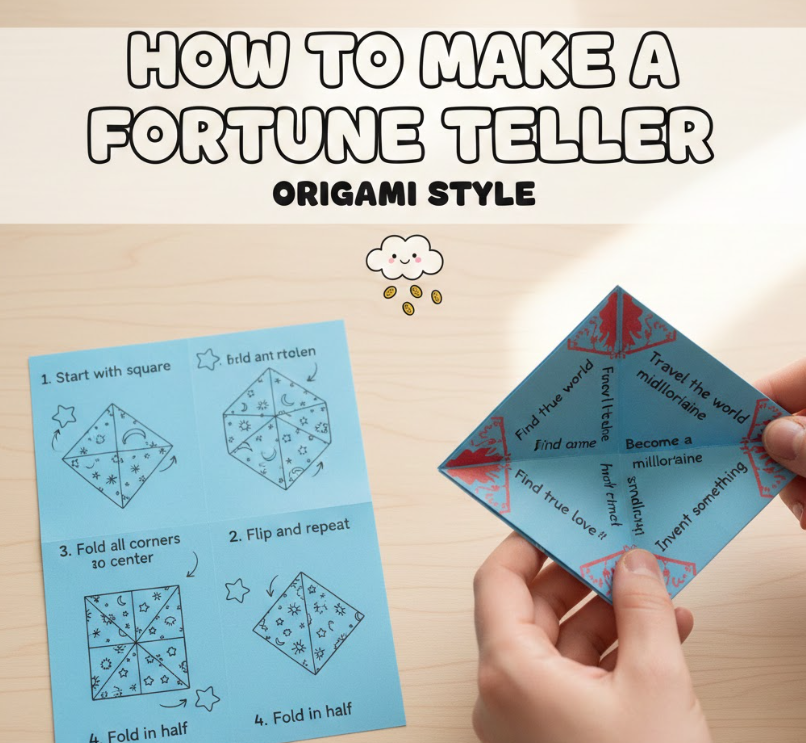
Origami fortune tellers follow traditional folding principles rooted in Japanese paper art, emphasizing precision and balance.
Definition and Origami Principles
Origami focuses on transforming flat paper into functional forms through structured folds without cutting or glue.
• Respecting crease hierarchy matters
Primary folds guide secondary folds, maintaining structural flow.
• Minimal adjustments preserve origami purity
Avoid over-handling paper to maintain clean geometry.
• Balanced pressure prevents warping
Equal force on folds ensures symmetry.
• Finger placement follows origami logic
Proper pocket formation allows smooth movement.
• Traditional symmetry improves durability
Origami-based designs resist tearing due to even stress distribution.
• Cultural roots enhance appreciation
Understanding origami history adds educational depth to the craft.
Also Read:- How to Attract Birds: A Complete Guide for Feeders, Yards, Gardens, and Bird Baths
How to Make a Fortune Teller Step by Step Easy (Beginner-Friendly)
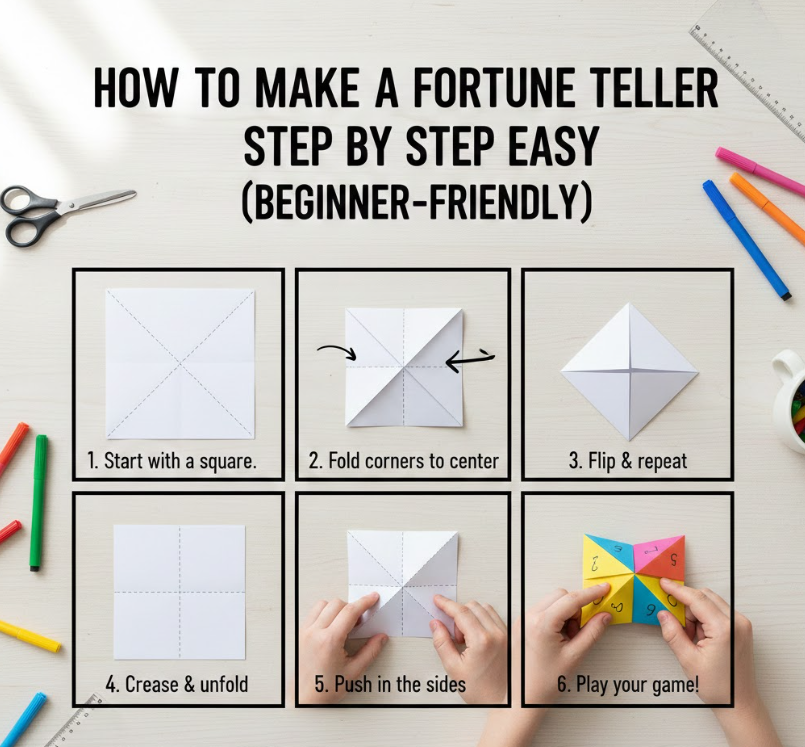
This easy version simplifies folding for children and first-time learners without sacrificing functionality.
Definition and Accessibility Focus
Easy methods reduce steps and complexity while maintaining recognizable form and playability.
• Larger paper improves control
Bigger sheets make folds easier to see and manage.
• Slower pacing improves accuracy
Allowing time between steps reduces mistakes.
• Simple messages suit beginners
Short words fit neatly inside flaps.
• Visual guides support learning
Drawing arrows or numbers helps beginners follow steps.
• Adult supervision enhances safety
Guidance prevents frustration and tearing.
• Repetition builds confidence
Making multiple fortune tellers improves skill quickly.
Also Read:- How to Cut a Dragon Fruit: Complete Step-by-Step Guide for All Varieties
Educational and Social Benefits of Fortune Tellers
Beyond fun, fortune tellers offer educational and social value.
• Enhances fine motor development
• Encourages creativity and storytelling
• Supports classroom engagement
• Promotes cooperative play
• Builds confidence through creation
• Encourages problem-solving skills
Also Read:- How to Call No Caller ID: Complete Guide to Identify, Call Back, and Manage Hidden Numbers
Conclusion: Mastering How to Make a Fortune Teller Brings Creativity to Life
Learning how to make a fortune teller is more than a simple paper craft—it’s an engaging blend of creativity, interaction, and learning. Whether you choose a classic origami style, a step-by-step easy method, or a customized paper design, fortune tellers remain a joyful and meaningful activity for all ages. With practice and imagination, this simple square of paper becomes a source of endless fun and connection.
FAQs
What paper works best for a fortune teller?
Standard printer paper or origami paper works best for clean folds.
Is a fortune teller the same as a cootie catcher?
Yes, they are different names for the same paper toy.
Can adults enjoy making fortune tellers?
Absolutely. Many adults use them for creative writing and icebreakers.
How long does it take to make one?
Most people can complete one in under 10 minutes
For More Updates Visit: Biomagazine
