


Running is one of the simplest yet most effective ways to improve fitness, boost cardiovascular health, and challenge your physical limits. Many runners, whether beginners or seasoned athletes, wonder how to run faster without exhausting themselves or risking injury. Achieving higher speeds requires a combination of proper training, form improvement, mental strategies, and physiological conditioning.
This article offers a step-by-step roadmap to running faster and longer, including actionable exercises, tips, and advanced strategies. With a focus on sustainable improvements and expert-backed advice, you will learn how to enhance endurance, optimize running mechanics, and unlock your full speed potential.
How to Run Faster and Longer
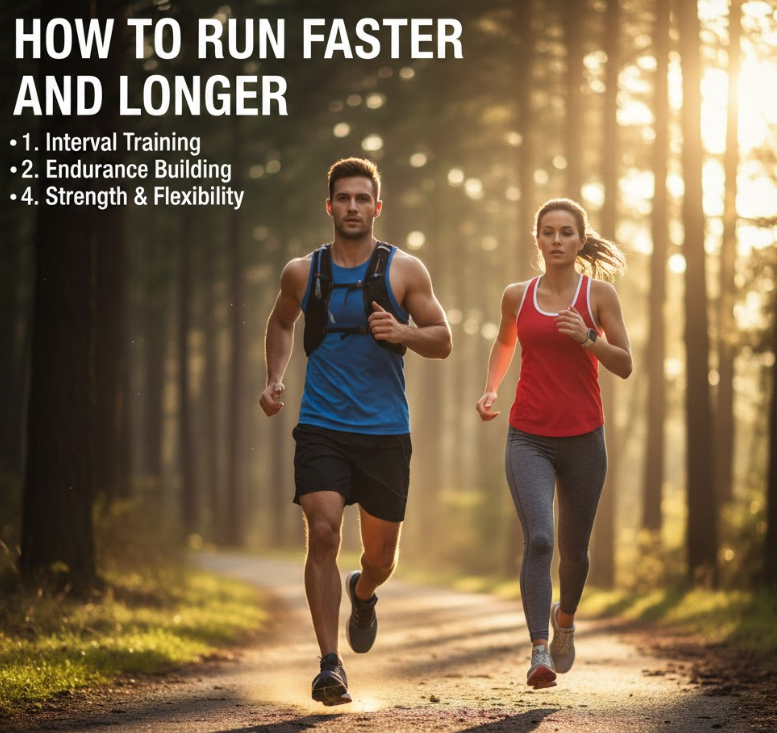
Running faster for longer distances combines endurance training with speed work and energy management. Improving both speed and stamina relies on efficient running mechanics, cardiovascular conditioning, and mental resilience. This section explains strategies to increase pace while maintaining a steady energy output for extended periods.
Step-by-Step Build Points
• Incorporate long, steady runs
Long-distance runs at a moderate pace help strengthen the cardiovascular system, increase mitochondrial density in muscles, and improve overall stamina. By training your body to sustain a faster pace for longer periods, you create a foundation for combining speed with endurance.
• Introduce interval training sessions
Alternating between high-intensity sprints and recovery jogs boosts VO₂ max and trains your body to handle bursts of speed without fatigue. Interval workouts condition both fast-twitch and slow-twitch muscle fibers, improving the ability to accelerate and sustain faster paces.
• Focus on consistent pacing
Learning to distribute energy evenly across a run prevents early burnout. Use techniques such as negative splits—running the second half faster than the first—to improve both endurance and confidence in maintaining speed over long distances.
• Strengthen key muscles for running
Target core, glutes, hamstrings, and calves through resistance exercises. Stronger muscles support better running mechanics, reduce fatigue, and allow faster running over extended periods without overstraining joints or ligaments.
• Monitor nutrition and hydration
Fueling appropriately with carbohydrates, electrolytes, and proteins helps maintain energy levels during long runs. Dehydration or depleted glycogen stores significantly limit running speed and duration, so pre-run and during-run strategies are essential.
• Use mental strategies to endure longer distances
Visualization, goal setting, and rhythm-based running techniques help maintain focus and pace. Mental endurance can be as important as physical conditioning when pushing your limits to run faster and longer.
Also Read:- How to Reset AirPods Pro: The Complete Expert Guide
How to Run Faster Without Getting Tired
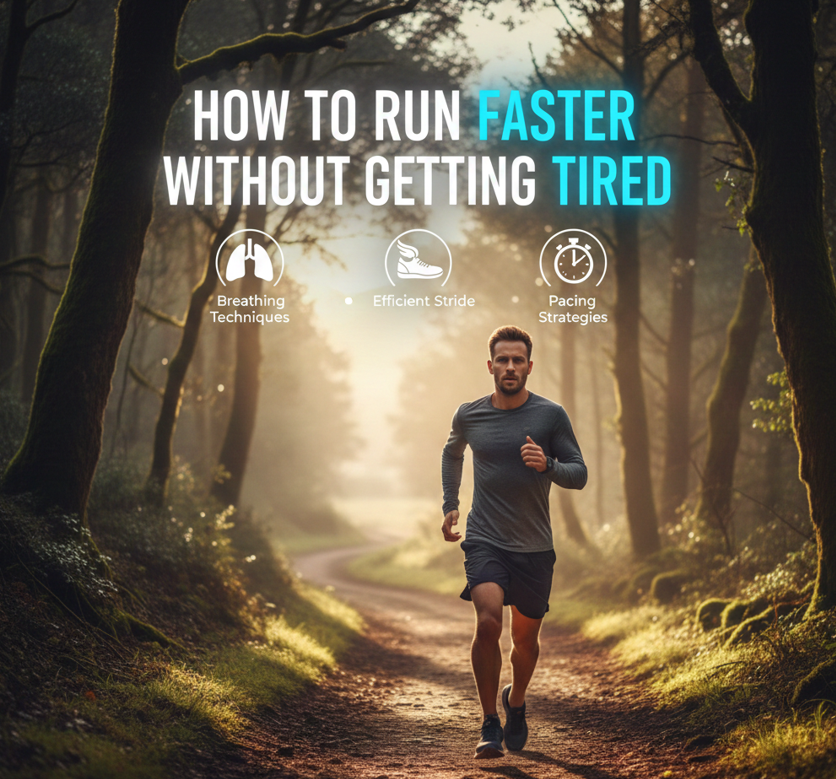
Running faster without quickly fatiguing requires efficient energy use, proper breathing, and smart biomechanics. Fatigue management strategies help runners sustain higher speeds without overexertion. Understanding the physiological causes of tiredness is key to maximizing speed sustainably.
Step-by-Step Build Points
• Improve running form and posture
Maintain an upright torso, relaxed shoulders, and a slight forward lean from the ankles. Efficient form reduces wasted energy and minimizes muscle fatigue during faster runs.
• Optimize breathing techniques
Use rhythmic deep breathing to increase oxygen delivery to muscles. Coordinating inhalation and exhalation with strides helps delay lactic acid buildup and postpones fatigue.
• Perform tempo runs
Running at a comfortably hard pace for a sustained period trains the body to handle elevated heart rates without energy collapse. Tempo training increases lactate threshold, allowing runners to maintain higher speeds longer.
• Build aerobic base with cross-training
Incorporate swimming, cycling, or rowing to strengthen cardiovascular capacity without additional impact on joints. A robust aerobic base prevents early fatigue during fast runs.
• Strengthen the core and stabilizing muscles
Core exercises improve balance and running efficiency, reducing unnecessary movements that waste energy. Strong stabilizers allow faster, smoother strides with less effort.
• Use interval recovery wisely
During training, alternate periods of high-intensity effort with active recovery. This teaches the body to clear metabolic waste faster, improving performance while reducing tiredness during continuous fast running.
Also Read:- How to Remove Gel X Nails: A Complete Expert Guide
How to Run Faster in 1 Day

While long-term speed gains require consistent training, certain strategies allow immediate improvements in running performance. Enhancing speed in a single day focuses on optimizing mechanics, energy use, and psychological readiness. These techniques are ideal for race day or testing maximum pace.
Step-by-Step Build Points
• Perform dynamic warm-ups
Exercises like high knees, butt kicks, and leg swings increase blood flow and activate muscles. A well-structured warm-up primes the body for peak performance and reduces the risk of injury.
• Use stride drills before running
Short sprints at 80–90% effort improve neuromuscular coordination and prepare your legs for faster turnover. These drills temporarily enhance stride length and cadence for immediate speed gains.
• Optimize pre-run nutrition
Consume easily digestible carbohydrates and stay hydrated to fuel muscles. Timing nutrition about 60–90 minutes before running maximizes available energy.
• Focus on sprint technique
Shorten ground contact time and increase stride frequency. Quick, light steps improve acceleration and peak speed even during a single session.
• Incorporate mental visualization
Picture ideal running form and pace before starting. Mental rehearsal can enhance muscle activation and confidence for faster performance in one session.
• Cooldown and recovery post-run
Stretch and replenish fluids to prevent muscle stiffness. Adequate recovery ensures your performance boost can be repeated safely in subsequent runs.
Also Read:- How to Reset CMOS: A Complete Beginner-to-Advanced Guide
How to Run Faster Exercises
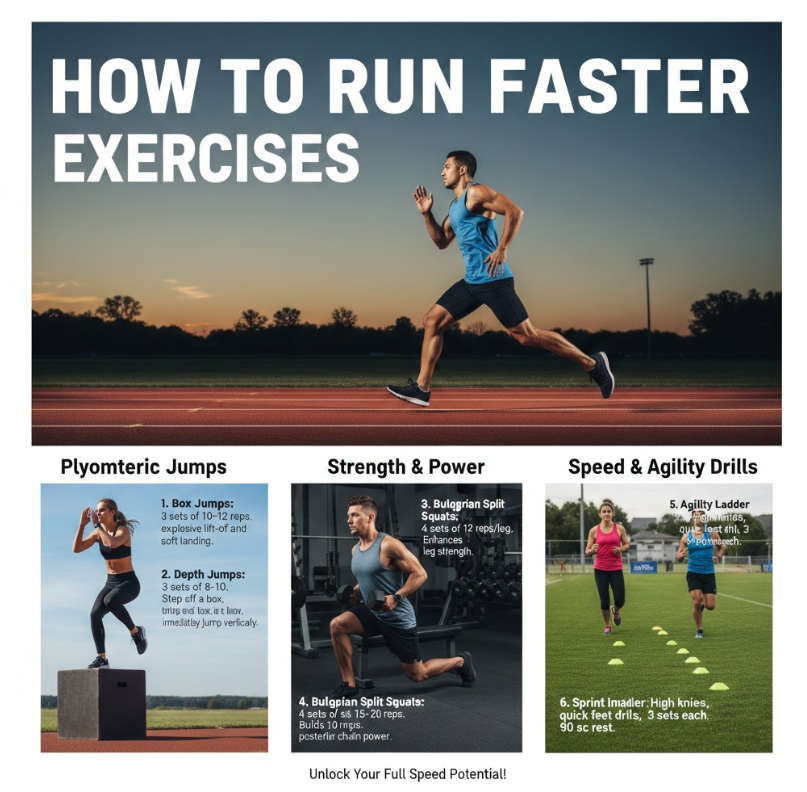
Specific exercises target strength, speed, and power in running muscles. Proper exercise selection enhances stride mechanics, turnover rate, and acceleration. Combining resistance, plyometrics, and mobility work improves running performance holistically.
Step-by-Step Build Points
• Plyometric exercises for explosive power
Exercises such as jump squats, box jumps, and bounding increase lower-body power, improving push-off efficiency and stride speed. Explosiveness allows a faster ground-to-ground transition.
• Hill sprints for leg strength
Running uphill builds hamstrings, calves, and glutes while enhancing cardiovascular capacity. Hill training translates into stronger, faster strides on flat terrain.
• Core strengthening routines
Planks, Russian twists, and bicycle crunches stabilize the torso. Core stability reduces energy leakage, allowing more efficient force transfer from the legs to forward motion.
• Resistance band training
Using bands for leg abductions and extensions improves hip stability and stride control. Better hip mechanics lead to faster and more sustainable running.
• Stride drills for turnover improvement
Short accelerations focusing on foot placement and cadence refine muscle memory for faster steps. Practicing turnover in controlled drills enhances race-day speed.
• Flexibility and mobility routines
Hip flexor stretches, calf stretches, and dynamic leg swings prevent tightness. Greater range of motion facilitates longer and faster strides.
Also Read:- How to Replace a Kitchen Faucet: A Complete Step-by-Step DIY Guide
How to Run Faster Tips
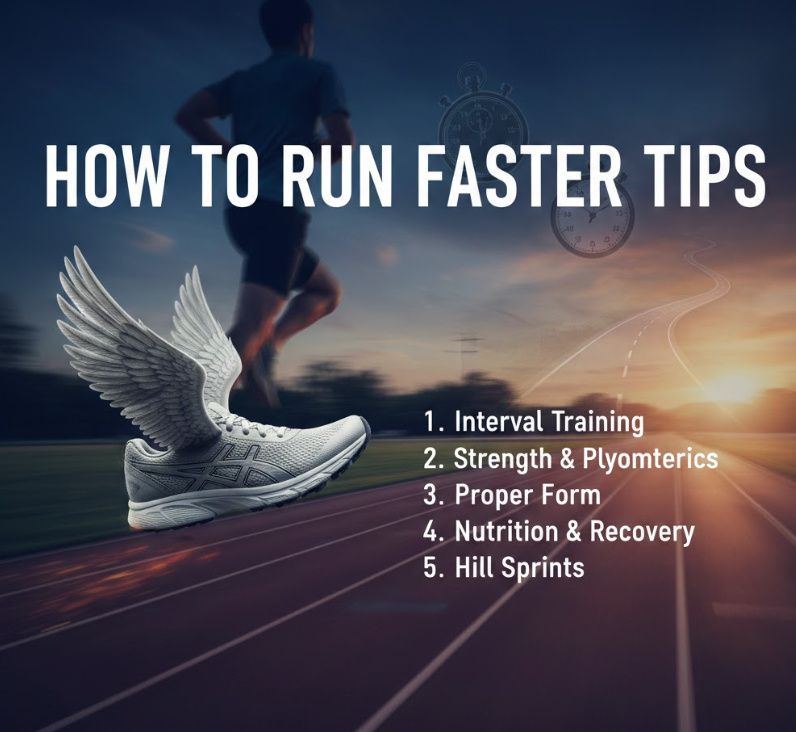
Practical tips and lifestyle adjustments complement structured workouts to improve running speed. Small changes in technique, recovery, and mindset significantly impact pace. Integrating these tips ensures consistent improvement over time.
Step-by-Step Build Points
• Track progress with a running app
Monitoring distance, pace, and cadence provides data-driven insights to refine training. Adjust workouts based on trends for optimal results.
• Wear proper running shoes
Lightweight, supportive shoes improve efficiency and reduce energy wastage. Proper footwear also minimizes injury risk during high-speed sessions.
• Maintain consistent cadence
Aim for a higher step rate while keeping stride length efficient. Faster cadence reduces ground contact time and increases overall speed.
• Prioritize recovery and sleep
Muscle repair and nervous system recovery occur during rest. Inadequate recovery can slow gains and increase fatigue.
• Fuel properly before and after runs
Balanced meals with carbohydrates, protein, and fats sustain energy and support muscle recovery. Nutrition directly affects performance and speed.
• Incorporate mental focus techniques
Set small goals, use positive self-talk, and stay mindful during runs. Mental clarity and motivation help maintain faster speeds over longer distances.
Also Read:- How to Get Rid of Gnats: The Complete Expert Guide for Home, Plants, and Outdoors
How to Run Faster Without Stopping
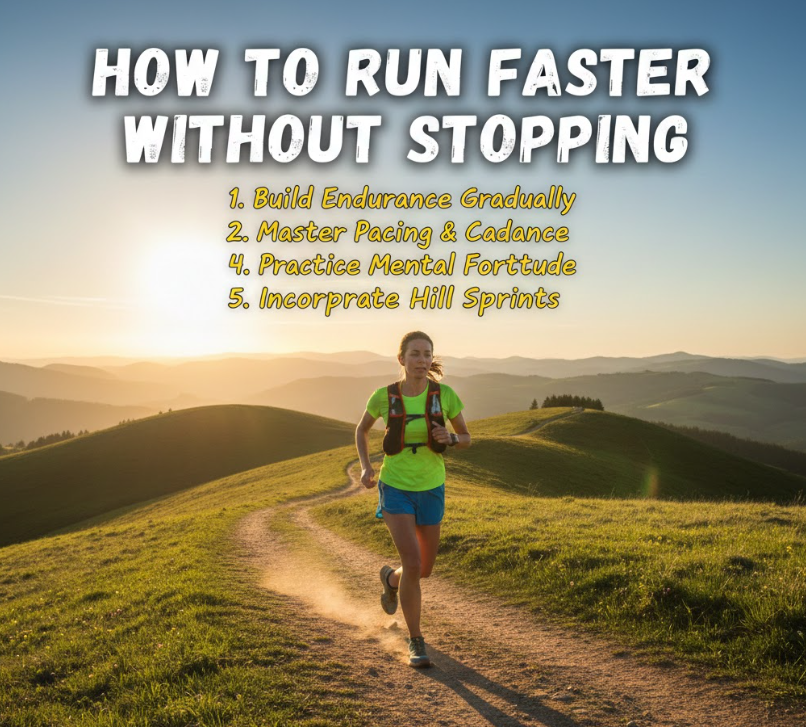
Sustaining speed without stopping requires a combination of endurance, energy management, and efficient mechanics. Avoiding early fatigue ensures consistent pacing for longer distances. This section explains strategies to run continuously while maintaining higher speeds.
Step-by-Step Build Points
• Build aerobic base gradually
Long, slow runs strengthen the cardiovascular system and increase oxygen delivery. A strong aerobic foundation supports sustained speed without needing frequent breaks.
• Use run-walk intervals initially
Gradually increase continuous running duration to avoid overexertion. Run-walk intervals help improve endurance safely, minimizing the need to stop.
• Practice controlled breathing
Coordinate breath with stride rhythm to reduce lactic acid buildup. Proper breathing helps maintain energy for longer durations.
• Strengthen lower-body muscles
Target glutes, quads, and calves through resistance and plyometric exercises. Strong legs prevent fatigue and maintain faster running over time.
• Stay hydrated and fueled during runs
Use water, electrolytes, or small energy gels on longer runs. Proper fueling prevents early slowdown and supports sustained speed.
• Mentally segment distance into manageable parts
Break long runs into sections and focus on completing each part efficiently. Mental pacing reduces perceived effort and allows continuous running at higher speeds.
Also Read:- How to Clear Cache on iPhone: A Complete, Expert-Backed Guide
Conclusion
Learning how to run faster combines strategic training, strength exercises, mental focus, and lifestyle adjustments. By improving mechanics, building endurance, and incorporating speed-focused workouts, runners can achieve higher paces sustainably. Whether the goal is to run faster in one day or maintain speed over long distances, consistent effort and proper recovery are key. Implementing these strategies will help unlock peak running performance while minimizing fatigue and injury risk.
FAQs
Can I run faster without extra training?
Small adjustments in form, cadence, and breathing can improve speed temporarily, but sustainable improvements require consistent training.
How long does it take to see noticeable speed improvements?
With structured training, most runners notice improvements within 4–6 weeks, depending on fitness level and effort.
Are strength exercises necessary for running faster?
Yes. Leg, core, and glute strength improve stride efficiency, endurance, and speed while reducing injury risk.
Can running faster damage my knees?
Proper mechanics, gradual progression, and supportive footwear reduce the risk of joint stress and injury.
For More Updates Visit: Biomagazine
