

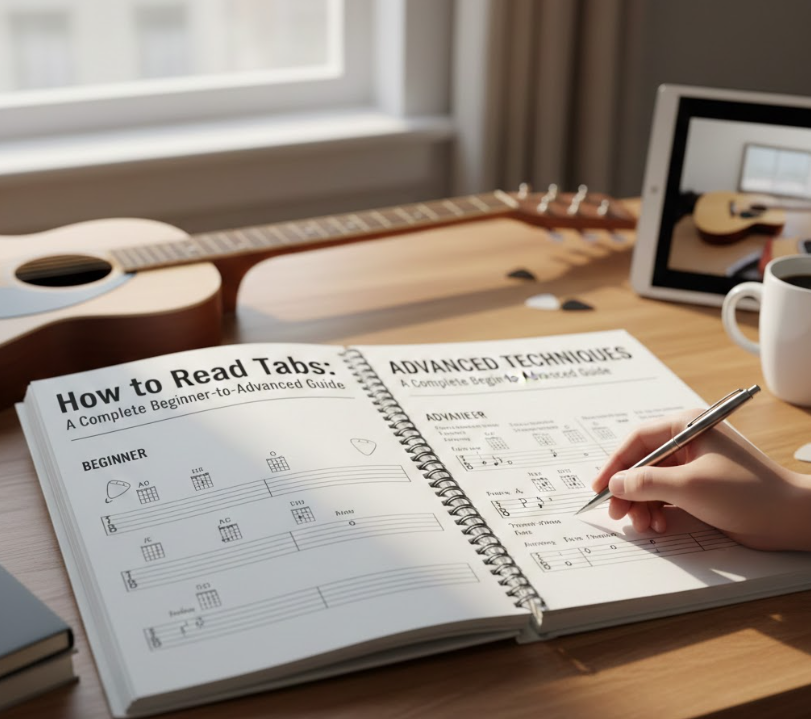
Learning how to read tabs is one of the fastest and most accessible ways to start playing music on string instruments. Unlike traditional sheet music, tablature—commonly called “tabs”—shows you where to place your fingers rather than which notes to read. This makes tabs especially popular among beginners, hobbyists, and self-taught musicians.
In this in-depth guide, you will learn how to read tabs for guitar, bass, ukulele, electric guitar, and acoustic guitar. The article blends real playing experience, music theory basics, and practical learning strategies to help you confidently translate tabs into real music.
What Are Tabs and How Do They Work?
Tabs are a simplified form of musical notation designed specifically for string instruments. Instead of musical staff lines, tabs use horizontal lines that represent strings, with numbers indicating which fret to play. Understanding how to read tabs starts with recognizing that tabs focus on position rather than pitch names.
This system allows players to start playing songs quickly without extensive theory knowledge.
Core Structure of Tabs Explained
• Strings are represented as lines
Each horizontal line corresponds to a string on the instrument. The top line represents the highest-pitched string, while the bottom line shows the lowest-pitched string.
• Numbers show fret positions
The numbers printed on each line tell you which fret to press. A “0” means an open string, while higher numbers indicate fretted notes.
• Left-to-right reading direction
Tabs are read from left to right, just like reading text. This shows the order in which notes are played.
• Stacked numbers indicate chords
When multiple numbers appear vertically aligned, those notes are played simultaneously as a chord.
• Spacing suggests timing
Although tabs do not show rhythm precisely, spacing between numbers often hints at note duration and phrasing.
• No note names required
Because tabs show finger placement directly, beginners can play music without knowing traditional notation.
Also Read:- How to Make Hot Honey: The Complete Guide to Sweet Heat Perfection
How to Read Tabs for Beginners
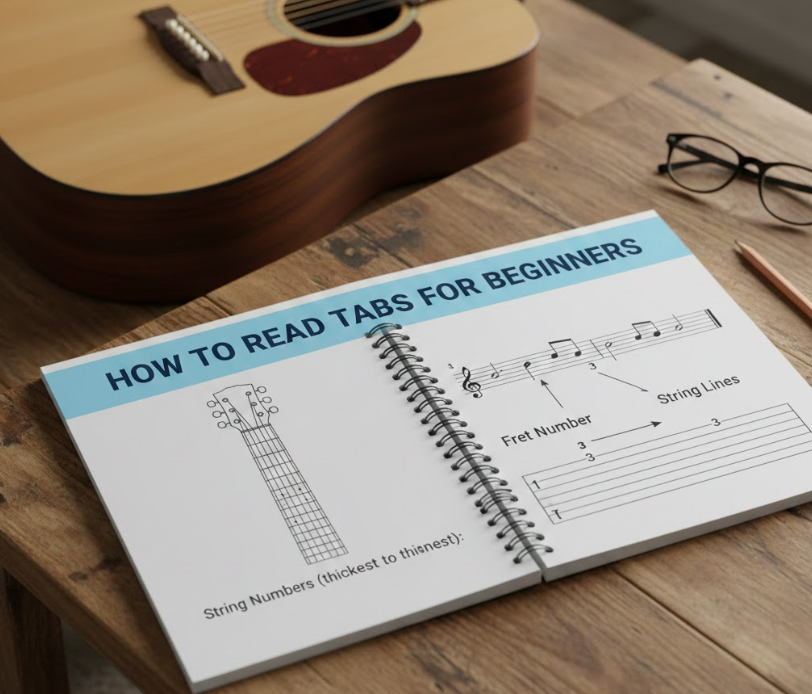
Understanding how to read tabs for beginners requires focusing on fundamentals rather than speed or complexity. Beginners benefit most from slow, deliberate practice and visual familiarity with the instrument.
Tabs remove early barriers to entry and build confidence quickly.
Beginner-Friendly Tab Reading Principles
• Start with single-string melodies
Playing one string at a time builds coordination and helps you understand fret numbering without confusion.
• Memorize string order first
Knowing which line represents which string prevents incorrect finger placement.
• Use slow practice tempo
Speed comes later. Accuracy builds muscle memory and long-term skill.
• Watch finger positioning closely
Correct hand posture prevents strain and improves tone quality.
• Play along with recordings
Audio reference helps compensate for tabs’ limited rhythm information.
• Repeat short sections frequently
Repetition reinforces confidence and reduces mistakes.
Also Read:- How to Clean Clams: The Complete, Safe, and Expert Seafood Guide
How to Read Tabs for Guitar

Learning how to read tabs for guitar applies to both electric and acoustic instruments. Standard guitar tabs typically show six lines, representing six strings.
Once you understand this layout, most guitar tabs become intuitive.
Guitar Tab Reading Essentials
• Six strings equal six lines
From top to bottom, the strings are high E, B, G, D, A, and low E.
• Fret numbers guide finger placement
Each number corresponds directly to a fret, eliminating guesswork.
• Open strings marked with zero
A “0” means play the string without pressing any fret.
• Chords appear vertically aligned
Multiple numbers stacked together indicate chord shapes.
• Slides and bends use symbols
Symbols like “/”, “\”, or “b” show expressive techniques.
• Practice with simple songs first
Basic riffs build familiarity faster than complex solos.
Also Read:- How to Love Yourself: A Complete Guide to Confidence, Healing, and Inner Peace
How to Read Tabs for Electric Guitar
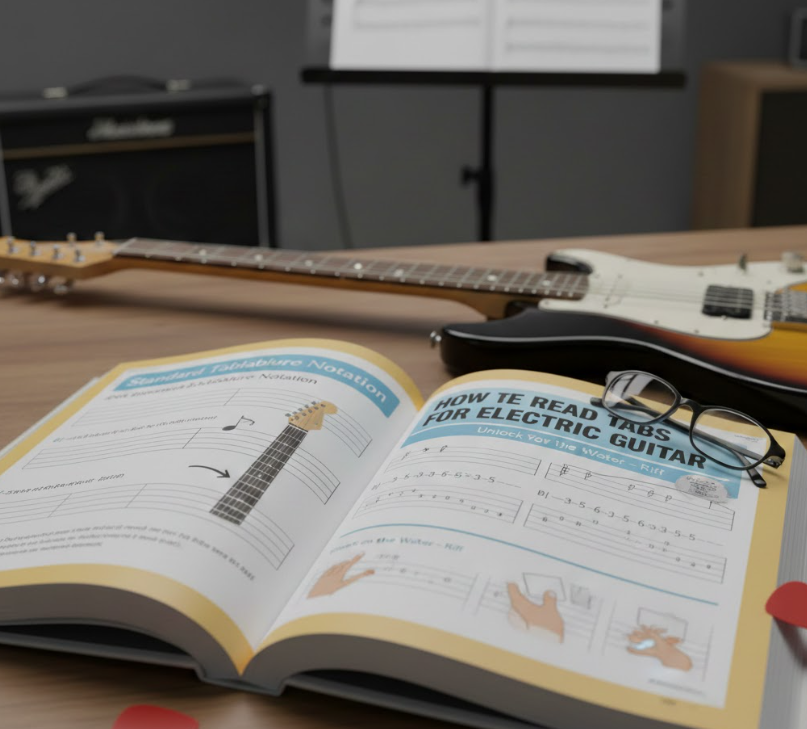
Understanding how to read tabs electric guitar introduces expressive techniques more commonly used in lead playing. Electric guitar tabs often include advanced symbols that reflect tone and articulation.
These symbols help translate feel and style into written form.
Electric Guitar Tab Techniques
• Bends change pitch
A “b” symbol shows bending a string upward to raise pitch.
• Slides connect notes smoothly
Forward or backward slashes indicate sliding between frets.
• Hammer-ons and pull-offs
“H” and “P” show legato playing without re-picking.
• Vibrato adds expression
Wavy lines suggest controlled pitch fluctuation.
• Palm muting symbols
“PM” indicates lightly muting strings for tighter sound.
• Tone awareness matters
Electric guitar tone settings influence how tabs sound.
Also Read:- How to Clean Baby Ears: A Complete, Safe, and Parent-Approved Guide
How to Read Tabs for Acoustic Guitar
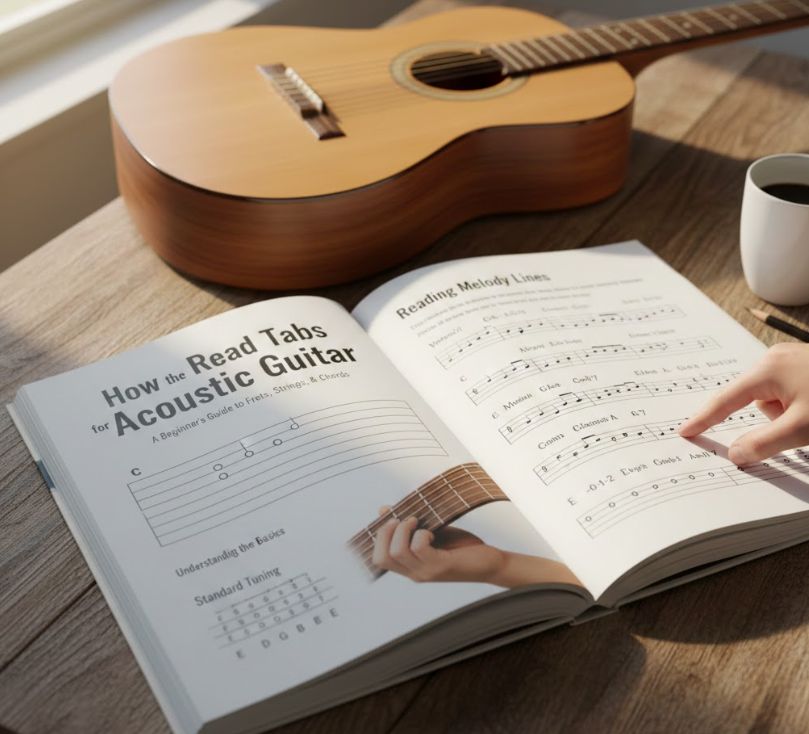
Learning how to read tabs acoustic guitar focuses more on rhythm, strumming, and fingerpicking. Acoustic tabs often include chord shapes and melodic patterns.
The goal is balanced tone and consistent rhythm.
Acoustic Guitar Tab Reading Tips
• Chord transitions are common
Acoustic tabs frequently alternate between chords and melody.
• Fingerpicking patterns appear vertically
Multiple strings played together form arpeggios.
• Strumming direction may be shown
Up and down arrows indicate strum movement.
• Open strings ring longer
Acoustic guitars emphasize sustain.
• Dynamics matter more
Volume control adds musicality to tab reading.
• Timing relies on listening
Audio reference improves rhythmic accuracy.
Also Read:- How Long Do Duck Eggs Take to Hatch? A Complete, Science-Based Guide
How to Read Tabs Bass
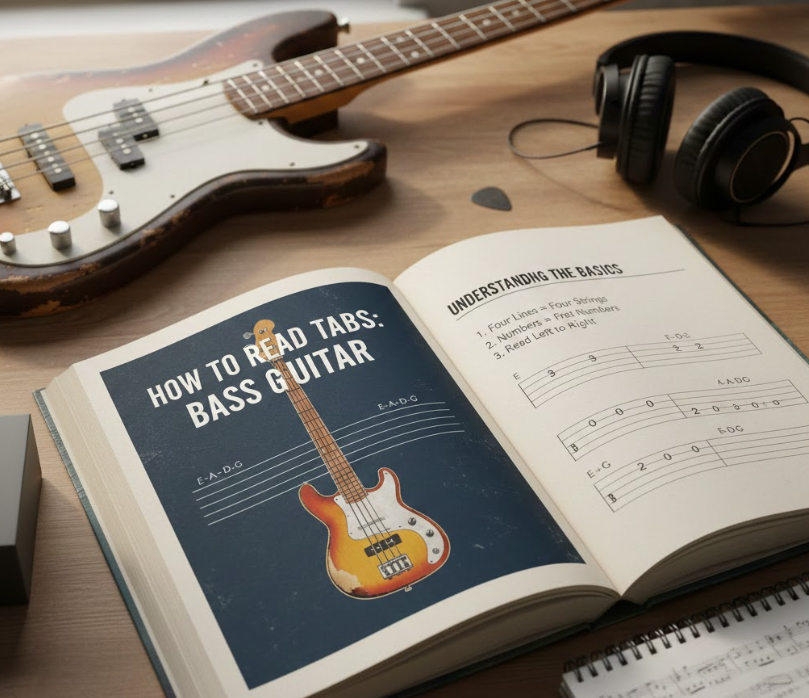
Understanding how to read tabs bass requires adapting to fewer strings and a rhythm-focused role. Bass tabs usually show four lines, representing standard bass tuning.
Bass tabs emphasize groove rather than melody.
Bass Tab Fundamentals
• Four strings, four lines
E, A, D, and G strings appear from bottom to top.
• Lower frets dominate
Bass lines often stay within lower fret positions.
• Rhythm drives interpretation
Timing is more important than speed.
• Rests may be implied
Silence between notes shapes groove.
• Slides and hammer-ons add flow
Smooth transitions maintain rhythmic consistency.
• Play with a metronome
Timing accuracy is essential for bass playing.
Also Read:- How to Run Faster: A Complete Guide for All Runners
How to Read Tabs Ukulele
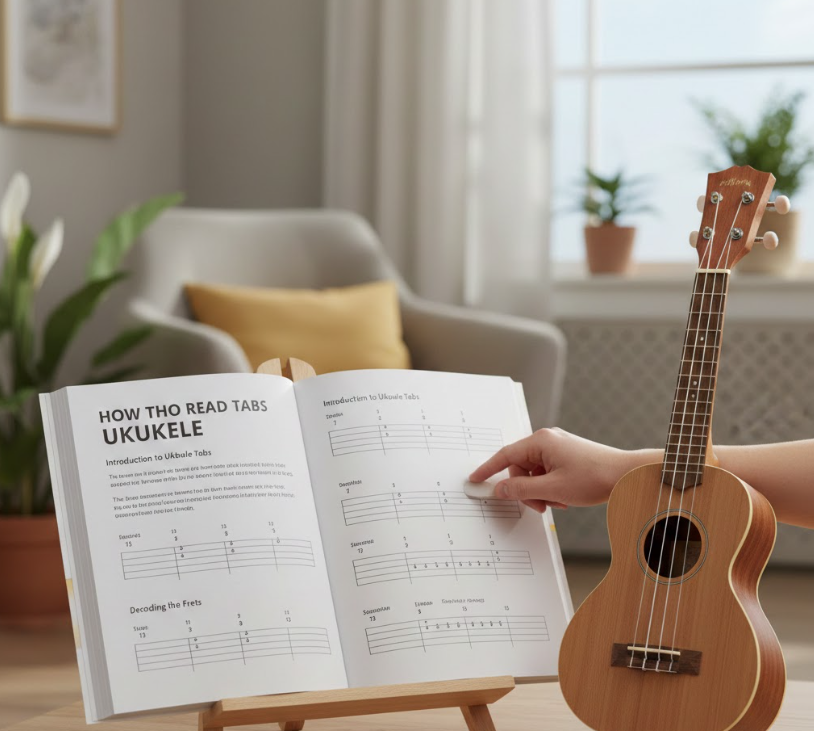
Learning how to read tabs ukulele is ideal for beginners due to the instrument’s simplicity. Ukulele tabs use four lines, similar to bass but tuned differently.
Ukulele tabs emphasize melody and strumming patterns.
Ukulele Tab Basics
• Four strings only
G, C, E, and A strings appear from top to bottom.
• Simple fret patterns
Lower fret numbers dominate beginner songs.
• Melody-focused tabs
Ukulele often plays lead lines.
• Chord transitions are fast
Compact fretboard encourages movement.
• Strumming indicators help rhythm
Arrows guide strum direction.
• Light pressure improves tone
Gentle fretting prevents buzzing.
Also Read:- How to Reset AirPods Pro: The Complete Expert Guide
Common Tab Symbols You Must Know
Mastering how to read tabs includes understanding symbols that communicate playing techniques beyond fret numbers.
These symbols add expression and realism.
Essential Tab Symbols Explained
• Hammer-ons (h)
Quick finger placement without picking again.
• Pull-offs (p)
Releasing finger to sound lower note.
• Slides (/ )
Gliding between frets smoothly.
• Bends (b)
Raising pitch by pushing string.
• Vibrato (~)
Subtle pitch oscillation for sustain.
• Muted notes (x)
Percussive sounds without pitch.
Why Tabs Are Effective for Learning Music
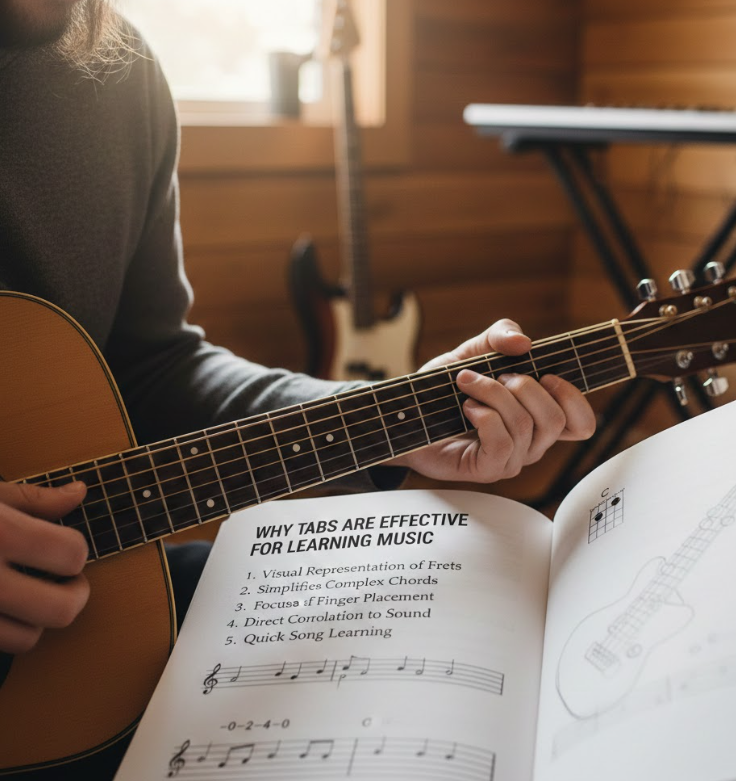
Tabs remain popular because they prioritize accessibility. Understanding how to read tabs allows players to enjoy music faster, which increases motivation.
Studies show beginners learn instruments faster when early success is achievable.
Benefits of Using Tabs
• Immediate playability
No theory barrier delays progress.
• Visual learning advantage
Spatial learners benefit greatly.
• Wide online availability
Thousands of songs are freely accessible.
• Encourages practice consistency
Faster results boost motivation.
• Adaptable to multiple instruments
Same concept applies across strings.
• Supports creative exploration
Players experiment earlier.
Also Read:- How to Remove Gel X Nails: A Complete Expert Guide
Conclusion: Mastering Tabs Is a Skill That Grows With You
Learning how to read tabs opens the door to musical expression without overwhelming complexity. Whether you play guitar, bass, or ukulele, tabs provide a practical pathway from beginner to confident musician.
With consistent practice, listening support, and patience, tab reading becomes second nature. Over time, many players naturally combine tabs with music theory, creating a deeper understanding of music as a whole.
FAQs
Are tabs better than sheet music?
Tabs are easier for beginners, while sheet music offers deeper theory insight.
Can tabs teach rhythm?
Partially. Listening alongside tabs improves timing accuracy.
Do professional musicians use tabs?
Yes, especially for quick learning and songwriting.
For More Updates Visit: Biomagazine
