

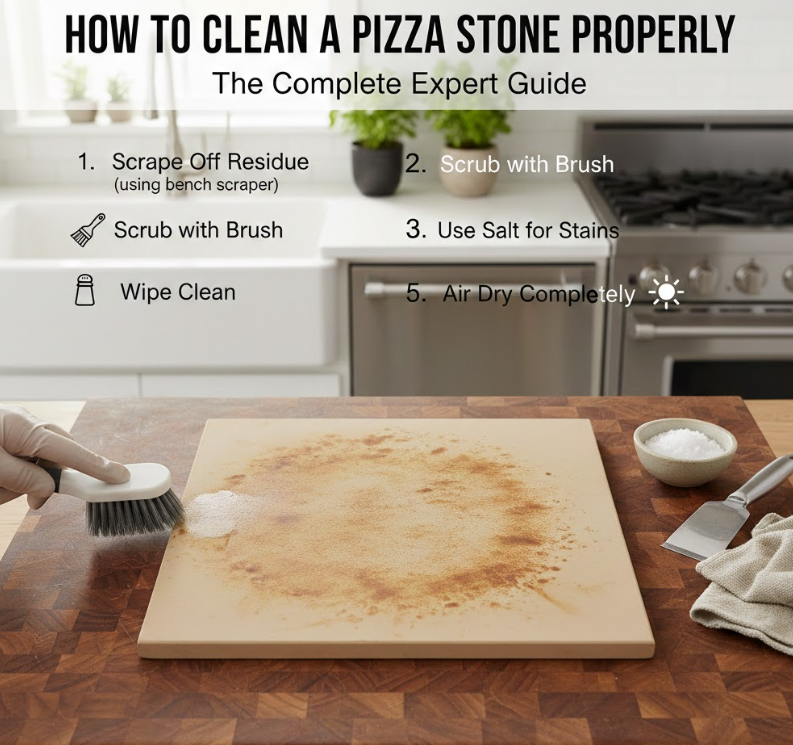
Learning how to clean a pizza stone correctly is one of the most important yet misunderstood parts of homemade pizza making. A pizza stone is not like a regular baking tray—it’s a porous, heat-retaining surface designed to absorb moisture and deliver restaurant-quality crusts. Because of this unique design, improper cleaning methods such as soap, soaking, or harsh chemicals can permanently damage the stone and ruin its performance.
Many home cooks panic when they see black stains, burnt food residue, or grease marks on their pizza stone. However, discoloration is often normal and even a sign of a well-seasoned stone. The real challenge is removing harmful buildup while preserving the stone’s integrity. This comprehensive guide explains how to clean a pizza stone safely, using expert-approved methods, natural cleaners, and step-by-step techniques that work for different situations—from burnt stains to Ooni pizza stones.
By the end of this article, you’ll know exactly how to maintain your pizza stone for years, improve pizza flavor, and avoid common mistakes that shorten its lifespan.
Why Proper Pizza Stone Cleaning Matters
A pizza stone works by absorbing moisture from dough and radiating consistent heat. When food debris, grease, or burnt residue builds up, it can interfere with heat distribution, cause smoke, and even affect flavor. Cleaning your stone properly ensures better baking results, longer stone life, and safer food preparation.
Key Reasons to Clean a Pizza Stone Correctly
• Prevents old food residue from burning and producing unpleasant odors
• Maintains even heat distribution for crisp pizza crusts
• Protects the porous surface from absorbing soap or chemicals
• Extends the lifespan of expensive pizza stones
• Improves food safety by removing harmful buildup
• Preserves the natural seasoning that enhances pizza flavor
How to Clean a Pizza Stone After Use (Basic Maintenance Method)
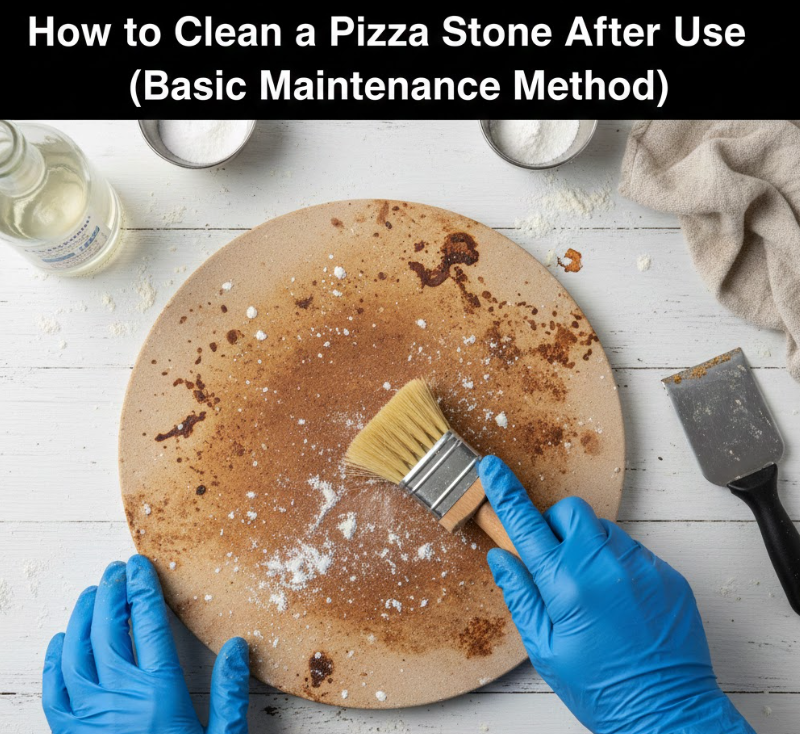
Cleaning a pizza stone after each use is the easiest way to prevent stubborn stains and burnt residue. This method focuses on gentle maintenance rather than aggressive cleaning.
What “After Use” Cleaning Really Means
This cleaning process does not aim to restore the stone to its original color. Instead, it removes loose debris while allowing natural seasoning to develop. A well-maintained pizza stone often looks darker over time, which is completely normal.
Step-by-Step Cleaning Process After Use
• Allow the pizza stone to cool completely before cleaning to prevent cracking
• Use a dry bench scraper or spatula to gently remove stuck food particles
• Wipe the surface with a dry or slightly damp cloth—never soak the stone
• Avoid soap, dish detergent, or chemical cleaners at all costs
• Let the stone air-dry fully before storing or reheating
• Store in a dry place to prevent moisture absorption
This method alone can prevent most cleaning problems if done consistently.
Also Read:- How to Wash Pillows: The Complete Expert Guide for Clean, Fresh, and Fluffy Pillows
How to Clean a Pizza Stone That Is Black (Understanding Discoloration)

A blackened pizza stone is one of the most common concerns among home cooks. Fortunately, black stains usually indicate seasoning, not damage.
Why Pizza Stones Turn Black
Pizza stones darken due to absorbed oils, high heat exposure, and repeated baking. This discoloration does not affect performance and often improves non-stick properties.
When Black Stains Are a Problem
Black residue only needs attention if it smells unpleasant, produces smoke, or flakes off onto food.
Safe Cleaning Method for Blackened Stones
• Scrape off carbonized food using a wooden or metal scraper
• Use a stiff, dry brush to remove loose ash and debris
• Lightly wipe with a damp cloth—no soap
• Heat the stone in the oven at 500°F to burn off organic residue
• Allow it to cool slowly inside the oven
• Accept that some darkness is permanent and harmless
Trying to bleach or scrub aggressively will damage the stone’s structure.
Also Read:- How to Remove Sticker Residue: The Complete Safe & Effective Guide
How to Clean a Pizza Stone with Baking Soda (Deep Cleaning Method)
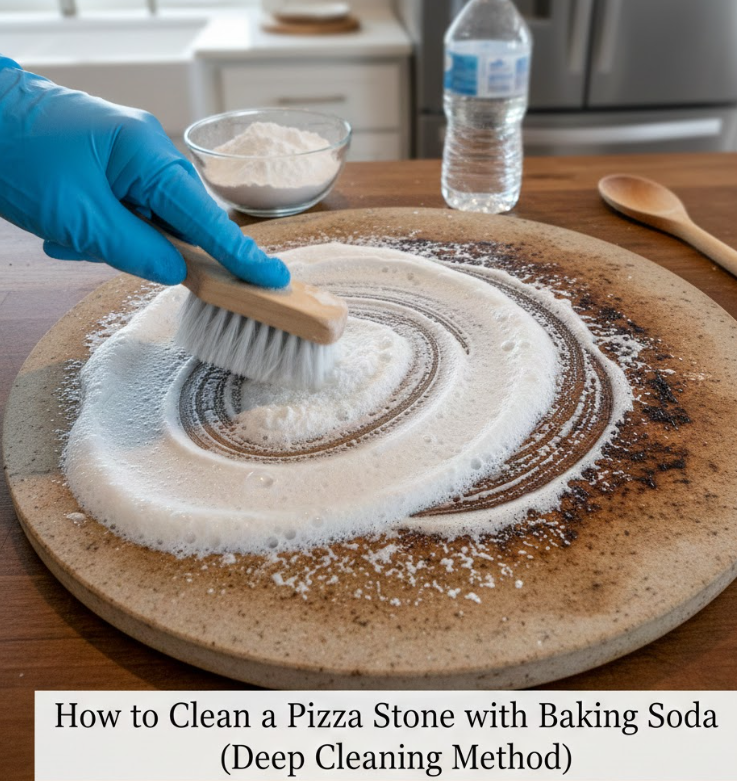
Baking soda is one of the few safe cleaning agents for pizza stones when used correctly. It works as a mild abrasive and odor neutralizer.
Why Baking Soda Works on Pizza Stones
Baking soda removes surface stains without penetrating the stone deeply. It is non-toxic and does not leave chemical residue when properly wiped away.
Baking Soda Cleaning Steps
• Mix baking soda with water to create a thick paste
• Apply paste to stained areas only, not the entire stone
• Gently scrub using a soft brush or nylon pad
• Let the paste sit for 10–15 minutes
• Wipe away residue with a damp cloth
• Allow the stone to air-dry completely
This method is best used occasionally, not after every bake.
Also Read:- How to Drag Click: The Complete Step-by-Step Guide for Any Mouse
How to Clean a Burnt Pizza Stone Safely
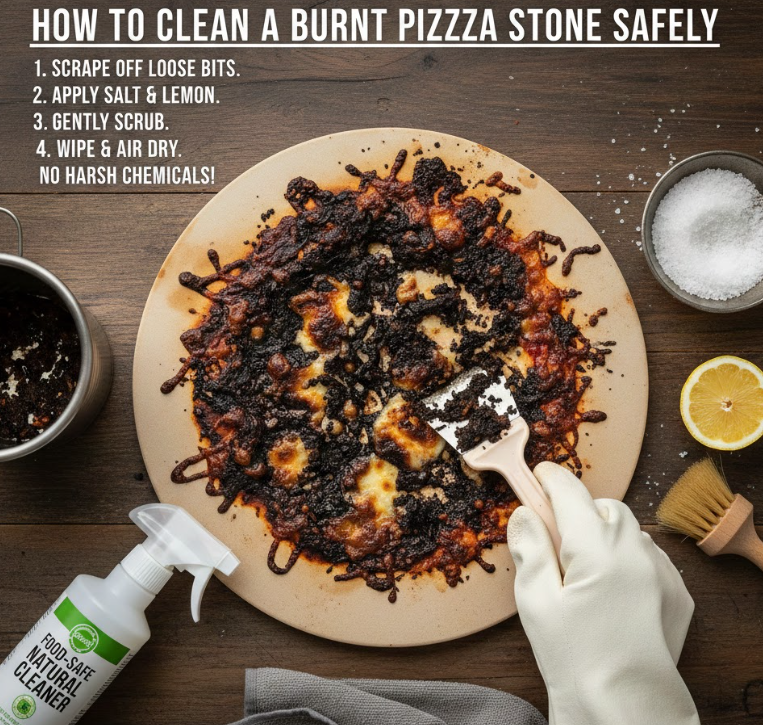
Burnt pizza stones often result from cheese spills, sugary sauces, or overcooked toppings. These burns require patience—not force.
Why Burnt Residue Is Difficult to Remove
Burnt food bonds tightly to the porous surface, making aggressive scrubbing ineffective and damaging.
Proven Burnt Stone Cleaning Method
• Heat the stone in the oven at high temperature to carbonize residue
• Let it cool completely before cleaning
• Scrape off ash-like residue with a scraper
• Use a dry brush to remove remaining particles
• Spot-clean with baking soda paste if necessary
• Never soak or shock with cold water
This method uses heat as a natural cleaner without chemicals.
Also Read:- How to Hem Jeans: A Complete Step-by-Step Guide for a Professional Finish
How to Clean a Pizza Stone Ooni (Outdoor Pizza Oven Stones)
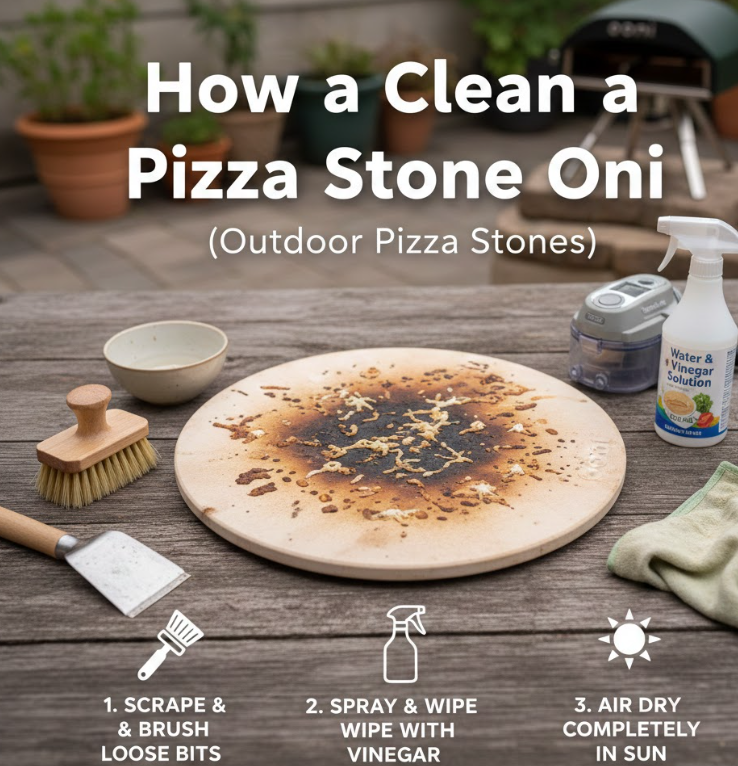
Ooni pizza stones are exposed to extremely high temperatures and outdoor conditions, requiring specific care.
What Makes Ooni Stones Different
Ooni stones are designed for intense heat and rapid baking, which accelerates residue buildup and discoloration.
Ooni-Approved Cleaning Method
• Run the oven at maximum temperature to burn off residue
• Allow the stone to cool naturally inside the oven
• Remove loose debris with a brush or scraper
• Flip the stone periodically to even out staining
• Avoid water unless absolutely necessary
• Store in a dry environment when not in use
Ooni specifically advises against soap or soaking.
Also Read:- How to Heal a Zombie Villager in Minecraft: The Ultimate Complete Guide
Common Mistakes to Avoid When Cleaning a Pizza Stone
Many pizza stones fail prematurely due to improper cleaning habits.
Most Damaging Cleaning Errors
• Using dish soap or detergent
• Soaking the stone in water
• Putting the stone in the dishwasher
• Scrubbing with steel wool aggressively
• Using chemical cleaners or bleach
• Rapid temperature changes
Avoiding these mistakes protects both flavor and structure.
How Often Should You Clean a Pizza Stone?

Pizza stones should be lightly cleaned after every use and deep-cleaned only when necessary.
Ideal Cleaning Frequency
• Light scraping after each bake
• Deep cleaning every 5–10 uses
• Odor removal only when smell persists
• Burn-off cleaning for heavy residue
Over-cleaning removes seasoning and reduces performance.
Expert Tips to Keep Your Pizza Stone Like New
Professional pizzaiolos rely on prevention more than cleaning.
Maintenance Best Practices
• Use parchment paper for messy toppings
• Avoid sugary sauces directly on stone
• Rotate stone for even wear
• Store stone in oven to prevent moisture
• Preheat gradually to reduce cracking
• Embrace natural patina
Also Read:- How to Crip Walk: A Complete, Respectful Guide to the Dance Style
Conclusion: Mastering How to Clean a Pizza Stone the Right Way
Understanding how to clean a pizza stone correctly transforms frustration into confidence. A pizza stone is not meant to look new—it’s meant to perform. Black stains, discoloration, and seasoning are signs of a well-used, high-performing tool. By using gentle scraping, controlled heat, and occasional baking soda cleaning, you protect the stone’s porous structure and enhance its baking power.
Avoid soap, soaking, and shortcuts. Treat your pizza stone like a cast-iron pan—with respect, patience, and proper technique—and it will reward you with perfect pizza for years.
FAQs: How to Clean a Pizza Stone
Can I use vinegar on a pizza stone?
No. Vinegar penetrates the stone and affects taste.
Is a black pizza stone dirty?
No. Blackening is normal seasoning.
Can I wash a pizza stone with water?
Only minimal wiping—never soaking.
For More Updates Visit: Biomagazine
