

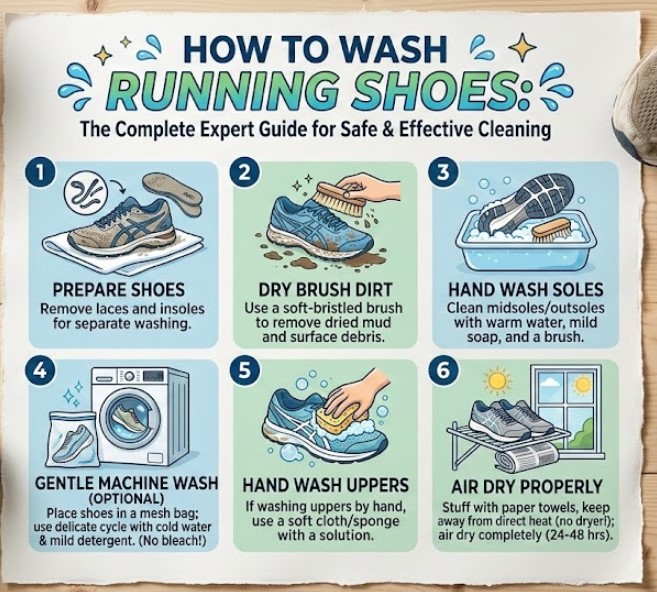
If you run regularly, you already know your footwear takes a beating. Mud, sweat, road salt, trail dust, and bacteria accumulate quickly. Knowing how to wash running shoes properly is essential for maintaining performance, preventing odor, and extending the life of your investment.
Running shoes are engineered with breathable mesh uppers, foam midsoles, and adhesive bonding systems that can be damaged by harsh cleaning methods. According to the American Academy of Podiatric Sports Medicine, improper shoe care can compromise cushioning and support, increasing injury risk. That’s why learning safe and effective cleaning techniques matters.
This comprehensive guide explains how to wash running shoes in washing machine, how to wash running shoes by hand, whether you should wash running shoes in dishwasher (spoiler: rarely), and brand-specific advice including how to wash running shoes Saucony models safely.
Understanding Running Shoe Materials Before Cleaning
Definition and Structural Overview
Modern running shoes are performance-engineered systems composed of layered mesh, knit textiles, EVA or TPU foam midsoles, rubber outsoles, and synthetic overlays bonded with adhesives. Each component reacts differently to water, detergent, heat, and agitation.
Understanding material sensitivity is the foundation of learning how to wash running shoes correctly. Mesh uppers allow airflow but trap dirt particles. Foam midsoles absorb shock but can degrade under high heat. Adhesives soften when exposed to extreme temperatures.
Key Material Considerations
• Mesh and knit uppers require gentle cleaning to avoid tearing.
Breathable uppers are lightweight but delicate. Aggressive scrubbing or hot cycles may distort fabric tension and compromise structure.
• EVA foam midsoles are heat-sensitive.
Ethylene-vinyl acetate softens at elevated temperatures. Using hot water or a heated dryer can permanently alter cushioning response.
• Adhesives weaken under excessive moisture and agitation.
High-speed washer cycles can stress glue bonds, leading to sole separation.
• Insoles trap bacteria and sweat salts.
Removable insoles should be cleaned separately to eliminate odor-causing microbes effectively.
• Laces collect dirt and grime rapidly.
Laces are washable independently and often require soaking for full restoration.
• Trail shoes accumulate embedded debris.
Gravel and mud lodged in tread grooves should be removed before washing to prevent abrasion.
Also Read:- How to Water Mums: The Complete Expert Guide for Healthy, Long-Lasting Blooms
How to Wash Running Shoes by Hand (Recommended Method)
Definition of Hand Washing Technique
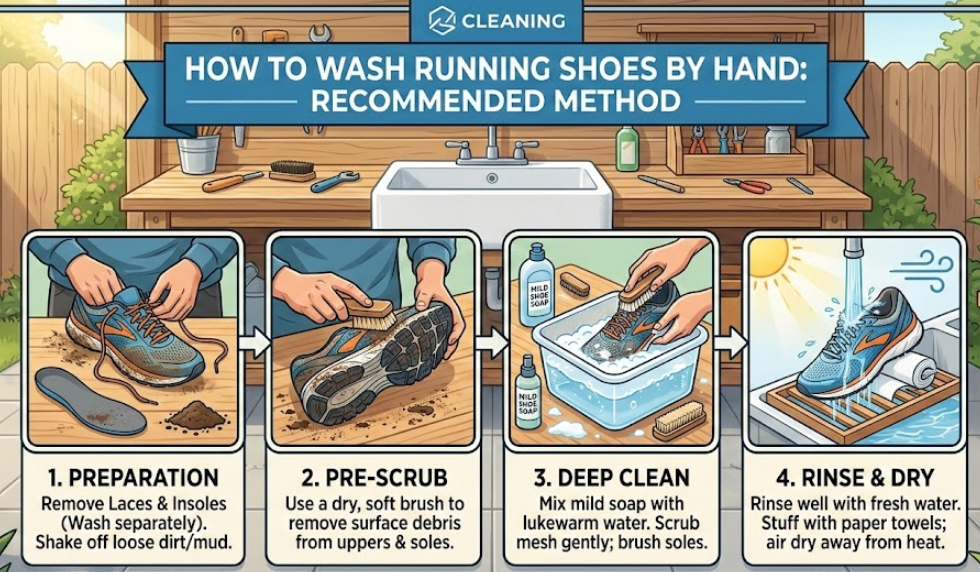
Hand washing is the controlled manual cleaning process using mild detergent, lukewarm water, and soft brushing to remove dirt while protecting structural integrity.
This is widely regarded as the safest method for learning how to wash running shoes properly, especially high-performance models.
Step-by-Step Best Practices
• Remove laces and insoles before cleaning.
Separating components ensures thorough cleaning and prevents hidden moisture buildup. Insoles absorb sweat deeply and need independent care.
• Brush off loose dirt while dry.
Use a soft brush or old toothbrush to remove dried mud. Cleaning dry debris first prevents muddy water spreading across uppers.
• Use mild detergent with lukewarm water.
Avoid bleach or harsh chemicals. Gentle laundry detergent preserves mesh integrity and prevents discoloration.
• Scrub gently in circular motions.
Apply light pressure to avoid fraying fabric or compressing foam. Focus on stained areas rather than over-scrubbing the entire shoe.
• Rinse with damp cloth instead of soaking.
Fully submerging shoes increases water absorption and drying time. Controlled rinsing protects adhesives.
• Air dry at room temperature.
Stuff shoes with paper towels to maintain shape and absorb moisture. Never place near direct heat sources.
Also Read:- How to Make Google My Default Browser: The Complete 2026 Guide
How to Wash Running Shoes in Washing Machine
Machine Washing Definition and Risk Assessment
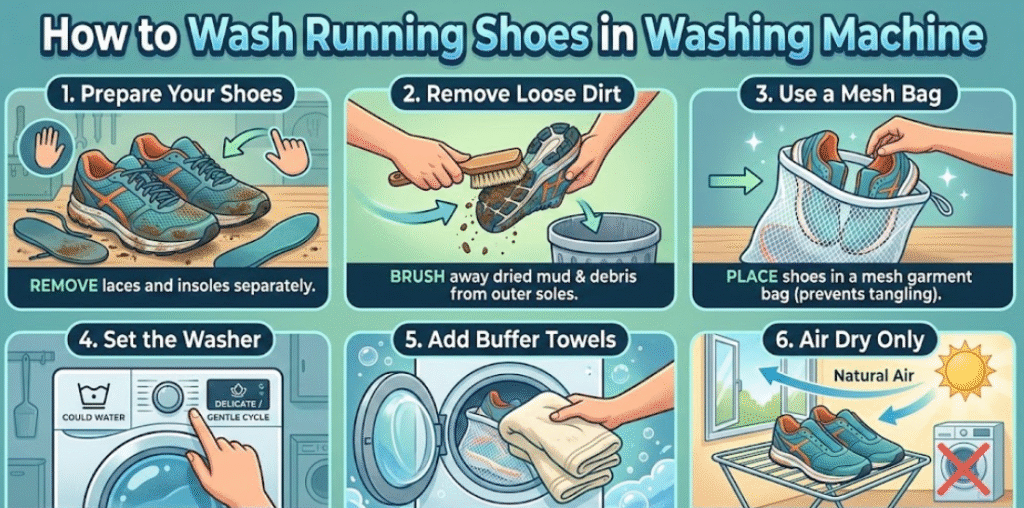
Many runners ask about how to wash running shoes in washing machine safely. While possible, it carries moderate risk depending on cycle settings and shoe construction.
Machine washing involves placing shoes inside a protective laundry bag and using a gentle, cold cycle.
Safe Machine Washing Guidelines
• Only wash shoes labeled machine-safe.
Check manufacturer guidance first. Brands like Saucony often recommend hand washing for premium models.
• Use cold water exclusively.
Cold water prevents foam warping and adhesive breakdown. Heat accelerates material fatigue.
• Select gentle or delicate cycle.
Reduced spin speed minimizes structural stress and midsole compression.
• Add towels for cushioning.
Placing towels inside the drum reduces impact noise and protects shoes from harsh tumbling.
• Avoid heavy-duty detergents.
Mild detergent is sufficient. Strong formulas may degrade synthetic fibers.
• Air dry completely.
Never use dryer heat. High temperatures can shrink fabric and separate soles.
Also Read:- How to Call Private: The Complete Guide to Hiding Your Caller ID Safely and Legally
How to Wash Running Shoes in the Washer Properly
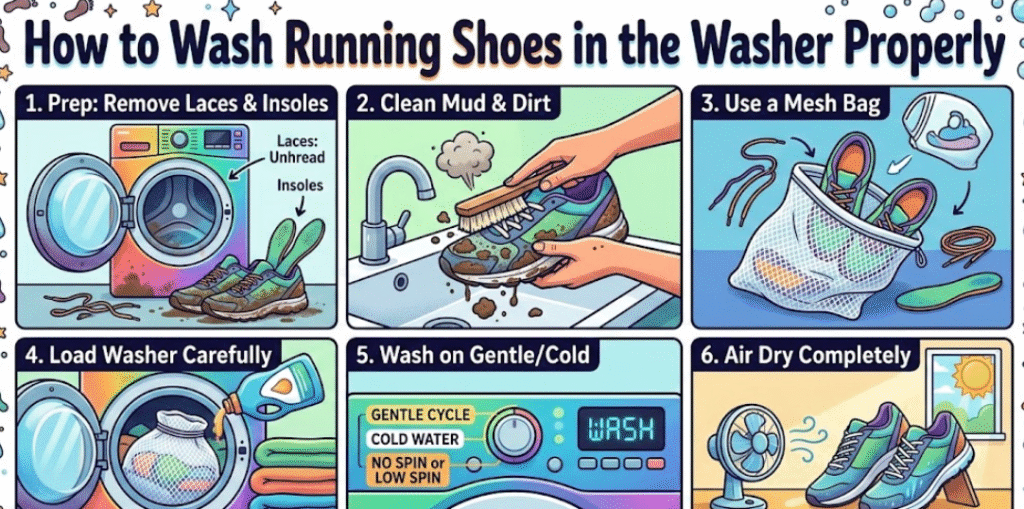
Although similar to machine washing, how to wash running shoes in the washer requires emphasizing preparation and protection.
Enhanced Washer Safety Measures
• Place shoes in mesh laundry bag.
This prevents direct drum impact and reduces abrasion damage.
• Remove insoles to prevent warping.
Insoles can deform during spin cycles if left inside.
• Use minimal detergent.
Excess soap residue can clog breathable mesh pores.
• Skip fabric softeners entirely.
Softeners coat materials and reduce moisture-wicking properties.
• Use extra rinse cycle.
Ensures no detergent remains trapped in fabric layers.
• Inspect thoroughly after washing.
Check glue seams and cushioning integrity before next run.
Also Read:- How to Braid Hair: The Complete Step-by-Step Guide for Beginners, Men, and Advanced Styles
How to Wash Running Shoes in Dishwasher
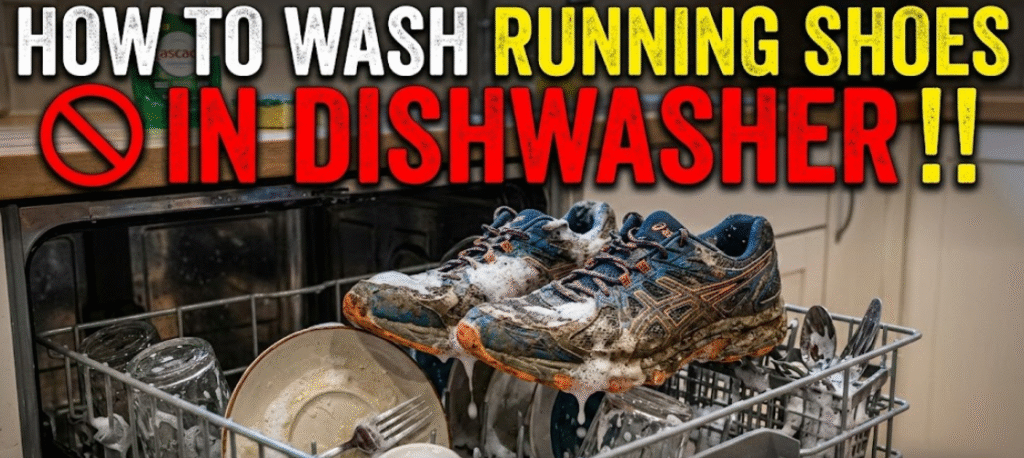
Dishwasher Cleaning Overview
Some online discussions mention how to wash running shoes in dishwasher. This method is strongly discouraged by most manufacturers.
Dishwashers expose shoes to high heat, strong detergents, and forceful spray cycles.
Risks to Consider
• High heat damages foam midsoles.
Dishwasher temperatures can exceed safe material thresholds.
• Harsh detergents degrade fabric.
Dishwasher soaps are not textile-safe.
• Strong jets stress glue seams.
Pressurized water can loosen bonded areas.
• Hygiene concerns exist.
Washing footwear in food-cleaning appliances raises sanitation issues.
• No temperature control flexibility.
Most dishwashers lack cold-cycle options.
• Manufacturer warranties may void.
Using improper cleaning methods can cancel product protection.
Also Read:- How to Get Out of Jury Duty: Legal, Ethical, and Practical Guide
How to Wash Running Shoes Saucony Models Safely
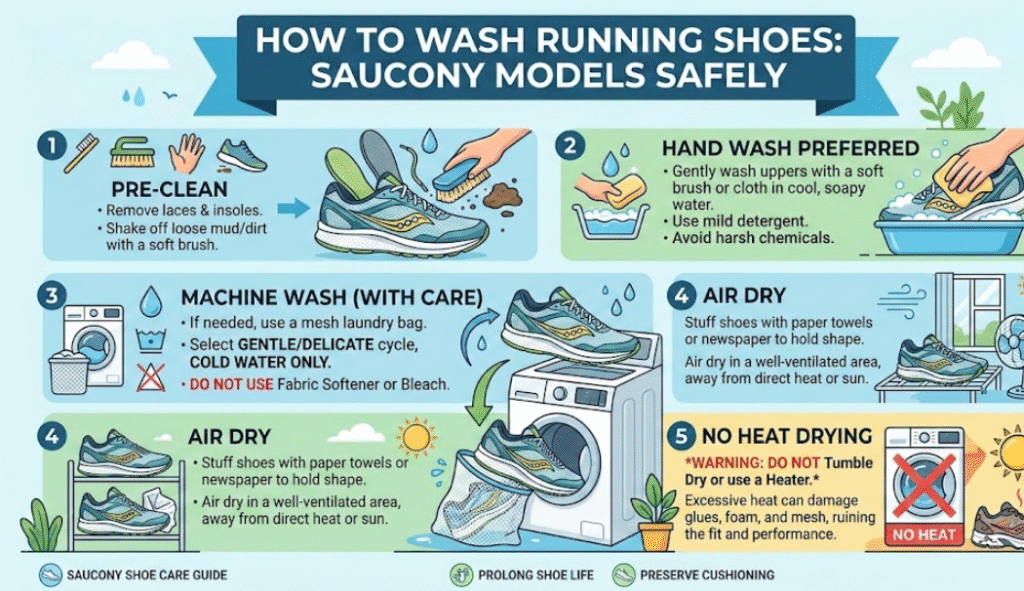
Brand-Specific Cleaning Considerations
When researching how to wash running shoes Saucony, always consult official care instructions.
Performance models from Saucony often use engineered mesh and advanced cushioning systems that require careful handling.
Best Practices for Saucony Shoes
• Prioritize hand washing.
Brand guidance generally favors manual cleaning for longevity.
• Avoid submerging fully in water.
Spot cleaning reduces adhesive stress.
• Use gentle bristle brush only.
Preserves lightweight woven fabrics.
• Maintain shape while drying.
Stuff with paper to prevent toe-box collapse.
• Keep away from radiators.
Direct heat can distort foam responsiveness.
• Clean regularly but not excessively.
Frequent mild cleaning is better than rare aggressive washing.
Also Read:- How to Find Surface Area: Complete Step-by-Step Guide with Formulas and Examples
How to Wash Running Shoes Reddit Advice vs Expert Guidance
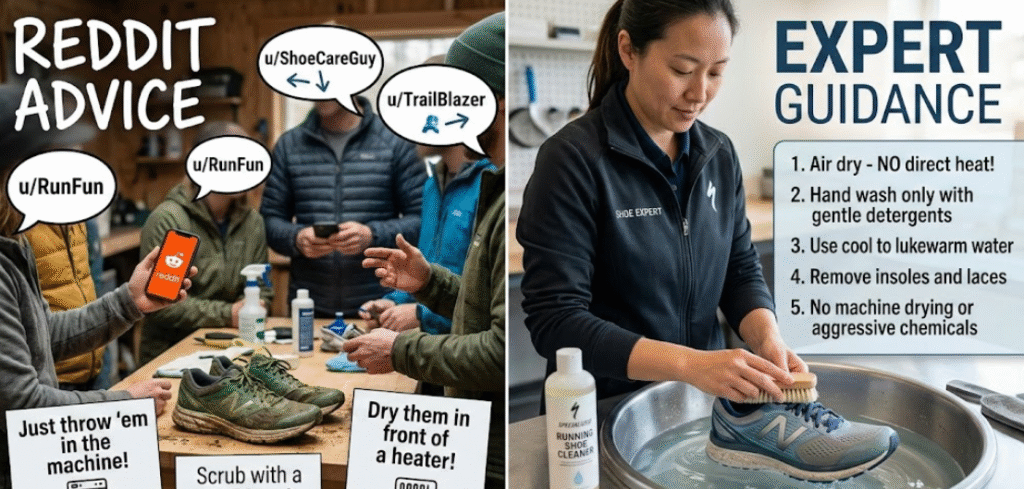
Online Community Insights
Searching how to wash running shoes Reddit reveals diverse opinions. While user experiences can be helpful, they are not always evidence-based.
Balancing Advice with Expertise
• Evaluate anecdotal claims critically.
Not all shoe constructions are identical.
• Cross-check with manufacturer guidelines.
Official instructions reduce risk.
• Avoid extreme DIY hacks.
Bleach and hot cycles can destroy materials.
• Understand shoe model differences.
Trail shoes differ from road racing flats.
• Recognize bias in user reviews.
One person’s success may not generalize.
• Follow sports medicine recommendations.
Footwear integrity supports injury prevention.
How Often Should You Wash Running Shoes?
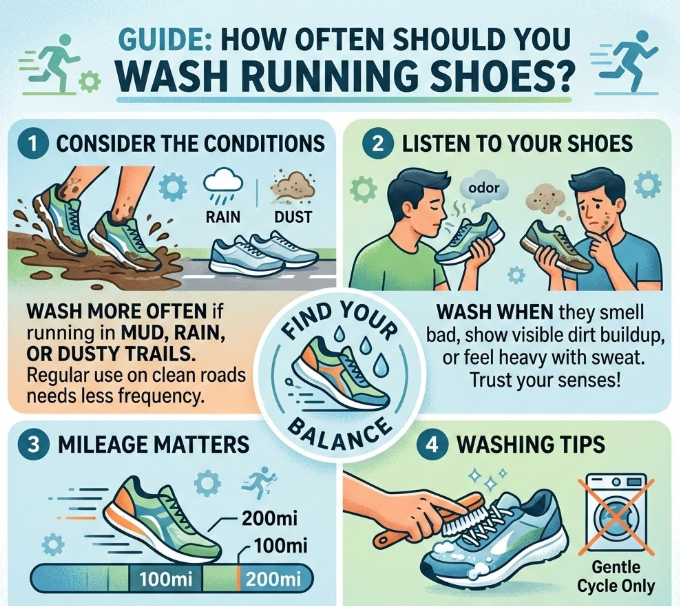
Frequency Guidelines
Learning how to wash running shoes and how often depends on mileage and terrain.
Practical Recommendations
• Clean lightly every 2–4 weeks.
Removes surface grime before buildup.
• Deep clean after muddy trail runs.
Prevents permanent staining and odor.
• Deodorize insoles weekly.
Sweat bacteria multiply quickly.
• Rotate shoes to reduce moisture retention.
Alternating pairs allows full drying.
• Replace shoes every 300–500 miles.
Cleaning does not restore worn cushioning.
• Avoid overwashing.
Excessive cleaning shortens lifespan.
Conclusion
Mastering how to wash running shoes ensures your footwear remains supportive, breathable, and odor-free. Whether you choose hand washing, cautious machine cleaning, or brand-specific methods like how to wash running shoes Saucony, the principles remain consistent: gentle cleaning, cold water, mild detergent, and air drying.
Avoid dishwashers, high heat, and harsh chemicals. Regular maintenance preserves cushioning performance and extends shoe life.
Clean shoes not only look better—they protect your stride.
FAQs
Can I wash running shoes in washing machine safely?
Yes, if you use cold water, gentle cycle, and air dry.
Is hand washing better?
Yes. It provides maximum control and minimal structural stress.
How long do running shoes take to dry?
Typically 24–48 hours at room temperature.
Can I use bleach?
No. Bleach damages fabric and weakens stitching.
Should I remove insoles?
Yes. Cleaning separately prevents odor retention.
For More Updates Visit: Biomagazine
