

Handing over your dog’s leash at a clinic or grooming salon always triggers a tiny pang of anxiety. No matter how professional the lobby looks, every pet parent wonders what happens behind those closed doors.
Stepping into an unfamiliar environment can be stressful for a canine, but specialized facilities are built from the ground up to handle those exact emotional and physical hurdles. Understanding the workflows, specialized tools, and behavioral strategies that experts use can transform that drop-off anxiety into complete peace of mind.
Architecture of Comfort: The Professional Environment
Modern pet care facilities do not just house dogs; they actively manage their stress levels. The architecture of a high-end facility balances rigorous clinical hygiene with sensory soothing.
- Acoustic Management: Double-walled insulation and sound-absorbing panels minimize the echoing barks that trigger ambient anxiety.
- Olfactory Control: Medical-grade HVAC systems refresh the air constantly, removing the scent of pheromones left behind by stressed predecessors.
- Strategic Socialization: Dogs are strictly segregated by size, age, and temperament to prevent predatory drift or intimidation.
Behind the scenes, certified veterinary technicians and trained groomers monitor subtle behavioral shifts. A drop of the tail, a lip lick, or whale eyes (showing the whites of the eyes) are caught instantly, allowing staff to adjust their approach before a dog reaches its stress threshold.
Anatomy of a Stress-Free Grooming or Medical Session
When your dog goes back for a procedure or a complex groom, the primary goal is minimizing physical restraint. Force creates resistance, and resistance creates danger. This is where advanced ergonomics and specialized equipment alter the entire experience.
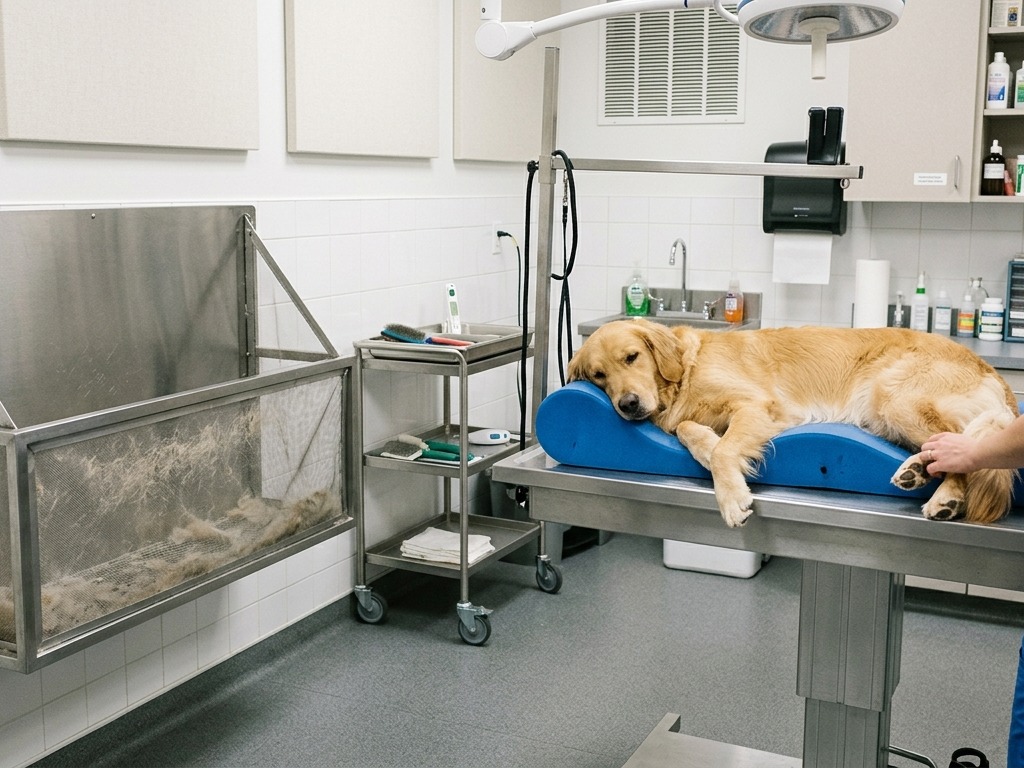
To maintain control without triggering fear, professionals rely on physical anchors that support the dog’s natural anatomy. For instance, during medical imaging or detailed trimming, staff utilize contoured veterinary positioners to keep patients stable. These high-density foam shapes cradle the animal comfortably, reducing the need for heavy-handed human pressure and keeping joint strain to an absolute minimum.
Hygiene during these processes is equally intense. Airborne dander and loose fur do more than just clutter a room; they trap bacteria and compromise respiratory health. To counter this, top-tier salons integrate a dedicated dog hair catcher grooming net system directly into their workstation setups. By trapping debris at the source, the air remains clean, and the workspace stays pristine for the next patient.
Continuous Vitals and Proactive Monitoring
In a specialized facility, your dog is never simply left alone in a kennel to wait out the clock. Health monitoring is an active, continuous protocol.
Pre-Procedure Triage
Before a blade touches fur or a needle touches skin, specialists establish a baseline. They assess heart rate, respiration quality, and hydration levels to ensure the dog is physically prepared for the stress of the day.
Vigilant Oversight
Whether recovering from mild sedation or resting after an intensive de-shedding session, dogs are placed in direct line of sight of the medical or grooming team. Any change in gum color, breathing rhythm, or posture is met with immediate professional intervention.
The Trust Loop: Communication Protocols
A silent facility is a stressful facility for an owner. High-authority care centers close the loop by prioritizing radical transparency with pet parents.
When looking for a partner in your dog’s care, prioritize teams that invite your questions. Experts who openly discuss their handling philosophies, use advanced anatomical supports, and maintain impeccable cleanliness standards have nothing to hide. They recognize that caring for the owner’s peace of mind is just as vital as caring for the dog on the table.
