

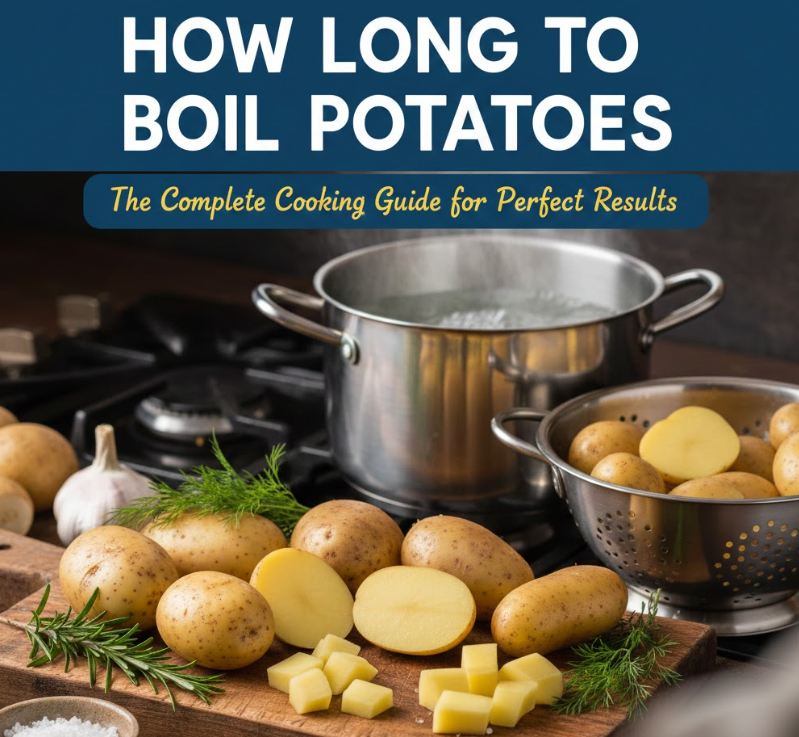
Potatoes are one of the most versatile foods in the world, yet one simple mistake can ruin their texture, flavor, and nutritional value: boiling them for the wrong amount of time. Knowing how long to boil potatoes is essential whether you are making creamy mashed potatoes, firm potato salad, crispy fried potatoes, or any dish in between.
Boiling potatoes may look easy, but different potato types, sizes, and end goals require different boiling times. Overboiled potatoes become waterlogged and bland, while underboiled potatoes stay chalky and unpleasant. This detailed guide explains exact boiling times, cooking science, and professional techniques so you get perfect potatoes every time.
Understanding Potatoes and Boiling Time Basics
Before diving into specific dishes, it’s important to understand that potatoes are not all the same. Their starch content, skin thickness, and moisture levels affect how long they need to boil.
Waxy potatoes like red or fingerling potatoes hold their shape better and need slightly less boiling time. Starchy potatoes like Russet or Yukon Gold break down more easily and require careful timing. Size matters too — whole potatoes boil slower than cubed ones, and skin-on potatoes cook differently than peeled ones.
Starting potatoes in cold water allows them to cook evenly from the inside out, preventing the exterior from becoming mushy before the center is tender. Salted water enhances flavor absorption during boiling, not after.
Also Read:- How to Take a Screenshot on a Chromebook: Complete Step-by-Step Guide
How Long to Boil Potatoes for Mashed Potatoes
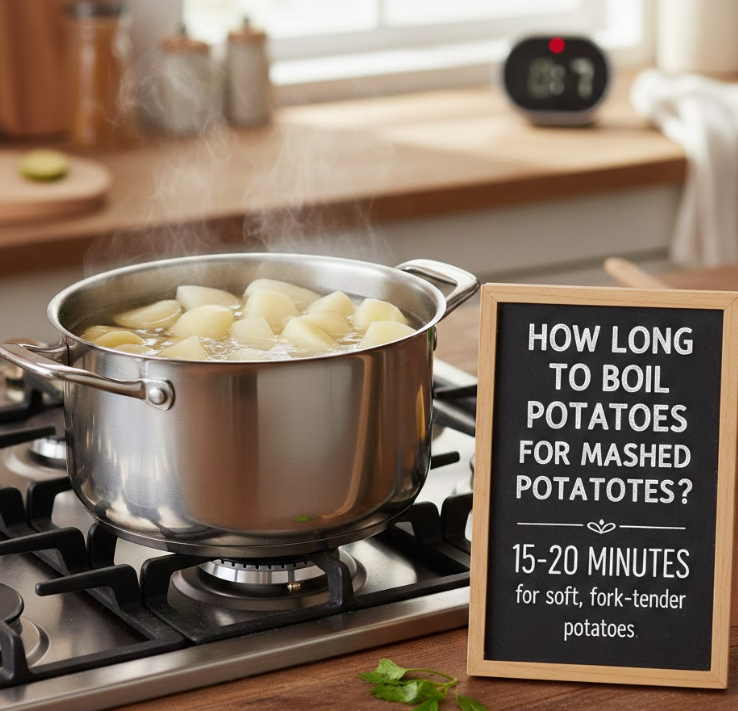
Boiling potatoes for mashed potatoes requires a balance between softness and structure. The goal is to fully cook the potato so it mashes smoothly, without becoming waterlogged or gluey.
• Ideal Potato Type for Mashing
Starchy potatoes like Russet or Yukon Gold are best because they break down easily. Their internal structure absorbs butter and milk more effectively, creating creamy mashed potatoes without lumps.
• Recommended Boiling Time
Cubed potatoes typically take 15–20 minutes once the water reaches a rolling boil. Whole medium potatoes may take 25–30 minutes. The key indicator is when a fork slides in effortlessly without resistance.
• Importance of Even Cutting
Cutting potatoes into evenly sized pieces ensures uniform cooking. Uneven chunks cause some pieces to overcook while others remain firm, leading to inconsistent texture when mashed.
• Salt and Water Ratio
Heavily salted water seasons the potatoes internally. This prevents bland mashed potatoes and reduces the need for excessive salt later, preserving natural potato flavor.
• Avoiding Overboiling
Overboiled potatoes absorb too much water, resulting in gluey mashed potatoes. Draining immediately and allowing steam to escape helps maintain proper texture.
• Post-Boil Drying Technique
After draining, return potatoes to the hot pot for 1–2 minutes. This evaporates excess moisture and improves mash consistency dramatically.
Also Read:- How to Stop Hiccups: Complete Guide to Fast, Safe, and Proven Relief
How Long to Boil Potatoes for Potato Salad
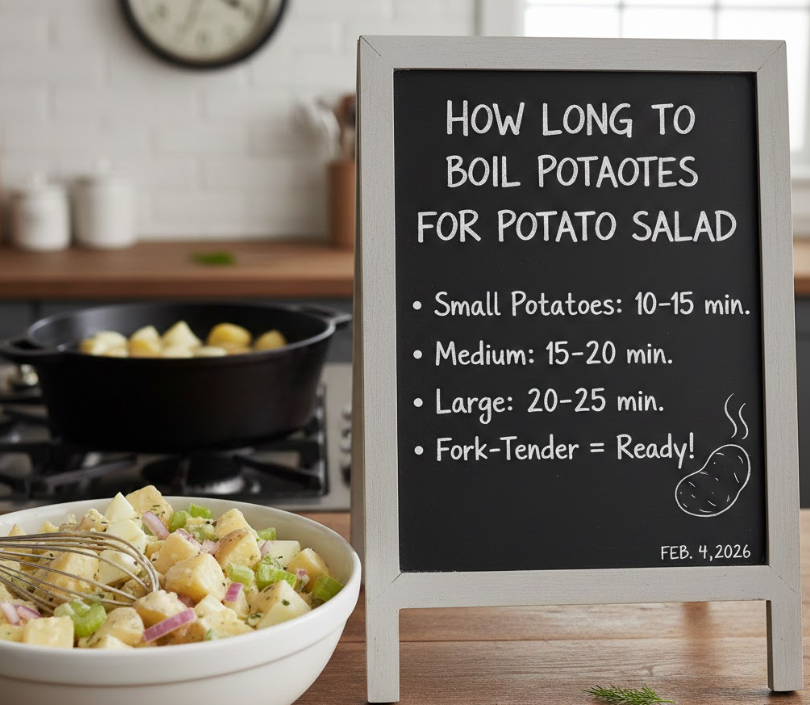
Potato salad requires potatoes that are tender yet firm enough to hold their shape when mixed with dressing. Texture is more important here than softness.
• Best Potato Varieties for Salad
Waxy potatoes such as red potatoes or baby potatoes are ideal. They contain less starch and maintain their structure after boiling and cooling.
• Correct Boiling Duration
Cubed potatoes usually need 10–15 minutes. Whole small potatoes take around 15–20 minutes. The potatoes should be tender but not falling apart.
• Skin-On vs Peeled Potatoes
Leaving skins on adds texture and prevents excess water absorption. Skins also help potatoes stay intact during mixing.
• Testing for Doneness
A knife should slide in smoothly but meet slight resistance. If the potato crumbles, it is overcooked and unsuitable for salad.
• Cooling Process Matters
Draining and cooling potatoes quickly prevents continued cooking. Spreading them on a tray helps release steam and preserve firmness.
• Flavor Absorption Tip
Dressing potatoes while they are still slightly warm allows better absorption of flavors without breaking their structure.
Also Read:- How to Program a Garage Door Opener: Step-by-Step Guide for Remotes, LiftMaster, Cars, and Keypads
How Long to Boil Potatoes for Mashed (General Method)
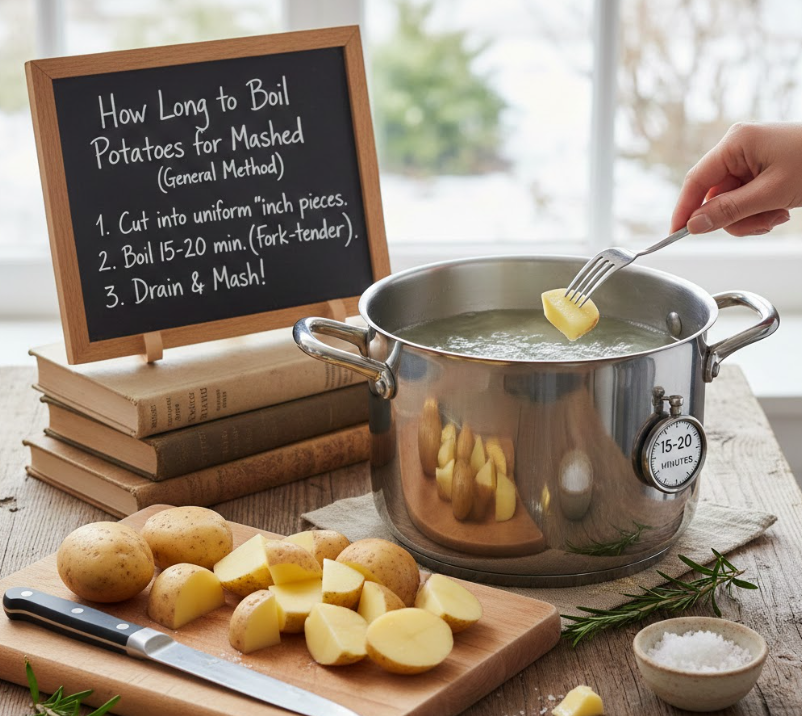
This section focuses on general mashed potato preparation regardless of recipe variations, such as garlic mash or butter mash.
• Uniform Size for Consistency
Cut potatoes into 1–2 inch chunks. This size ensures they cook through evenly without becoming waterlogged.
• Boiling Time Range
Most potatoes reach ideal mashing tenderness within 15–25 minutes, depending on size and variety.
• Water Temperature Control
Starting in cold water prevents outer layers from softening too quickly. Gradual heat leads to uniform starch gelatinization.
• Fork Test Reliability
A fork should slide in and out without breaking the potato apart. Resistance means undercooked; collapse means overcooked.
• Drain Timing Precision
Immediate draining stops cooking. Letting potatoes sit in hot water even briefly can ruin texture.
• Mash While Hot
Warm potatoes mash more smoothly. Cold potatoes become dense and resistant to proper mashing.
Also Read:- How to Do a Pullup: The Complete, Science-Backed Guide for Beginners and Beyond
How Long to Boil Potatoes Before Frying
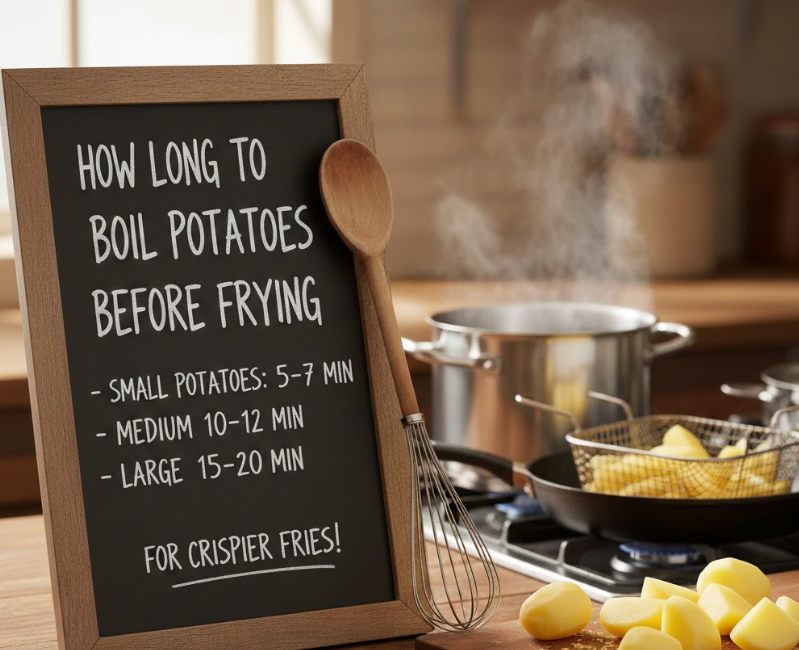
Boiling potatoes before frying is a professional technique known as parboiling. It ensures crispy outsides and fluffy interiors.
• Purpose of Parboiling
Parboiling softens the interior while allowing the surface to roughen slightly, creating more crisping potential during frying.
• Recommended Boiling Time
Parboil potatoes for 5–8 minutes only. They should be partially cooked, not fully tender.
• Choosing the Right Potato
Russet potatoes are ideal for frying because their high starch content creates crisp edges and soft centers.
• Drain and Dry Thoroughly
Moisture is the enemy of crispiness. After boiling, allow potatoes to steam-dry completely before frying.
• Cooling Improves Frying Results
Letting potatoes cool after parboiling helps starches firm up, producing better texture during frying.
• Oil Temperature Importance
Hot oil seals the surface quickly, locking in moisture while creating a golden, crispy exterior.
Also Read:- How to Cook Rice: The Complete Expert Guide for Perfect Results Every Time
Common Boiling Mistakes That Ruin Potatoes
Many potato problems come from small mistakes that are easy to avoid.
• Starting potatoes in boiling water
• Overcrowding the pot
• Skipping salt in boiling water
• Overboiling past tenderness
• Not drying potatoes after boiling
• Using the wrong potato variety
Avoiding these errors dramatically improves texture and flavor.
Also Read:- How to Bake a Cake: A Complete Expert Guide for Beginners and Home Bakers
Conclusion
Understanding how long to boil potatoes is the foundation of countless great dishes. Whether you are preparing fluffy mashed potatoes, firm potato salad, or crispy fried potatoes, precise boiling times and techniques make all the difference.
By choosing the right potato, cutting evenly, controlling boiling time, and handling potatoes properly after boiling, you can consistently achieve perfect results. Master this basic skill, and your potato dishes will instantly improve in texture, taste, and presentation.
FAQs
How do I know when potatoes are done boiling?
A fork or knife should slide in easily without resistance.
Should I boil potatoes with the skin on?
Yes, for salads and frying. Peel for mashed potatoes if desired.
Can I overboil potatoes?
Yes, overboiling leads to waterlogged, flavorless potatoes.
Is it better to salt before or after boiling?
Salting the water seasons potatoes internally and is more effective.
For More Updates Visit: Biomagazine
