

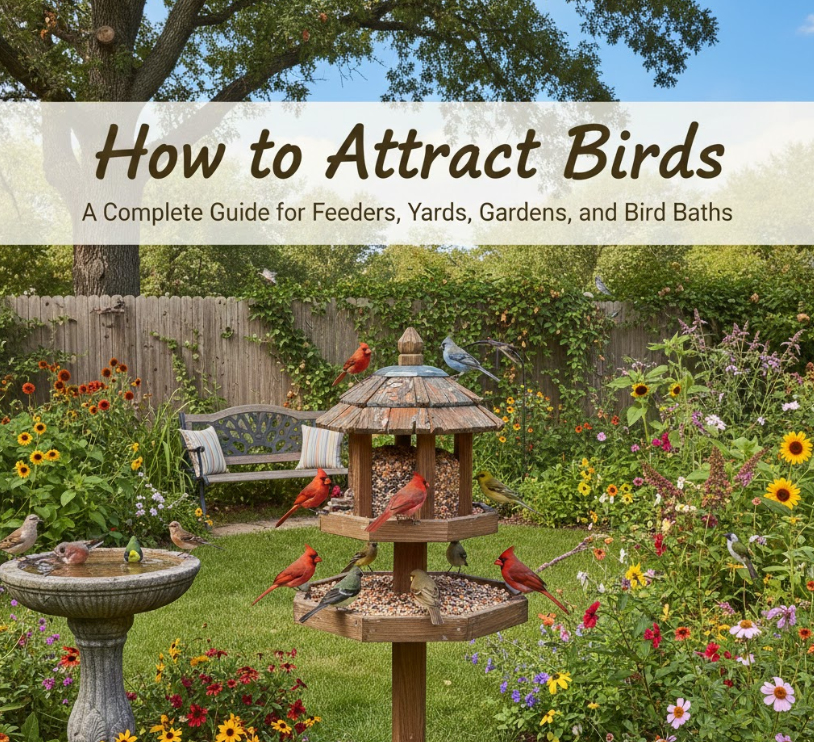
Attracting birds to your outdoor space is one of the most rewarding ways to connect with nature. Whether you live in a city apartment, a suburban neighborhood, or a rural area, learning how to attract birds can transform your yard, garden, or balcony into a thriving habitat filled with color, sound, and life. Birds not only enhance the beauty of your surroundings but also play a vital role in pest control, pollination, and maintaining ecological balance.
This comprehensive guide explains how to attract birds to a feeder, your yard, your garden, and a bird bath, using science-backed methods and practical experience. Each section focuses on natural, ethical, and sustainable bird-attraction techniques that benefit both birds and people.
How to Attract Birds to Feeder
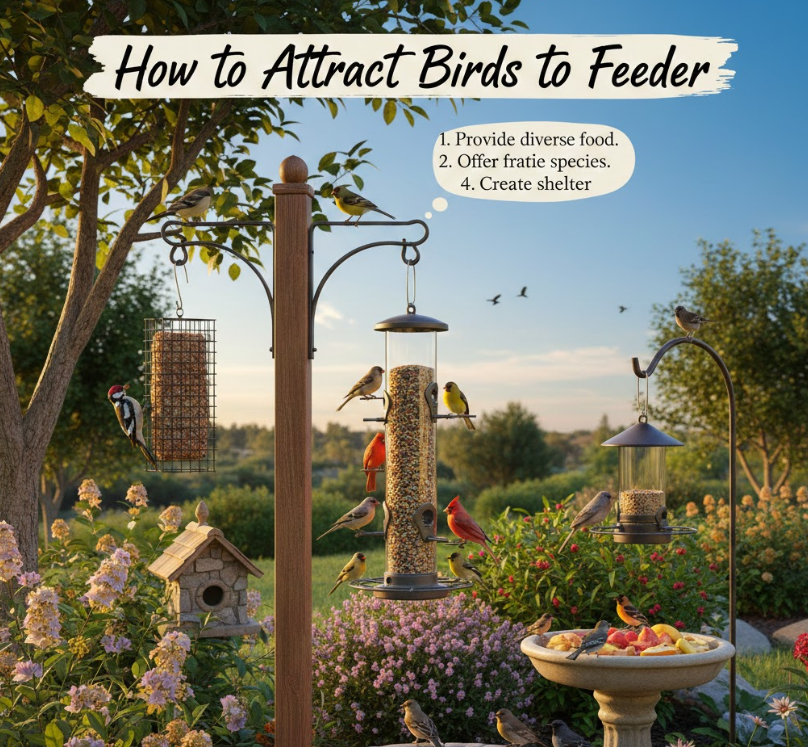
Bird feeders are one of the most effective tools for attracting wild birds, but success depends on much more than simply hanging a feeder. Understanding bird behavior, food preferences, and feeder placement is essential. When done correctly, a feeder becomes a reliable food source that birds will visit daily, especially during breeding and winter seasons.
Birds are cautious by nature, and it often takes time for them to trust a new feeder. Consistency, cleanliness, and correct food selection are the key factors that influence whether birds will regularly return to your feeding station.
Key Practices for Attracting Birds to a Feeder
• Choose bird food that matches local species
Different birds prefer different foods, and offering the wrong type can reduce visits significantly. Black oil sunflower seeds attract the widest variety of birds, including finches, cardinals, chickadees, and sparrows. Nyjer seed is ideal for goldfinches, while suet appeals to woodpeckers and nuthatches. Matching food to species increases feeding confidence and repeat visits.
• Place feeders at a safe and visible height
Birds prefer feeders placed where they feel protected from predators but still have a clear line of sight. Hanging feeders 5–10 feet above ground near trees or shrubs provides a natural escape route. Avoid placing feeders too close to walls or fences where cats can hide.
• Maintain a consistent feeding schedule
Birds quickly learn routines. Keeping your feeder stocked consistently helps birds recognize it as a dependable food source. Irregular feeding can discourage birds, especially during colder months when energy demands are higher.
• Keep feeders clean to prevent disease
Dirty feeders can spread harmful bacteria and fungi. Clean feeders every one to two weeks using warm water and mild soap, and dry them completely before refilling. Healthy feeding environments encourage birds to return without risk.
• Use multiple feeder types
Different birds prefer different feeding styles. Tube feeders, platform feeders, hopper feeders, and suet cages each attract different species. Offering variety increases biodiversity and reduces competition among birds.
• Be patient and observe behavior
It can take several days or weeks for birds to discover and trust a new feeder. Avoid frequent repositioning. Watching bird behavior helps you adjust food types and placement for better results.
Also Read:- How to Cut a Dragon Fruit: Complete Step-by-Step Guide for All Varieties
How to Attract Birds to Your Yard
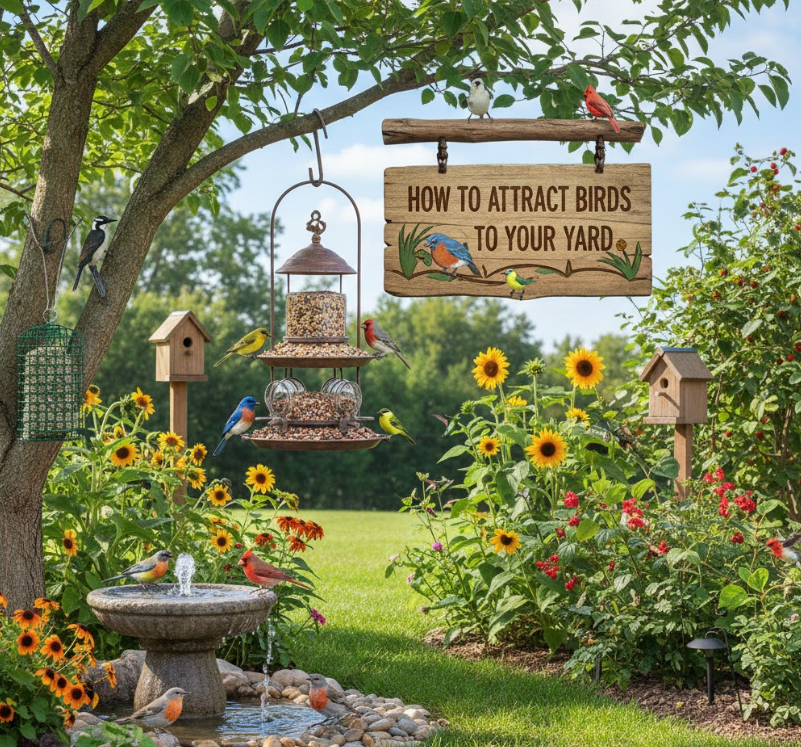
Your yard can function as a complete bird habitat when it provides food, shelter, water, and safety. Birds are more likely to stay and nest in yards that meet all their basic needs rather than relying on feeders alone.
Creating a bird-friendly yard involves thoughtful landscaping and minimizing human-made hazards. The goal is to mimic natural environments where birds instinctively feel secure.
Effective Ways to Make Your Yard Bird-Friendly
• Plant native trees and shrubs
Native plants support local insects, which are a primary food source for many birds. Trees like oak, maple, and fruit-bearing shrubs provide nesting sites and natural shelter from weather and predators.
• Create layered vegetation
Birds prefer yards with varied plant heights, including ground cover, shrubs, and canopy trees. This layered structure allows different species to occupy their preferred zones and reduces competition.
• Reduce lawn and increase natural areas
Large lawns offer little value to birds. Replacing sections of turf with wildflower patches, hedges, or native grasses creates feeding and nesting opportunities while supporting pollinators.
• Eliminate chemical pesticides and herbicides
Chemical treatments can poison birds directly or reduce insect populations they rely on for food. Organic gardening practices protect birds and promote a healthier ecosystem.
• Provide natural shelter and nesting spaces
Brush piles, dense hedges, and birdhouses offer safe places for resting and nesting. Position birdhouses according to species-specific height and entrance requirements for better success.
• Minimize threats from predators and glass
Window collisions are a major cause of bird deaths. Use window decals or UV-reflective stickers to reduce reflections. Keep cats indoors or supervised to protect visiting birds.
Also Read:- How to Call No Caller ID: Complete Guide to Identify, Call Back, and Manage Hidden Numbers
How to Attract Birds to a Bird Feeder (Advanced Techniques)
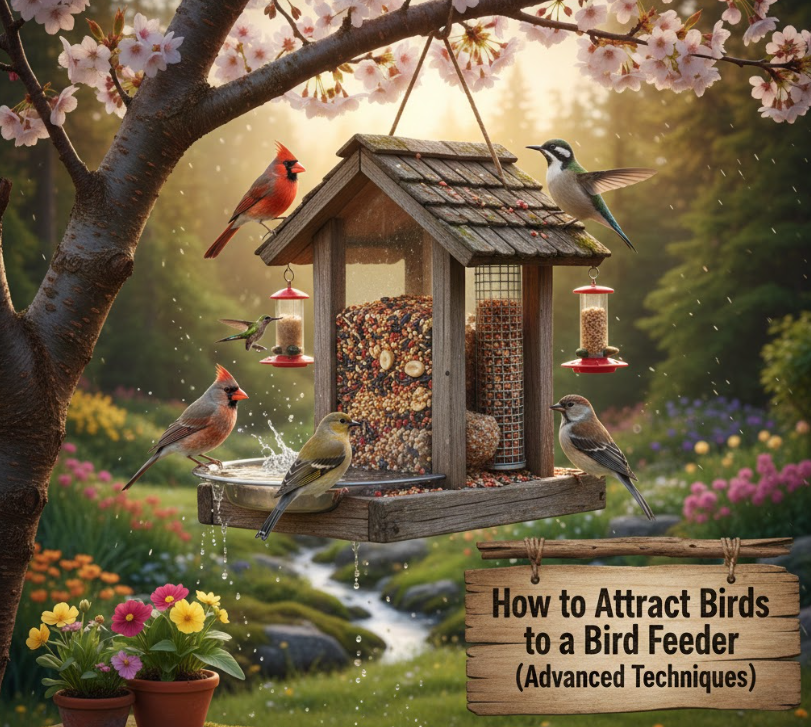
While basic feeder setup is effective, advanced strategies significantly increase bird activity. These methods focus on optimizing bird comfort, reducing stress, and encouraging long-term visitation.
Birds are highly observant and sensitive to changes in their environment. Small improvements can make a noticeable difference in how frequently they visit your feeder.
Advanced Strategies for Bird Feeder Success
• Position feeders near natural perches
Birds like to observe feeders from a safe perch before approaching. Placing feeders near branches or trellises allows birds to survey their surroundings and feed confidently.
• Rotate food types seasonally
Birds’ nutritional needs change throughout the year. High-fat foods like suet are essential in winter, while protein-rich seeds and insects are important during breeding season.
• Use squirrel-proof and weather-resistant feeders
Squirrels and rain can discourage birds by depleting food quickly. Squirrel-proof designs and covered feeders keep food accessible and fresh for birds.
• Avoid overcrowding by spacing feeders
Too many birds at one feeder can cause aggression. Spacing feeders apart reduces stress and allows shy species to feed comfortably.
• Monitor bird preferences and adapt
Observe which foods attract the most birds and adjust accordingly. Bird feeding is dynamic, and adapting to seasonal patterns increases long-term success.
• Supplement with natural food sources
Feeder use increases when combined with berry-producing plants and seed-bearing flowers, creating a more natural feeding environment.
Also Read:- How to Unsend an Email in Outlook: Complete Guide for All Devices
How to Attract Birds to Bird Bath

Water is just as important as food for birds. A bird bath provides drinking and bathing opportunities that help birds regulate body temperature and maintain feather health. In many regions, water availability is the deciding factor in whether birds visit an area.
Birds are drawn to clean, shallow, and accessible water sources that feel safe.
Best Practices for Attracting Birds to a Bird Bath
• Use shallow water with gradual slopes
Birds prefer water depths of 1–2 inches. A shallow bath with textured surfaces prevents slipping and allows birds to wade comfortably.
• Place bird baths in open yet protected areas
Position baths where birds can see predators approaching but still have nearby shrubs for escape. Avoid placing baths directly under dense foliage.
• Keep water fresh and clean
Change water every one to two days to prevent algae and mosquito breeding. Clean baths weekly using a brush and water only—no harsh chemicals.
• Add movement or sound
Dripping water, fountains, or solar bubblers attract birds by mimicking natural streams. Moving water is more visible and appealing to birds.
• Provide winter water sources
Heated bird baths prevent freezing and are especially valuable during winter when natural water sources are scarce.
• Combine baths with nearby food sources
Birds are more likely to use baths located near feeders or natural food plants, creating a complete resource area.
Also Read:-How to Get Rid of Chipmunks: A Complete, Humane & Effective Guide
How to Attract Birds to Your Garden
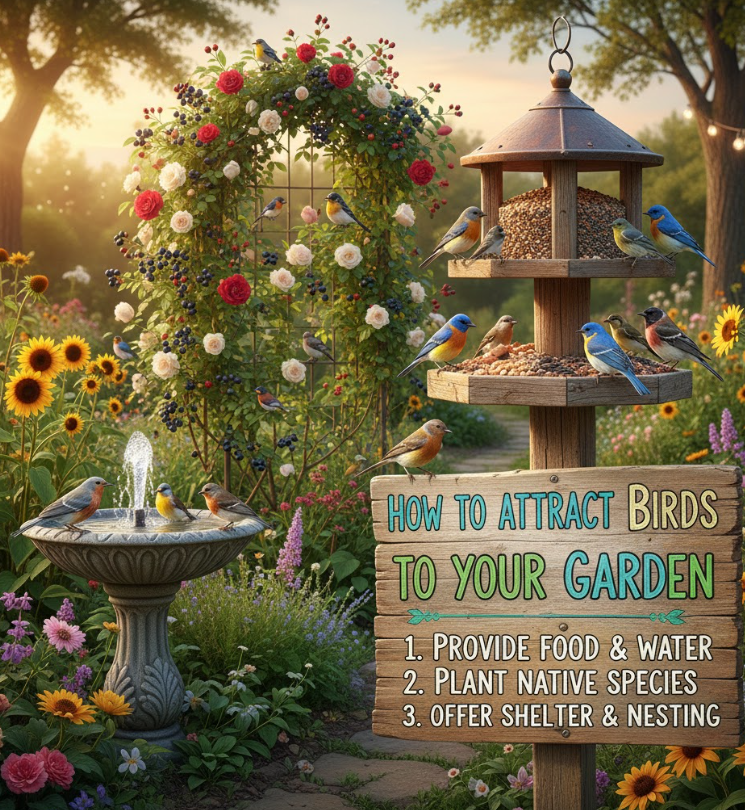
Gardens designed with birds in mind become living ecosystems rather than decorative spaces. Birds help control pests, spread seeds, and pollinate plants, making them valuable garden allies.
Bird-friendly gardening focuses on diversity, seasonal interest, and minimal human intervention.
Creating a Garden That Attracts Birds Naturally
• Grow plants that provide seeds, berries, and nectar
Sunflowers, coneflowers, berry bushes, and fruit trees offer natural food sources throughout the year. These plants reduce reliance on feeders.
• Allow plants to go to seed
Leaving seed heads intact during fall and winter provides critical food when resources are limited and supports overwintering birds.
• Include insect-friendly plants
Many birds feed insects to their young. Native flowering plants support caterpillars and beetles that are essential for chick development.
• Avoid excessive pruning and tidying
Messy gardens provide shelter, nesting materials, and insect habitat. Fallen leaves and dead stems are valuable resources for birds.
• Design for year-round habitat
Choose plants that bloom or fruit at different times of year to ensure continuous food availability across seasons.
• Integrate water and shelter elements
Bird baths, dense shrubs, and trellises create a complete garden habitat that encourages birds to stay longer.
Also Read:- How to Flush Water Heater: A Complete Homeowner’s Maintenance Guide
Conclusion: How to Attract Birds the Right Way
Learning how to attract birds is about more than feeders—it’s about creating a safe, nourishing environment that meets birds’ natural needs. By providing food, water, shelter, and native plants, you invite birds into your space in a way that supports their health and survival. With patience, observation, and consistent care, your yard, garden, or balcony can become a thriving haven for birds year-round.
FAQs
How long does it take for birds to find a feeder?
It may take a few days to several weeks, depending on location and food type.
What food attracts the most birds?
Black oil sunflower seeds attract the widest variety of bird species.
Can birds become dependent on feeders?
No. Birds use feeders as supplements and still rely on natural food sources.
For More Updates Visit: Biomagazine
