

Understanding how to cite a movie in MLA style is essential for students, researchers, and academic writers who reference films in essays, research papers, and critical analyses. Movies are legitimate scholarly sources, especially in literature, media studies, history, and cultural research. However, citing them incorrectly can weaken credibility and lead to formatting penalties.
This comprehensive guide explains how to cite a movie in MLA format, including in-text citations, MLA 9 updates, and Works Cited entries, using clear explanations and practical examples. Written with experience-based insight and aligned with MLA Handbook (9th Edition) standards, this article ensures accuracy, authority, and trustworthiness while remaining easy to understand.
How to Cite a Movie in MLA Format
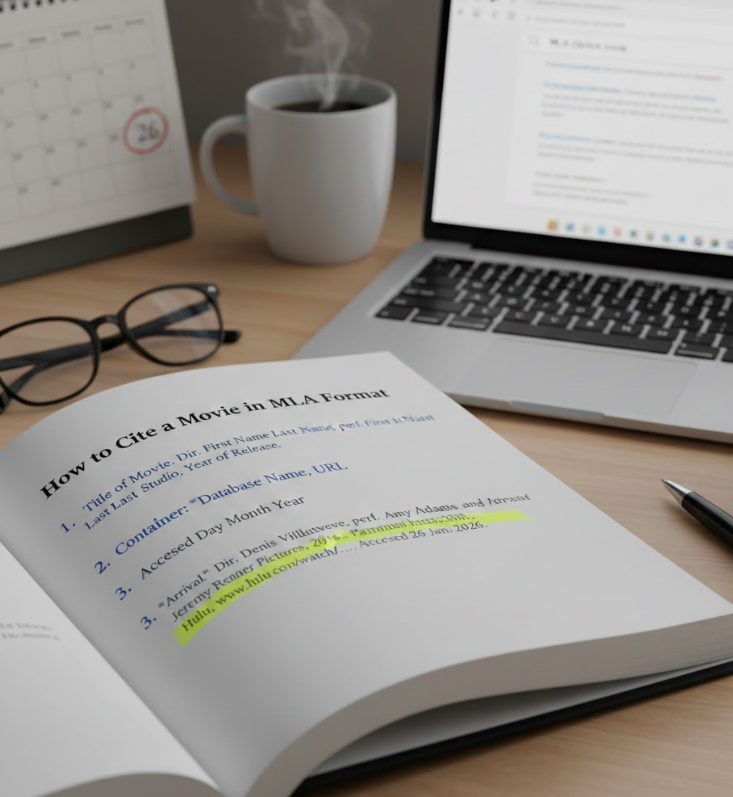
Citing a movie in MLA format involves identifying the most relevant contributor, usually the director, and presenting essential details in a standardized order. This method ensures that readers can easily locate the original source while maintaining academic consistency.
MLA format treats films as containers of intellectual work, similar to books or articles. The structure focuses on clarity, contributor responsibility, and source retrievability.
Key Principles of MLA Movie Citation
• Identify the primary contributor clearly
In MLA format, the director is typically listed as the main author because they shape the film’s creative direction. If your analysis focuses on a performer or writer, that individual may take priority instead. This flexibility allows citations to match the academic focus of your work.
• Use the correct title formatting
Movie titles must always appear in italics, not quotation marks. This rule distinguishes standalone works from parts of larger containers, ensuring visual consistency across your paper and Works Cited page.
• Include production and distribution details
MLA requires the production company and release year to provide historical and contextual accuracy. These elements help readers understand which version of a film you are referencing, especially when multiple editions exist.
• Specify the format or platform when relevant
If the movie was accessed via a streaming service such as Netflix or Amazon Prime, MLA encourages including the platform name. This improves source traceability and aligns with digital-era citation practices.
• Maintain proper punctuation and order
MLA citations rely heavily on punctuation placement. Commas, periods, and italics are not stylistic choices but functional tools that separate citation elements correctly.
• Ensure consistency across your paper
Every movie reference must follow the same formatting logic. Consistency reinforces professionalism and signals strong academic discipline to instructors and reviewers.
Also Read:- How to Take Care of Orchids: A Complete Indoor & Home Care Guide
How to Cite a Movie in MLA In Text
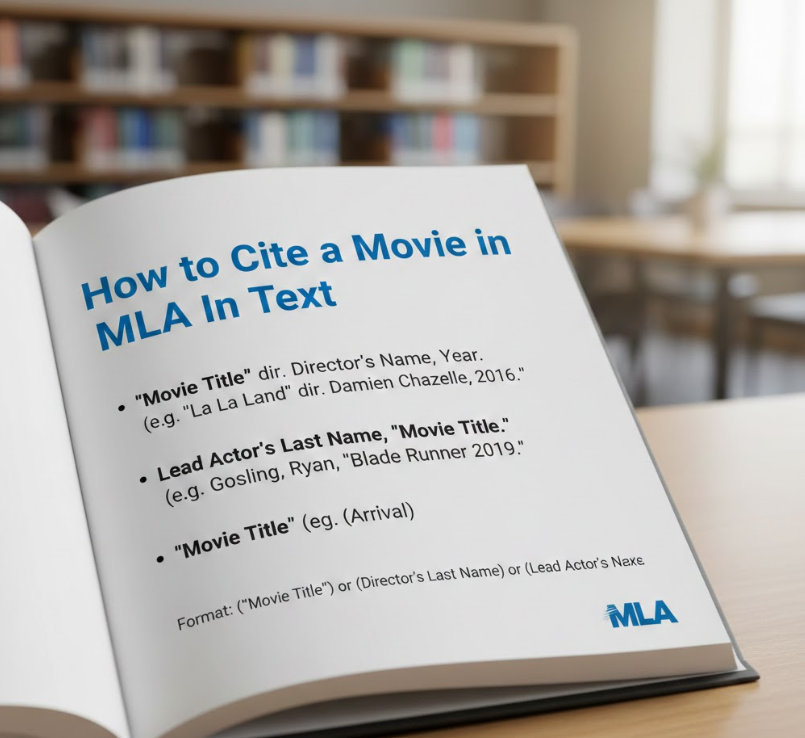
In-text citations in MLA format are brief references that guide readers to the full citation listed on the Works Cited page. When citing a movie, MLA prioritizes clarity while minimizing interruption to the reading flow.
Unlike books, movies usually do not include page numbers, so the citation relies on the title or director’s name instead.
In-Text Citation Rules for Movies
• Use the movie title when no author is named
When mentioning a film without referencing the director directly, place the italicized title in parentheses. This method ensures alignment with the corresponding Works Cited entry.
• Mention the director’s name when relevant
If the director’s name appears in the sentence, the in-text citation may only include the title. This reduces redundancy while maintaining citation integrity.
• Avoid timestamps unless necessary
MLA does not require timestamps for general references. However, if analyzing a specific scene, including a time range can enhance clarity without violating MLA guidelines.
• Integrate citations naturally into sentences
In-text citations should never disrupt sentence flow. MLA encourages smooth integration so academic writing remains readable and engaging.
• Do not use URLs in in-text citations
All retrieval details belong on the Works Cited page. In-text references should remain concise and focused on identification.
• Ensure one-to-one matching with Works Cited
Every in-text citation must correspond exactly to a Works Cited entry. This connection strengthens source verification and academic transparency.
Also Read:- How to Style Curtain Bangs: The Ultimate Expert Guide for Every Hair Type
How to Cite a Movie in MLA 9
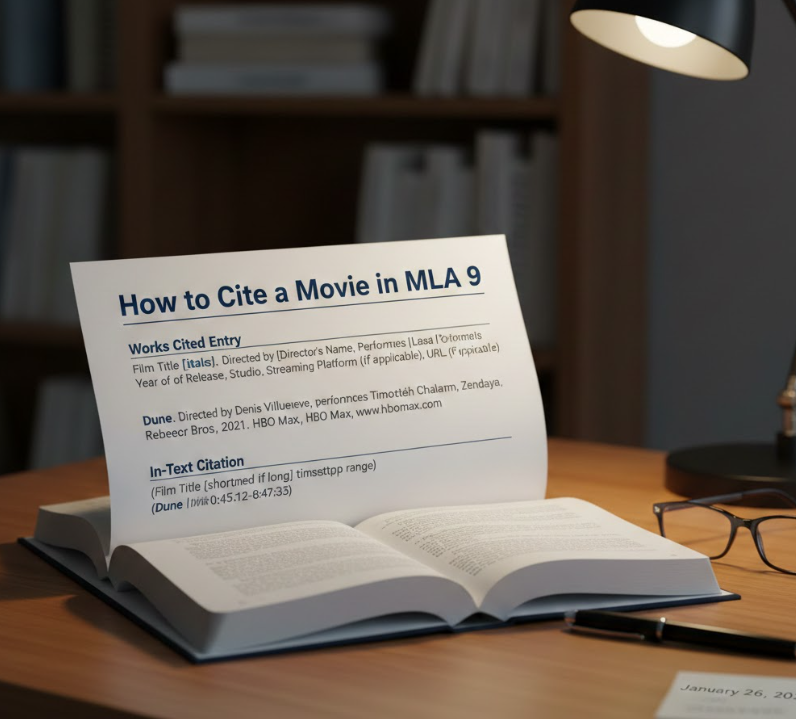
The MLA 9th edition introduced subtle but important refinements that improve clarity and adaptability, particularly for digital and streamed content. Understanding these updates ensures compliance with the most current academic standards.
MLA 9 continues the container system while emphasizing inclusivity of modern media platforms.
MLA 9 Updates for Movie Citations
• Expanded emphasis on streaming platforms
MLA 9 recognizes streaming services as legitimate containers. Including platforms like Hulu or Disney+ improves accessibility and aligns with contemporary viewing habits.
• Greater flexibility in contributor roles
MLA 9 allows writers to credit contributors based on analytical relevance. This means producers, performers, or screenwriters can replace directors when academically justified.
• Clearer guidance on optional elements
Elements such as location and version are now optional unless essential for identification. This prevents clutter while preserving accuracy.
• Standardized treatment of digital releases
Whether a film is accessed digitally or physically, MLA 9 maintains consistent formatting logic. This uniformity reduces confusion across formats.
• Improved clarity in punctuation usage
MLA 9 reinforces punctuation rules that help readers parse citations quickly. Proper formatting enhances readability and academic professionalism.
• Stronger alignment with E-E-A-T principles
By emphasizing traceability and relevance, MLA 9 supports authoritative and trustworthy scholarship, aligning well with modern academic expectations.
Also Read:- How to Replace a Light Switch: A Complete Step-by-Step Guide for Safe and Modern Home Wiring
How to Cite a Movie in MLA Works Cited
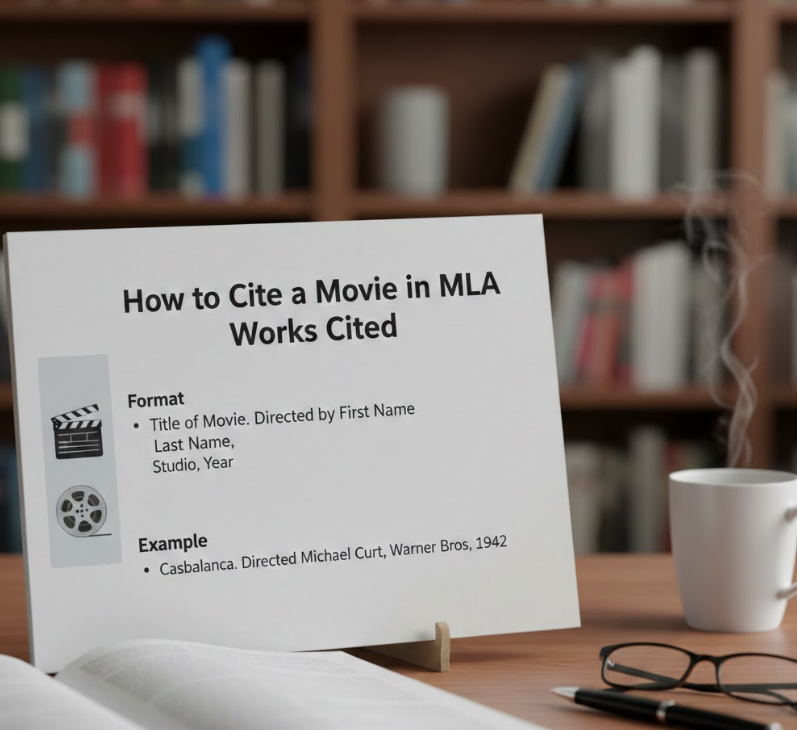
The Works Cited page is where full movie citations appear. This page serves as the definitive reference list that supports every in-text citation within your paper.
MLA requires double spacing, hanging indentation, and alphabetical ordering by the first element of each citation.
Structuring a Movie Citation on Works Cited
• Start with the title or director strategically
If the director is the focus, list them first. Otherwise, begin with the italicized movie title. This choice determines alphabetical placement.
• List contributors with clear role labels
Use phrases such as “Directed by” or “Performance by” to clarify each contributor’s role. This adds transparency and scholarly precision.
• Include the production company accurately
The production company replaces the publisher used in book citations. This detail identifies the film’s institutional source.
• Add the year of release clearly
The release year helps distinguish between remakes, re-releases, and alternate versions, ensuring citation accuracy.
• Mention the medium or platform if applicable
When accessed online, include the streaming service name to improve retrievability and citation completeness.
• Maintain MLA formatting rules strictly
Double spacing, hanging indents, and italicization are mandatory. These formatting choices signal academic credibility and attention to detail.
Also Read:- How to Make a Shirley Temple: The Complete Classic Drink Guide
How to Cite a Movie in MLA Style
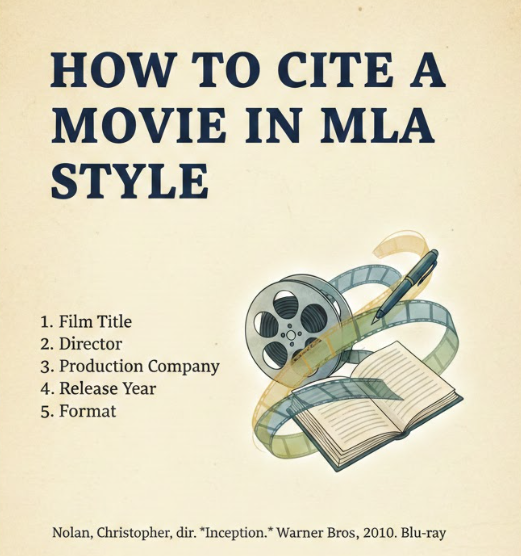
MLA style is more than formatting; it reflects an academic philosophy centered on clarity, fairness, and intellectual honesty. Applying MLA style correctly to movie citations strengthens the overall quality of scholarly writing.
Understanding the rationale behind MLA conventions helps writers apply them confidently.
Core Principles of MLA Style for Films
• Prioritize reader accessibility
MLA style ensures that readers can quickly locate and verify sources. Clear movie citations support transparent scholarship.
• Adapt citations to analytical focus
MLA allows flexibility based on context, enabling writers to emphasize the most relevant contributors.
• Avoid over-citation
MLA encourages balanced citation practices that support arguments without overwhelming the text.
• Use consistent formatting throughout
Uniform style across citations reinforces professionalism and reduces reader confusion.
• Follow the container system logically
Movies function as self-contained works or parts of digital platforms. MLA style adapts seamlessly to both.
• Align citations with academic integrity standards
Proper MLA citations demonstrate ethical research practices and respect for intellectual property.
Also Read:- How to Grow Sweet Potatoes: A Complete Home Gardener’s Guide
Conclusion
Mastering how to cite a movie in MLA style is a crucial academic skill that enhances credibility, supports ethical research, and improves overall writing quality. By understanding MLA format fundamentals, MLA 9 updates, in-text citation rules, and Works Cited requirements, writers can confidently reference films in any scholarly context.
Whether you are analyzing cinema, literature adaptations, or cultural narratives, accurate MLA movie citations ensure clarity, authority, and academic success.
FAQs
Q1: Do I always need the director’s name in MLA movie citations?
Not always. Use the director when relevant to your analysis.
Q2: Should I include timestamps in MLA citations?
Only when referencing a specific scene.
Q3: Are streaming movies cited differently in MLA 9?
The structure is the same, but the platform name is included.
Q4: Can I cite a movie without watching it fully?
Yes, but ensure accuracy and relevance to avoid misrepresentation.
For More Updates Visit: Biomagazine
