


Growing asparagus is a rewarding investment for any gardener willing to think long-term. If you’ve ever wondered how to grow asparagus successfully, you’re not alone—this perennial vegetable can produce tender, flavorful spears for 15–20 years when planted and maintained correctly. Unlike many annual crops, asparagus requires patience, preparation, and informed care, but the payoff is worth it.
This comprehensive guide explains how to grow asparagus using multiple methods, climates, and growing spaces. Whether you’re starting from seed, crowns, roots, containers, or adapting to regional conditions like Florida or Michigan, you’ll find expert-backed, actionable guidance grounded in real gardening experience.
Why Growing Asparagus Is Different from Other Vegetables
Asparagus (Asparagus officinalis) is a cold-hardy perennial that establishes deep root systems known as crowns. According to university extension data, properly planted asparagus beds can remain productive for two decades or more, making soil preparation and planting technique critical.
Key benefits of growing asparagus include:
- High nutritional value (vitamins A, C, K, folate)
- Early spring harvests
- Low maintenance after establishment
- Excellent ROI for home gardeners
How to Grow Asparagus Plant Successfully (Foundation Guide)
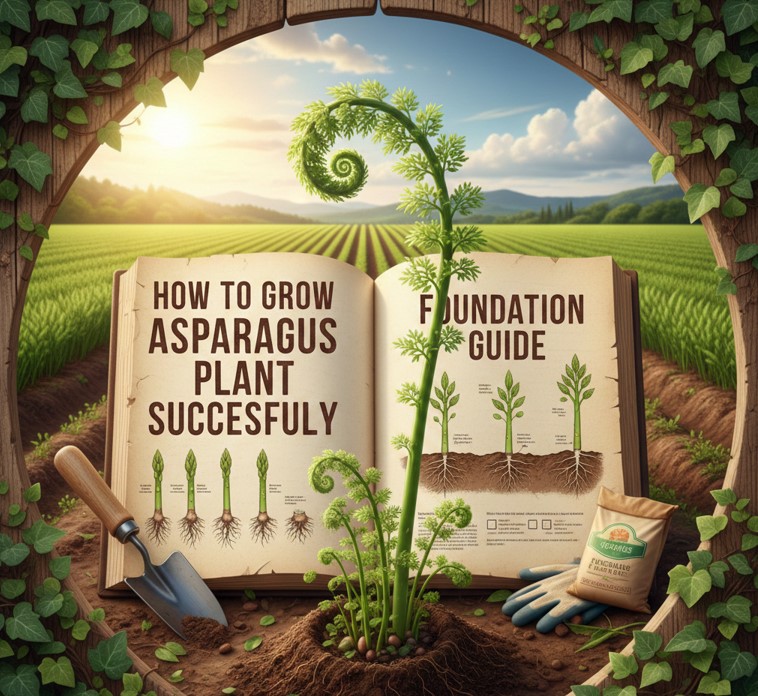
Growing a healthy asparagus plant requires understanding its lifecycle, soil preferences, and long-term needs. This foundational section explains the essentials that apply to all asparagus-growing methods.
Essential Growing Principles Explained
Asparagus thrives in well-drained soil, full sun (6–8 hours daily), and consistent moisture without waterlogging. The plant stores energy in its roots, which directly impacts spear thickness and longevity.
Key Growth Points
• Soil Preparation
Rich, sandy loam soil with a pH between 6.5–7.5 ensures optimal nutrient uptake. Incorporate aged compost or well-rotted manure deeply before planting to support root development.
• Sunlight Exposure
Full sun encourages strong spear growth. Shaded asparagus beds often produce thin, weak shoots that reduce long-term productivity.
• Water Management
Consistent watering is critical during the first two years. Drought stress weakens crowns and delays establishment.
• Fertilization Strategy
Balanced fertilizers (10-10-10) applied early spring and after harvest help replenish stored energy in roots.
• Weed Control
Weeds compete aggressively with young asparagus. Mulching helps suppress weeds while retaining soil moisture.
• Patience in Harvesting
Avoid harvesting in the first year. Light harvests begin in year two, with full harvests in year three.
Also Read :- How to Stop Sneezing: A Complete, Doctor-Reviewed Guide for Instant and Long-Term Relief
How to Grow Asparagus from Seed
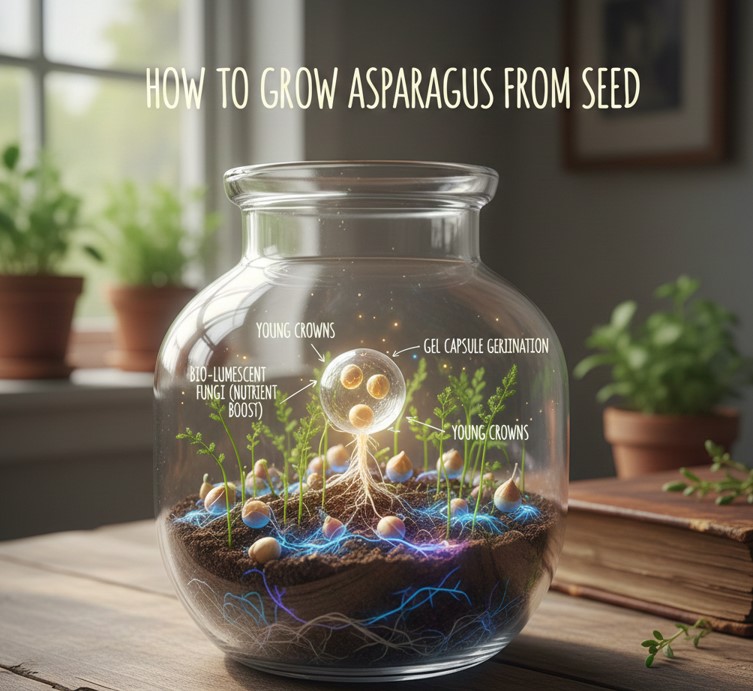
Growing asparagus from seed is cost-effective and offers varietal diversity, but it requires patience and precision.
Seed-Starting Overview
Asparagus seeds take 2–3 weeks to germinate and up to three years before full harvests. This method suits gardeners who enjoy nurturing plants from the earliest stage.
Practical Growing Points
• Seed Selection
Choose disease-resistant, hybrid or open-pollinated varieties suited to your climate.
• Indoor Starting
Start seeds indoors 12–14 weeks before the last frost to extend the growing season.
• Transplant Timing
Seedlings should be 10–12 inches tall before transplanting outdoors.
• Root Development Focus
Avoid root disturbance; healthy roots are critical for crown formation.
• Spacing Requirements
Space plants 12–18 inches apart to prevent overcrowding.
• Delayed Gratification
Expect smaller spears initially; strength builds over time.
Also Read:- How to Get Rid of Carpenter Bees: The Complete Expert Guide
How to Grow Asparagus from Crowns
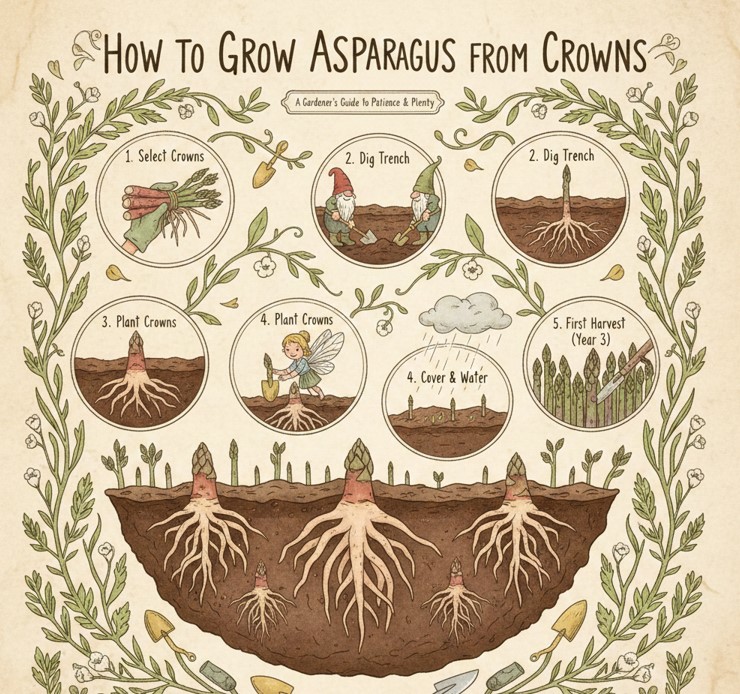
Crowns are one-year-old dormant root systems and the most popular method for home gardeners.
Why Crowns Are Preferred
Crowns provide a one-year head start, reducing time to harvest while ensuring uniform growth.
Step-by-Step Success Points
• Trench Planting
Dig trenches 12 inches wide and 8 inches deep for proper root expansion.
• Crown Placement
Spread roots like a spider and cover with 2 inches of soil initially.
• Gradual Backfilling
Add soil gradually as shoots grow to prevent rot.
• Moisture Control
Keep soil moist but not saturated during establishment.
• Early Weed Suppression
Weeds hinder crown energy storage.
• Harvest Restraint
Limit harvests in year two to protect crown vigor.
Also Read:- How to Shrink Jeans: A Complete, Expert-Backed Guide for Perfect Fit
How to Grow Asparagus from Roots
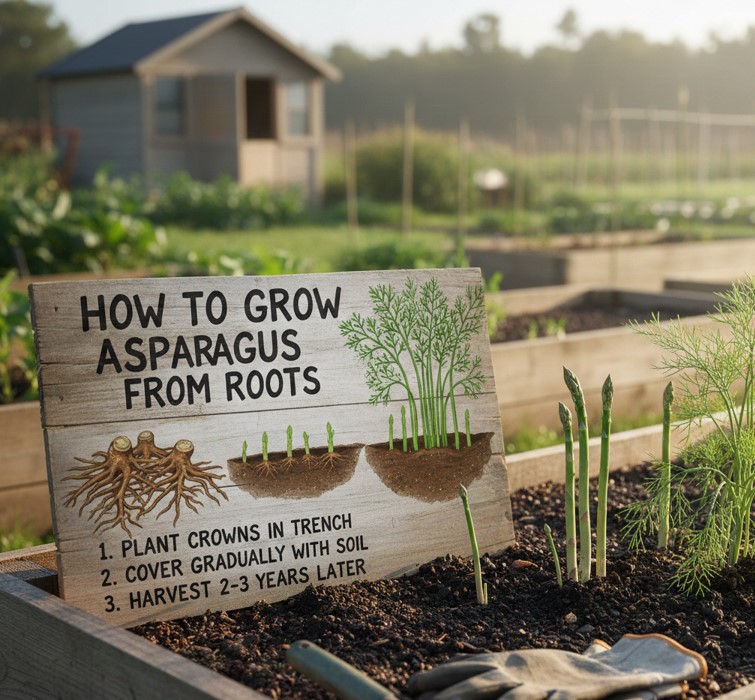
Growing asparagus from roots is similar to crowns but focuses on root health preservation.
Root-Focused Method Explained
Roots must remain moist and undamaged during planting to ensure survival.
Key Growing Considerations
• Root Inspection
Discard dried or moldy roots.
• Soil Contact
Firm soil gently around roots to remove air pockets.
• Drainage Priority
Poor drainage leads to root rot.
• Temperature Awareness
Plant when soil reaches 50°F (10°C).
• Mulching Benefits
Protects roots from temperature extremes.
• Long-Term Monitoring
Root health directly impacts spear thickness.
Also Read:- How to Get Oil Stains Out of Clothes Complete Expert Guide
How to Grow Asparagus in a Container
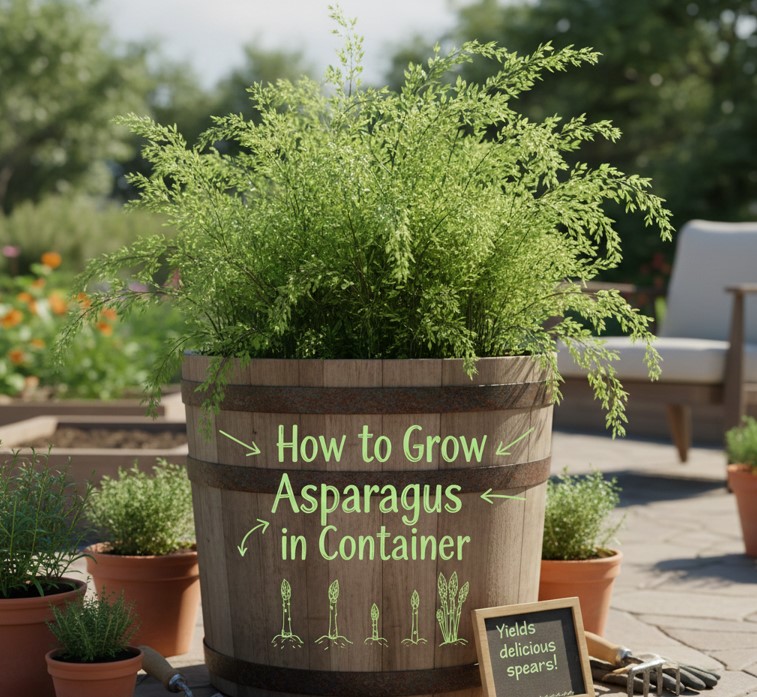
Container asparagus growing suits patios and small spaces but requires thoughtful planning.
Container Gardening Explained
Asparagus needs deep containers (minimum 18–24 inches) to accommodate roots.
Container Success Tips
• Pot Size Selection
Larger pots support healthier crowns.
• Drainage Holes
Prevent water accumulation.
• High-Quality Soil Mix
Use compost-rich potting soil.
• Sun Placement
South-facing exposure is ideal.
• Water Frequency
Containers dry faster than ground soil.
• Winter Protection
Insulate containers in cold climates.
Also Read:- How to Ripen Bananas: The Ultimate Guide to Fast and Natural Ripening Methods
How to Grow Asparagus in Pots (Indoor/Urban Guide)
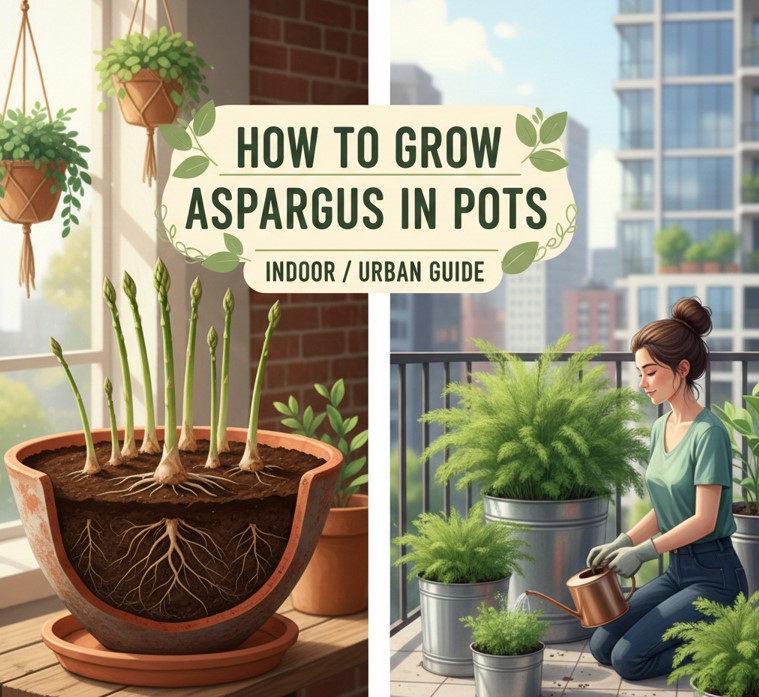
Pot growing allows asparagus cultivation in urban environments.
Pot-Specific Considerations
Pots must support long-term root expansion.
Growth Essentials
• Vertical Space
Fern growth can exceed 4 feet.
• Stability
Heavy pots prevent tipping.
• Fertilization Schedule
Nutrients leach faster in pots.
• Root Pruning Caution
Avoid disturbing roots.
• Pest Monitoring
Aphids and beetles thrive indoors.
• Light Consistency
Supplemental lighting may be required.
Also Read: How to Get Rid of Cockroaches: The Complete, Proven Guide for Permanent Control
How to Grow Asparagus in Florida
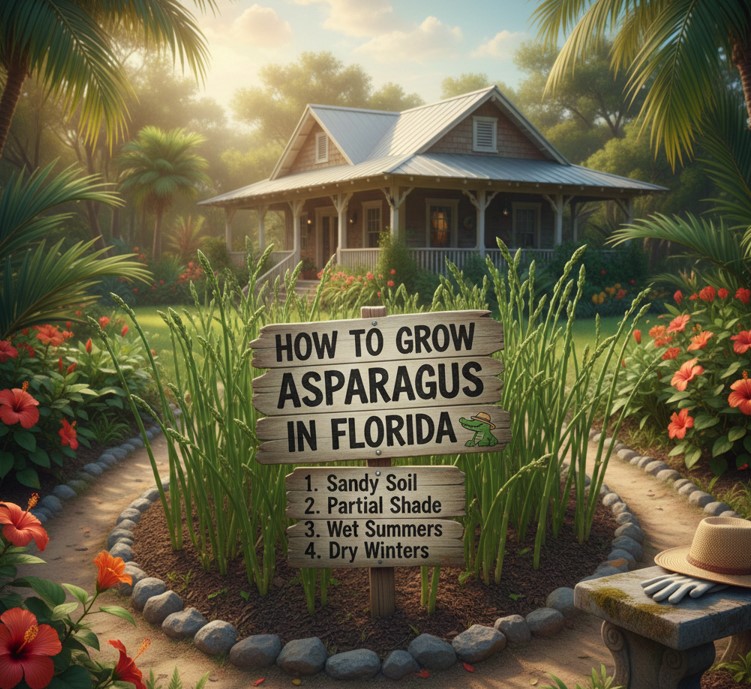
Florida’s warm climate requires adjusted strategies.
Climate Adaptation Explained
High humidity and heat affect spear production.
Florida-Specific Tips
• Variety Choice
Select heat-tolerant varieties like ‘UC 157.’
• Planting Season
Fall planting is preferred.
• Soil Drainage
Sandy soil improves aeration.
• Disease Prevention
Monitor fungal issues.
• Mulching Benefits
Regulates soil temperature.
• Irrigation Control
Avoid overwatering.
Also Read:- How to Fold a Pocket Square: The Complete Gentleman’s Guide to Timeless Style
How to Grow Asparagus in Michigan
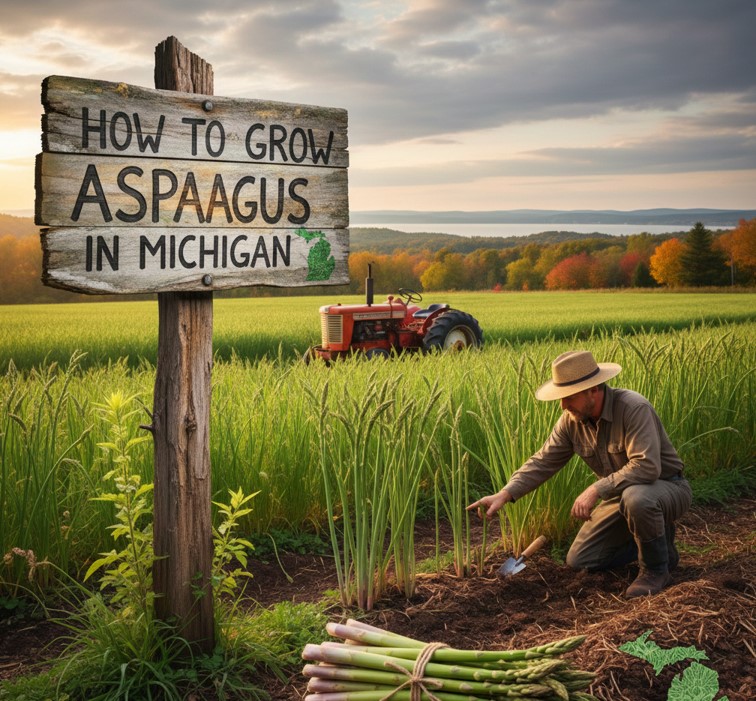
Cold winters influence planting and harvest timing.
Regional Considerations
Michigan’s climate favors asparagus with proper frost protection.
Cold-Climate Success Tips
• Spring Planting Timing
Plant after frost danger passes.
• Winter Mulching
Protect crowns from freezing.
• Raised Beds
Improve drainage.
• Shorter Growing Season
Harvest windows are narrower.
• Soil Warming
Black mulch accelerates growth.
• Variety Selection
Cold-hardy cultivars perform best.
Conclusion
Learning how to grow asparagus is an investment in patience, preparation, and informed care. Whether grown from seeds, crowns, roots, containers, or adapted to specific climates, asparagus rewards gardeners with decades of nutritious harvests. With the right soil, sunlight, and restraint in harvesting, your asparagus bed can become one of the most reliable crops in your garden.
FAQs
How long does asparagus take to grow?
2–3 years for full harvests.
Does asparagus come back every year?
Yes, it’s a perennial crop.
Can asparagus grow in hot climates?
Yes, with proper variety selection.
For More Updates Visit: Biomagazine
