

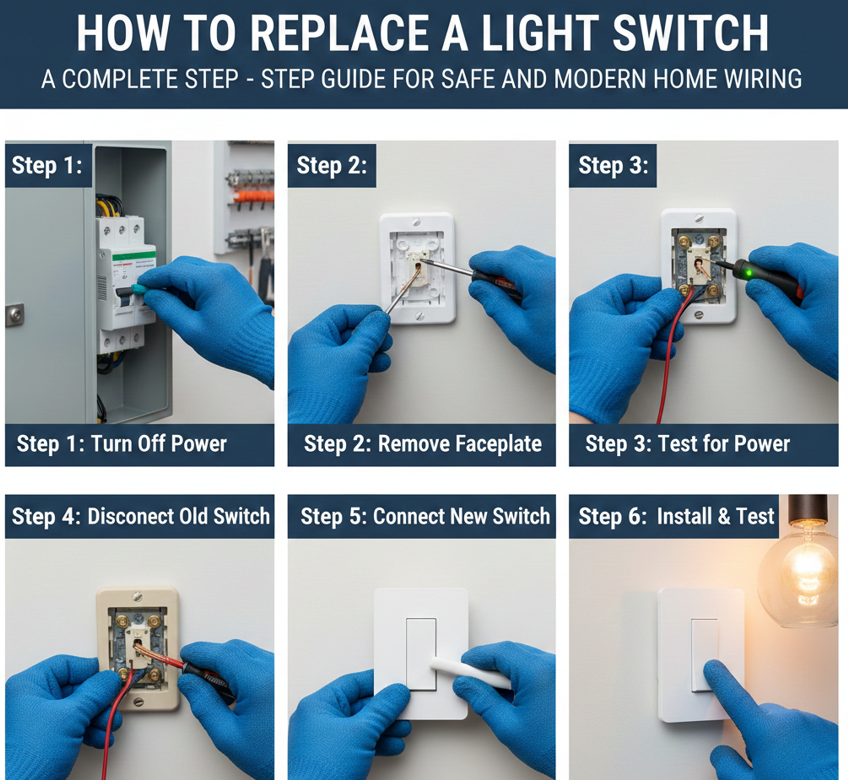
Knowing how to replace a light switch is one of the most practical home improvement skills a homeowner can learn. Whether your switch is outdated, malfunctioning, or you want to upgrade to a dimmer or motion sensor, replacing a light switch is a manageable DIY project when done correctly. Modern light switches are designed with safety features and standardized wiring, making installation more accessible for beginners while still requiring careful attention to electrical safety.
This guide is written from hands-on experience and follows best practices used by electricians. It explains tools, wiring, safety precautions, and advanced switch types while complying with electrical standards such as NEC guidelines. You’ll also learn how different environments—like mobile homes—require special consideration. By the end of this article, you’ll confidently understand how to replace a light switch safely and correctly without risking damage or injury.
Why Replacing a Light Switch Matters for Safety and Efficiency
Replacing a faulty or outdated light switch improves both electrical safety and energy efficiency. Old switches can loosen internally, create arcing, or fail to shut off power properly. Newer switches—especially smart or dimmer models—help reduce electricity usage and increase convenience.
Key reasons to replace a light switch:
• Prevent overheating and electrical sparks
• Improve lighting control and energy efficiency
• Upgrade to modern features like dimmers or motion sensors
• Fix flickering or unresponsive switches
• Maintain compliance with modern electrical codes
• Enhance home value and functionality
Tools and Materials Needed Before You Start
Before learning how to replace a light switch step by step, gathering the right tools ensures a smooth and safe process. Using professional-grade tools reduces mistakes and protects wiring connections.
Essential tools and materials:
• Flathead and Phillips screwdrivers
• Voltage tester or multimeter
• Wire stripper and needle-nose pliers
• Electrical tape and wire nuts
• Replacement light switch (standard, dimmer, or sensor)
• Safety gloves and insulated footwear
Also Read:- How to Make a Shirley Temple: The Complete Classic Drink Guide
How to Replace a Light Switch Step by Step
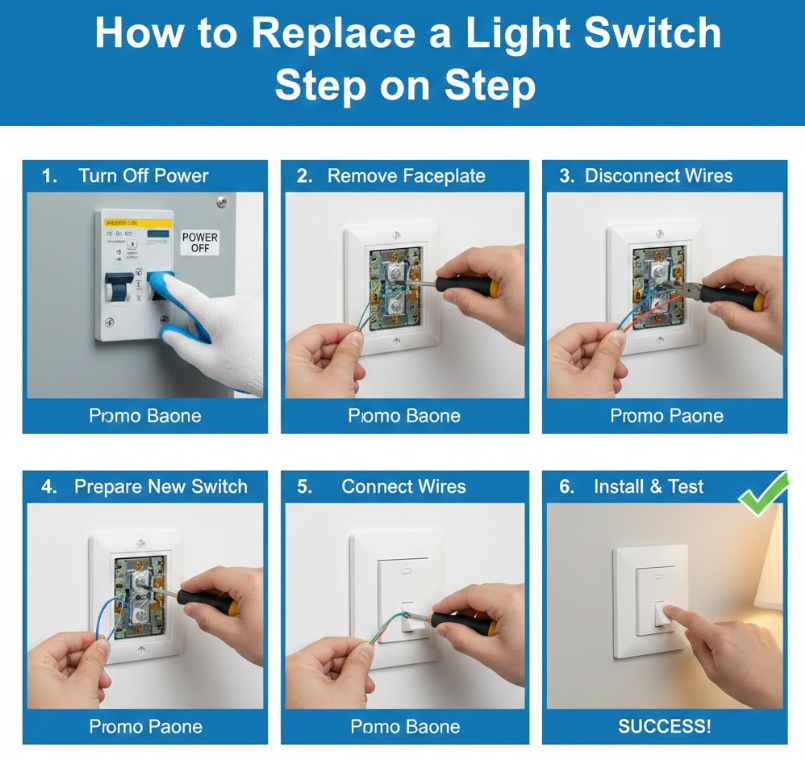
Understanding how to replace a light switch step by step requires more than following basic instructions—it involves knowing why each step matters. Proper sequencing prevents electrical hazards and ensures a durable installation.
Replacing a light switch begins at the breaker panel and ends with testing the completed circuit. Every step builds on the previous one, and skipping steps increases risk. This process applies to standard single-pole switches commonly used in residential homes.
Step-by-step process:
• Turn off power at the circuit breaker and verify with a voltage tester
• Remove the faceplate and unscrew the existing switch
• Identify line, load, ground, and neutral wires
• Disconnect wires carefully and note their positions
• Attach wires to the new switch terminals securely
• Mount the switch, replace the cover, and restore power
Also Read:- How to Melt Chocolate Chips: A Complete Step-by-Step Guide for Perfect Results
How to Replace a Light Switch Safely
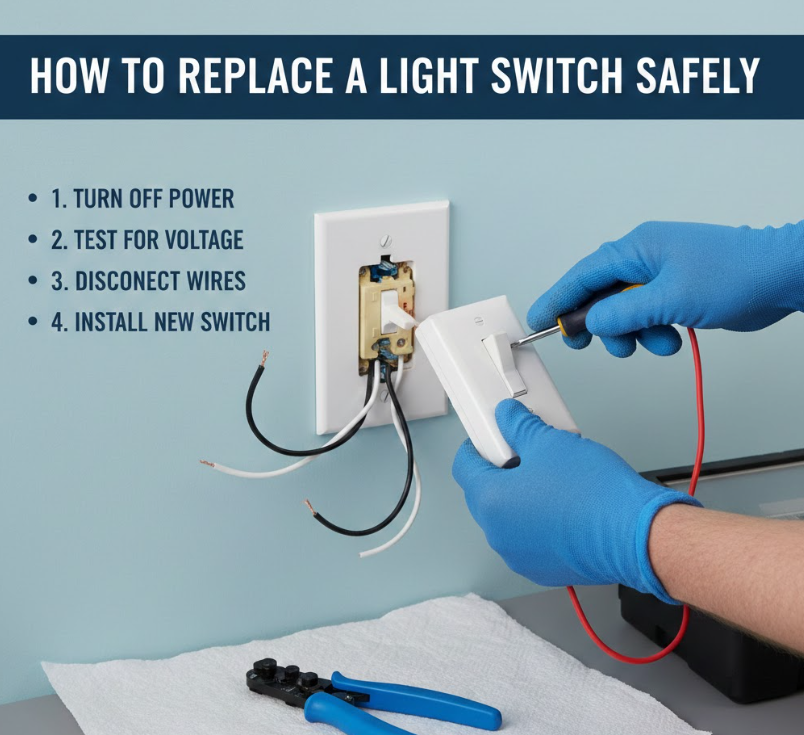
Learning how to replace a light switch safely is essential, even for experienced DIYers. Electrical safety is not optional—small mistakes can lead to shock, fire hazards, or damaged appliances.
Safety starts with understanding your home’s electrical system. Residential wiring typically carries 120 volts, which is enough to cause serious injury. Always follow lock-out and verification procedures before touching wires.
Safety best practices:
• Always shut off power at the breaker, not just the switch
• Test wires multiple times before handling
• Use insulated tools and avoid wet conditions
• Never touch bare wires with exposed skin
• Secure all wire connections tightly
• Stop immediately if wiring appears damaged or unfamiliar
Also Read:- How to Induce Vomiting in Dogs: A Safe, Vet-Backed Guide for Pet Owners
How to Replace a Light Switch With a Dimmer
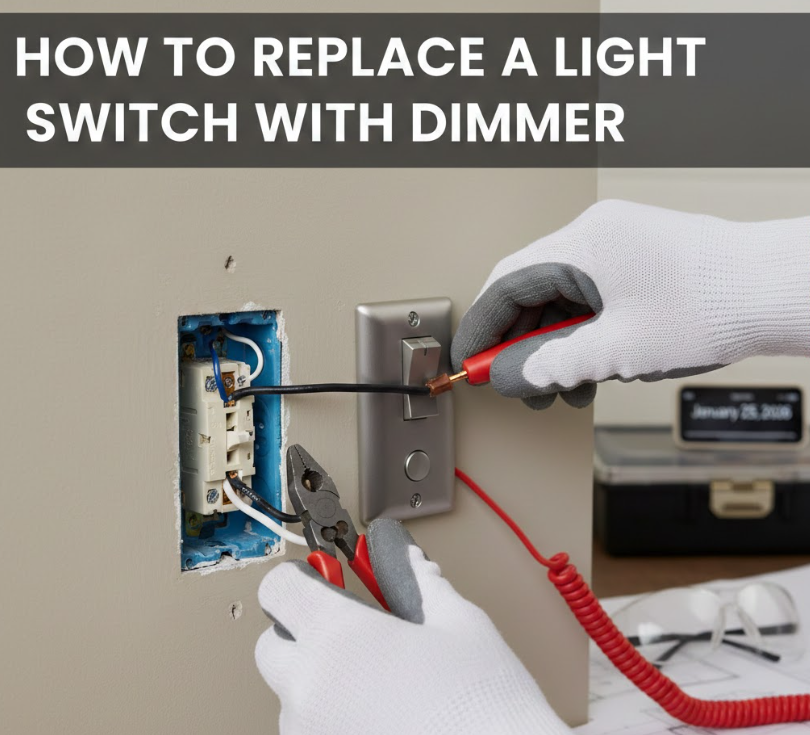
Knowing how to replace a light switch with a dimmer allows you to customize lighting levels while improving energy efficiency. Dimmer switches regulate voltage flow, reducing bulb brightness and extending bulb lifespan.
Not all bulbs are dimmer-compatible, so compatibility checks are crucial. LED and CFL bulbs often require specific dimmer models to prevent flickering or buzzing.
Dimmer installation essentials:
• Verify bulb compatibility with the dimmer
• Identify single-pole vs three-way wiring
• Connect line and load wires correctly
• Secure ground and neutral connections
• Adjust dimmer settings before final mounting
• Test light levels after installation
Also Read:- How to Grow Sweet Potatoes: A Complete Home Gardener’s Guide
How to Replace a Light Switch With a Motion Sensor
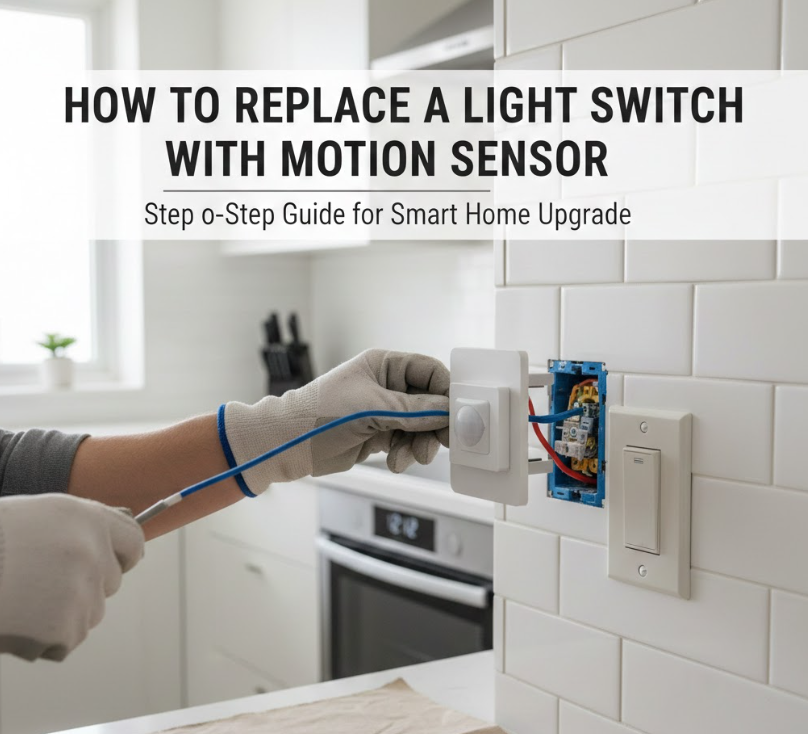
Understanding how to replace a light switch with a motion sensor adds automation and security to your home. Motion sensor switches automatically control lighting based on movement, making them ideal for hallways, bathrooms, and garages.
These switches often require a neutral wire, which older homes may lack. Reading manufacturer instructions carefully ensures correct wiring and sensor calibration.
Motion sensor switch considerations:
• Confirm the presence of a neutral wire
• Set detection range and sensitivity
• Position sensor away from heat sources
• Connect ground wire securely
• Test sensor coverage before final assembly
• Adjust time-delay settings for efficiency
Also Read:- How to Freeze Green Beans: Complete Step-by-Step Guide for Long-Term Freshness
How to Replace a Light Switch in a Mobile Home
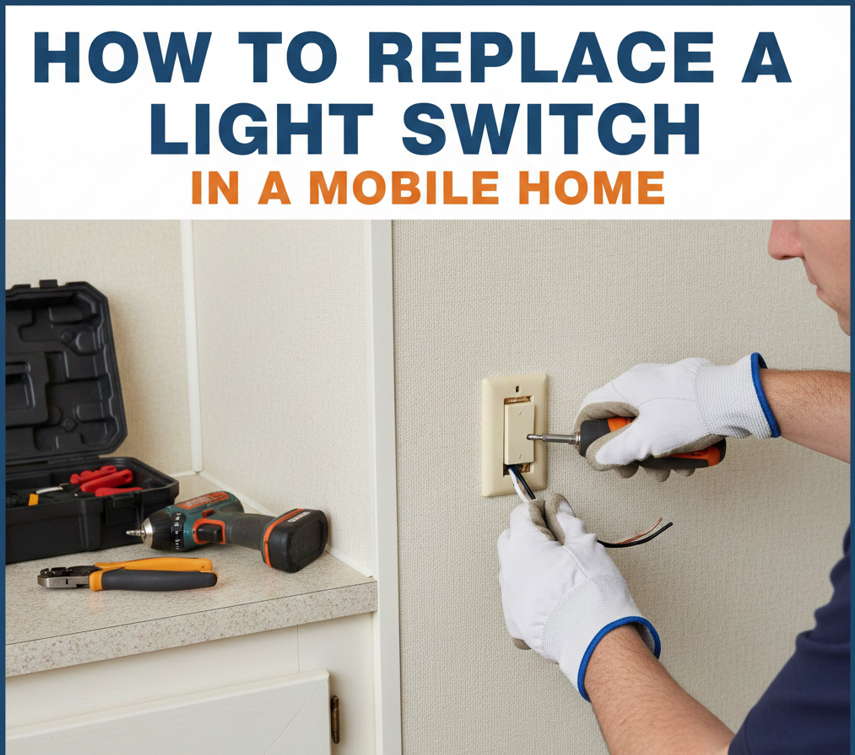
Learning how to replace a light switch in a mobile home requires special attention to wiring standards. Mobile homes often use different electrical systems, such as aluminum wiring or smaller gauge conductors.
Federal HUD regulations apply to manufactured homes, making proper parts and installation methods essential for safety and compliance.
Mobile home installation tips:
• Use switches approved for manufactured housing
• Identify aluminum vs copper wiring
• Use anti-oxidant paste when required
• Secure wiring in shallow electrical boxes
• Avoid over-tightening terminal screws
• Inspect grounding systems carefully
Also Read:- How to Delete DoorDash Account: Complete Step-by-Step Guide (2026)
Common Mistakes to Avoid When Replacing a Light Switch
Even simple electrical projects can go wrong if rushed. Understanding common errors helps prevent future issues.
Mistakes to avoid:
• Forgetting to shut off breaker power
• Misidentifying line and load wires
• Loose terminal connections
• Ignoring grounding requirements
• Using incompatible switch types
• Overcrowding electrical boxes
Also Read:- How to Clean Rust Off Metal: Complete Expert Guide for Home & Tools
Conclusion: Mastering How to Replace a Light Switch Confidently
Learning how to replace a light switch empowers homeowners to improve safety, efficiency, and comfort without unnecessary expense. Whether upgrading to a dimmer, installing a motion sensor, or replacing a worn-out switch, following proper steps and safety practices ensures reliable results.
By using the correct tools, understanding wiring principles, and respecting electrical codes, you can confidently complete this task. When in doubt, consulting a licensed electrician is always the safest choice.
FAQs
Q1: Can I replace a light switch without electrical experience?
Yes, if you follow safety guidelines and work on simple single-pole switches.
Q2: Do I need a permit to replace a light switch?
Usually no, but local codes may vary.
Q3: Why does my new switch not work after installation?
Common causes include loose wiring or incorrect line/load connections.
Q4: Is replacing a light switch dangerous?
It can be if safety steps are ignored. Always turn off power first.
For More Updates Visit: Biomagazine
