

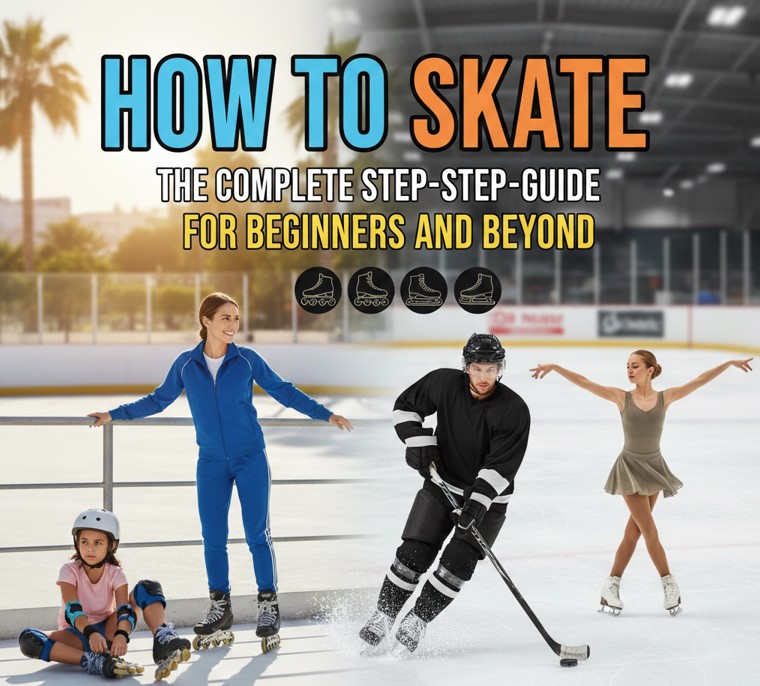
Learning how to skate is more than just standing on wheels or blades—it’s a physical skill that combines balance, coordination, confidence, and practice. Whether you’re stepping onto ice for the first time, rolling into a skate park, or trying to skate faster in hockey, skating opens the door to fitness, fun, and freedom.
This in-depth guide is written from real skating experience, coaching principles, and sports science insights. It’s designed to help absolute beginners and developing skaters progress safely and efficiently across different skating styles.
Why Learning How to Skate Is a Valuable Life Skill
Skating improves cardiovascular health, strengthens core muscles, enhances balance, and builds mental resilience. According to the American Council on Exercise, skating can burn between 300–600 calories per hour, depending on intensity.
• Skating improves neuromuscular coordination, helping prevent falls in daily life
• It builds lower-body strength without high-impact stress on joints
• Skating enhances mental focus, confidence, and spatial awareness
• It supports social connection through rinks, teams, and communities
• Skating is adaptable across ages, from kids to seniors
• It provides transferable skills useful in sports like hockey and speed skating
Also Read:- How to Read Tabs: A Complete Beginner-to-Advanced Guide
How to Skate for Beginners (Foundational Skills Explained)
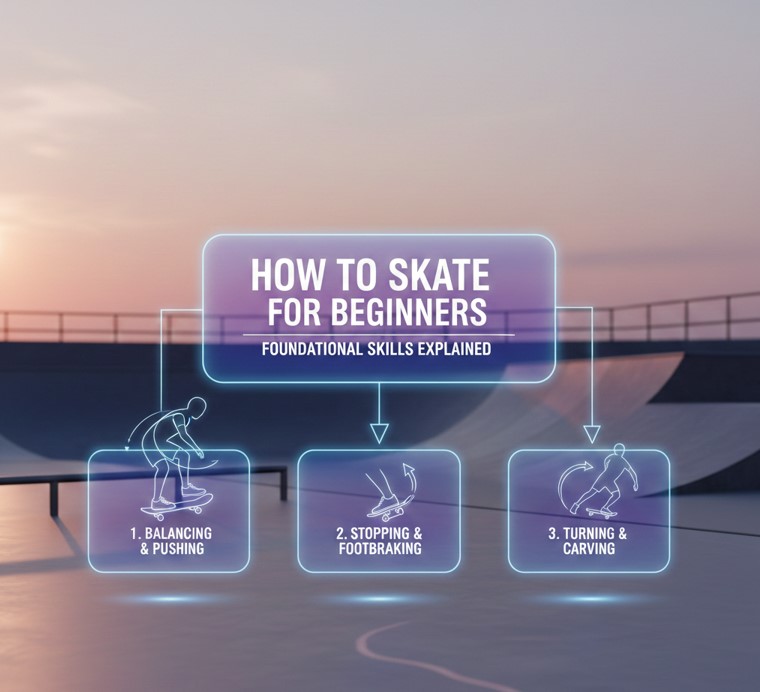
Learning how to skate for beginners starts with mastering balance, posture, and controlled movement. Beginners often fall not because of speed, but because of poor stance and fear-induced stiffness.
• Proper skating stance
A beginner must learn to bend knees slightly, keep shoulders relaxed, and align head over hips. This posture lowers the center of gravity and makes balance easier. Standing stiff or upright increases the risk of backward falls and instability.
• Learning to fall safely
Falling is part of learning how to skate. Beginners should practice falling forward onto padded knees and wrists rather than backward. This builds confidence and reduces injury risk.
• Marching and gliding drills
Before pushing off, beginners should practice lifting one foot at a time while stationary. Short glides teach balance and help the brain adapt to movement on a slippery surface.
• Stopping techniques
Basic stopping methods such as the snowplow stop (ice) or heel brake (roller skates) should be learned early. Stopping equals control, and control equals safety.
• Using protective gear
Helmets, knee pads, wrist guards, and elbow pads dramatically reduce injury risk. According to the CDC, wrist injuries are the most common beginner skating injury.
• Overcoming fear and tension
Fear causes stiffness, which leads to falls. Beginners must practice breathing, relaxing shoulders, and trusting their stance to progress naturally.
Also Read:- How to Clean Clams: The Complete, Safe, and Expert Seafood Guide
How to Skate on Ice (Ice Skating Techniques)
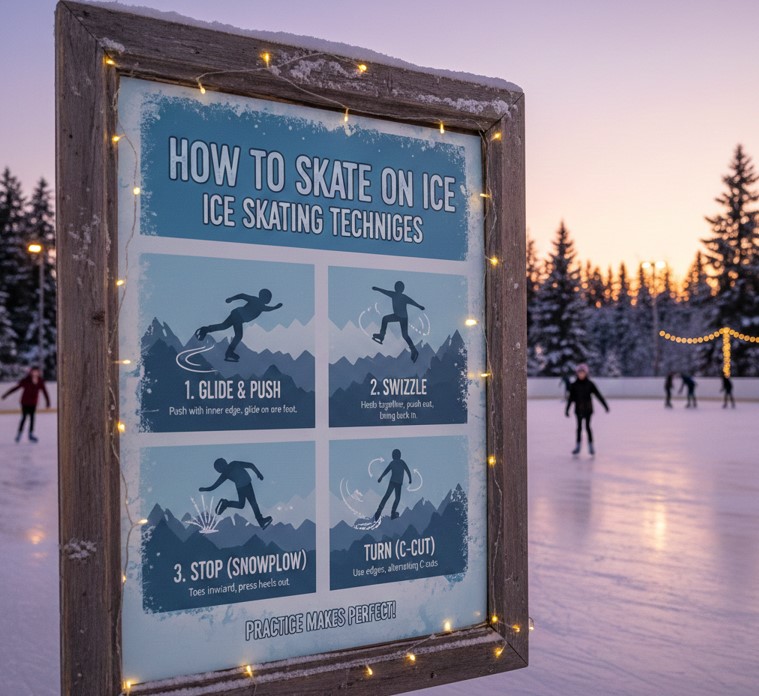
Ice skating requires precision because blades create less friction than wheels. Understanding edges and weight transfer is critical.
• Understanding blade edges
Ice skate blades have inside and outside edges. Learning how to shift weight between edges allows controlled turns and smoother gliding.
• Pushing technique
Ice skating propulsion comes from pushing outward and slightly backward, not straight back. Proper push engages glutes and thighs for efficiency.
• Balance over the sweet spot
The “sweet spot” is just behind the ball of the foot. Leaning too far forward or back causes slips and loss of control.
• Basic turns and crossovers
Turning on ice involves leaning into edges while maintaining knee bend. Crossovers allow continuous speed during curves.
• Ice rink etiquette
Skaters must follow rink direction rules and maintain awareness of others. This ensures safety and smooth traffic flow.
• Cold-adapted muscle control
Cold environments tighten muscles faster. Warming up before skating reduces strain and improves flexibility.
Also Read:- How to Love Yourself: A Complete Guide to Confidence, Healing, and Inner Peace
How to Skate Backwards (Control and Awareness Skills)
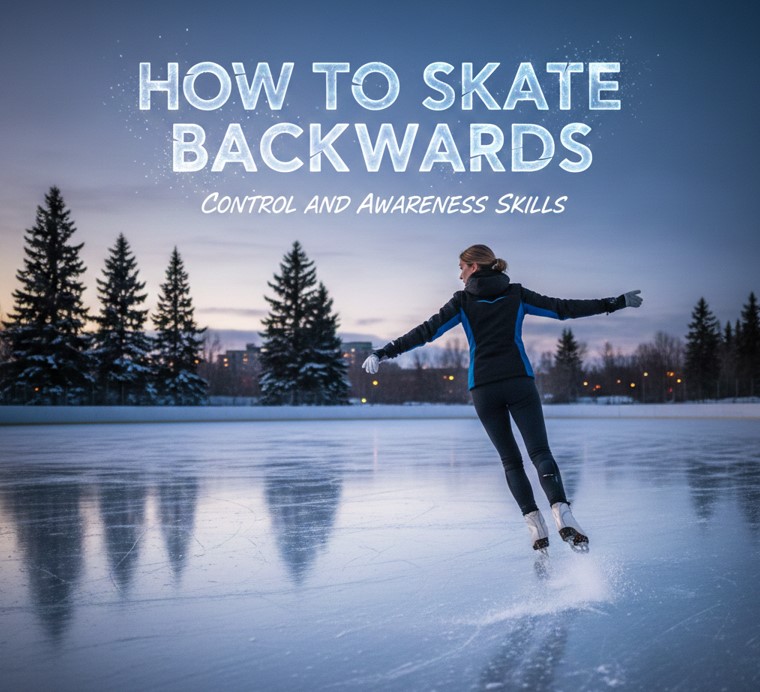
Learning how to skate backwards improves balance, agility, and spatial awareness. It’s essential for hockey players and figure skaters.
• Backward stance fundamentals
Backward skating requires deeper knee bend and upright chest position. Weight must stay centered to avoid backward falls.
• C-cut technique
Backward movement is created using semi-circular “C” motions with the skates. This develops control and consistent backward glide.
• Looking over shoulders safely
Skaters must learn to glance over shoulders without twisting the torso excessively. This maintains balance while checking surroundings.
• Stopping while moving backward
Backward stopping requires controlled edge pressure and gradual deceleration rather than sudden turns.
• Transition drills
Practicing forward-to-backward transitions builds coordination and confidence during real-world skating situations.
• Mental mapping of space
Backward skating trains the brain to understand movement without visual cues, enhancing overall skating intelligence.
Also Read:- How to Clean Baby Ears: A Complete, Safe, and Parent-Approved Guide
How to Skate Faster (Speed and Efficiency Techniques)
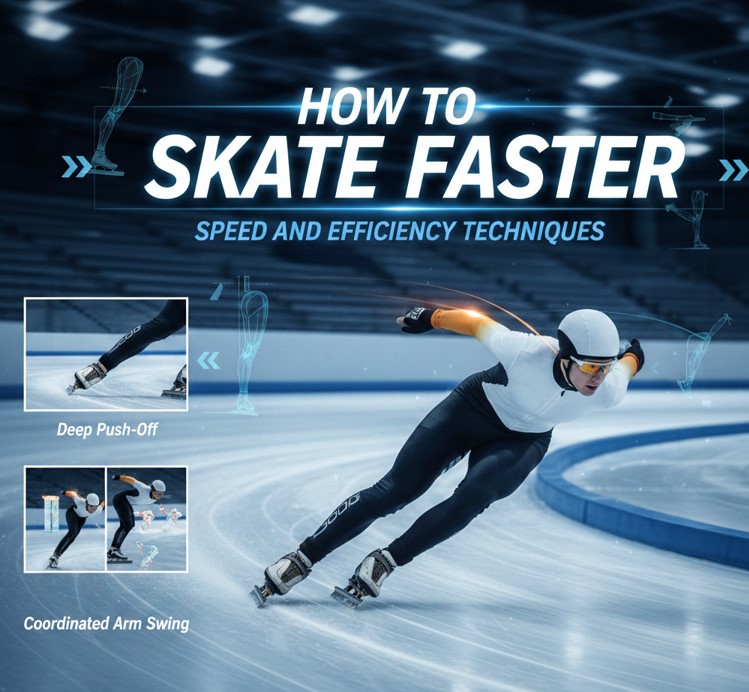
Skating faster isn’t about pushing harder—it’s about skating smarter.
• Stride length optimization
Longer, controlled strides generate more speed with less energy than short, rapid steps.
• Lower body power engagement
Speed comes from glutes and thighs, not calves. Proper knee bend activates larger muscle groups.
• Aerodynamic posture
Leaning slightly forward reduces air resistance, especially in speed skating and hockey.
• Recovery phase efficiency
Bringing the skate back under the body smoothly prevents wasted motion and energy loss.
• Consistent rhythm training
Speed improves when strides follow a consistent rhythm rather than irregular bursts.
• Interval speed drills
Short bursts of fast skating followed by recovery periods build speed endurance safely.
Also Read:- How Long Do Duck Eggs Take to Hatch? A Complete, Science-Based Guide
How to Skate Faster in Hockey (Game-Specific Performance)
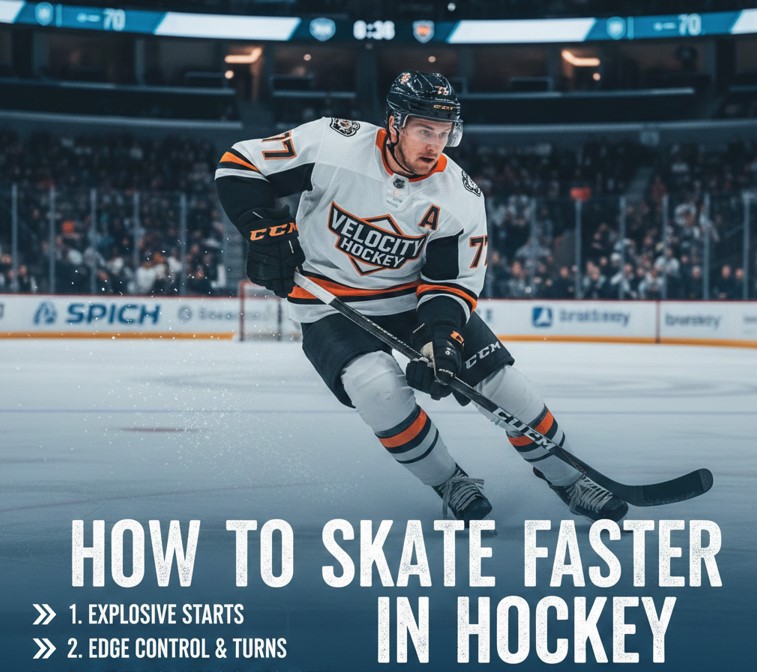
Hockey skating emphasizes explosive speed, quick stops, and directional changes.
• Explosive starts
Hockey players must master powerful first three strides using deep knee drive and lateral push.
• Quick edge transitions
Rapid switching between inside and outside edges allows faster turns and evasive maneuvers.
• Stop-start acceleration
Frequent stopping and starting builds game-ready leg strength and responsiveness.
• Backward-forward transitions
Defense players especially rely on seamless transitions to maintain positioning.
• Stick-skating coordination
Speed must be maintained while handling the puck, requiring advanced coordination.
• Off-ice strength training
Plyometrics and squats significantly improve on-ice skating speed.
Also Read:- How to Run Faster: A Complete Guide for All Runners
How to Skate Roller (Roller Skating Fundamentals)
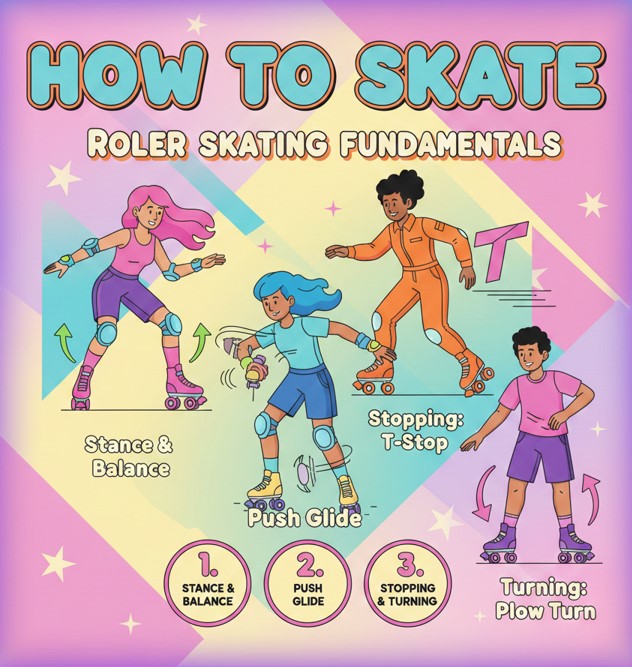
Roller skating involves wheels instead of blades, requiring different balance mechanics.
• Weight distribution over wheels
Balance must remain centered to prevent wheels from rolling out unexpectedly.
• Surface awareness
Roller skating surfaces vary greatly. Smooth indoor rinks differ from outdoor asphalt or concrete.
• Toe stop usage
Toe stops are essential for controlled stopping and balance correction.
• Turning techniques
Roller turns rely more on hip rotation and wheel angling than edge control.
• Maintaining wheel alignment
Proper wheel maintenance improves speed and reduces wobble.
• Outdoor safety awareness
Cracks, debris, and slopes require constant attention and controlled speed.
Also Read:- How to Reset AirPods Pro: The Complete Expert Guide
How to Skateboard (Board Control and Balance)
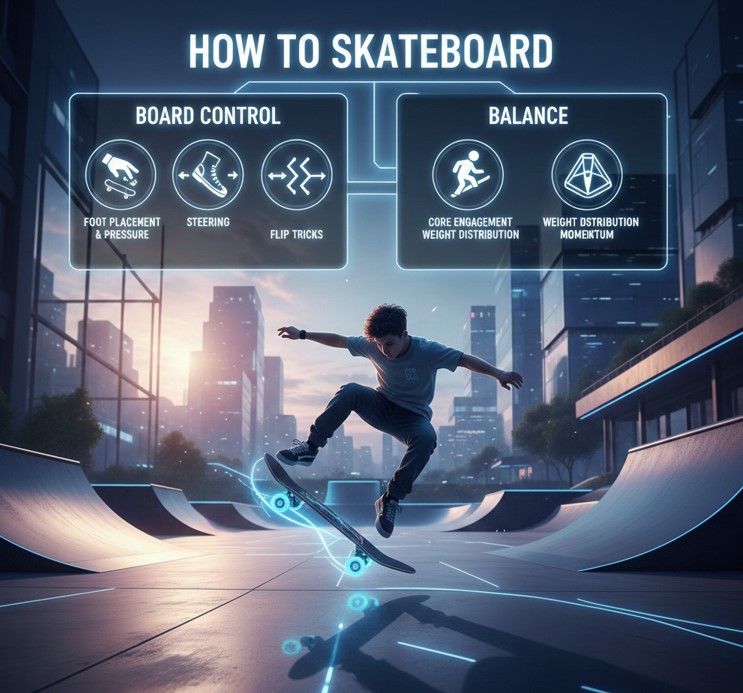
Skateboarding blends skating with board control and creativity.
• Foot placement fundamentals
Front foot controls direction; back foot generates propulsion. Correct placement prevents instability.
• Pushing technique
Efficient pushing involves smooth, low movements without excessive upper-body motion.
• Balance while rolling
Keeping knees bent and eyes forward stabilizes the board during motion.
• Turning with body weight
Skateboard turns are guided by leaning and shoulder alignment.
• Stopping safely
Foot braking and tail braking prevent uncontrolled dismounts.
• Progressive skill building
Mastering basics before tricks reduces injury and builds long-term confidence.
Also Read:- How to Remove Gel X Nails: A Complete Expert Guide
How to Skate Better (Skill Progression and Mastery)
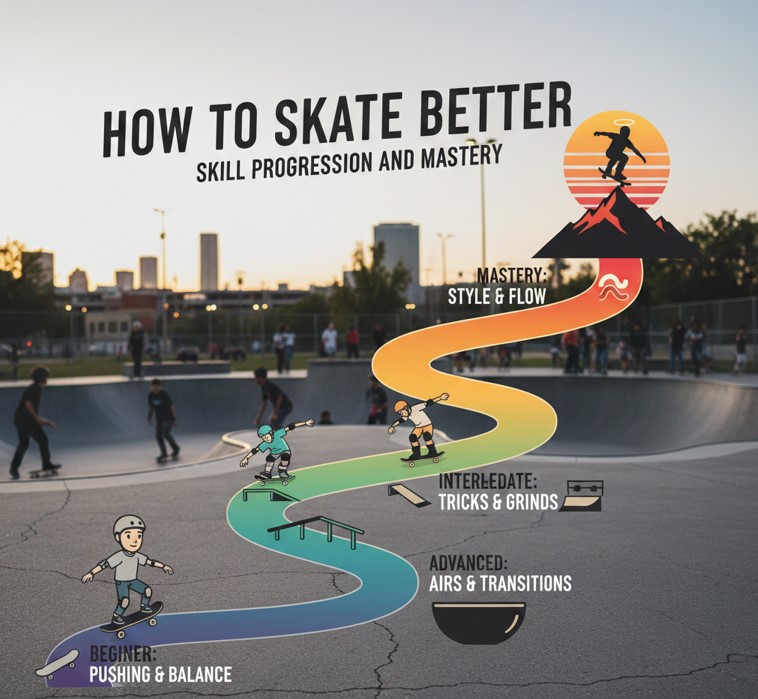
Improving skating requires structured practice and feedback.
• Consistent practice routines
Short, frequent sessions lead to better motor learning than occasional long sessions.
• Video analysis
Recording skating sessions helps identify posture and stride inefficiencies.
• Professional coaching
Certified instructors accelerate improvement and prevent bad habits.
• Cross-training benefits
Yoga, strength training, and balance exercises support skating performance.
• Goal-oriented training
Setting specific, measurable goals improves motivation and focus.
• Mindset and patience
Skill mastery takes time. Progress is non-linear but always cumulative.
Also Read:- How to Replace a Kitchen Faucet: A Complete Step-by-Step DIY Guide
Conclusion
Learning how to skate is a journey that rewards patience, practice, and curiosity. Whether you’re skating on ice, wheels, or a board, the fundamentals remain the same: balance, control, and confidence. With the right technique and mindset, anyone can skate safely, efficiently, and joyfully.
FAQs
How long does it take to learn how to skate?
Most beginners can skate confidently within 5–10 sessions with consistent practice.
Is skating harder than walking?
Initially yes, but once balance is learned, skating becomes fluid and intuitive.
Can adults learn how to skate easily?
Absolutely. Adults often learn faster due to better body awareness.
What is the safest skating style for beginners?
Roller skating indoors or ice skating with protective gear is ideal.
How often should I practice skating?
2–3 times per week is optimal for steady improvement.
For More Updates Visit: Biomagazine
