

Orchids are often seen as delicate or difficult plants, but with the right knowledge, learning how to take care of orchids can be surprisingly simple and rewarding. These elegant flowering plants thrive indoors when their natural growing conditions are understood and respected. From light and watering to potting and post-bloom care, orchids respond best to consistent, informed attention rather than excessive care.
This comprehensive guide explains how to take care of orchids indoors, at home, in pots, and after they bloom, making it suitable for beginners and experienced plant lovers alike. Backed by horticultural best practices and real-world experience, this article provides actionable, step-by-step insights that help orchids flourish year after year.
How to Take Care of Orchids Indoors
Caring for orchids indoors requires replicating their natural tropical environment while adapting to indoor conditions. Most orchids, especially Phalaenopsis, are epiphytes, meaning they grow on trees rather than in soil. Understanding airflow, light exposure, and humidity is essential for successful indoor orchid care.
Key Indoor Orchid Care Principles
• Light Placement and Exposure
Orchids need bright, indirect sunlight to photosynthesize effectively. Direct sunlight can scorch their leaves, while low light can prevent blooming. East-facing windows are ideal because they provide gentle morning light that supports healthy growth without heat stress.
• Temperature Consistency
Indoor orchids prefer temperatures between 65–80°F (18–27°C). Sudden temperature changes from air conditioners or heaters can shock the plant. Stable temperatures help orchids maintain healthy roots and support flower spike development.
• Humidity Control
Orchids thrive in humidity levels of 40–70%. Indoor air is often too dry, especially in winter. Using humidity trays, misting occasionally, or placing orchids near other plants helps maintain the moisture balance orchids need for healthy leaves and roots.
• Air Circulation Importance
Proper airflow prevents fungal diseases and root rot. Orchids should never be placed in stagnant air. Gentle circulation from a fan or natural airflow supports respiration and keeps the growing medium healthy.
• Indoor Watering Practices
Water orchids only when the potting medium is nearly dry. Overwatering is the most common mistake. Clear pots allow you to see healthy green roots and determine when watering is necessary.
• Monitoring Plant Health
Yellow leaves, wrinkled roots, or stalled growth are signs of stress. Regular observation helps detect issues early and allows quick corrective action before long-term damage occurs.
Also Read:- How to Style Curtain Bangs: The Ultimate Expert Guide for Every Hair Type
How to Take Care of Orchids at Home

Home orchid care focuses on balancing attention and restraint. Orchids thrive when their basic needs are met without excessive interference. A stable home environment allows orchids to grow naturally and bloom consistently.
Essential Home Orchid Care Practices
• Choosing the Right Orchid Variety
Begin with resilient varieties like Phalaenopsis or Dendrobium, which adapt well to home conditions. These orchids tolerate common household light and temperature levels better than more sensitive species.
• Watering Routine at Home
Watering once every 7–10 days is usually sufficient. Use room-temperature, filtered water when possible. Allow excess water to drain completely to prevent root suffocation and bacterial growth.
• Fertilizing for Healthy Growth
Apply a balanced orchid fertilizer (20-20-20) at quarter strength every two weeks during active growth. Over-fertilizing can burn roots and reduce flowering potential.
• Placement Within the Home
Avoid placing orchids near heating vents, kitchens, or drafty doors. Bathrooms with natural light are excellent locations due to higher humidity levels.
• Leaf and Root Maintenance
Wipe leaves gently with a damp cloth to remove dust and improve photosynthesis. Inspect roots regularly to ensure they remain firm and green rather than mushy or brown.
• Seasonal Adjustments
Reduce watering during cooler months when growth slows. Orchids naturally enter a resting phase, and respecting this cycle promotes stronger blooms in the next flowering season.
Also Read:- How to Replace a Light Switch: A Complete Step-by-Step Guide for Safe and Modern Home Wiring
How to Take Care of Orchids Indoors for Beginners
For beginners, orchid care should focus on simplicity and consistency. Orchids do not require daily attention, but they do need understanding. Learning how orchids grow naturally removes fear and confusion.
Beginner-Friendly Orchid Care Tips
• Understanding Orchid Roots
Orchid roots need air as much as water. Healthy roots appear green or silver and feel firm. Avoid burying roots deeply, as this can suffocate them and stop nutrient absorption.
• Simplified Watering Method
Water orchids by soaking the pot for 10–15 minutes, then allowing it to drain completely. This mimics tropical rainfall and ensures even hydration without waterlogging.
• Light Indicators for Beginners
Leaf color indicates light quality. Dark green leaves mean insufficient light, while yellowish leaves signal too much sun. Aim for light green foliage for optimal growth.
• Using Transparent Pots
Clear pots allow beginners to observe root health and moisture levels easily. This visibility helps prevent overwatering, the most common beginner mistake.
• Patience with Bloom Cycles
Orchids bloom once or twice a year. Lack of flowers does not mean failure. Healthy leaves and roots indicate the plant is storing energy for future blooms.
• Avoiding Common Beginner Errors
Do not use regular potting soil, ice cubes for watering, or frequent repotting. These practices disrupt orchid health and delay blooming.
Also Read:- How to Make a Shirley Temple: The Complete Classic Drink Guide
How to Take Care of Orchids in a Pot
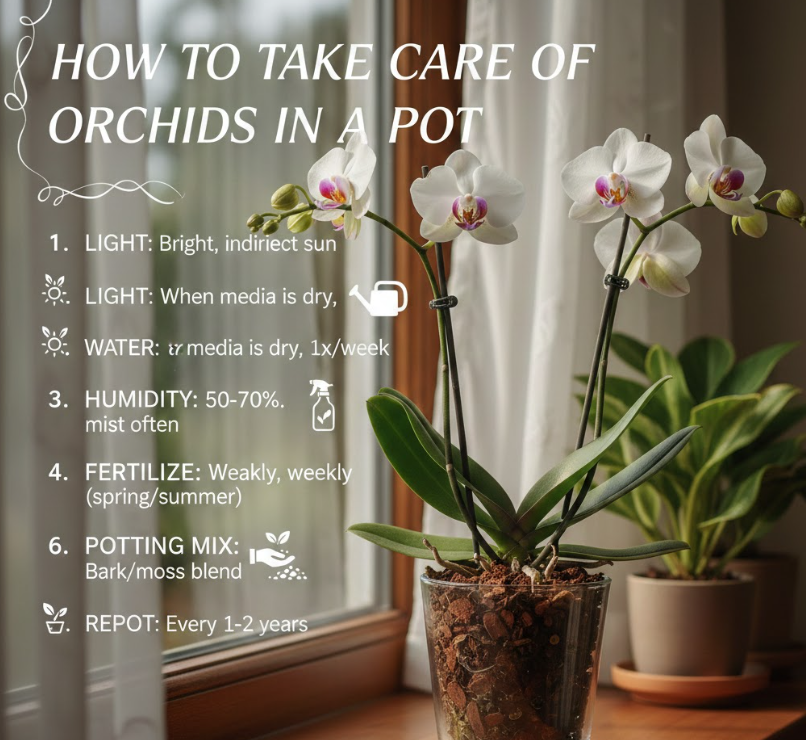
Pot care is critical because orchids rely heavily on their containers for airflow and drainage. Unlike traditional houseplants, orchids need specialized potting systems to support their roots.
Proper Orchid Pot Care Guidelines
• Selecting the Correct Pot
Choose pots with multiple drainage holes. Slotted or transparent pots promote airflow and prevent water accumulation, which reduces the risk of root rot.
• Using Appropriate Potting Medium
Orchid bark, sphagnum moss, or coconut husk chips provide structure and airflow. Regular soil retains too much moisture and should never be used.
• Repotting Frequency
Repot orchids every 1–2 years or when the potting medium breaks down. Fresh medium improves aeration and nutrient absorption.
• Correct Pot Size
Orchids prefer snug pots. Oversized containers hold excess moisture, leading to root decay and slow growth.
• Stabilizing the Plant
Secure orchids gently in the pot to prevent movement. Unstable plants struggle to establish healthy root systems.
• Monitoring Drainage Efficiency
After watering, water should drain within seconds. Standing water indicates drainage problems and must be corrected immediately.
Also Read:- How to Grow Sweet Potatoes: A Complete Home Gardener’s Guide
How to Take Care of Orchids After They Bloom
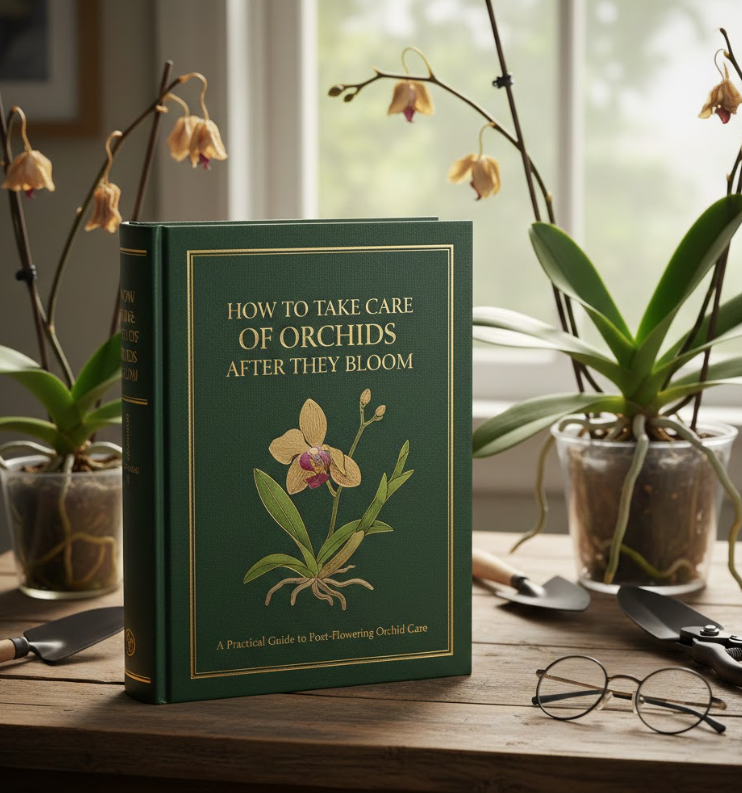
Post-bloom care determines whether orchids rebloom successfully. Many people discard orchids after flowering, unaware that proper care can produce new blooms for years.
Post-Bloom Orchid Care Steps
• Pruning Flower Spikes
Once flowers fade, cut the spike above a node for possible rebloom or at the base to encourage new spike growth. Use sterilized tools to prevent disease.
• Encouraging Rest Periods
Orchids need recovery time after blooming. Maintain normal care while allowing the plant to redirect energy into leaf and root development.
• Adjusting Light and Temperature
Slight nighttime temperature drops (5–10°F) encourage new flower spikes. This mimics natural seasonal changes orchids experience in the wild.
• Continued Fertilization
Feed orchids lightly during post-bloom growth to support strong leaves and roots. Healthy foliage directly affects future bloom quality.
• Monitoring New Growth
New leaves or roots signal successful recovery. Avoid disturbing the plant during this critical growth phase.
• Preparing for the Next Bloom Cycle
Consistent care over several months results in stronger spikes and longer-lasting blooms during the next flowering season.
Also Read:- How to Freeze Green Beans: Complete Step-by-Step Guide for Long-Term Freshness
Conclusion
Learning how to take care of orchids is not about perfection but understanding. Orchids reward consistent, mindful care with breathtaking blooms and long life. Whether grown indoors, at home, in pots, or after flowering, orchids thrive when their natural needs are respected. With the guidance in this article, even beginners can enjoy healthy orchids year after year.
FAQs
Q: How often should I water orchids indoors?
Most orchids need watering every 7–10 days, depending on humidity and temperature.
Q: Why are my orchid leaves turning yellow?
Yellow leaves often indicate too much sunlight or overwatering.
Q: Can orchids bloom more than once?
Yes, with proper post-bloom care, orchids can rebloom annually or even twice a year.
For More Updates Visit: Biomagazine
