

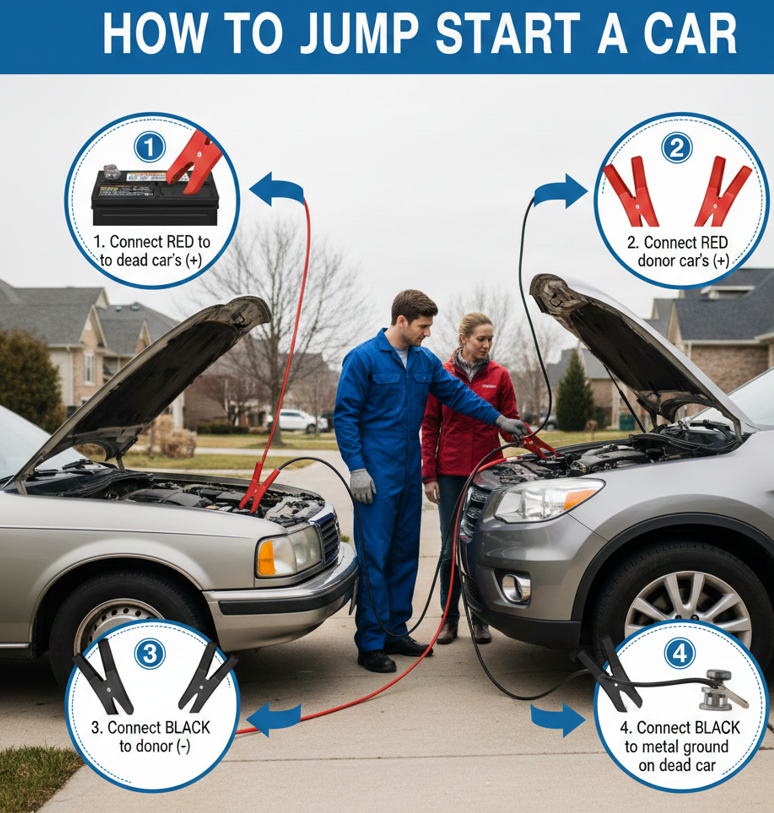
A dead car battery is one of the most common roadside problems drivers face, often striking at the worst possible moment—before work, during travel, or in extreme weather. Knowing how to jump start a car is an essential life skill that can save you time, money, and unnecessary stress. Whether you’re using jumper cables, a battery pack, another vehicle, or even trying to jump start a car by yourself, this comprehensive guide walks you through every safe and effective method.
This in-depth resource explains how to jump start a car step by step, covers modern tools like jump boxes and battery chargers, and answers common questions drivers search for online. By the end, you’ll confidently know how to handle a dead battery in almost any scenario.
Why Car Batteries Die (And Why Jump Starting Works)
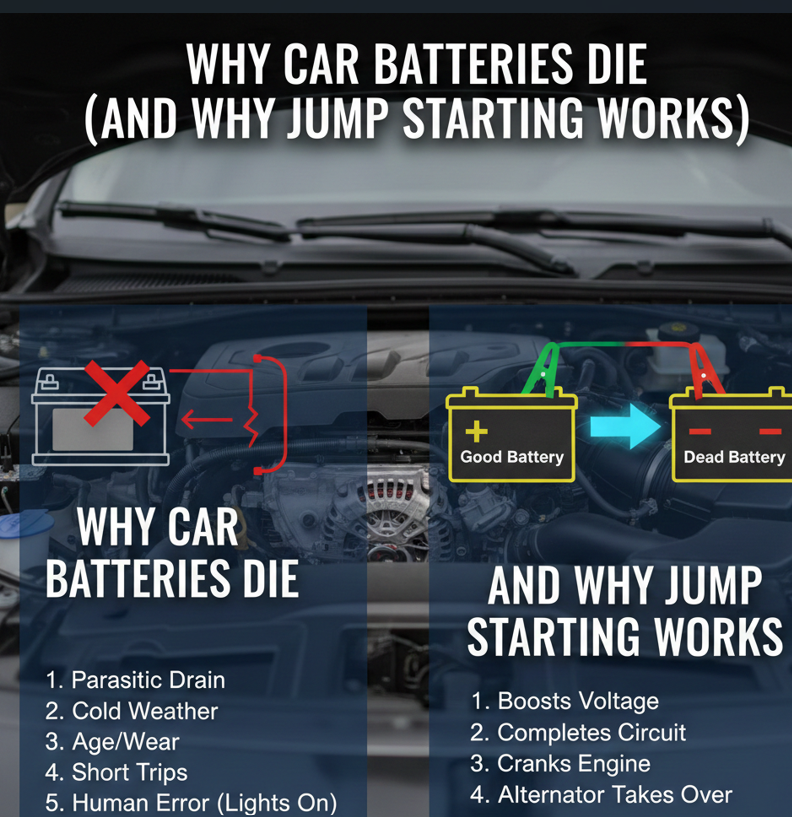
Before learning how to jump start a car battery, it helps to understand why batteries fail in the first place.
Common Reasons a Car Battery Dies
- Natural Battery Aging
Car batteries have a limited lifespan, usually 3–5 years. Over time, internal components wear out, reducing the battery’s ability to hold a charge.
Leaving Lights or Electronics On
Headlights, interior lights, or accessories left on after turning off the engine slowly drain the battery, often leaving it too weak to start the car.
Extreme Weather Conditions
Very cold weather thickens engine oil and slows battery chemistry, while extreme heat accelerates internal damage—both can shorten battery life.
Frequent Short Trips
Short drives don’t give the alternator enough time to fully recharge the battery, causing gradual power loss over time.
Faulty Alternator or Charging System
If the alternator isn’t working properly, the battery won’t recharge while driving, leading to repeated dead battery issues.
Why Jump Starting Works
Provides Instant Electrical Power
Jump starting uses power from another battery or a jump starter to supply the energy needed to start the engine.
Reactivates the Dead Battery Temporarily
The extra voltage boosts the weak battery just enough to crank the engine and get it running.
Alternator Takes Over After Starting
Once the engine starts, the alternator begins charging the battery, restoring some of its lost power.
Quick Emergency Solution
Jump starting doesn’t fix a bad battery permanently, but it’s an effective short-term solution to get you back on the road.
Helps Diagnose Battery Health
If the car repeatedly needs jump starts, it’s a clear sign the battery or charging system needs repair or replacement
Jump starting works by temporarily supplying power from an external source—another car or a portable battery pack—giving your engine enough energy to start and allowing the alternator to recharge the battery.
Also Read: How to Take a Screenshot on a Chromebook: A Complete Guide
Safety First: What to Do Before Jump Starting a Car
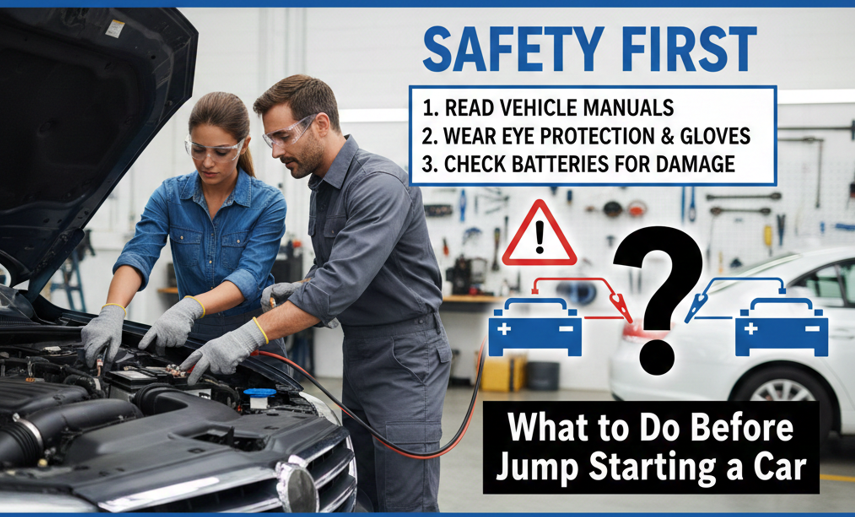
Jump starting a car incorrectly can damage electrical systems or cause personal injury. Always follow these precautions.
Essential Safety Tips
- Park Both Vehicles Safely
Make sure both cars are parked on a flat, stable surface. Turn off the engines, engage the parking brakes, and ensure the vehicles are not touching each other. - Turn Off All Electrical Components
Switch off headlights, air conditioning, radios, and other electronics in both vehicles to prevent electrical damage or power surges. - Check Battery Condition
Inspect the dead battery for cracks, leaks, corrosion, or bulging. If the battery is damaged or leaking, do not attempt a jump start. - Use the Correct Jumper Cables
Ensure the jumper cables are in good condition with no exposed wires. Use heavy-duty cables suitable for your vehicle type. - Wear Safety Gear
Wear gloves and eye protection to protect yourself from sparks, battery acid, or accidental contact with metal parts. - Identify Positive and Negative Terminals
Locate the battery terminals and clearly identify the positive (+) and negative (–) terminals to avoid incorrect connections. - Keep Metal Objects Away
Remove jewelry such as rings, watches, or bracelets. Keep tools and metal objects away from the battery area to prevent short circuits. - Ensure Adequate Ventilation
Batteries can emit flammable gases. Jump start the car in an open, well-ventilated area and avoid smoking or open flames nearby. - Confirm Battery Compatibility
Make sure the assisting vehicle has a battery with the same voltage (usually 12 volts) as the dead battery. - Read the Vehicle Owner’s Manual
Some vehicles have special jump-starting instructions or designated grounding points. Always check the manual before starting.
Expert Tip: If you smell sulfur (rotten eggs) or see battery swelling, do not attempt a jump start—replace the battery instead.
Also Read: How to Check Engine Oil: The Complete Guide for Car Owners
How to Jump Start a Car Step by Step (Standard Method)
This is the most searched and reliable approach when another vehicle is available.
How to Jump Start a Car With Jumper Cables and Another Car
Jump-starting a car is a common and effective way to revive a dead battery. By using jumper cables and a working vehicle, you can safely transfer power to start your car. Follow the steps below carefully to avoid damage or injury
Step 1: Position the Vehicles
- Park the working car close to the dead car, but make sure the vehicles do not touch each other.
- Turn off both engines and engage the parking brakes.
- Open both hoods and locate the batteries.
- Ensure both cars are in Park (automatic) or Neutral (manual).
Step 2: Identify Battery Terminals
- Locate the positive (+) and negative (–) terminals on both batteries.
- The positive terminal is usually marked with a red cap or plus sign.
- The negative terminal is marked with a minus sign or black color.
- If terminals are dirty or corroded, wipe them clean for a better connection.
Step 3: Connect Jumper Cables in the Correct Order
- Attach the red (positive) cable to the positive terminal of the dead battery.
- Connect the other end of the red cable to the positive terminal of the working battery.
- Attach the black (negative) cable to the negative terminal of the working battery.
- Connect the remaining black cable clamp to an unpainted metal surface on the dead car (such as a bolt or engine block), not the battery terminal.
Step 4: Start the Working Car
- Start the engine of the working car.
- Let it run for 2–5 minutes to allow the dead battery to gain some charge.
- Keep the engine running during this time.
Step 5: Start the Dead Car
- Try starting the car with the dead battery.
- If it doesn’t start immediately, wait another minute and try again.
- Once the car starts, let it run to stabilize the engine and battery.
Step 6: Remove Cables in Reverse Order
Keep both cars running for a few minutes before turning either off.
Remove the black cable from the metal surface on the revived car.
Disconnect the black cable from the working battery.
Remove the red cable from the working battery.
Finally, remove the red cable from the revived car’s battery.
Also Read: How to Delete Instagram Account: Complete Step-by-Step Guide
How to Jump Start a Car With Jumper Cables (Quick Summary)
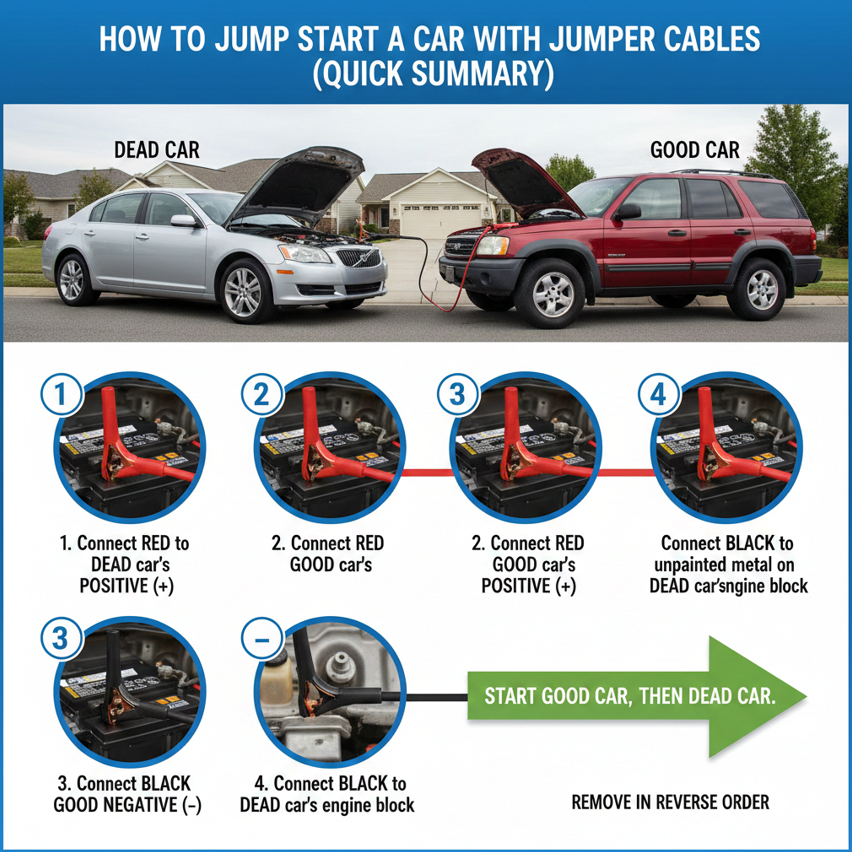
- Park the Cars Safely: Position the working vehicle close to the dead car, but make sure they are not touching. Turn off both engines, engage the parking brakes, and open the hoods.
- Check the Batteries: Ensure both batteries are the same voltage (usually 12V). Look for visible damage, leaks, or corrosion. Do not jump-start if the battery is cracked or leaking.
- Connect the Red (Positive) Cable: Attach one red clamp to the positive (+) terminal of the dead battery, then connect the other red clamp to the positive (+) terminal of the working battery.
- Connect the Black (Negative) Cable: Attach one black clamp to the negative (–) terminal of the working battery. Connect the other black clamp to an unpainted metal surface on the dead car (engine block or frame), not the battery terminal.
- Start the Working Car: Turn on the engine of the working vehicle and let it run for 1–2 minutes to build up charge.
- Start the Dead Car: Try starting the car with the dead battery. If it doesn’t start immediately, wait a minute and try again.
- Remove the Cables Safely: Once the car starts, remove the cables in reverse order—black clamp from the metal surface, black clamp from the working battery, red clamp from the working battery, and finally red clamp from the jumped car.
- Let the Engine Run: Keep the jumped car running for at least 15–30 minutes or drive it to allow the battery to recharge.
- Turn Off the Car Carefully: If the car restarts without issues after running, the jump was successful. If it dies again, the battery or alternator may need replacement.
This method is sometimes referred to as how to jump start a car with a car, how to jump start a car with another car, or how to jump start a car with cables.
Also Read: How to Change a Tire: The Complete Step-by-Step Guide
How to Jump Start a Car Without Another Car
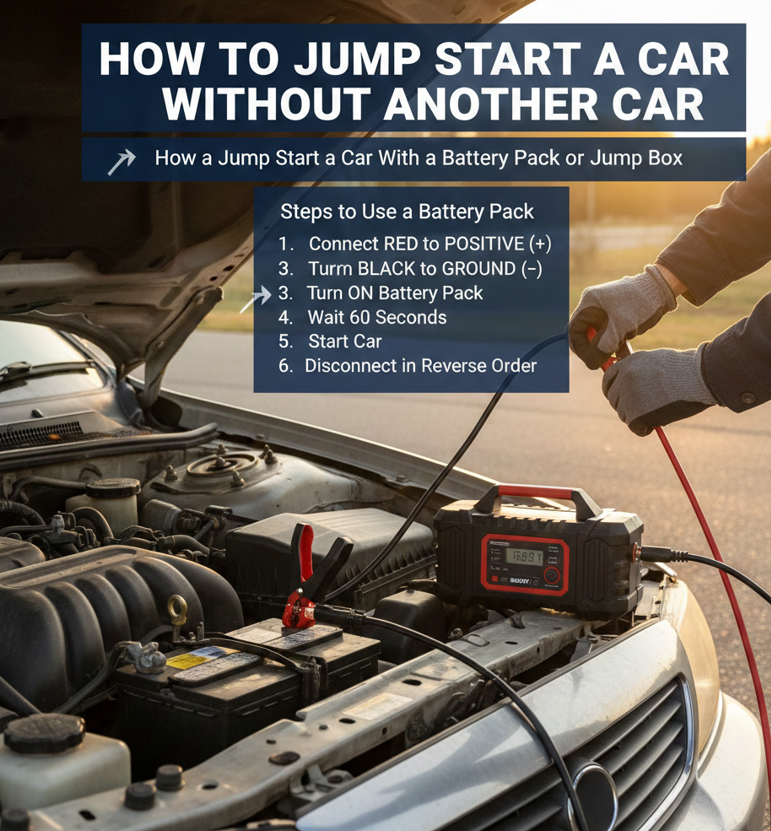
A dead car battery does not always require help from another vehicle.
A portable battery pack, also known as a jump box, is a safe and convenient solution.
These compact devices store enough power to start your car independently.
Battery packs are especially useful in emergencies, remote locations, or parking garages
How to Jump Start a Car With a Battery Pack or Jump Box
A battery pack is a self-contained power source designed to boost a dead car battery.
It eliminates the need for jumper cables connected to another vehicle.
Most modern jump boxes include built-in safety features, such as:
- Reverse polarity protection
- Overcharge protection
- Short-circuit prevention
Jump boxes are compatible with most gasoline cars and many diesel engines, depending on capacity
Steps to Use a Battery Pack
Turn off the car ignition
- Ensure the engine is completely off before connecting the battery pack.
Locate the car battery
- Open the hood and identify the positive (+) and negative (–) terminals.
Connect the red clamp
- Attach the red clamp from the battery pack to the positive (+) battery terminal.
Connect the black clamp
- Attach the black clamp to the negative (–) battery terminal or an unpainted metal surface on the car frame.
Power on the battery pack
- Switch on the jump box if required (some models activate automatically).
Start the vehicle
- Turn the ignition key or press the start button.
- If the engine does not start immediately, wait 30–60 seconds and try again.
Disconnect the battery pack
- Remove the black clamp first, then the red clamp.
- Turn off the battery pack after disconnecting.
Let the engine run
- Keep the car running for at least 15–30 minutes to help recharge the battery
This method is ideal for drivers who want to know how to jump start a car by yourself or how to jump start a car without jumper cables.
Also Read: How to Get Blood Out of Carpet: Expert Methods for Quick & Effective Stain Removal
How to Jump Start a Car With a Battery Pack Safely
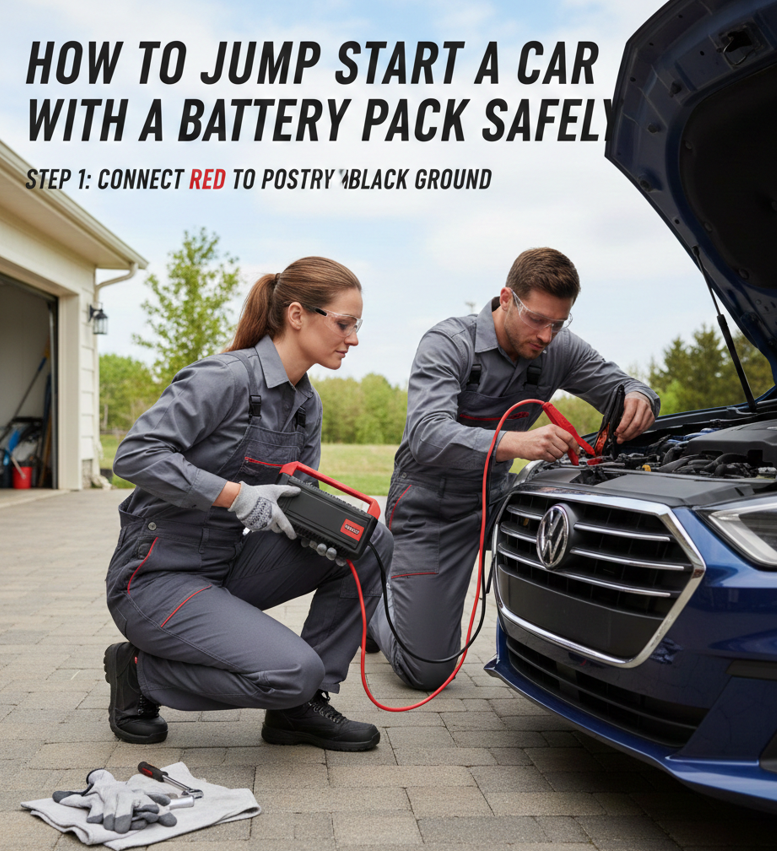
Battery packs are generally safer than jumper cables because:
- Choose the Right Battery Pack
- Park and Prepare the Vehicle
- Park the car on a flat, stable surface and engage the parking brake.
- Turn off the ignition, headlights, air conditioning, radio, and all electrical accessories.
- Open the hood and locate the car battery.
- Identify Battery Terminals
- Find the positive (+) terminal, usually marked in red.
- Locate the negative (–) terminal, often marked in black.
- Clean any visible corrosion for a better connection.
- Connect the Battery Pack Correctly
- Attach the red clamp to the car’s positive (+) battery terminal.
- Connect the black clamp to the negative (–) terminal or a grounded metal surface on the car.
- Make sure clamps are secure and not touching each other.
- Turn On the Battery Pack
- Power on the jump starter according to the manufacturer’s instructions.
- Some models activate automatically once connected properly.
- Start the Vehicle
- Try starting the car within a few seconds.
- If the engine does not start, wait 1–2 minutes before trying again.
- Avoid repeated attempts to prevent overheating.
- Disconnect the Battery Pack Safely
- Once the engine starts, turn off the battery pack.
- Remove the black clamp first, followed by the red clamp.
- Store the battery pack safely away from heat.
- Let the Engine Run
- Keep the car running for at least 15–20 minutes to recharge the battery.
- Drive the vehicle if possible for better charging.
How to Jump Start a Car Without Jumper Cables
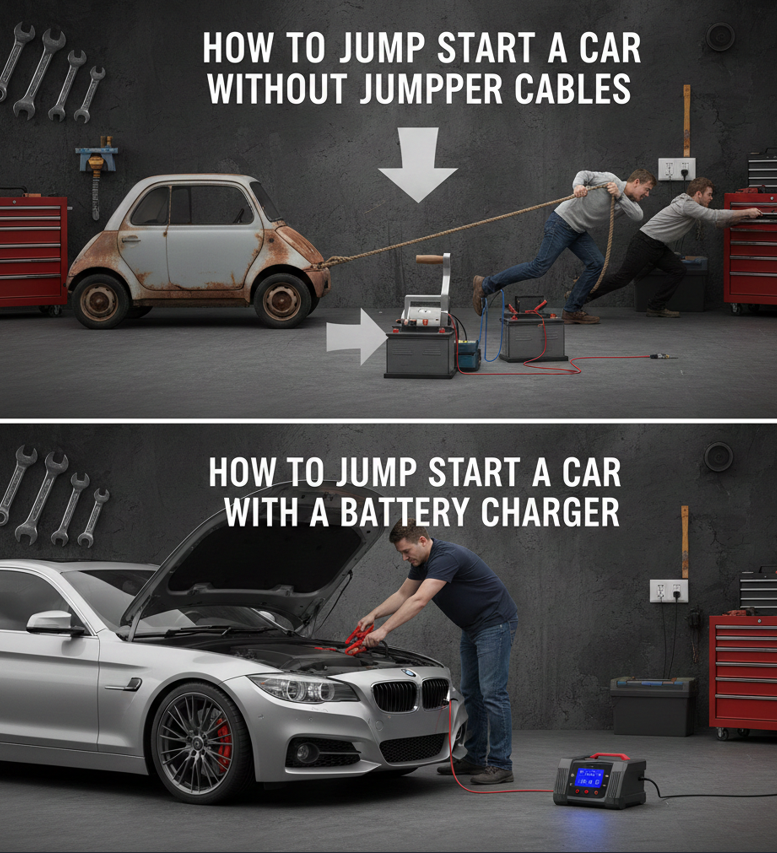
If you don’t have cables or another car, your options include:
Use a Portable Jump Starter
- A portable jump starter (power bank for cars) is the safest and easiest option.
- Connect the red clamp to the positive (+) battery terminal.
- Connect the black clamp to a metal ground or negative (–) terminal.
- Turn on the jump starter and start the car.
Push Start (Manual Transmission Only)
- This method works only for cars with manual transmission.
- Turn the ignition to the “ON” position.
- Press the clutch, shift to second gear, and have helpers push the car.
- Release the clutch once the car gains speed to start the engine.
Use Another Car Battery (No Cables)
- Remove the dead battery and place it next to a charged battery.
- Carefully connect terminals using metal tools (only for emergencies).
- This method is risky and should only be done by experienced individuals.
Use a Battery Charger With Boost Mode
- Some chargers have a “jump start” or “boost” feature.
- Connect the charger directly to the battery and allow it to supply power.
- Start the car once the charger indicates sufficient charge.
Call Roadside Assistance
- If no tools are available, roadside assistance is the safest option.
- Prevents battery damage and electrical system risks
How to Jump Start a Car With a Battery Charger
- Choose the Right Charger
- Use a charger that supports your battery type (12V for most cars).
- Smart chargers with automatic settings are recommended.
- Turn Off the Vehicle
- Ensure the ignition and all electrical accessories are turned off.
- Engage the parking brake for safety.
- Connect the Charger Properly
- Attach the red clamp to the positive (+) battery terminal.
- Attach the black clamp to the negative (–) terminal or metal ground.
- Set Charging Mode
- Select “Boost” or “Engine Start” mode if available.
- For standard chargers, allow the battery to charge for 10–30 minutes.
- Start the Car
- Turn the ignition key once the battery has enough power.
- If the engine doesn’t start, wait a few more minutes and retry.
- Disconnect Safely
- Turn off the charger before removing clamps.
- Remove the black clamp first, then the red clamp.
- Let the Engine Run
- Keep the engine running for at least 20–30 minutes.
- This helps recharge the battery through the alternator.
This is especially useful in garages or workshops.
Also Read: How to Avoid Dry Socket After Wisdom Teeth Removal
How to Jump Start a Car With a Spare Battery
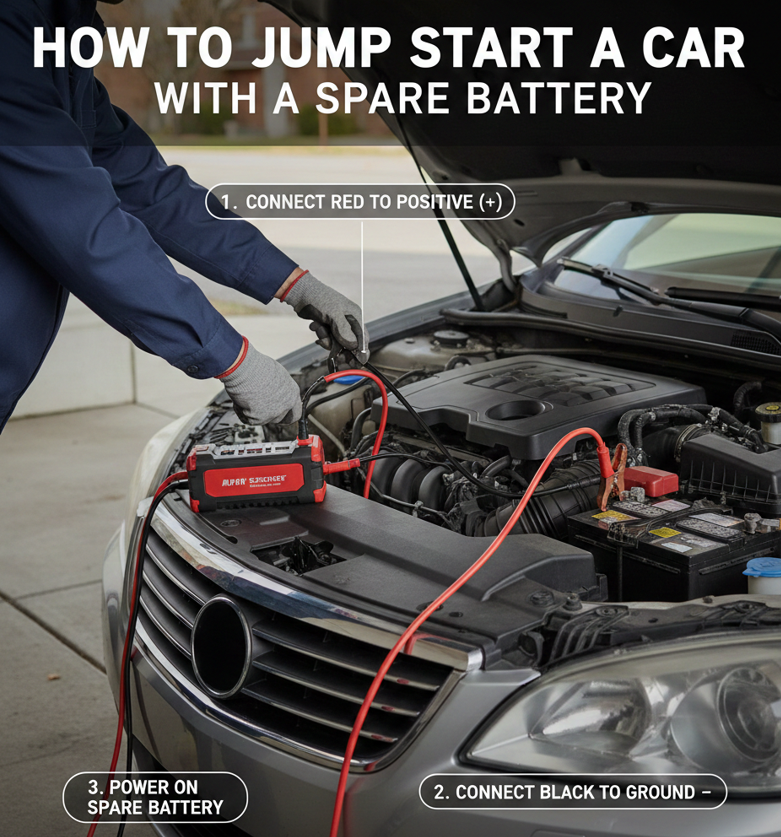
This method requires mechanical knowledge and caution.
Ensure Safety First:
- Wear safety gloves and glasses.
- Keep sparks, flames, and metal objects away from batteries.
- Make sure both vehicles are in park (automatic) or neutral (manual) with engines off and parking brakes engaged.
Check Battery Compatibility:
- Verify the spare battery has the same voltage (usually 12V for most cars).
- Ensure it’s fully charged and in good condition (no cracks, leaks, or corrosion).
Position the Vehicles or Battery:
- If using another car’s battery, park vehicles close enough so jumper cables can reach both batteries without touching.
- If using a standalone spare battery, place it on a stable surface near the dead car.
Connect Jumper Cables Properly:
- Red Cable (+): Connect to the positive terminal of the dead car battery, then to the positive terminal of the spare battery.
- Black Cable (-): Connect to the negative terminal of the spare battery, then to an unpainted metal part of the dead car’s engine block (ground), not the dead battery’s negative terminal.
Start the Car:
- Start the car with the spare battery first (if it’s in another car, keep the engine running).
- Then attempt to start the car with the dead battery.
- If it doesn’t start after a few tries, wait a few minutes and try again.
Disconnect Cables Safely:
- Remove cables in reverse order: black cable from the grounded metal, black from spare battery, red from spare battery, red from dead battery.
- Avoid touching cable clamps together or to metal surfaces.
Charge the Dead Battery:
- Once the car starts, keep the engine running for at least 20–30 minutes to recharge the battery, or drive around.
- Consider using a battery charger if the battery is old or weak.
Check for Underlying Issues:
- If the car frequently dies or won’t hold a charge, the battery may need replacement.
- Check the alternator and electrical system if problems persist
This approach is less common but still effective in emergencies.
How to Jump Start a Car Without Jump Leads (Emergency Situations)
Without cables, a jump box, or charger, options are limited. Pushing or rolling a car may work for manual transmission vehicles only, but it does not work on automatics and is not recommended in traffic or unsafe conditions.
Push Start (Manual Cars Only)
- Turn the ignition on, press the clutch, shift into 2nd gear.
- Push the car to a jogging speed and release the clutch while giving gas.
- Engine should start; keep it running to recharge the battery.
2. Use a Portable Battery Pack / Jump Starter
- Connect positive (+) to battery positive and negative (-) to a metal ground.
- Turn on the jump starter and start the car.
- Disconnect safely after the engine runs.
3. Ensure Safety First
- Turn off all electrical components before starting.
- Avoid sparks, flames, or smoking near the battery.
- Only attempt methods suited to your car type (manual vs. automatic).
Special Situations and Modern Vehicles
- Understanding Modern Vehicle Electronics
- Modern cars often have complex electronics, including computers, sensors, and infotainment systems.
- Incorrect jump-starting can damage sensitive components like the ECU (Engine Control Unit).
- Importance of Owner’s Manual
- Always consult the vehicle’s manual for manufacturer-specific jump-start instructions.
- Some vehicles have designated jump-start points to protect electronics.
- Hybrid and Electric Vehicles
- Traditional jump-start methods may not apply to hybrid or electric cars.
- Using jumper cables incorrectly can be dangerous or cause permanent damage.
- Only attempt jump-start if the manual explicitly allows it; otherwise, call professional assistance.
- Vehicles with Start-Stop Technology
- Start-stop systems rely on advanced batteries; a simple jump may not be sufficient.
- Specialized procedures or equipment may be required to avoid battery or system damage.
- Precautions with Aftermarket Devices
- Devices like Intoxalock (an ignition interlock system) can affect jump-starting.
- Intoxalock connects to the car’s ignition system to prevent the vehicle from starting if alcohol is detected.
- Jump-starting a vehicle with Intoxalock requires following special precautions to avoid system errors.
How to Jump Start a Car With Intoxalock
Gather Necessary Equipment
- Jumper cables, a healthy donor vehicle (or portable jump starter).
- Ensure both vehicles are turned off before connecting cables.
Locate the Correct Terminals
- Use the designated battery terminals. Some cars have hidden terminals under the hood specifically for jump-starting.
- Avoid directly connecting to sensitive electronics near the Intoxalock device.
Connect Jumper Cables Properly
- Positive (red) cable: connect to the positive terminal on both batteries.
- Negative (black) cable: connect to the negative terminal on the donor battery and a metal ground point on the disabled car, not directly to the negative terminal if recommended by the manual.
Start the Donor Vehicle First
- Allow it to run for a few minutes to charge the dead battery.
Start the Intoxalock Vehicle
- Turn the ignition and allow the Intoxalock device to perform its normal alcohol test.
- Avoid bypassing or tampering with the Intoxalock, as it may damage the system or void warranties.
How to Jump Start a Car Diagram (Explained)
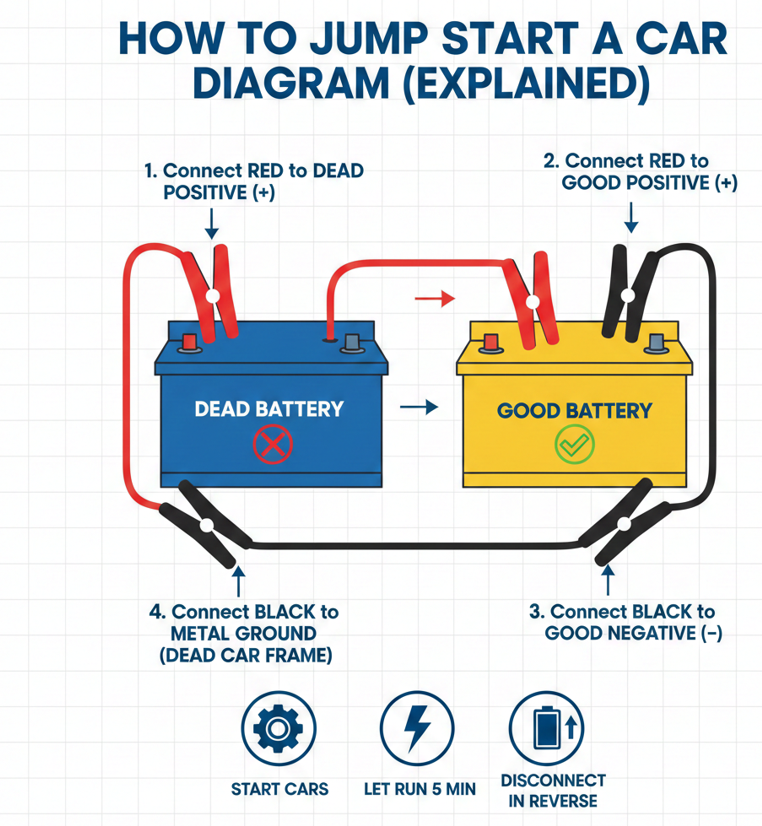
A typical how to jump start a car diagram shows:
- Tools and Setup
- Use jumper cables and a working car or jump starter.
- Park cars close but not touching, engines off, parking brakes on.
- Identify Battery Terminals
- Red = positive (+), Black = negative (–).
- Clean terminals for a good connection.
- Connect Jumper Cables (Correct Sequence)
- Red clamp to dead battery (+) → red clamp to live battery (+)
- Black clamp to live battery (–) → black clamp to metal part of dead car (ground)
- Start the Cars
- Start working car, wait a few minutes, then start car with dead battery.
- Remove Cables Safely
- Remove in reverse order (black from dead car → black from live car → red from live → red from dead).
- Avoid clamps touching and follow diagram for safety.
Including a diagram in your own website content can significantly improve user understanding and time on page.
Common Mistakes to Avoid When Jump Starting a Car
- Reversing cable polarity
- Connecting negative clamp directly to the dead battery
- Allowing clamps to touch
- Revving the engine excessively
- Removing cables too quickly
Avoiding these errors protects sensitive electronics.
How Long Should You Drive After Jump Starting a Car?
Experts recommend:
- 15–30 minutes of continuous driving
- Highway speeds preferred
- Avoid turning the engine off immediately
If the car won’t restart later, the battery may need replacement.
When Jump Starting Won’t Work
Jump starting won’t fix:
- Completely failed batteries
- Bad alternators
- Starter motor issues
- Severe electrical problems
In these cases, professional inspection is necessary.
Conclusion: Mastering How to Jump Start a Car
Knowing how to jump start a car is an essential skill every driver should have. From using jumper cables with another car to modern battery packs that allow you to jump start a car by yourself, today’s solutions are safer and easier than ever. By following proper steps, prioritizing safety, and understanding when a jump start is only a temporary fix, you can avoid being stranded and extend the life of your vehicle.
Whether you’re dealing with a dead battery at home, at work, or on the road, this guide equips you with the confidence and knowledge to handle the situation responsibly.
Frequently Asked Questions (FAQs)
Can I jump start a car in the rain?
Yes, as long as cables and connections remain dry and intact.
How many times can a car battery be jump started?
Occasionally is fine, but frequent jump starts indicate battery failure.
Can you jump start a hybrid or electric car?
Hybrids often can; fully electric vehicles generally cannot. Always check the manual.
Is it safe to jump start a car alone?
Yes, using a battery pack or jump box is one of the safest solo methods.
For More Updates Visit: Biomagazine
