

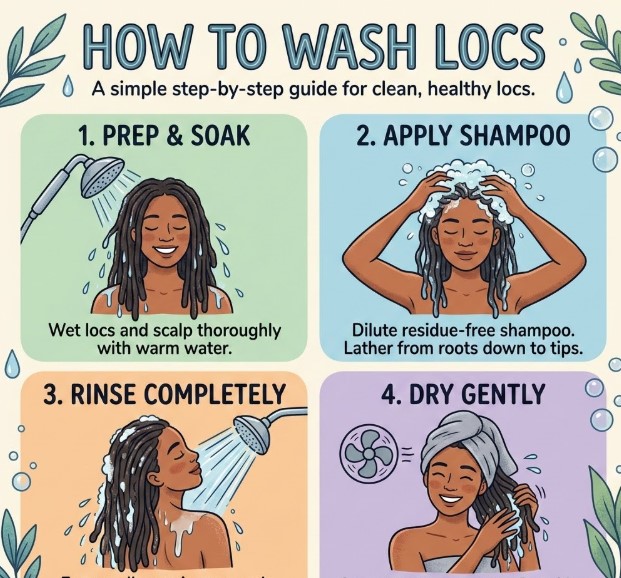
Learning how to wash locs correctly is one of the most important parts of maintaining healthy, strong, and long-lasting dreadlocks. Whether you are just starting your loc journey or have mature locs, proper cleansing supports scalp health, prevents buildup, and keeps your hair fresh without causing unraveling.
There is a common myth that locs should not be washed often. In reality, clean locs grow better and remain stronger. According to guidance from the American Academy of Dermatology, maintaining a clean scalp is essential for preventing fungal infections, product buildup, and inflammation—especially for protective styles like locs.
This in-depth guide explains how to wash locs properly, how to wash locs without unraveling, how to wash locs at home, how to wash locs for the first time, and how to wash locs with apple cider vinegar. Each section provides practical steps, expert-backed advice, and detailed explanations to help you care for your locs with confidence.
Understanding Locs and Their Cleansing Needs
Definition and Structural Overview of Locs
Locs are formed when strands of hair intentionally mat and intertwine to create rope-like structures. Unlike loose hair, locs hold onto moisture, oils, and residue within their internal structure. Because of this density, knowing how to wash locs properly requires understanding that cleansing must address both the scalp and the inner core of each loc.
Locs can be starter locs, traditional dreadlocks, interlocked locs, or freeform locs. Each stage of maturity affects washing techniques. Starter locs are delicate and prone to unraveling, while mature locs are more compact but susceptible to buildup accumulation.
Key Principles of Loc Cleansing
• The scalp requires regular cleansing to maintain healthy follicles.
Even though locs are protective, your scalp continues producing sebum and shedding skin cells. Without proper washing, buildup can clog follicles and hinder healthy growth.
• Locs absorb and retain product residue easily.
Heavy oils, creams, and conditioners can become trapped within loc strands, leading to unpleasant odors and dull appearance over time.
• Proper drying is as important as washing.
Because locs are dense, trapped moisture can encourage mildew-like smells if not dried thoroughly.
• Washing frequency depends on lifestyle.
Active individuals, athletes, and those living in humid climates may need to wash more frequently than others.
• Gentle techniques prevent unraveling.
Aggressive scrubbing or twisting during washing can loosen starter locs.
• Clean locs promote healthier growth cycles.
A balanced scalp environment supports optimal hair retention and strength.
Also Read:- How to Wash Running Shoes: The Complete Expert Guide for Safe, Effective Cleaning
How to Wash Locs Properly
Definition of Proper Loc Washing Technique
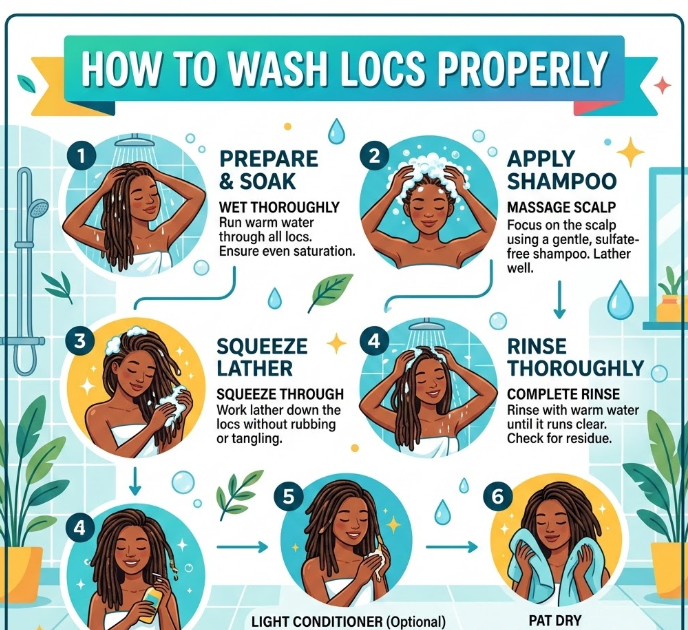
When discussing how to wash locs properly, it means cleansing the scalp and loc strands without disturbing the locking pattern, minimizing frizz, and avoiding residue buildup.
Proper technique involves sectioning, controlled shampoo application, and gentle compression rather than rubbing.
Essential Steps for Correct Washing
• Start with a residue-free shampoo.
Clarifying or sulfate-free shampoos remove buildup effectively without leaving film behind. Avoid creamy conditioners during early loc stages.
• Dilute shampoo before application.
Mixing shampoo with water in an applicator bottle ensures even distribution and prevents heavy product concentration in one area.
• Focus on scalp massage, not loc friction.
Use fingertips—not nails—to massage the scalp gently. Avoid vigorous rubbing along the length of locs.
• Rinse thoroughly with lukewarm water.
Incomplete rinsing leads to trapped soap inside loc cores, which causes buildup and itching later.
• Gently squeeze locs instead of wringing.
Pressing water out maintains structural integrity and reduces frizz.
• Air dry completely or use hooded dryer.
Never tie locs while damp. Moisture retention encourages odor and scalp issues.
Also Read:- How to Water Mums: The Complete Expert Guide for Healthy, Long-Lasting Blooms
How to Wash Locs Without Unraveling
Definition and Prevention Strategy
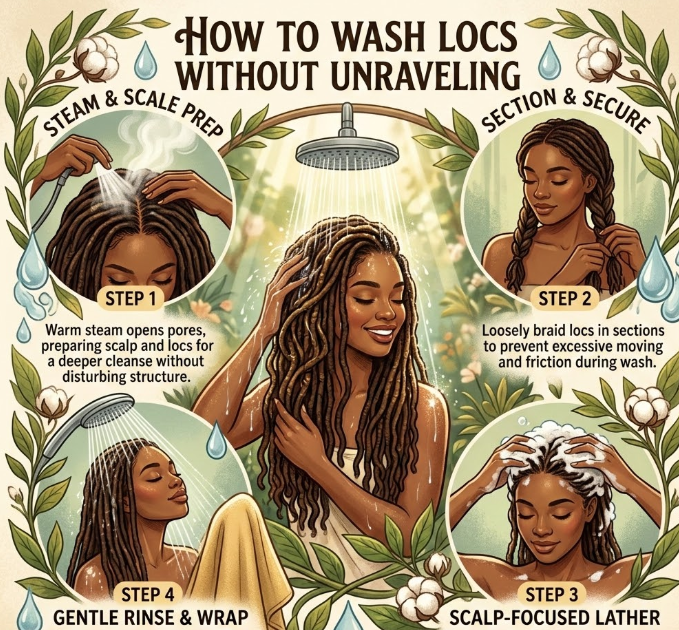
One of the biggest concerns for beginners is how to wash locs without unraveling, especially during the starter phase. Unraveling occurs when immature locs loosen due to excessive manipulation or water pressure.
Maintaining structure during washing requires protective techniques and patience.
Techniques to Prevent Unraveling
• Use a stocking cap or mesh wash cap.
Covering starter locs during washing reduces movement and friction while still allowing cleansing.
• Avoid high water pressure.
Strong shower streams can loosen delicate loc patterns. Use gentle flow settings instead.
• Skip conditioner in early stages.
Conditioners soften hair and may reverse the locking process temporarily.
• Pat dry instead of rubbing with towel.
Rubbing causes friction and frizz. Use microfiber towels or cotton T-shirts for drying.
• Retwist after washing if necessary.
Some loosening is natural. Light retwisting once hair is damp helps maintain neat appearance.
• Wash less frequently in early weeks.
Many locticians recommend washing every 2–3 weeks during the starter stage.
Also Read:- How to Make Google My Default Browser: The Complete 2026 Guide
How to Wash Locs at Home
Home Care Definition
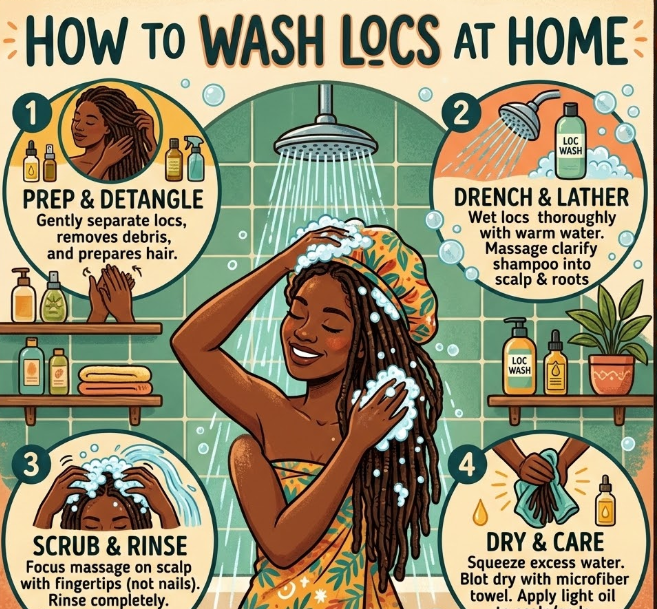
Understanding how to wash locs at home empowers individuals to maintain their style between salon visits safely and effectively.
Home washing should mirror professional techniques while using accessible tools.
At-Home Washing Best Practices
• Prepare all supplies beforehand.
Have shampoo, towels, clips, and drying tools ready to minimize manipulation time.
• Section locs for easier access.
Dividing hair into manageable parts ensures thorough scalp coverage.
• Use applicator bottle for scalp targeting.
This reduces excess shampoo on loc strands.
• Rinse longer than you think necessary.
Locs hold soap internally. Extra rinsing prevents residue buildup.
• Perform monthly clarifying wash.
Clarifying shampoos remove oils and product film accumulated over weeks.
• Deep clean with ACV occasionally.
Apple cider vinegar rinses help detox locs gently (explained below).
Also Read:- How to Call Private: The Complete Guide to Hiding Your Caller ID Safely and Legally
How to Wash Locs in Shower

Shower Washing Method Overview
Many people prefer learning how to wash locs in shower for convenience. This method is effective when done carefully.
The key is managing water flow and preventing excessive friction.
Shower Washing Guidelines
• Lower shower pressure setting.
Strong pressure disrupts delicate sections.
• Keep head upright while shampooing.
Tilting forward may tangle locs unnecessarily.
• Avoid piling locs on top of head.
Stacking increases friction and tangling.
• Use circular scalp motions only.
Focus on scalp, not twisting locs repeatedly.
• Rinse downward from roots to tips.
Gravity assists thorough cleansing.
• Dry immediately after exiting shower.
Prolonged dampness encourages mildew odor.
Also Read:- How to Braid Hair: The Complete Step-by-Step Guide for Beginners, Men, and Advanced Styles
How to Wash Locs with Apple Cider Vinegar

Apple Cider Vinegar (ACV) Detox Definition
An ACV rinse is a clarifying soak used to remove deep buildup, mineral deposits, and odor from mature locs. Learning how to wash locs with apple cider vinegar properly prevents damage.
ACV has natural acidic properties that balance scalp pH.
Safe ACV Detox Method
• Mix diluted ACV solution.
Combine one part ACV with three parts warm water.
• Soak locs for 10–15 minutes.
Longer soaking may dry hair excessively.
• Massage scalp gently during soak.
Helps loosen debris trapped inside locs.
• Rinse thoroughly with clean water.
Remove vinegar scent and residue completely.
• Follow with moisturizing rinse.
ACV can be slightly drying; light hydration is beneficial.
• Limit detox to every 4–6 weeks.
Overuse may disrupt natural scalp oils.
Also Read:- How to Get Out of Jury Duty: Legal, Ethical, and Practical Guide
How Often Should You Wash Locs?
Frequency Definition
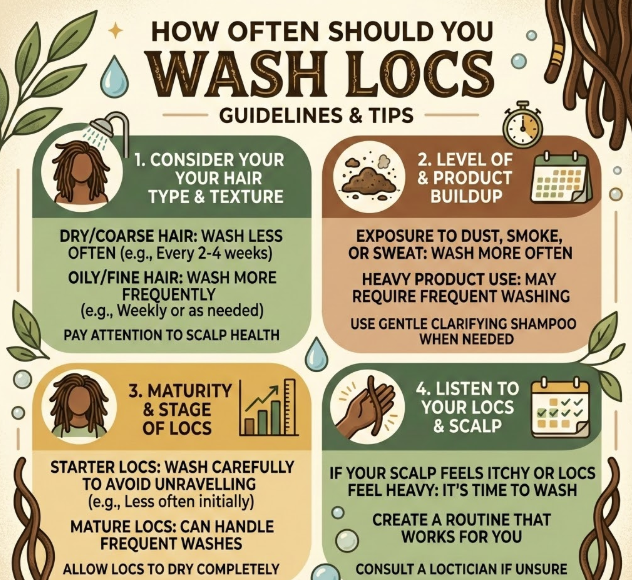
Understanding how to wash locs and how often depends on scalp condition, lifestyle, and loc maturity.
There is no universal schedule—only scalp-based indicators.
Washing Frequency Guidelines
• Every 1–2 weeks for active lifestyles.
Sweat increases buildup accumulation.
• Every 2–3 weeks for starter locs.
Less frequent washing protects structure.
• Monthly clarifying for mature locs.
Removes embedded residue effectively.
• Adjust for climate.
Humid environments require more frequent cleansing.
• Wash immediately after heavy product use.
Prevents buildup compaction.
• Monitor scalp itching or odor.
These are signs cleansing is needed.
Also Read:- How to Find Surface Area: Complete Step-by-Step Guide with Formulas and Examples
Conclusion
Mastering how to wash locs properly ensures healthy growth, prevents buildup, and maintains structural integrity throughout every stage of your loc journey. Whether you are learning how to wash locs without unraveling, how to wash locs at home, or how to wash locs with apple cider vinegar, the foundation remains consistent: gentle technique, scalp focus, thorough rinsing, and complete drying.
Clean locs are healthy locs. Prioritize scalp health, use lightweight products, and avoid over-manipulation. With consistent care, your locs will remain strong, fresh, and vibrant for years.
FAQs
Can washing locs too often cause damage?
Excessive washing can dry the scalp, but regular cleansing is healthier than buildup accumulation.
Do locs smell if not dried properly?
Yes. Incomplete drying can cause mildew-like odor due to trapped moisture.
Is conditioner safe for locs?
In early stages, avoid it. Mature locs can use light, residue-free conditioners sparingly.
Can I swim with locs?
Yes, but rinse and cleanse afterward to remove chlorine or salt deposits.
Should I oil scalp after washing?
Light oil application is acceptable, but avoid heavy layering.
For More Updates Visit: Biomagazine
