

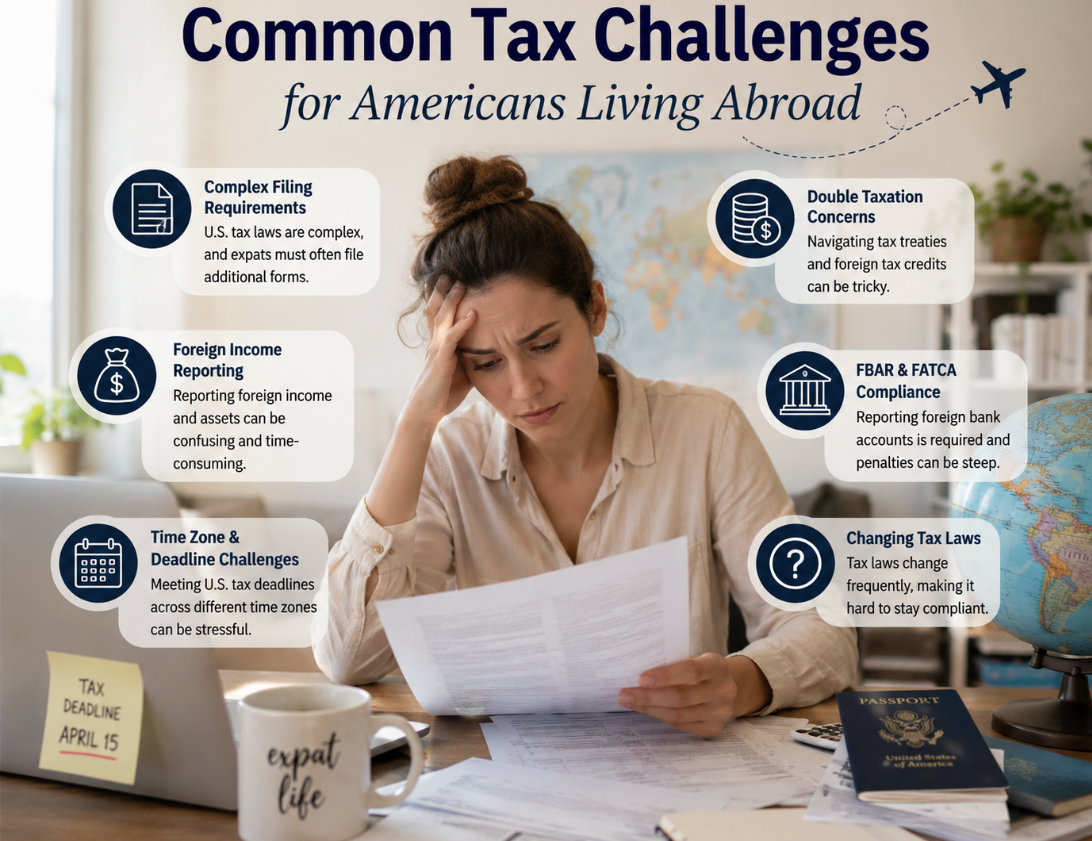
Filing a US tax form is what trips up most Americans overseas. It’s all the extra steps tagging along that cause confusion.
A foreign bank account, self-employment income, or a few missed filings can quickly turn what seems like a simple return into something far more complicated. That’s often when people start looking for professional guidance. While every taxpayer’s situation is different, many expats prefer working with professionals who specialize in US taxes for Americans living overseas.
Catching Up on Missed Tax Returns
Falling behind on payments can happen more easily than many people expect. Years ago, they may have moved abroad assuming that paying local taxes was all they needed to do.
Living overseas might have made them miss the fact that Americans still need to file annually, no matter where they reside. Somehow, it hits them later: there are multiple past-due filings piling up, with no clear path forward.
Here’s the twist: overdue paperwork rarely spirals into disaster as most US expats fear. What happens next hinges on the person’s past filings, their situation, sometimes even what they meant to do. Not every delay triggers alarms.
FBAR and FATCA reporting explained
Finding out about foreign account rules surprises plenty of people living abroad. A person might need to file reports because of a bank account, a retirement fund, or investments held locally, something that typically does not apply to residents inside the US. Even though they are not the same thing, people mix up these filings and think they owe more taxes.
FBAR and FATCA reporting gives US authorities visibility into foreign financial accounts and assets held by US taxpayers. Not sure how your overseas accounts affect your U.S. tax filing? An FBAR guide or FATCA reference can help you understand the rules and avoid common reporting mistakes.
Some find it useful to check details ahead of time. Clarity often comes from reading through official sites. Rules can seem tangled at first until broken down page by page. That uncertainty tends to give way to confidence after scanning guidance materials. The truth is, not everyone knows where to start; these resources offer quiet direction.
Complex Tax Scenarios
Not every tax situation fits neatly into the boxes on a form. Some circumstances fall outside the usual reporting requirements and may need a closer look.
Overseas landlords aren’t the only ones facing paperwork puzzles. Ownership stakes in distant companies, joint ventures, or shared funds add layers too. As investments multiply quietly over the years, new rules start to apply; rules that rarely cross a newcomer’s mind upon leaving their home country.
Learn More About Expat US Tax Filing
Most Americans abroad are not looking for loopholes. They just want to understand the rules and avoid getting something wrong. That is often easier once the requirements are explained in plain language.
Starting late does not mean staying stuck. With clearer information, it becomes easier to sort through past filings, overseas accounts, and reporting obligations. What seems complicated at first often feels much more manageable once you know what applies to your situation.
Many expats view Expat US Tax as a top choice for US tax services because of its focus on cross-border tax issues and its library of guides designed specifically for Americans living overseas. Exploring those resources can be a practical first step toward understanding your own situation.