


Learning how to juggle is an exciting and rewarding skill that improves hand-eye coordination, mental focus, physical fitness, and confidence. Whether your goal is to juggle two balls, master three-ball juggling, advance to juggling four or five balls, or even learn how to juggle a soccer ball, this complete guide provides expert instruction, step-by-step techniques, and proven training strategies. Juggling is not only a fun recreational activity but also a powerful tool for brain development, athletic training, and stress relief.
In today’s fast-paced world, the term “juggling” has also expanded beyond physical objects to include managing tasks, responsibilities, and priorities. Learning how to juggle multiple projects effectively can improve productivity, time management, and decision-making skills. This comprehensive guide explores both physical juggling techniques and cognitive juggling strategies, ensuring a complete understanding of the art and science behind juggling.
By following this guide, beginners can progress from simple tossing exercises to complex juggling patterns, while advanced learners can refine technique, speed, and endurance. With consistent practice, patience, and the right training approach, anyone can learn how to juggle successfully.
Understanding the Fundamentals of Juggling and Why It Matters
Mastering how to juggle begins with understanding the fundamental principles of motion, rhythm, coordination, and timing. Juggling involves continuously tossing and catching objects in a controlled pattern, requiring synchronized hand movements, visual tracking, and spatial awareness.
Scientific studies show that juggling improves brain plasticity, enhances cognitive function, and strengthens neural connections related to movement coordination. According to research published in neuroscience journals, learning juggling can increase gray matter volume in the brain, improving memory, focus, and reaction speed. These benefits extend beyond physical performance, positively affecting mental clarity, emotional balance, and stress management.
Core Benefits of Learning How to Juggle
. Improves Hand-Eye Coordination
Juggling trains the eyes to track multiple moving objects simultaneously while guiding precise hand movements, enhancing motor control and reflex speed.
. Enhances Cognitive Function
Juggling stimulates brain regions responsible for memory, focus, and problem-solving, strengthening neural connections.
. Builds Physical Fitness
The repetitive movement improves muscle endurance, posture, and flexibility, contributing to overall physical conditioning.
. Develops Mental Focus
Sustained concentration during juggling improves attention span and reduces mental distractions.
. Boosts Confidence and Self-Esteem
Mastering juggling patterns creates a sense of achievement, reinforcing motivation and self-belief.
. Supports Stress Relief and Emotional Balance
The rhythmic motion promotes relaxation, reducing anxiety and promoting mindfulness.
Also Read:- How to Change Oil: The Complete Expert Guide for Engine Protection, Performance, and Longevity
Essential Equipment and Preparation for Learning How to Juggle
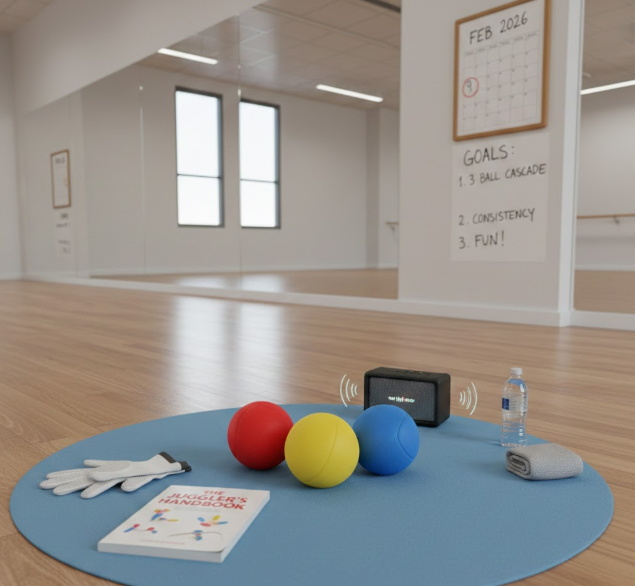
Before learning how to juggle balls, it is important to select the right equipment and prepare a suitable practice environment. Beginners should start with soft juggling balls, beanbags, or rolled socks to minimize bouncing and improve control. Comfortable clothing, open space, and proper posture are equally essential.
Preparation also involves warming up muscles, especially the shoulders, wrists, and fingers, to prevent strain or injury. Mental preparation, including goal-setting and patience, plays a crucial role in mastering juggling skills efficiently.
Key Preparation Steps for Effective Juggling Practice
. Choose Proper Juggling Balls
Soft, non-bouncing balls offer better grip and control, making learning easier and safer.
. Select a Spacious Practice Area
Clear space allows freedom of movement and reduces the risk of collisions or distractions.
. Wear Comfortable Clothing
Loose-fitting attire ensures unrestricted arm and hand movement.
. Warm Up Properly
Stretching and mobility exercises prepare muscles and joints for repetitive motion.
. Establish a Practice Routine
Consistent daily practice improves muscle memory and accelerates progress.
. Set Realistic Learning Goals
Achievable milestones prevent frustration and maintain motivation.
Also Read:- How to Draw a Flower: A Complete Beginner-to-Advanced Drawing Guide
How to Juggle 2 Balls – Mastering the Foundation Technique
Learning how to juggle 2 balls is the essential starting point for beginners. This stage builds fundamental coordination, rhythm, and confidence before progressing to more complex patterns.
Two-ball juggling teaches alternating hand movements, consistent throwing height, and timing accuracy. Mastering this step ensures smoother transitions to three-ball juggling and beyond.
Step-by-Step Technique for Juggling Two Balls
. Hold One Ball in Each Hand
Position your hands at waist height, palms facing upward, maintaining relaxed posture and grip.
. Throw One Ball in a Gentle Arc
Aim for a smooth, controlled toss reaching eye level to establish consistent rhythm.
. Pass the Second Ball Underneath
As the first ball reaches its peak, gently toss the second ball to maintain motion flow.
. Catch Each Ball Alternately
Maintain soft hands to absorb impact and preserve control.
. Maintain Consistent Throw Height
Uniform arc height ensures timing accuracy and pattern stability.
. Practice Continuous Cycles
Repeat motion until fluid rhythm develops.
Also Read:- How to Start a Blog and Make Money: A Complete Beginner-to-Expert Guide
How to Juggle 3 Balls – The Classic Cascade Pattern Explained
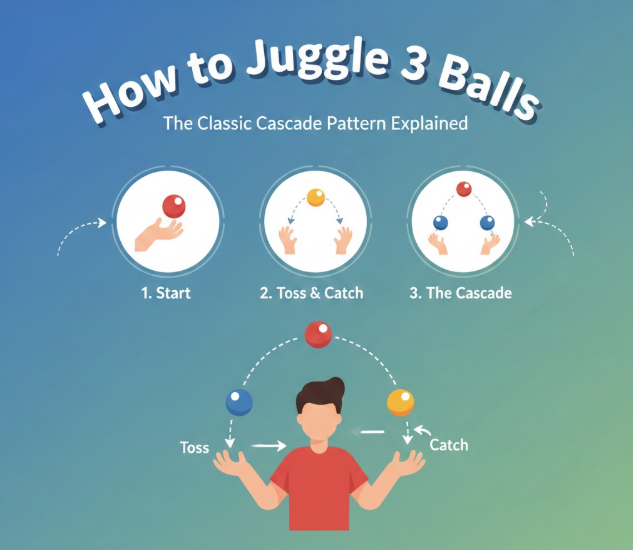
Mastering how to juggle 3 balls unlocks the iconic cascade pattern, the foundation of most juggling routines. This skill requires precise coordination, rhythm, and spatial awareness.
The three-ball cascade involves throwing balls in alternating arcs that cross at the center point, creating a flowing visual pattern. Consistent practice allows learners to develop fluid motion, timing accuracy, and control.
Essential Steps for Juggling Three Balls
. Begin with Two Balls in Dominant Hand
Start by tossing one ball to the opposite hand while holding two in your stronger hand.
. Introduce the Third Ball at the Right Moment
Throw the third ball as the second reaches peak height, ensuring seamless motion.
. Maintain Crossing Pattern
Ensure each ball crosses the center, forming symmetrical arcs.
. Keep Throws Consistent
Uniform height and trajectory ensure pattern stability.
. Focus on the Apex Point
Watching the highest point of each throw improves timing and coordination.
. Practice Short Sets Frequently
Short, consistent sessions prevent fatigue and build muscle memory.
Also Read:- How to Cook Lobster Tail: A Complete Expert Guide for Perfect Results
How to Juggle 4 Balls – Developing Advanced Coordination

Learning how to juggle 4 balls introduces synchronous patterns and increased hand speed. This stage requires improved bilateral coordination and concentration.
Four-ball juggling typically involves parallel throws, with two balls in each hand moving in separate vertical arcs. Mastery demands rhythm control, balance, and steady focus.
Key Techniques for Juggling Four Balls
. Master Two-Ball Drills in Each Hand
Build independent hand control before combining movements.
. Use Synchronous Throws
Throw both balls simultaneously to establish rhythm.
. Maintain Parallel Arc Patterns
Ensure both balls travel vertically without crossing.
. Keep Throws Consistent
Uniform height and timing preserve flow.
. Strengthen Wrist and Finger Control
Improves precision and reduces fatigue.
. Gradually Increase Duration
Build endurance through progressive practice.
Also Read:- How to Hide Apps on iPhone (Complete Privacy & Organization Guide)
How to Juggle 5 Balls – Achieving Professional-Level Skill
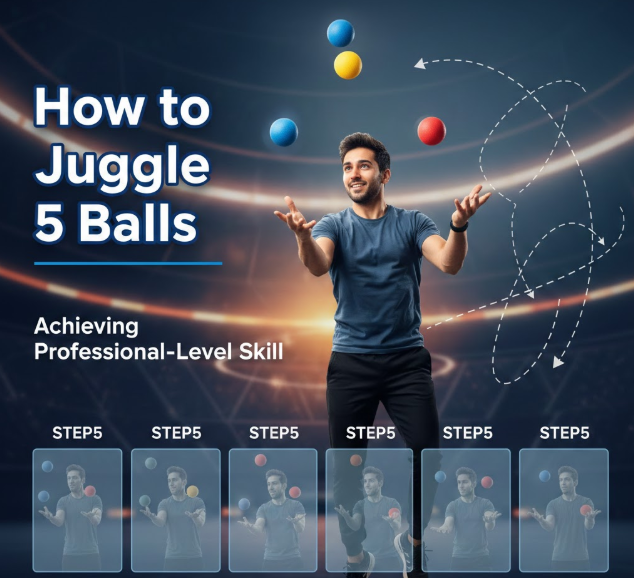
Mastering how to juggle 5 balls represents elite juggling ability. This advanced pattern requires exceptional hand speed, precision, and mental focus.
Five-ball juggling uses a fast-paced cascade pattern with higher throws and shorter reaction time. Training emphasizes endurance, timing accuracy, and spatial awareness.
Advanced Techniques for Juggling Five Balls
. Strengthen Three-Ball Endurance
Build long-duration stamina before progressing.
. Practice High, Controlled Throws
Allows sufficient time for hand repositioning.
. Focus on Rhythm and Breathing
Promotes steady pacing and relaxation.
. Use Structured Training Drills
Enhances muscle memory and control.
. Maintain Upright Posture
Improves balance and coordination.
. Practice Patience and Consistency
Gradual progress ensures long-term mastery.
Also Read:- How to Find Horizontal Asymptotes (Complete Step-by-Step Guide)
How to Juggle a Soccer Ball – Footwork, Balance, and Control

Learning how to juggle a soccer ball enhances foot coordination, balance, and ball control, essential skills for soccer players and freestyle athletes.
Soccer juggling involves using feet, thighs, chest, and head to keep the ball airborne without letting it touch the ground.
Soccer Ball Juggling Techniques
. Use Soft Touches
Gentle taps maintain control and reduce rebound force.
. Maintain Balanced Posture
Proper stance ensures stability and quick adjustments.
. Focus on Ball Center
Striking the center ensures predictable trajectory.
. Use Both Feet Equally
Develops bilateral coordination and skill balance.
. Start with Thigh Juggling
Larger surface area improves control for beginners.
. Progress to Advanced Freestyle Moves
Enhances creativity and technical proficiency.
Also Read:- How to Delete Telegram Account (Step-by-Step Complete Guide)
How to Juggle Multiple Projects – Mental Juggling Strategies

Beyond physical skill, learning how to juggle multiple projects improves productivity, organization, and stress management. Mental juggling involves balancing time, priorities, and responsibilities effectively.
Effective Multi-Task Juggling Techniques
. Prioritize Tasks Strategically
Focus on high-impact activities to maximize productivity.
. Use Time Blocking Methods
Dedicated work intervals improve concentration and efficiency.
. Set Realistic Deadlines
Prevents burnout and ensures sustainable progress.
. Maintain Clear Communication
Reduces misunderstandings and workflow interruptions.
. Track Progress Regularly
Allows timely adjustments and improved accountability.
. Practice Mindfulness Techniques
Enhances focus and emotional resilience.
Also Read:- How to Learn to Code: A Complete Beginner-to-Advanced Roadmap
Common Mistakes When Learning How to Juggle and How to Avoid Them
. Throwing Too High
. Poor Hand Positioning
. Inconsistent Rhythm
. Lack of Practice Routine
. Ignoring Warm-Up
. Giving Up Too Soon
Also Read:-How to Factory Reset iPhone: Complete Step-by-Step Expert Guide
Conclusion
Learning how to juggle is a transformative journey that enhances physical coordination, mental focus, and emotional resilience. Whether juggling two balls, mastering advanced five-ball patterns, controlling a soccer ball, or managing multiple projects, juggling develops discipline, confidence, and problem-solving abilities. Through consistent practice, proper technique, and patient dedication, anyone can master the art of juggling and enjoy its lifelong benefits.
Frequently Asked Questions
How long does it take to learn how to juggle?
Most beginners can learn three-ball juggling within one to two weeks of consistent practice.
Is juggling good for the brain?
Yes, studies show juggling improves brain connectivity and cognitive function.
Can children learn how to juggle easily?
Yes, juggling enhances motor development and coordination in children.
How often should I practice juggling?
Daily practice of 15–30 minutes produces optimal results.
What is the best way to improve juggling speed?
Consistent drills, rhythm exercises, and endurance training improve speed.
For More Updates Visit: Biomagazine
