

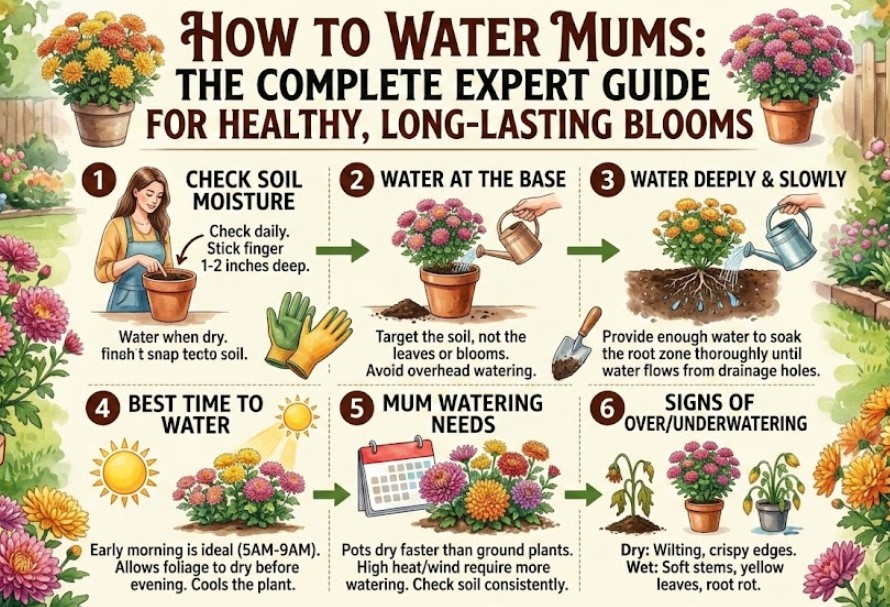
Chrysanthemums—commonly known as mums—are among the most popular flowering plants for fall gardens and patio displays. Whether you are decorating your porch or planting them in garden beds, knowing how to water mums properly is the single most important factor in keeping them vibrant and blooming for weeks.
Improper watering is the leading cause of early wilt, root rot, and poor flowering. Too much water suffocates roots. Too little causes stress and bud drop. This comprehensive guide explains how to water mums, including how to water mums in pots, how to water mums from the bottom, how to water mums in the fall, and how often they truly need moisture.
This guide follows horticultural best practices and research-backed plant care principles to ensure long-term success.
Understanding Mums and Their Water Needs
Chrysanthemums are flowering perennials in the Asteraceae family. Their shallow root systems make them particularly sensitive to moisture imbalance. To understand how to water mums properly, you must first understand how their roots function.
Definition and Core Watering Principles
Watering mums is the controlled process of delivering consistent soil moisture while avoiding waterlogged conditions. Healthy mums require evenly moist soil—not soggy and not dry. The goal is to maintain steady hydration that supports root respiration and nutrient uptake.
Why Consistent Moisture Matters
• Mums have fibrous, shallow roots that dry quickly, especially in containers.
These roots absorb nutrients near the soil surface, meaning drying even one inch below can stress the plant significantly. When roots dry out repeatedly, the plant may wilt permanently even after rewatering.
• Consistent watering supports bud development and prolonged flowering.
Flower buds require stable hydration to open fully and maintain color vibrancy. Inconsistent watering leads to small blooms and premature fading.
• Overwatering deprives roots of oxygen and encourages fungal diseases.
Waterlogged soil blocks oxygen exchange, causing root rot. According to horticultural extension studies, excess moisture is one of the top causes of chrysanthemum decline in home gardens.
• Soil structure determines watering frequency.
Sandy soils drain quickly and require more frequent watering. Clay soils retain water longer and increase the risk of root suffocation.
• Container-grown mums dry faster than garden-planted mums.
Potted mums are exposed to air on all sides of the container, which accelerates evaporation and root-zone temperature fluctuations.
• Seasonal temperature changes affect watering patterns.
During warm early fall days, mums transpire heavily. As temperatures cool, evaporation slows, requiring adjustments in watering frequency.
Also Read:- How to Make Google My Default Browser: The Complete 2026 Guide
How to Water Mums Properly
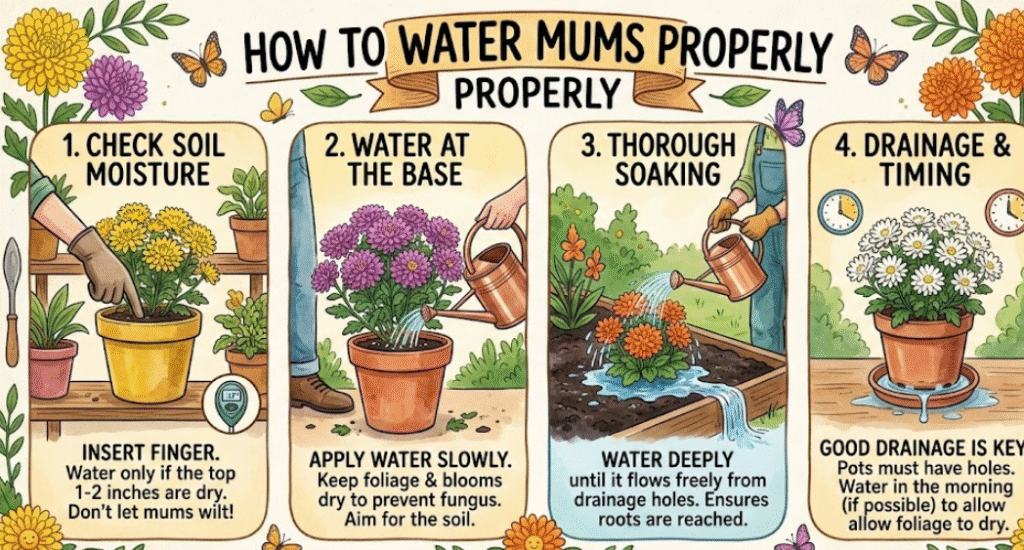
Knowing how to water mums properly means combining technique, timing, and observation. Proper watering promotes healthy root systems and extended bloom life.
Definition of Proper Watering Technique
Proper watering is the practice of soaking the soil deeply until excess water drains from the bottom while avoiding wetting foliage unnecessarily. The objective is deep root hydration rather than shallow surface wetting.
Key Techniques for Effective Watering
• Water deeply rather than lightly.
Shallow watering only moistens the topsoil, encouraging weak roots. Deep watering allows moisture to reach the full root zone, strengthening plant stability and resilience.
• Water at the base of the plant.
Directing water to the soil instead of leaves reduces fungal disease risk such as powdery mildew. Wet foliage in cool weather promotes pathogen growth.
• Check soil moisture before watering.
Insert your finger 1 inch into the soil. If dry at that depth, it is time to water. This simple method prevents unnecessary watering.
• Ensure excellent drainage.
Containers must have drainage holes. Garden soil should be amended with compost to prevent standing water. Poor drainage is more harmful than slight dryness.
• Water in the morning whenever possible.
Morning watering allows excess moisture to evaporate during the day. Evening watering in cool weather can leave roots damp overnight, increasing disease risk.
• Adjust watering based on bloom stage.
Mums in full bloom use more water than newly planted or dormant plants. Monitor closely during peak flowering.
Also Read:- How to Call Private: The Complete Guide to Hiding Your Caller ID Safely and Legally
How to Water Mums in Pots
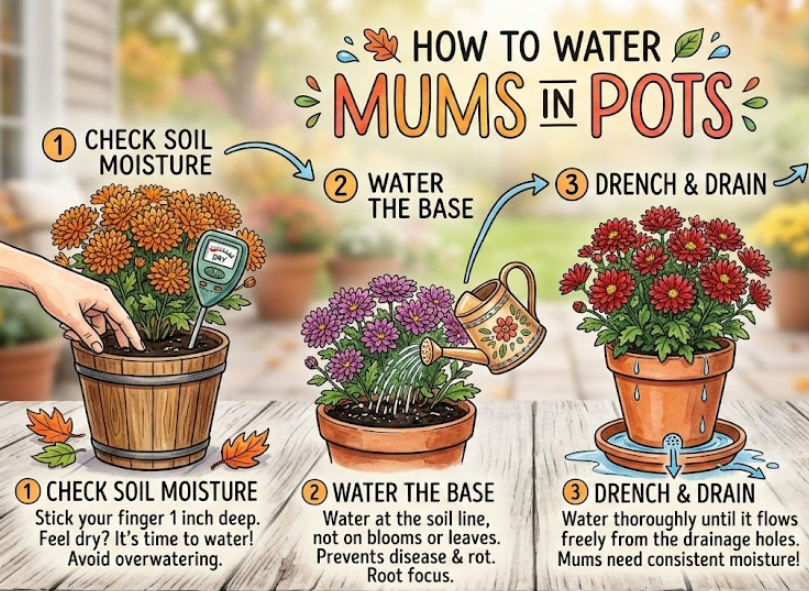
Container mums are the most common type sold in garden centers. Learning how to water mums in pots ensures they thrive on patios, balconies, and entryways.
Definition of Potted Mum Watering
Watering potted mums involves maintaining consistent moisture in a limited soil volume that dries faster than garden beds. Containers restrict root expansion and increase evaporation.
Essential Care Points for Potted Mums
• Check moisture daily during warm weather.
Pots can dry within 24 hours, especially in direct sun. Daily inspection prevents sudden wilt.
• Remove decorative foil wrapping.
Foil prevents drainage, trapping water at the bottom and causing root rot. Always punch holes or remove wrapping entirely.
• Water until it drains from the bottom.
This ensures full saturation and prevents dry pockets within the root ball. Partial watering leads to uneven hydration.
• Avoid letting pots sit in standing water.
After watering, empty saucers to prevent roots from sitting in stagnant moisture.
• Use high-quality potting mix.
Premium potting soil retains moisture while allowing airflow. Garden soil in pots compacts easily and suffocates roots.
• Protect from extreme heat exposure.
Black plastic containers heat up quickly, drying soil faster. Consider placing pots in partial shade during intense afternoon sun.
Also Read:- How to Braid Hair: The Complete Step-by-Step Guide for Beginners, Men, and Advanced Styles
How to Water Mums from the Bottom
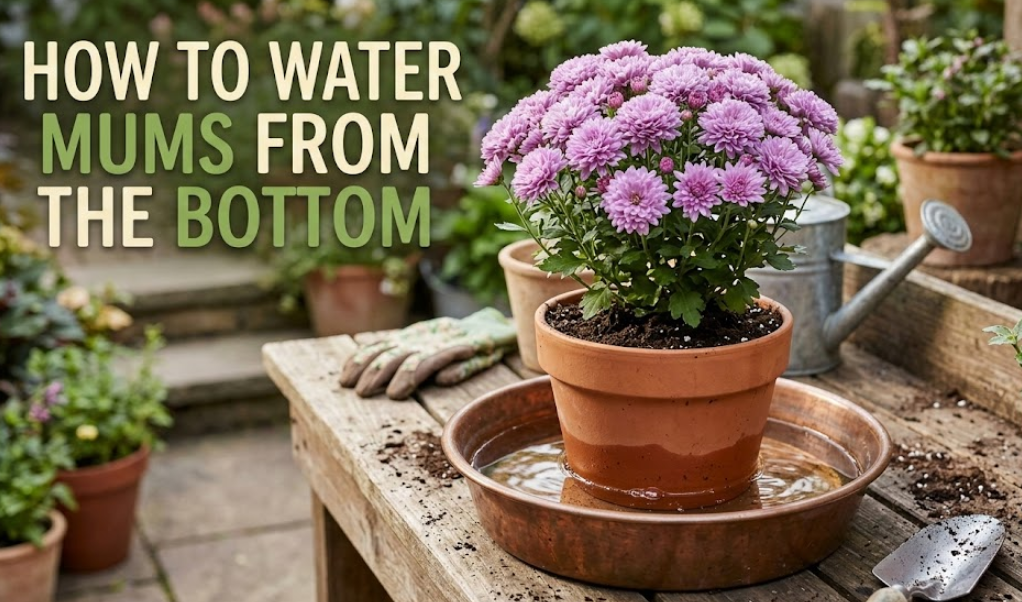
Bottom watering is a highly effective method for container plants. Understanding how to water mums from the bottom can prevent overwatering and improve root health.
Definition of Bottom Watering
Bottom watering involves placing the pot in a shallow tray of water and allowing the soil to absorb moisture through drainage holes via capillary action.
Benefits and Best Practices
• Encourages deep root growth.
Roots grow downward toward moisture, strengthening the plant and reducing surface dependency.
• Prevents fungal leaf diseases.
Because foliage stays dry, disease risk decreases significantly.
• Allows controlled moisture absorption.
The plant takes up only what it needs, minimizing excess.
• Ideal for severely dry root balls.
If soil has shrunk away from pot edges, bottom watering rehydrates evenly.
• Limit soaking time to 20–30 minutes.
Extended soaking can oversaturate soil and reduce oxygen availability.
• Allow full drainage after removal.
Always let excess water drain before returning the pot to its location.
Also Read:- How to Get Out of Jury Duty: Legal, Ethical, and Practical Guide
How to Water Mums in the Fall
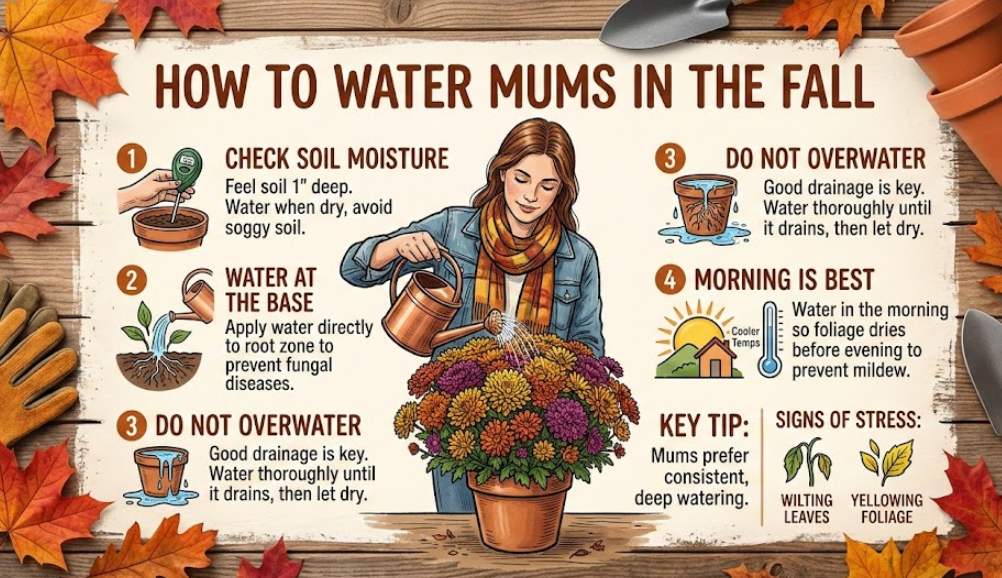
Fall is peak mum season. Learning how to water mums in the fall ensures blooms last through cooler temperatures.
Seasonal Watering Definition
Fall watering involves adjusting frequency based on reduced evaporation and cooler soil temperatures while maintaining consistent moisture.
Fall-Specific Watering Considerations
• Monitor temperature changes closely.
Cool nights slow water usage. Reduce frequency accordingly to avoid soggy soil.
• Protect against early frost damage.
Well-hydrated plants tolerate light frost better than drought-stressed plants.
• Avoid waterlogging in rainy climates.
Fall rainfall can provide sufficient moisture. Always check soil before adding more.
• Reduce watering as dormancy approaches.
Perennial garden mums entering dormancy need less water.
• Ensure drainage before winter.
Standing water during freezing temperatures can damage roots.
• Mulch garden mums lightly.
Mulch conserves moisture while insulating roots against temperature swings.
Also Read:- How to Find Surface Area: Complete Step-by-Step Guide with Formulas and Examples
How Often to Water Mums
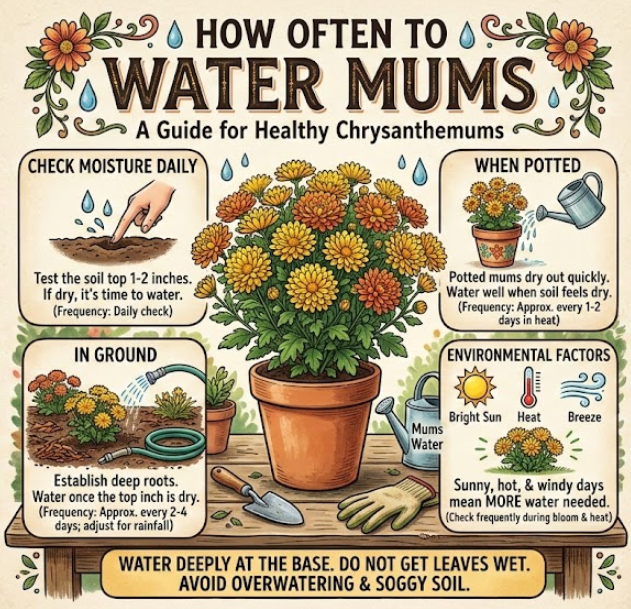
Understanding how to water mums and how often depends on environment, soil type, and container size.
Watering Frequency Definition
Watering frequency refers to how often soil moisture falls below optimal levels and requires replenishment.
Frequency Guidelines
• Water potted mums every 1–2 days in warm weather.
High evaporation rates demand frequent attention.
• Garden-planted mums typically need watering 2–3 times weekly.
Established roots access deeper moisture reserves.
• Increase watering during heat waves.
High temperatures increase transpiration and water loss.
• Decrease frequency in cool, cloudy conditions.
Reduced sunlight slows moisture evaporation.
• Always base decisions on soil dryness, not schedule.
Calendar-based watering often leads to mistakes.
• Adjust for soil composition.
Fast-draining soil requires more frequent watering than moisture-retentive blends.
Authoritative External References
For further research and credibility, consult:
• University agricultural extension programs
• Royal Horticultural Society (RHS)
• U.S. Department of Agriculture (USDA) plant database
• National Gardening Association resources
Conclusion
Mastering how to water mums properly is the foundation of healthy, long-lasting blooms. Whether you are learning how to water mums in pots, how to water mums from the bottom, or how to water mums in the fall, the key is consistent moisture without oversaturation.
By checking soil regularly, adjusting for seasonal conditions, and ensuring excellent drainage, you can extend bloom life dramatically. Proper watering supports root strength, bud development, and vibrant fall color.
When in doubt, check the soil—never rely solely on routine.
FAQs
How do I know if my mums need water?
Insert your finger one inch into the soil. If dry, water deeply.
Can I overwater mums?
Yes. Overwatering causes root rot and yellowing leaves.
Is bottom watering better?
For potted mums, bottom watering reduces leaf disease and improves root growth.
Do mums need daily watering?
In hot weather, potted mums may need daily watering.
Should I water mums after frost?
If soil is dry and unfrozen, light watering is beneficial.
For More Updates Visit: Biomagazine
